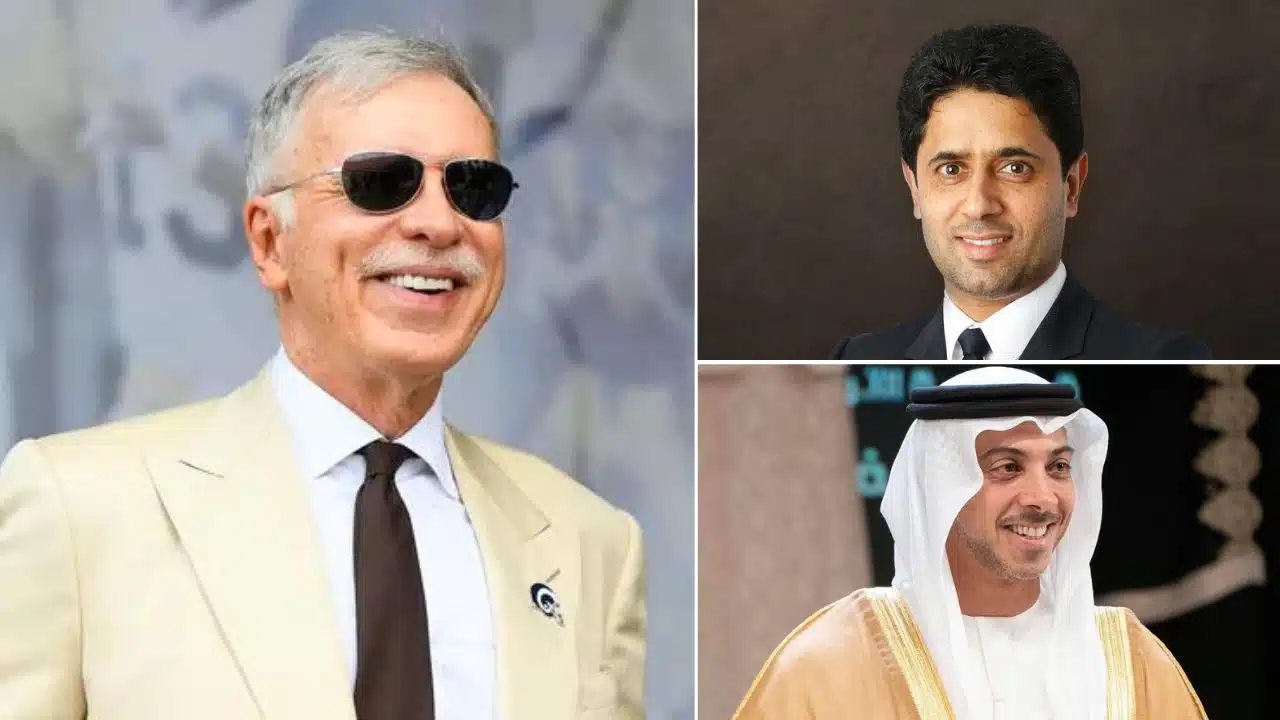
Football clubs around the world are often centers of power and influence in their communities. The owners of these clubs wield immense financial resources to recruit top talent and bring championships and glory to their teams. But who are the wealthiest football club owners on the planet?
This article will count down the 20 richest football club owners based on their total estimated net worth. We will uncover where their wealth comes from, highlight their prized assets, and reveal just how they have been able to achieve such staggering fortunes.
Whether through inheritance, business savvy, political connections, or extreme luck, these owners sit atop mountains of cash that bring success on and off the pitch. Read on to find out who makes the top 20 list of the richest club owners in world football.
Content Highlights
- Over a dozen football clubs across Europe are owned by billionaires, with the top teams often coming with price tags over $1 billion.
- Much of the billionaire wealth flooding into European football comes from inheritance and commodities in the Middle East, investments and technology in America, steel and resources in Russia.
- Unfathomable wealth is often poured into clubs for player transfers, salaries, stadium upgrades and sponsorship deals to quickly try achieving success.
- Despite exorbitant funding, on-field performance varies widely based on managerial decisions, showing money alone does not automatically yield trophies.
- The ranking order of richest club owners shifts regularly over time, but the extreme wealth invested into top-level football continues to rapidly grow.
Top 10 Richest Football Club Owners in the World at a Glance
|
Name |
Football Club |
Estimated Net Worth |
Source of Wealth |
|
Sheikh Mansour |
Manchester City |
$25 billion |
Inheritance, Investment |
|
Dietrich Mateschitz |
RB Salzburg |
$21 billion |
Red Bull |
|
Andrea Agnelli |
Juventus |
$16 billion |
Fiat Chrysler |
|
Philip Anschutz |
LA Galaxy |
$11 billion |
Investments |
|
Stan Kroenke |
Arsenal |
$10.7 billion |
Real Estate, Sports |
|
Roman Abramovich |
Chelsea |
$10.2 billion |
Steel, Investments |
|
Zhang Jindong |
Inter Milan |
$9.6 billion |
Technology |
|
Dmitry Rybolovlev |
AS Monaco |
$8 billion |
Fertilizer |
|
Nasser Al-Khelaifi |
Paris Saint-Germain |
$8 billion |
Investments |
|
Hasso Plattner |
San Jose Earthquakes |
$7.5 billion |
SAP |
The Top 20 Wealthiest Football Club Owners
1. Sheikh Mansour – Manchester City FC
- Estimated Net Worth: $25 billion
- Source of Wealth: Inheritance, Investment
Topping the list as the richest football club owner in the world is Sheikh Mansour bin Zayed Al Nahyan, the billionaire deputy prime minister of the United Arab Emirates and younger brother of the current president.
Sheikh Mansour has an estimated personal net worth of $25 billion accrued from stakes in numerous companies and inherited wealth as a member of Abu Dhabi’s ruling family. He purchased Manchester City FC in 2008 and has since poured over $1.3 billion into the club for various investments. These include the recruitment and salaries of elite players, club infrastructure, and coaching staff.
Under Sheikh Mansour’s ownership, Manchester City has experienced a remarkable transformation, winning 6 Premier League titles since 2011. The club is now a dominant force in English and European football, demonstrating the massive financial clout Mansour wields. Additionally, you can also read about- Goal-Scoring Giants: Top 10 Football Goalscorers of 2023 Revealed
2. Dietrich Mateschitz – RB Salzburg
- Estimated Net Worth: $21 billion
- Source of Wealth: Red Bull
Austrian billionaire Dietrich Mateschitz is the cofounder and owner of the Red Bull energy drink empire, along with stakes in Red Bull’s Formula 1 racing teams and extreme sports sponsorships.
With 49% of the company in his name and an estimated personal net worth around $21 billion, he is leveraging this fortune to grow Red Bull GmbH’s sporting portfolio globally. This includes complete ownership takeovers of football clubs Red Bull Salzburg and RB Leipzig.
Through his sports-focused investments and ownership, the Red Bull brand continues to amass huge publicity and exposure across football. Dietrich Mateschitz remains one of the wealthiest sports team owners in the world.
3. Andrea Agnelli – Juventus FC
- Estimated Net Worth: $16 billion
- Source of Wealth: Fiat Chrysler
Italian businessman and industrial heir Andrea Agnelli has an estimated net worth of $16 billion. As CEO of carmaker Fiat Chrysler and controlling shareholder of Ferrari, his family has presided over Juventus FC for nearly a century.
His father, uncle, and grandfather were all previously majority owners of Juventus, one of the biggest and most successful clubs in Italy. Andrea assumed chairmanship of the club over a decade ago, continuing his family legacy.
With a huge fortune accumulated in automotive holdings and capital poured into Juventus to reinforce their domestic dominance, Andrea Agnelli continues to be a powerful figure in European football finance.
4. Philip Anschutz – LA Galaxy
- Estimated Net Worth: $11 billion
- Source of Wealth: Investments
American billionaire Philip Anschutz accrued his vast $11 billion personal fortune through shrewd “old economy” investments in real estate, energy, railroads, and entertainment companies across the United States over the past 50 years.
Anschutz has utilized this wealth to gain 100% ownership stakes in 7 professional sports teams, including Major League Soccer’s LA Galaxy. Since acquiring the club in 1995, Anschutz has invested substantial capital in infrastructure like the Dignity Health Sports Park stadium to bolster support and facilities for Galaxy.
With a current valuation of $480 million, LA Galaxy is one of the league’s premier clubs, boosted in financial power and competitiveness from Anschutz’s continual infrastructure and roster investments.
5. Stan Kroenke – Arsenal FC
- Estimated Net Worth: $10.7 billion
- Source of Wealth: Real Estate, Sports
Married into the Walmart retail empire, American Stan Kroenke has built a sprawling business portfolio now worth $10.7 billion across real estate, sports, and media holdings valued at over $17 billion.
As the owner of Premier League club Arsenal since 2011, Kroenke has leveraged his cross-continental influence to elevate Arsenal into one of the richest clubs in world football. With a value of $2.8 billion, Arsenal continues to be competitive under the American’s ownership.
From TV rights to lucrative sponsorship deals, Kroenke and his conglomerate Kroenke Sports & Entertainment continue to maximize monetization opportunities to empower Arsenal as a financial juggernaut both on and off the pitch.
6. Roman Abramovich – Chelsea FC
- Estimated Net Worth: $10.2 billion
- Source of Wealth: Steel, Investments
Russian billionaire Roman Abramovich rocketed to fame in English football after acquiring Chelsea FC in 2003 and transforming the club into an English powerhouse and global brand with over $3 billion in total investment.
With an estimated net worth fluctuating around $10 billion accrued in Russian oil, steel production, and other ventures, Abramovich ushered in a new blueprint for foreign billionaires buying success in the sport.
Through astronomical transfer fees and world-leading salaries to lure superstar talent to Stamford Bridge, Abramovich’s wealth has financed 5 Premier League titles for Chelsea since 2004 despite recent ownership uncertainty due to sanctions placed on Russian oligarchs. If you want you can also read- European Giants Circle Argentine Wonderkid Dubbed “The Next Messi”
7. Zhang Jindong – Inter Milan
- Estimated Net Worth: $9.6 billion
- Source of Wealth: Technology
The richest man in China’s technology industry, Zhang Jindong is the founder and major shareholder of Suning Holdings Group, a corporation specializing in appliances, real estate, finance, and more.
With a personal net worth estimated at $9.6 billion, Zhang acquired a majority stake in storied Italian club Inter Milan in 2016, becoming the first-ever Chinese owner of a major European team.
Since acquiring Inter Milan, Suning has continued to inject capital into the club for player transfers, stadium renovation, and branding opportunities to reestablish Inter as an elite Italian team after years of decline.
8. Dmitry Rybolovlev – AS Monaco
- Estimated Net Worth: $8 billion
- Source of Wealth: Fertilizer
Russian businessman and investor Dmitry Rybolovlev acquired a majority stake in 7-time French champion AS Monaco in 2011. With an estimated personal net worth around $8 billion primarily derived from ownership stakes in fertilizer producers, Rybolovlev has invested over $300 million into AS Monaco.
His wealth has helped secure high-profile players and staff to transform the club back into an annual contender in France and Europe after years of obscurity. Though recent seasons have seen player sales outweigh signings, AS Monaco continues to benefit from the patronage of Russia’s “Fertilizer King” Rybolovlev as owner.
9. Nasser Al-Khelaifi – Paris Saint-Germain
- Estimated Net Worth: $8 billion
- Source of Wealth: Investments
Qatari billionaire Nasser Al-Khelaifi heads the Qatar Sports Investments group which took over operational control of Paris Saint-Germain in 2011 with lofty ambitions of establishing the club as a top-5 global brand in football.
With an estimated personal wealth around $8 billion from investments in Qatar’s energy, finance, and broadcasting sectors, Al-Khelaifi has funneled over a billion dollars into PSG for record-shattering player transfers and wages to attract superstars like Messi, Mbappé, and Neymar to the club.
The results on the pitch have seen PSG completely dominate French football while becoming a Champions League regular, demonstrating the power Al-Khelaifi holds in elevating teams to elite levels through extreme wealth accrued in Qatar.
10. Hasso Plattner – San Jose Earthquakes
- Estimated Net Worth: $7.5 billion
- Source of Wealth: SAP
German IT entrepreneur Hasso Plattner accumulated an immense fortune through co-founding software corporation SAP SE in the 1970s, growing it into a multi-billion dollar company. With a personal net worth around $7.5 billion and 37% stake in the firm, Plattner has diverse side investments in American sports teams.
A lifelong sports fanatic, he became majority owner of the San Jose Earthquakes in 2013 and has invested substantially in infrastructure upgrades like their dedicated stadium and training facilities. Though they lack superstars, Plattner’s continual patronage provides essential financial security for the Earthquakes as a smaller-budget MLS team.
You May Find Interest: Top 25 World’s Richest Sports Owners 2023 [With Net Worth and Earning]
Other Notable Billionaire Football Club Owners
Beyond the top 10 wealthiest football club owners lies a cluster of other billionaires whose extreme wealth has afforded them ownership of the beautiful game’s most prized assets across Europe and beyond. They include:
– Guo Guangchang (Wolves) – $5.5 billion from conglomerate Fosun International
– Joe Lewis (Tottenham Hotspur) – $5.1 billion from currency trading
– Liu Yonghao (Atletico Madrid) – $3.9 billion from animal feed and pig farming
– Paul Allen Estate (Seattle Sounders) – $3.3 billion from Microsoft
– John Fredriksen (Valencia) – $2.7 billion from oil tankers and shipping
While they may not break into the top 10, these billionaire backers nevertheless provide vital injections of capital to elevate their clubs using immense personal fortunes accrued across business, political connections, and investments worldwide. Their wealth brings with it both outsized attention, pressure, and expectations.
Conclusion
The astronomical amounts of wealth held by football’s billionaire club owners provides a competitive edge both on the transfer market and in stadium facilities and branding that most clubs could only dream of matching. Globalized entertainment and sports continue merging as billionaire backers purchase these clubs as ultra-prestigious personal assets.
With no financial restrictions, these owners often act on pure passion, wielding open checkbooks to purchase any player they desire or redevelop aging stadiums into cutting-edge arenas. However, with great money comes great accountability, and patience for lack of returns on their massive investments often wears thin.
The coming decades will see shifts in the ranking order, as new magnates from Africa, Asia and the Middle East step up to acquire Europe’s established clubs. But one thing will remain constant – the extreme wealth pumping into football at its highest peaks that shows no signs of drying up anytime soon.
Frequently Asked Questions (FAQs)
1. Who Is the Richest Football Club Owner in the World?
Sheikh Mansour bin Zayed Al Nahyan, deputy prime minister of the UAE, is the wealthiest owner with a staggering estimated net worth around $25 billion amassed from inheritance, investments, and holdings in numerous companies.
2. How Much Are Billionaires Spending on Buying Football Clubs?
It varies widely, but since the year 2000 over a dozen football clubs across Europe’s top leagues have been acquired by billionaires. Recently Todd Boehly’s investment group paid £2.5 billion to acquire Chelsea FC from Roman Abramovich. Amounts over $1 billion for a major European team are frequent.
3. Where Does Most Billionaire Money in Football Come From?
Many sources, both historical and newly emerging. Prominent wealth origins include inheritance, commodities like oil/gas, investments, retail like Walmart or technology like Microsoft, food/drink like Red Bull’s rise, and exploding sectors like Chinese real estate or industry.
4. Which League Has the Most Billionaire Club Owners?
Currently England’s Premier League has the most billionaire backers with 7 owners on the list including Stan Kroenke (Arsenal), Shanghai SIPG’s owner, Zhang Jindong who owns Inter Milan, and Dietrich Mateschitz whose Red Bull GmbH owns RB Leipzig in Germany.
5. Do Billionaire Owners Automatically Translate to On-Field Success?
Not at all, it simply enables financial ability to attempt to cultivate it. Owners still vary immensely in their understanding of football operations from scouting to tactics to team culture. Many clubs struggle despite huge funding if other structures are not properly set up and foundational chemistry established across management, coaches and locker room.