
Canada is moving through a period of massive structural change as the 2030 and 2035 federal clean electricity deadlines approach. Provinces once reliant on coal or gas are now racing to build new wind farms, solar arrays, and nuclear reactors to meet the growing demand for zero-emission power. This shift is not just about meeting a mandate, but rather a survival strategy to attract global industry and ensure grid reliability in a world where electricity demand is expected to double by 2050.
How We Selected Our 7 Best Renewable Energy Goals by Canadian Provinces Insights
To pinpoint the most significant shifts in the provincial energy race, we analyzed 2026 budget releases, utility resource plans, and the latest federal regulatory filings. We focused on initiatives that moved beyond the planning phase and into actual construction or procurement.
-
Grid Impact: The total gigawatt-hours expected to be added to the provincial grid by the end of 2026.
-
Policy Maturity: The presence of signed legislation or competitive bid processes already in motion.
-
Economic Scale: The level of capital investment allocated for new infrastructure projects.
-
Equity Innovation: The degree to which the project involves Indigenous ownership or community benefit agreements.
The summary below highlights the current standing of these regional efforts as they enter the peak construction season of 2026.
| Province | Primary Technology | 2026 Milestone |
| Ontario | Nuclear and SMRs | Darlington SMR Construction |
| Quebec | Large-Scale Wind | 3,000 MW Procurement Call |
| Alberta | Solar and Storage | Grid Integration of 2.5 GW |
| BC | Wind and Solar | First “Call for Power” in 15 years |
| Nova Scotia | Offshore Wind | Green Hydrogen Legislation |
7 Vital Renewable Energy Goals by Canadian Provinces to Track in 2026
Understanding the specific paths each province is taking reveals a patchwork of energy strategies that reflect regional geography and existing grid strengths.
1. Ontario’s Nuclear Renaissance and SMR Rollout
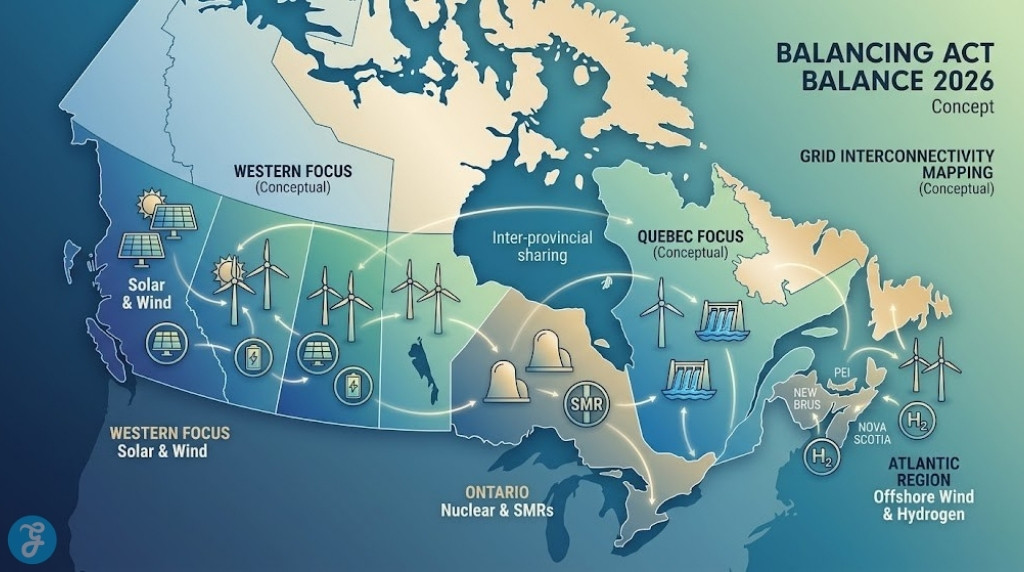
Ontario is doubling down on nuclear power to meet its massive baseload requirements in 2026. The province is currently moving forward with the first of four Small Modular Reactors (SMRs) at the Darlington site, which represents a global first in commercial SMR deployment. This is paired with the early-stage planning for a major expansion at Bruce Power, which could eventually become the largest nuclear facility in the world.
Best for: Industrial sectors and urban centers that require a steady, weather-independent supply of carbon-free power.
Why We Chose It:
-
It provides a high-density energy source that does not require the massive land use of wind or solar.
-
It supports Ontario’s goal of being a global hub for SMR technology exports.
-
It addresses the supply gap created by the retirement of coal and the refurbishment of older reactors.
Things to consider: Nuclear projects carry high upfront costs and long timelines compared to rapid-deployment solar or wind arrays.
2. Quebec’s Strategic Pivot Toward Wind Power
Hydro-Québec surprised the energy sector in early 2026 by shifting its long-term strategy away from building more large-scale dams. Instead, the utility is launching a massive procurement drive for wind power to meet the 3,000 MW requirement needed to keep up with industrial growth. This change acknowledges that wind is now the fastest and most cost-effective way to add capacity to a hydro-heavy system.
Best for: Rapidly expanding the grid to support new data centers and battery manufacturing plants.
Why We Chose It:
-
Wind power perfectly complements existing hydro reservoirs, which can act as a giant battery when the wind isn’t blowing.
-
The 2026 strategy prioritizes local manufacturing in the Gaspé region.
-
It allows the province to hit short-term targets without the 15-year wait for a new hydro dam.
Things to consider: Integrating large amounts of wind requires significant upgrades to transmission lines in remote areas.
3. Alberta’s Renewables 2.0 and Solar Integration
Following a period of regulatory review, Alberta has entered its “Renewables 2.0” phase in 2026. The province is now focusing on the integration of a record-breaking 2.5 GW of solar capacity that came online over the last two years. The new provincial rules emphasize grid stability and land-use protection, ensuring that the solar boom does not come at the expense of prime agricultural land.
Best for: Farmers and rural municipalities looking for diversified income through land leases and local tax revenue.
Why We Chose It:
-
Alberta has the best solar resource in Canada, making these projects highly efficient.
-
The 2026 focus shifted toward adding battery storage to help balance the peaks of solar production.
-
It maintains Alberta’s lead as the most attractive market for corporate power purchase agreements (PPAs).
Things to consider: New regulations for reclamation bonds mean higher initial security costs for project developers.
4. British Columbia’s First “Call for Power” in 15 Years
BC Hydro has officially launched its first competitive bid for new clean energy in over a decade. By late 2026, the utility expects to have secured 3,000 GWh of annual power, primarily from wind and solar projects. This move is a response to the massive demand from the mining and LNG sectors as they attempt to electrify their operations to meet federal emissions caps.
Best for: New independent power producers (IPPs) looking to break into the BC market after years of stagnation.
Why We Chose It:
-
It ends a 15-year pause in new clean energy development in the province.
-
The bid process includes a mandatory minimum of 25% Indigenous equity ownership.
-
It targets projects that can be built quickly to meet the 2028-2030 supply crunch.
Things to consider: Projects must be able to hook into the existing grid without requiring multi-billion-dollar transmission expansions.
5. Atlantic Offshore Wind and Green Hydrogen Hubs
Nova Scotia and Newfoundland have moved past the pilot phase and into full-scale legislative support for offshore wind in 2026. The primary goal is not just to power local homes, but to use the massive wind resource in the North Atlantic to create green hydrogen for export to Europe. This strategy leverages deep-water ports and existing shipping lanes to create a new energy economy in the Maritimes.
Best for: Coastal communities in the Atlantic provinces looking for long-term industrial employment.
Why We Chose It:
-
The wind speeds in the Atlantic are among the most consistent and powerful in the world.
-
It creates a path for Atlantic Canada to become a global leader in green hydrogen technology.
-
It aligns with the 2026 federal goals for clean energy exports.
Things to consider: The technology for green hydrogen production at scale is still maturing, and initial costs are high.
6. Indigenous Equity and Majority Ownership Models
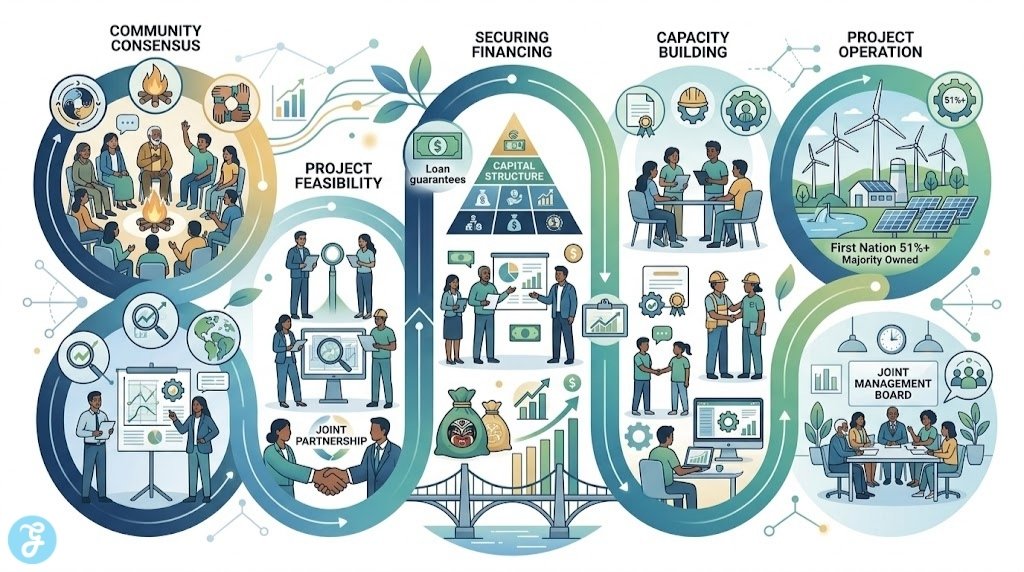
A key trend in 2026 is the shift from Indigenous “consultation” to “majority ownership.” Across Saskatchewan and the Maritimes, First Nations are now taking 51% or higher stakes in major wind and solar projects. This model ensures that the economic benefits of the energy transition stay within local communities and provide a steady stream of revenue for decades.
Best for: Ensuring long-term social license and economic reconciliation through energy development.
Why We Chose It:
-
It provides the most stable path for project approvals and community support.
-
The 2026 federal budget included new loan guarantees specifically for Indigenous energy ownership.
-
It helps close the economic gap for remote communities that currently rely on expensive diesel power.
Things to consider: Building the internal capacity to manage large-scale energy assets requires significant initial investment in training.
7. The Push for Inter-Provincial Grid Connectivity
Provinces are finally addressing the “energy silos” that prevent them from sharing clean power across borders. In 2026, new progress on the Atlantic Loop and enhanced BC-Alberta connections has moved from the boardroom to the field. These projects are designed to move surplus hydro power into provinces when their wind or solar production is low, creating a more resilient national grid.
Best for: Reducing the overall cost of the energy transition by sharing existing resources.
Why We Chose It:
-
It is the only way to meet 2035 net-zero targets without over-building capacity in every single province.
-
The 2026 updates to the federal Clean Electricity Regulations have prioritized these cross-border links.
-
It provides a backup system for provinces during extreme weather events.
Things to consider: Political disagreements over cost-sharing between provinces can still delay these projects by years.
An Overview Of 7 Renewable Energy Goals by Canadian Provinces for a Greener Future
The provincial energy race is no longer a slow crawl but a high-speed sprint toward a electrified economy.
Overview Comparison Table
The comparison below highlights how the primary energy regions are positioning themselves to meet the 2026 supply requirements.
| Region | Strategy Focus | Primary Barrier | Target Impact |
| Western Canada | Private Solar and Wind | Grid Stability | Rapid Growth |
| Central Canada | Nuclear and SMRs | High Capital Cost | Baseload Security |
| Quebec | Integrated Hydro/Wind | Remote Transmission | Industrial Growth |
| Atlantic Canada | Offshore Wind/Hydrogen | Technology Maturity | Global Export |
Our Top 3 Picks and Why?
Of the seven strategies, Ontario’s SMR Rollout, Quebec’s Wind Pivot, and Indigenous Equity Models are the most influential. Ontario is proving that nuclear can be built in smaller, more manageable stages. Quebec is showing how to integrate variable wind into a stable hydro system. Most importantly, the Indigenous ownership model is changing the social and economic fabric of energy development, making the transition more equitable for everyone involved.
How to Choose the Right Renewable Energy Goals by Canadian Provinces for Your Business or Home?
Deciding how to align with these provincial shifts depends on your location and your long-term energy needs.
The Selection Framework:
-
Check the Local Incentives: Review your provincial utility’s 2026 rebate programs for heat pumps or EV chargers.
-
Evaluate Your Baseload: If your business runs 24/7, look for provinces like Ontario or Quebec that prioritize stable nuclear or hydro.
-
Look for PPA Opportunities: If you are in Alberta, investigate corporate power purchase agreements to lock in green energy at a fixed price.
-
Audit Your Grid Connection: Ensure your local distribution network can handle the two-way flow of power if you plan on adding solar.
Decision Matrix:
The summary below helps you determine which provincial strategy best suits your investment or living goals.
| If you prioritize… | Then look for provinces with… |
| Lowest Carbon Intensity | High Hydro and Nuclear focus (Quebec/Ontario). |
| Rapid Market Access | Competitive private developer models (Alberta/Saskatchewan). |
| Long-term Export Potential | Coastal hydrogen and offshore wind hubs (Nova Scotia/Newfoundland). |
The Final Checklist
-
Has your local province signed on to the 2026 federal Clean Electricity Regulations?
-
Does your local utility offer a “net-metering” program for home or business solar?
-
Are there Indigenous-led energy projects in your region that offer community investment?
-
Is your province currently upgrading its transmission lines to support new wind or solar?
-
Have you checked the 2026 provincial budget for new green energy tax credits?
The Path Toward a Net-Zero Canadian Grid
The race to hit renewable energy targets in 2026 has transformed from a purely environmental goal into a major economic engine. By moving away from monolithic projects and toward a mix of nuclear, wind, and solar, provinces are building a more flexible and resilient system. The success of this transition will not just be measured in megawatts, but in how effectively these projects create local jobs and involve the communities that host them. As the 2030 deadline approaches, the provinces that moved first on these smart strategies will be the ones that enjoy the most stable and affordable power in North America.