
Modern software environments evolve quickly, and version-specific tools often raise questions about purpose, stability, and real-world value. One such release drawing attention is refixs2.5.8a, a version that users frequently encounter while managing systems, workflows, or specialized digital processes.
This article provides a clear, professional explanation of refixs2.5.8a, focusing on what it is, how it functions, and why it matters. The goal is not promotion, but clarity helping readers understand whether this version is relevant to their needs and how to approach it responsibly.
Written from a technical and practical perspective, this guide is designed for beginners and experienced users alike, using simple English without oversimplifying important details.
Understanding refixs2.5.8a
What refixs2.5.8a Represents
refixs2.5.8a is a specific software release identified by a structured version number. The numbering indicates that it is not an early build, but a later-stage iteration developed after multiple revisions. Such versions typically focus on refinement rather than foundational changes.
In practice, refixs2.5.8a is designed to improve reliability, correct previously identified issues, and optimize performance under real usage conditions. It is commonly used in environments where consistency and predictable behavior are more important than experimental features.
Why Version Precision Matters
Software versions are not labels added at random. The exact format of refixs2.5.8a communicates technical intent. The core number reflects the main architecture, while the trailing revision signals adjustments that may include stability improvements, compatibility updates, or minor functional refinements.
For users, this precision helps determine whether refixs2.5.8a is suitable for deployment in production environments or better reserved for controlled testing scenarios.
Key Functional Characteristics of refixs2.5.8a
Stability-Oriented Design
One of the defining characteristics of refixs2.5.8a is its emphasis on stability. Rather than introducing major new capabilities, this version focuses on ensuring that existing functionality performs consistently across different usage conditions.
This makes refixs2.5.8a particularly useful in workflows where interruptions or unpredictable behavior could cause operational delays or data inconsistencies.
Performance Optimization
Another notable aspect of refixs2.5.8a is its attention to performance efficiency. Refinements at this stage often involve reducing unnecessary processing overhead and improving how the system handles repetitive tasks.
These optimizations may not always be visible at first glance, but over extended use they contribute to smoother operation and reduced system strain.
Compatibility Awareness
refixs2.5.8a is typically designed with backward compatibility in mind. This allows it to function alongside existing configurations without forcing immediate structural changes. For organizations or individuals managing legacy systems, this approach reduces friction during upgrades.
Practical Use Cases for refixs2.5.8a
Controlled Production Environments
In production settings where reliability is critical, refixs2.5.8a is often selected because it represents a mature stage of development. Teams rely on such versions when they need predictable behavior over extended periods.
This makes refixs2.5.8a suitable for long-running processes that cannot afford frequent updates or unexpected changes.
Testing and Validation Scenarios
While stability is a strength, refixs2.5.8a is also valuable in testing environments. It provides a reference point against which newer versions can be evaluated. By comparing behavior and output, teams can identify whether newer releases deliver meaningful improvements.
Using refixs2.5.8a as a baseline helps isolate variables during testing and simplifies troubleshooting.
Maintenance-Focused Deployments
For systems in maintenance mode, where the goal is continuity rather than expansion, refixs2.5.8a offers a balanced solution. It supports ongoing operations without introducing unnecessary complexity.
Installation and Configuration Considerations
Preparation Before Deployment
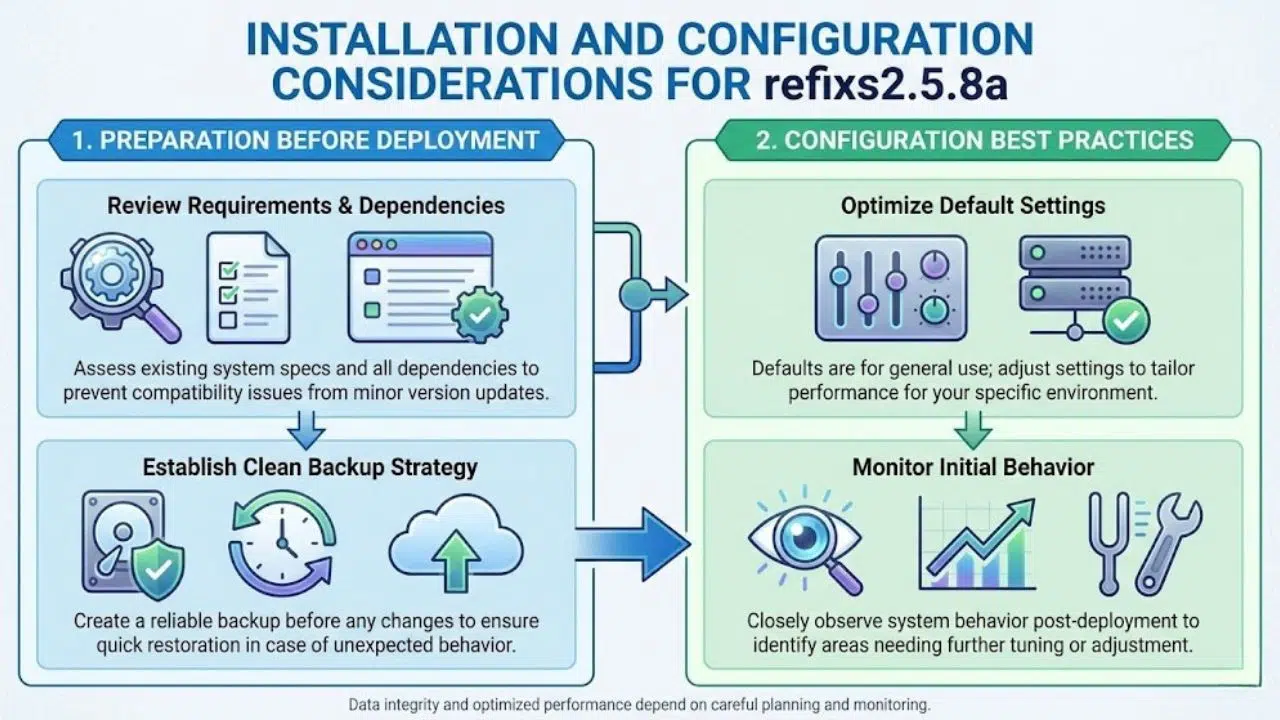
Before implementing refixs2.5.8a, it is important to review existing system requirements and dependencies. Even minor version updates can introduce subtle changes that affect compatibility.
A clean backup strategy is essential. This ensures that systems can be restored quickly if unexpected behavior occurs after installation.
Configuration Best Practices
Proper configuration plays a significant role in how effectively refixs2.5.8a performs. Default settings are typically optimized for general use, but specific environments may benefit from adjustments.
Monitoring system behavior during the initial deployment phase helps identify whether further tuning is required.
Common Challenges and How to Address Them
Misaligned Expectations
One common issue with refixs2.5.8a arises when users expect dramatic feature additions. This version is primarily about refinement, not transformation. Understanding this prevents disappointment and helps align expectations with reality.
Integration Issues
Although refixs2.5.8a is designed for compatibility, integration challenges can still occur if surrounding systems are outdated or heavily customized. Gradual deployment and staged testing help minimize these risks.
Maintenance Oversight
Like any software version, refixs2.5.8a requires ongoing monitoring. Ignoring logs or performance metrics can allow minor issues to escalate over time.
Security and Reliability Perspective
Security Posture of refixs2.5.8a
Security considerations are often addressed incrementally in later-stage releases. refixs2.5.8a typically includes refinements that close known gaps identified in earlier versions.
However, it should still be part of a broader security strategy that includes regular audits and access controls.
Long-Term Reliability
Reliability is not only about how software performs today, but how it behaves over months or years. refixs2.5.8a is generally chosen for environments where long-term consistency is required.
Its conservative approach to change supports predictable outcomes, which is essential for mission-critical operations.
Comparison with Earlier Releases
Earlier versions often focus on introducing features and testing new ideas. By contrast, refixs2.5.8a reflects a phase where feedback has been incorporated and unnecessary complexity reduced.
This evolution explains why many users prefer refixs2.5.8a when stability outweighs novelty. It represents accumulated learning rather than experimental ambition.
Frequently Asked Questions
What is refixs2.5.8a used for?
refixs2.5.8a is used as a stable software release focused on performance refinement and reliability. It is commonly deployed in environments where predictable behavior and long-term consistency are more important than introducing new features.
Is refixs2.5.8a suitable for production systems?
Yes, refixs2.5.8a is generally suitable for production use, especially in systems that prioritize stability. Its design emphasizes consistency and controlled performance rather than experimental functionality.
Does refixs2.5.8a include major new features?
No, refixs2.5.8a primarily focuses on refinements, optimizations, and fixes. Users should not expect major feature additions, but rather improvements in how existing functions perform.
How does refixs2.5.8a differ from earlier versions?
The main difference lies in maturity. refixs2.5.8a builds on previous releases by addressing known issues and improving reliability, making it more dependable for sustained use.
Can refixs2.5.8a be integrated with older systems?
In most cases, yes. refixs2.5.8a is designed with backward compatibility in mind, though testing is recommended to ensure smooth integration with customized or legacy environments.
Final Thoughts
refixs2.5.8a represents a thoughtful stage in software development where refinement takes priority over rapid change. Its focus on stability, performance efficiency, and compatibility makes it a practical choice for controlled environments and long-term deployments.
By understanding what refixs2.5.8a is designed to deliver and what it intentionally avoids users can make informed decisions about adoption and configuration. When implemented with realistic expectations and proper oversight, this version can provide dependable performance and operational confidence.
For professionals evaluating refixs2.5.8a, the key is alignment: matching the software’s strengths with the actual needs of the system it supports.