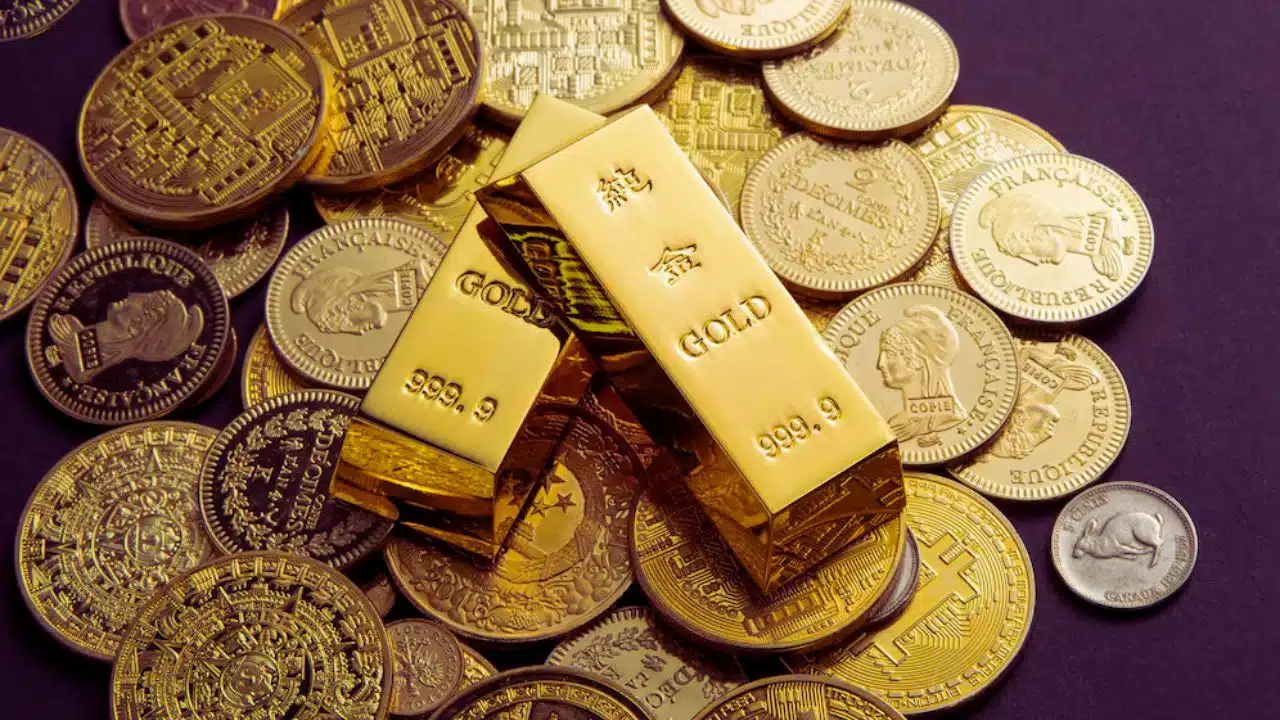
Gold prices have reached impressive highs this year, hitting a record-breaking $2,772 per troy ounce. This consistent rally has now extended across six of the past seven weeks, making gold one of the most resilient investments in today’s market. Year-to-date gains of 33% mean gold has outperformed the broader stock market by about 10 percentage points, outpacing even high-performing indices like the Nasdaq 100. Since October 2022, when the bull market took off in stocks, gold has continued to surpass the S&P 500, showing returns of 67% against the S&P’s 63%, based on data from YCharts.
Gold’s superior returns have established it as a highly sought-after asset, drawing interest from investors and central banks alike. This demand is reflected in the SPDR Gold Shares ETF—the world’s largest gold ETF—which currently holds $78 billion in assets under management, including a $5 billion increase over the past six months. Physical gold demand has surged, with major retailers like Costco reportedly selling out of gold bars each time they’re listed online. Wells Fargo estimates Costco alone sells up to $200 million in gold bars and silver coins each month, showcasing strong consumer demand for tangible gold as a reliable store of value.
Central Banks’ Gold Buying Frenzy Fuels Demand
One significant factor driving gold’s upward trajectory is the active buying by central banks worldwide, many of whom are looking to diversify their reserves away from the US dollar. The World Gold Council reports that in the first half of 2025 alone, central banks purchased a record 483 tons of gold, making it one of the most active years on record. Countries like Turkey, India, and China are leading the charge, collectively accounting for a significant portion of these purchases.
This trend is partly fueled by concerns about the US dollar’s reliability. Since the mid-2022 surge in central bank gold buying, demand has tripled. Goldman Sachs recently highlighted this shift as a structural response to fears surrounding US financial sanctions and rising US sovereign debt. This heightened demand is particularly visible since Russia’s invasion of Ukraine, after which the US implemented strict sanctions to exert economic pressure on Russia. But gold’s appeal for countries like Russia lies in its independence from the dollar-dominated financial system, making it more challenging for the US to implement effective sanctions.
Economist Mohamed El-Erian underscored the significance of this trend, noting that the continued rise in gold ownership “captures an increasingly persistent behavioral trend among China and ‘middle power’ countries.” These nations appear to be seeking a hedge against the dollar’s influence by building reserves in gold. Some countries are also exploring alternatives to dollar-based payment systems, which have been the cornerstone of global finance for the past 80 years. This de-dollarization movement has gained traction, particularly in light of Russia’s ability to withstand US sanctions by stabilizing its economy around non-dollar assets like gold. Such moves by Russia, China, and other nations may continue to weaken the dollar’s dominance, potentially signaling a gradual transformation in the global financial landscape.
Gold as a Safe-Haven Amid Rising Geopolitical Risks
Gold has historically served as a “safe-haven” asset due to its stability, particularly during periods of geopolitical tension. This year, global investors have leaned on gold amid an array of conflicts and political uncertainties. Russia’s ongoing war in Ukraine, escalating violence in the Middle East, and China’s continued threats toward Taiwan’s independence have all contributed to an increasingly unstable geopolitical environment. This climate has encouraged investors to seek security in gold, which is often seen as a hedge against international crises.
A notable development adding to gold’s allure as a safe-haven investment is the mounting US debt, which has cast doubt on US Treasuries as a guaranteed safe asset. Traditionally, investors have turned to Treasuries in times of uncertainty, but rising national debt is complicating this option. Bank of America recently described gold as possibly the “last safe-haven asset standing,” an endorsement that has resonated with both individual and institutional investors. With other traditional safe assets becoming less predictable, central banks and investors alike are showing increased interest in gold as a risk-averse option during turbulent times.
Political Uncertainty and Economic Pressures in the US
The approaching US presidential election has also contributed to the rise in gold prices. As former President Donald Trump’s odds of re-election increase, so too does market concern around potential fiscal policies that could significantly impact the economy. Investors anticipate that a Trump-led administration might implement policies leading to increased government spending and higher debt accumulation, which would put pressure on the dollar and potentially drive inflation upward. This scenario positions gold as a more attractive investment, especially among those wary of fiscal instability.
David Oxley, an economist at Capital Economics, suggested that fears of “fiscal profligacy, financial repression, and attacks on Fed independence” under a potential Trump administration make gold an appealing hedge for investors. However, even if Trump doesn’t secure the presidency, the rising deficit is likely to remain an issue. Steve Sosnick, chief strategist at Interactive Brokers, emphasized that neither presidential candidate appears particularly focused on fiscal restraint, which further strengthens the case for gold as a long-term investment. If US economic policies remain expansionary, gold could see sustained growth as investors look for stable, non-dollar-based assets.
Interest Rates and Gold’s Momentum
Historically, lower interest rates have served as a tailwind for gold prices, with the precious metal often experiencing an uptick as borrowing costs fall. Following the Federal Reserve’s recent rate cut, data from the World Gold Council shows that gold typically rises by up to 10% in the six months after the Fed initiates rate cuts. Although the 10-year US Treasury yield recently hit a peak, gold prices have continued to climb, suggesting that investors are looking beyond US rate hikes to a global trend of falling interest rates.
Central banks globally seem to be moving toward looser monetary policies to address economic slowdowns. The People’s Bank of China recently lowered rates by 25 basis points, followed by the Bank of Canada’s 50-basis-point cut. The European Central Bank also reduced rates by 25 basis points, and the Bank of England is expected to follow suit with even more aggressive cuts. Given this global environment, gold’s upward momentum is likely to persist as more central banks shift to accommodative policies.
As the US Federal Reserve signals further rate cuts, lower borrowing costs are expected to make gold an even more appealing option for investors, both at home and abroad. With this trend likely to continue, gold’s status as a viable alternative to traditional assets like stocks and bonds seems increasingly secure, particularly as global economies navigate complex and unpredictable conditions.
Gold’s Future in a Shifting Financial Landscape
In the face of growing economic uncertainty, gold remains one of the most attractive options for investors seeking a stable and reliable asset. The combination of strong demand from central banks, rising geopolitical tensions, fiscal uncertainties in the US, and a global trend toward lower interest rates all contribute to gold’s current appeal. Analysts widely expect that these factors will continue to support gold’s growth as both individual and institutional investors prioritize safety in today’s unpredictable financial climate.
As the US dollar’s global influence appears to wane, gold’s role as a trusted store of value becomes even more significant, particularly for countries and investors seeking alternatives. While the US financial system remains highly influential, the de-dollarization movement could lead to a more fragmented international financial structure, with gold serving as a key anchor in this evolving landscape. For now, the “yellow metal” shows no signs of slowing, positioning it as a long-term haven for investors and a potential tool for nations looking to diversify beyond dollar-dominated assets.