

Tokenization has moved from slogan to infrastructure. For years, it sat in pitch decks as a promise to “put everything on-chain.” Today, there are real-world projects using tokenization to issue bonds, run money market funds, trade carbon credits, and fractionalize hotels, houses, art, and royalties.
This piece takes a look at 18 real-world tokenization projects that are live, funded, and used by actual investors or customers. Together, they show how far the market has come, and where the frictions still lie.
Why Real-World Projects Using Tokenization Matter Now
From crypto novelty to market infrastructure
The first wave of blockchain stories focused on cryptocurrencies. The current wave is quieter but more consequential. Real-world tokenization projects apply the same technology to familiar assets: government bills, corporate debt, rental homes, vault gold, carbon offsets, or loyalty points.
Instead of reinventing money, these projects digitise ownership records, cash flows, and collateral. They promise faster settlement, lower operational costs, and smaller minimum tickets. More importantly, they make previously closed markets – like institutional liquidity or fine art – reachable for a wider investor base.
For regulators, that shift cuts both ways. Tokenization can improve transparency and auditability, but it also creates new custody, cybersecurity, and disclosure questions. That tension explains why many of the flagship projects sit in tightly controlled “sandbox” environments, even while they run on public chains.
What tokenization actually means in practice
In practice, most real-world tokenization projects follow a similar pattern:
-
A legal wrapper (fund, special purpose vehicle, or trust) holds the underlying assets.
-
The wrapper issues digital tokens that represent units, shares, or claims.
-
A transfer agent or smart contract manages issuance, transfers, redemptions, and sometimes distributions.
-
Compliance checks – know-your-customer, sanctions, investor categories – are embedded in the access rules for those tokens.
The result is not a wild west experiment, but another way to structure, track, and distribute assets and liabilities. With that context, we can look at concrete asset tokenization examples across sectors.
How These Real-World Tokenization Projects Were Chosen
The 18 examples below are not a ranking. They have been selected because they meet three simple criteria:
-
Real assets, not theory. Each project ties tokens to identifiable underlying assets or cash flows.
-
Live deployments. The tokens have been issued and used, not just announced.
-
Diverse sectors. Together, they cover funds, bonds, real estate, commodities, climate, culture, loyalty, and SME finance.
The list mixes household financial brands with newer specialists. That blend reflects the current state of play: established institutions bring balance sheets and regulatory reach; crypto-native firms bring speed and experimentation.
1. BlackRock BUIDL – Tokenizing Institutional Liquidity
How the project uses tokenization
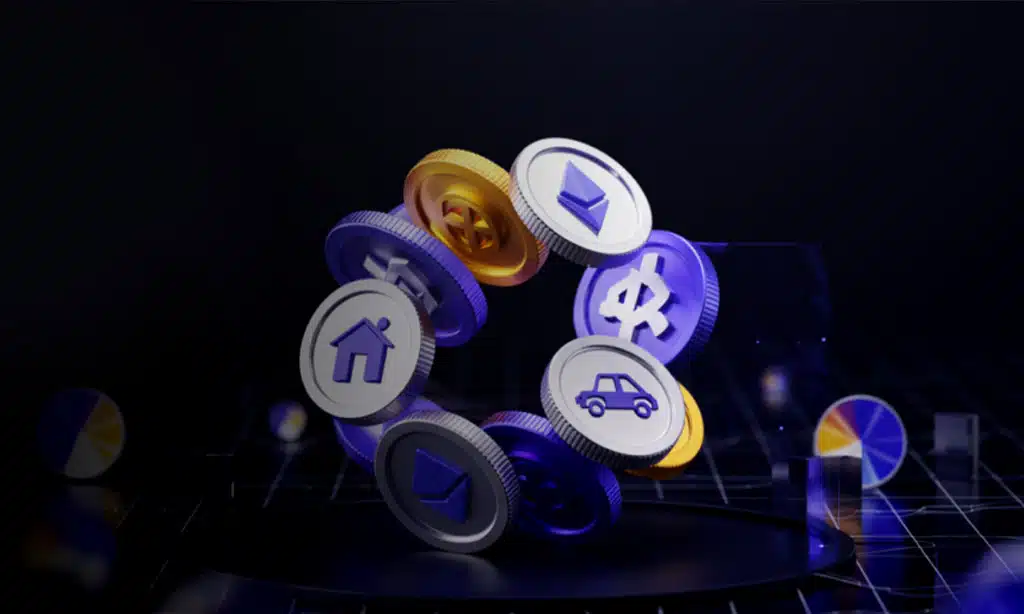
BlackRock’s USD Institutional Digital Liquidity Fund, commonly known as BUIDL, is one of the clearest real-world projects using tokenization in mainstream finance. The fund invests in short-term, high-quality instruments such as US government bills and repo. Instead of maintaining a traditional share register only, the fund issues tokenized units on a public blockchain.
Investors subscribe through a regulated intermediary. Their holdings are recorded simultaneously in conventional books and as on-chain tokens. Interest accrues daily and is reflected directly in the token balance or value. Large crypto platforms already accept BUIDL tokens as collateral for trading and lending, closing the loop between traditional instruments and digital markets.
Why it matters
BUIDL demonstrates that tokenization can operate at an institutional scale with a familiar risk profile. It also shows a pragmatic approach: the structure preserves regulatory oversight and off-chain record-keeping, while using tokens for programmability and composability.
For other asset managers, it is a signal. If the largest players are comfortable issuing tokenized liquidity products, pressure will rise on peers to offer similar exposure.
2. Franklin Templeton’s Tokenized Money Market Platform
Tokenizing regulated funds across regions
Franklin Templeton has quietly become a reference name among real-world tokenization projects. Through its Benji platform and related strategies, the firm operates money market funds whose registers live on blockchains such as Stellar and other institutional networks.
In the United States, investors access a government money fund where each share corresponds to a token entry on-chain. In Europe, an on-chain government fund operates under a regulated UCITS structure. The underlying portfolios look traditional – government securities and cash – but the shareholder registry and transfer mechanics use tokenization.
Lessons from this asset tokenization example
Franklin Templeton’s work illustrates several practical points:
-
Tokenization can sit inside conventional fund wrappers without disturbing their regulatory perimeter.
-
Transfer agents and custodians remain central, but their roles are digitised rather than removed.
-
Investors do not need to be “crypto users” to benefit from faster, more transparent record-keeping.
For business readers, this is a template for how to modernise without re-inventing the legal stack.
3. DBS–Franklin Templeton sgBENJI – Tokenized Retail Fund in Singapore
Opening tokenization to wealth and retail clients
In Singapore, Franklin Templeton and DBS Bank have launched sgBENJI, a tokenized money market fund distributed through the bank’s wealth channels, with retail access planned in stages. Units in the fund are represented on a blockchain register while remaining subject to local securities rules.
Rather than marketing itself as a crypto product, sgBENJI is positioned as a familiar cash management tool with an upgraded record-keeping layer. Over time, DBS aims to allow eligible clients to trade, lend, and potentially pledge the tokens as collateral across its digital exchange and third-party venues.
Why this real-world tokenization project matters
The collaboration shows how banks can integrate tokenized funds into existing advisory and distribution workflows. It also hints at an emerging model in Asia: regulated wealth platforms treat tokenized funds as an infrastructure choice, not a speculative theme.
4. UBS uMINT – A Tokenized USD Money Market Investment Fund
How uMINT works
UBS Asset Management’s uMINT is a tokenized version of a USD money market strategy. The fund is built on a blockchain network, and eligible investors access it through authorised distributors. Tokens represent claims on an underlying portfolio of high-quality short-term instruments, designed to match the risk profile of conventional cash management products.
What it signals
uMINT reinforces a broader pattern: global asset managers use tokenization to modernise operational plumbing while keeping risk appetites conservative. For corporate treasurers and institutional investors, these projects indicate that tokenized cash and near-cash instruments will likely become routine over the medium term.
5. Goldman Sachs & BNY Mellon – Tokenized Money Market Funds on GS DAP
A closed-loop design for institutional clients
Goldman Sachs has developed GS DAP, a private blockchain platform for issuing and managing digital securities. BNY Mellon has integrated its LiquidityDirect cash management platform with GS DAP to support tokenized money market funds for institutional clients.
In this case, tokenization remains inside a controlled environment. Tokens mirror positions in underlying funds rather than circulating freely on public networks. They serve to streamline subscription, redemption, and internal settlement between large institutions.
Trade-offs and implications
This real-world tokenization project shows the more conservative end of the design spectrum:
-
Pros: Familiar governance, strong control over participant onboarding, and easier alignment with existing rules.
-
Cons: Limited composability with the broader digital asset ecosystem and less innovation around collateral usage.
For banks and custodians, it illustrates how to experiment without fully embracing open DeFi.
6. Ondo Finance OUSG – Tokenized U.S. Treasuries
Converting Treasury exposure into on-chain yield
Ondo Finance focuses on bringing real-world yield to digital markets. Its flagship product, OUSG, represents interests in short-term US Treasury portfolios. Eligible investors subscribe through a regulated structure; on the other side, they hold tokens that move on public blockchains and can plug into DeFi protocols.
OUSG has been deployed on several networks, including enterprise-oriented ledgers. The tokens accrue yield from the underlying Treasuries and can be used as collateral in onchain lending and structured products.
Why OUSG is a landmark real-world tokenization project
This is one of the clearest asset tokenization examples where:
-
Underlying exposure is plain – government bills.
-
Token mechanics are transparent – subscriptions, redemptions, and accruals follow clear rules.
-
Onchain integrations are deep – OUSG is plugged into multiple DeFi applications.
For businesses, OUSG showcases how a regulated product can still benefit from the liquidity and programmability of open blockchain networks.
7. European Investment Bank – Digital Bonds on Public and Private Chains
Issuing a supranational bond on Ethereum
The European Investment Bank (EIB), the lending arm of the European Union, issued a €100m two-year bond recorded directly on the Ethereum blockchain. Instead of a traditional central securities depository, the bond existed as digitally native tokens on-chain.
Investment banks underwrote the deal, and central bank money was represented on a distributed ledger for settlement. Later issuances extended the model to private blockchain platforms and experiments with wholesale central bank digital currency.
Lessons from the EIB’s experiments
The EIB’s work shows that:
-
Tokenization can coexist with established underwriting and distribution roles.
-
Digital bonds can shorten settlement timelines and simplify reconciliation.
-
Public and private networks can both host serious, regulated issuance.
For corporate and public issuers, the EIB provides a proof-of-concept that goes beyond pilot slides.
8. Siemens Digital Bonds – Corporate Debt on DLT
From issuance to secondary trading
German industrial group Siemens has issued digital bonds using blockchain technology, including a large €300m corporate bond recorded on a permissioned network. More recently, the company executed secondary market trades of that bond on a regulated digital exchange platform.
The tokens represent standard bond economics – coupon, maturity, and redemption – but the life cycle, from allocation to secondary transfers, runs through distributed ledger infrastructure.
Why this real-world project using tokenization matters
Siemens bridges two gaps:
-
It shows corporate issuers that tokenization is not limited to sovereign or supranational bodies.
-
It demonstrates that secondary markets for tokenized debt can function inside regulated environments.
For treasurers, the key takeaway is that digital issuance can reduce intermediaries in the settlement chain while leaving the credit profile unchanged.
9. MakerDAO & Huntingdon Valley Bank – A Tokenized Loan Vault
Structuring a DeFi–bank collaboration
MakerDAO, a decentralised credit protocol, created a vault to provide up to $100m in DAI stablecoin funding to Huntingdon Valley Bank, a US-regulated institution. The bank originates commercial loans; those exposures are structured into a vehicle whose participation rights are reflected as on-chain positions backing the vault.
In simple terms, a stream of loan cash flows from the bank is mirrored in a tokenized structure that supports the issuance of DAI. Governance token holders approve parameters and risk frameworks.
What this teaches about real-world tokenization projects
This collaboration illustrates:
-
How DeFi protocols can take exposure to off-chain assets through legal wrappers and governance processes.
-
How banks can tap into new funding sources while remaining inside regulatory borders.
-
Where the frictions sit: data transparency, default management, and the alignment of on-chain voting with off-chain legal enforcement.
For business readers, it is a case study in cross-border innovation between decentralised and traditional finance.
10. Aspen Digital – Tokenizing the St. Regis Aspen Resort
A luxury hotel divided into digital securities
Aspen Digital created a tokenized offering tied to an equity stake in the St. Regis Aspen Resort, a high-end hotel in Colorado. Investors purchased digital securities that represented a slice of the property’s ownership, with a minimum allocation far below direct real estate acquisition.
The tokens were offered to accredited investors under securities exemptions and later admitted to trading on an alternative trading system. Behind the scenes, a corporate entity held the property; the tokens mapped to its equity.
Why this real-world tokenization project still matters
Aspen Digital remains a reference point for several reasons:
-
It demonstrated investor appetite for fractional exposure to “trophy” assets.
-
It highlighted the importance of clear investor rights, disclosures, and secondary liquidity.
-
It set an early standard for how to marry regulated offerings with token rails.
For property owners and developers, Aspen shows that tokenization can be used for capital raises, but the legal structuring remains crucial.
11. RealT – Fractional Rental Properties in US Cities
Turning homes into global micro-investments
RealT operates a platform that sells fractional interests in rental properties, primarily in American cities such as Detroit, Cleveland, and Chicago. Each property is held through a legal entity. Investors buy tokens that entitle them to a share of rental income and potential capital gains.
The real-world projects using tokenization here are highly granular: single-family homes and small multifamily units rather than large commercial towers. Minimum investments are often below $100, with returns paid out in stablecoins.
The other side of the story
While the model opened up access, investigative reporting and local coverage have highlighted governance and tenant-care challenges around some properties. Questions have emerged about property management standards, disclosure, and alignment between token holders and residents.
For editors and policymakers, RealT is a reminder that tokenization can amplify both positive and negative behaviours. Regulatory oversight, local housing policy, and investor education remain critical.
12. Mata Capital – Tokenized Real Estate Funds in France
Lowering ticket sizes through tokenization
French asset manager Mata Capital has used blockchain to modernise the way it distributes shares in real estate funds, including projects such as Paris hotel developments. By digitising fund units as tokens and shifting investor onboarding to digital workflows, the firm aims to reduce operational costs and lower minimum investment thresholds.
Asset tokenization examples from this project
Key features include:
-
Tokenized fund shares are recorded on-chain, with off-chain legal documentation.
-
A long-term goal of reducing the minimum subscription from institutional levels to amounts accessible to smaller investors.
-
Integration with professional service providers for custody, compliance, and audit.
For European managers, Mata Capital demonstrates a realistic step-by-step path rather than a radical overhaul.
13. Pax Gold (PAXG) – Tokenizing Allocated Gold Bars
One token, one troy ounce of vaulted gold
Pax Gold is a gold-backed token where each unit represents one fine troy ounce of London Good Delivery gold held in professional vaults. Holders have a direct claim on specific bars under the custody of a regulated trust company.
The tokens can be traded on digital asset venues, transferred between wallets, and, subject to conditions, redeemed for physical gold or cash equivalents. Pricing closely tracks spot gold markets.
Why tokenized gold is a flagship real-world tokenization project
Pax Gold simplifies access to fully allocated bullion without requiring investors to manage storage or logistics. It delivers:
-
Fractional ownership: investors can hold less than one bar.
-
Liquidity: tokens trade continuously on digital markets.
-
Transparency: the issuer publishes information about bar holdings and custody.
For metals dealers and wealth platforms, this provides a template for linking vaulted assets to digital distribution channels.
14. Toucan Protocol – Tokenized Carbon Credits
Bringing carbon credits on-chain
Toucan Protocol focuses on the tokenization of carbon credits from the voluntary carbon market. Validated credits are bridged onto a blockchain and represented as fungible tokens that each correspond to a verified tonne of carbon reduction or removal.
Once on-chain, these tokens can be traded, pooled into reference baskets, or “retired” to offset emissions. The process aims to reduce double-counting and make retirement traceable.
Why this matters for climate finance
Tokenized carbon credits illustrate how real-world tokenization projects can add transparency to markets that previously relied on fragmented registries and PDFs. At the same time, the model faces important questions:
-
How to ensure that on-chain tokens always correspond to valid, off-chain credits.
-
How to manage changing quality standards for climate projects.
-
How to avoid speculation overwhelming the environmental purpose.
For climate-focused businesses, this example shows both the promise and complexity of digitising environmental claims.
15. Masterworks – Fractional Tokens for Fine Art
Turning museum-grade art into investable slices
Masterworks acquires high-value artworks, securitises them, and sells fractional interests to investors. While the platform primarily speaks the language of “shares” and “offerings,” the underlying infrastructure leans on tokenization concepts: investors hold small, transferable units that track an underlying artwork’s value.
The model uses regulated offering structures, appraisal processes, and secondary trading windows on the platform. Investors gain exposure to a niche asset class that was previously the domain of high-net-worth collectors and institutions.
What this real-world tokenization project reveals
Masterworks shows that:
-
Token-like structures can open cultural assets to diversified portfolios.
-
Regulatory compliance and due diligence are central to investor trust.
-
Liquidity remains constrained by the art market’s own dynamics, regardless of the digital wrapper.
For cultural institutions or galleries, the project hints at ways to unlock capital without selling entire collections outright.
16. Tokenized Music Royalties – Platforms for Fan Ownership
Selling royalty slices as tokens
Several platforms allow artists or rights holders to sell fractional royalty interests in songs to fans. Buyers purchase tokens or token-backed instruments that entitle them to a share of future streaming or licensing income.
These real-world tokenization projects aim to:
-
Give artists upfront capital in exchange for part of their future income.
-
Let fans participate directly in the financial upside of music they support.
-
Create secondary markets for royalty rights, improving liquidity in what was once a very illiquid asset class.
Risks and regulatory questions
Experiments in this area have also exposed tensions:
-
Platforms must navigate securities law, intellectual property rights, and platform policies.
-
Some collections have faced restrictions on marketplaces, raising questions about liquidity and investor protection.
-
Valuation is complex and depends on long-term streaming behaviour, which can change quickly.
Still, tokenized royalties remain a powerful example of how tokenization can shift the relationship between creators, intermediaries, and audiences.
17. Tokenized Loyalty and Rewards – From Points to Portable Tokens
Upgrading loyalty schemes
Tokenized loyalty projects treat reward points as digital tokens that can move across partners and, in some cases, across chains. Instead of siloed databases for each airline, retailer, or bank, a shared ledger tracks balances, transfers, and redemptions.
In some pilots, customers earn tokens that can be redeemed with multiple partners, traded peer-to-peer, or even used as collateral in other digital applications. For brands, tokenization promises better data on customer behaviour and reduced reconciliation costs between partners.
Why this is a meaningful real-world tokenization project
Loyalty programmes sit at the intersection of finance, marketing, and data. Tokenization can:
-
Make points feel more tangible and valuable for customers.
-
Reduce breakage by making redemption easier and more flexible.
-
Enable new coalition programmes where multiple brands share a common token.
At the same time, most deployments remain careful pilots. Issues such as consumer protection, tax treatment of rewards, and the risk of speculative trading must be addressed before tokenized loyalty becomes standard.
18. Centrifuge – Tokenizing Invoices, Credit, and Funds for SME Finance
Asset-agnostic tokenization for real-world financing
Centrifuge provides infrastructure for bringing diverse real-world assets – such as invoices, trade receivables, real estate, and revenue-based finance – into on-chain lending pools. Asset originators tokenise their exposures, often as non-fungible tokens that represent specific claims. Those positions feed into structured pools funded by investors.
Investors, in turn, hold pool tokens that reflect diversified exposure to underlying loans or receivables. Smart contracts handle interest, principal repayments, and loss waterfalls.
Why this is a key real-world tokenization project
Centrifuge stands out because it is not tied to a single asset class. Instead, it shows how tokenization can:
-
Extend credit to small and medium-sized businesses by unlocking new liquidity channels.
-
Improve transparency around collateral performance through on-chain data.
-
Serve as infrastructure for third-party tokenized products, including index-style funds.
For lenders, fintechs, and asset managers, Centrifuge offers a blueprint for using tokenization as a capital markets tool rather than a marketing slogan.
What These Real-World Projects Using Tokenization Tell Business Leaders
Common patterns across successful projects
Looking across these 18 real-world tokenization projects, several patterns emerge:
-
Regulation first, technology second. The projects that gain traction tend to start from legal and regulatory design, then use tokens to improve execution.
-
Conservative underlying assets. Many early successes involve low-risk, well-understood assets such as government bills, money market funds, or fully allocated gold.
-
Hybrid architectures. Most initiatives combine off-chain governance and on-chain tokens, rather than trying to move everything into smart contracts at once.
-
Distribution and integration. The real value often lies in plugging tokenized assets into existing distribution networks, trading venues, or DeFi protocols, not merely in “minting a token.”
How to evaluate tokenization opportunities
For businesses considering their own real-world tokenization projects, a few practical questions help cut through the noise:
-
What problem are we solving? Faster settlement, lower minimums, better transparency, new investor segments, or all of the above?
-
Which assets genuinely benefit? Illiquid, operationally complex assets tend to gain the most. Liquid, exchange-traded instruments may see fewer advantages.
-
How will we handle governance and risk? Tokenization does not remove credit, market, or operational risk; it changes how those risks are packaged and monitored.
-
Who are the partners? Legal counsel, custodians, technology providers, and distribution platforms all matter as much as the chain chosen.
The road ahead
Taken together, these asset tokenization examples show that the shift is already underway. Bonds, funds, property, gold, carbon, and royalties are being sliced into programmable digital units, often under the supervision of regulators and established institutions.
For editors, policymakers, and business leaders, the key question is no longer whether tokenization will play a role, but how quickly it will move from pilot projects to the default way assets are issued, traded, and reported. The answer will depend less on technology and more on trust, governance, and the ability of these real-world projects using tokenization to deliver day-to-day value without adding new complexity.































