


Prince Harry and Meghan Markle, through their Archewell Foundation, have issued a strongly-worded statement criticizing Meta’s recent policy changes, which include an overhaul of its fact-checking mechanisms and adjustments to its content moderation policies. Their concerns underscore the potential risks of these decisions, particularly for marginalized communities and the broader democratic process.
The Duke and Duchess of Sussex specifically addressed Meta’s modifications to its “Hateful Content Policies” and its decision to reduce commitments to diversity, equity, and inclusion (DEI). According to the couple, these shifts could foster an online environment that allows harmful content, such as hate speech and abuse, to proliferate unchecked, undermining the values of free speech and public safety.
“Meta’s changes to its ‘Hateful Content Policies’ do not protect free expression but instead foster an environment where abuse and hate speech silence and threaten the voices of whole communities who make up a healthy democracy,” the couple said in their statement. They added that the rollback of DEI commitments is equally troubling, as it could weaken safeguards meant to protect vulnerable groups online.
Meta’s Controversial Decisions: What Has Changed?
Meta, the parent company of Facebook, Instagram, and WhatsApp, has implemented several major changes to its content policies. Notably, the company has announced plans to scale back its reliance on third-party fact-checkers, instead shifting to a “Community Notes” system, modeled after the one used by X (formerly Twitter). The “Community Notes” feature allows users to collaboratively add context or corrections to posts, ostensibly to provide a more democratic approach to content moderation.
In addition, Meta has eased restrictions on certain types of speech, including controversial topics related to gender identity and sexual orientation. While the company maintains that these changes are intended to promote free expression and reduce bias in moderation, critics argue they could pave the way for increased misinformation and abuse.
Meghan Markle, who recently rejoined Instagram after a years-long absence, has personal experience with the challenges of navigating online spaces. Since her marriage to Prince Harry in 2018, she has spoken out about the online harassment and abuse she has endured. Markle has also engaged in discussions with Meta executives about online safety, which makes the company’s recent decisions even more disappointing in her eyes.
Critics Speak Out: A Growing Chorus of Concern
The backlash against Meta’s changes isn’t limited to the royal couple. Other notable figures and organizations have voiced their concerns, calling the changes a significant step backward in the fight against online harm.
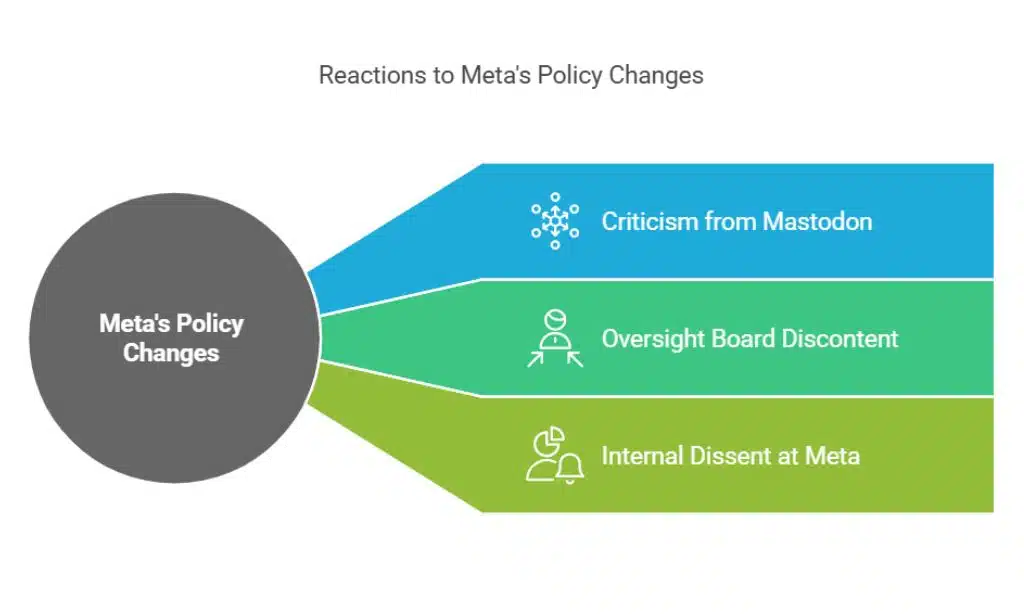
Eugen Rochko, the CEO of decentralized social network Mastodon, described the changes as “deeply troubling” and a “concern to anyone with a conscience.” Mastodon, which has positioned itself as a safer and more inclusive alternative to major platforms, has seen a surge in users as trust in platforms like Facebook and Instagram declines.
Michael McConnell, co-chair of Meta’s independent oversight board, has also expressed dismay. In a statement, McConnell revealed that the oversight board was not consulted about the policy changes. “The oversight board was created to provide guidance on such decisions, but we were bypassed in this instance. That raises questions about Meta’s commitment to accountability and transparency,” he said.
Even within Meta’s leadership, dissent is reportedly brewing. A top Meta official, speaking anonymously, criticized CEO Mark Zuckerberg for “buckling to political pressure” and making decisions that prioritize profits over the well-being of users and advertisers’ concerns.
Why This Matters: The Larger Implications
The changes to Meta’s policies have sparked widespread debate about the role and responsibilities of social media platforms in regulating content. While some argue that reducing content moderation and fact-checking promotes freedom of speech, others contend that it creates fertile ground for misinformation, hate speech, and harassment.
Critics, including Harry and Meghan, emphasize that marginalized communities often bear the brunt of lax content policies. When harmful narratives and abusive behavior are allowed to thrive, they argue, it silences voices that are crucial for a vibrant democracy and a healthy online ecosystem.
The rollback of DEI commitments is another major concern. These initiatives were introduced to ensure inclusivity and safety on Meta’s platforms, particularly for underrepresented groups. By scaling back these efforts, Meta risks alienating these communities and undermining years of progress.
Meta’s Defense: A Vision of Free Expression
Meta has defended its policy changes as a step toward greater transparency and inclusivity in content moderation. CEO Mark Zuckerberg has argued that the “Community Notes” system empowers users to take part in shaping the content they see, thereby reducing accusations of bias.
In a blog post, the company stated, “We believe that free expression is vital to a healthy society, and these changes are aimed at fostering a more open and democratic platform.” However, the statement has done little to quell critics’ concerns, with many questioning whether users have the tools and expertise needed to effectively counter misinformation.
The Future of Online Safety: A Contentious Debate
As the debate around Meta’s policy changes continues, questions about the future of online safety and free expression remain unresolved. Social media platforms wield immense power in shaping public discourse, and the decisions they make have far-reaching consequences.
For Prince Harry and Meghan Markle, the issue is personal as well as political. Their experiences with online abuse underscore the urgent need for responsible content policies. By speaking out, they hope to raise awareness about the risks posed by Meta’s changes and advocate for a safer, more inclusive internet.
Whether Meta will reconsider its approach in response to public criticism remains to be seen. For now, the company faces mounting pressure from users, advertisers, and advocacy groups to balance its commitment to free expression with its responsibility to protect vulnerable communities.































