

The logistics industry is undergoing a seismic transformation, driven by rapid advancements in technology, shifting consumer expectations, and the urgent push toward sustainability. As we look ahead to 2030, the pace of change shows no signs of slowing. From autonomous freight to green supply chains, the logistics landscape is set to look vastly different than it does today.
In this article, we explore 10 bold predictions that could redefine how goods are transported, stored, and delivered across the globe. Whether you’re a supply chain professional or simply curious about the future of movement, these insights will help you stay one step ahead in a dynamic industry.
AI-Driven Autonomous Vehicles Revolutionizing Freight Transport
Self-driving trucks and delivery drones transform road freight. The World Economic Forum says global logistics will top $18 trillion by 2030. Many of these trucks will run as electric vehicles, using computer vision, smart route planning, and machine learning algorithms.
They cut fuel consumption, ease driver shortages, and boost operational efficiency. They ship goods around the clock, enabling 24/7 shipping.
AI watches freight data, inspects transactions, and spots fraud or theft. It flags supply chain disruptions so risk management stays sharp. Self-driving trucks will talk to digital twins of roads and warehouses for real-time course corrections.
Delivery drones will fill last-mile delivery gaps in e-commerce growth and cross-border e-commerce. This wave shapes workforce development, STEM careers, and a future-proof business strategy in logistics and supply chain management.
Advanced Predictive Analytics Enhancing Supply Chain Efficiency
Predictive analytics, machine learning, time series forecasting, and big data lakes help teams predict demand with razor sharp accuracy by 2030. This AI approach scans market trends, weather, and economic shifts, churning terabytes into clear forecasts.
Programs spot swings in global supply chains, so planners avoid stockouts and cut wasted inventory.
IoT sensors stream live data into interactive dashboards, cutting bottlenecks and slashing theft risks. Algorithms spot geopolitical risks, natural disasters, and price spikes, letting teams reroute freight before delays grow.
This watchful system boosts e-commerce growth and strengthens supplier ties.
Smart Warehousing with AI-Powered Robotics
Warehouses deploy AI-driven robots to sort, pick, and pack orders. DHL’s Strategy 2030 adds more self-driving carts and mechanical arms powered by artificial intelligence to speed tasks.
These machines link to warehouse management systems via AI algorithms and machine vision cameras. They speed order fulfillment and shrink errors. Managers shave operational costs and boost efficiency.
Robots work alongside staff, creating safer, smarter floors.
AI also guides reverse logistics in modern hubs. It tracks product lifecycles across supply chain networks. Smart racks sort returns, sending items back for reuse or disposal. Hubs tap green technologies and renewable energy sources to charge fleets.
They cut carbon emissions and support circular economy goals. Teams lock down data with cybersecurity tools, protecting customer info.
Real-Time Route Optimization for Faster Deliveries
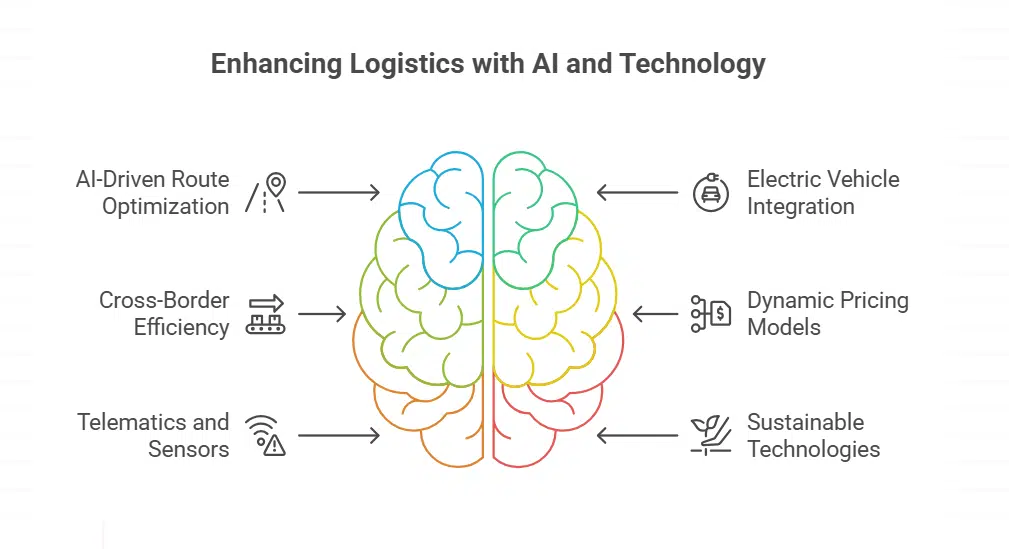
Robots in depots load and sort packages, and AI maps the best roads next. The system taps GPS trackers, traffic cameras, and weather data to refine routes on the go. Freight-forwarding teams cut delays, fuel costs, and carbon output with each recalculation.
Electric vehicles join the fleet, and AI guides them to chargers before range dips dangerously low. Cross-border e-commerce hubs see fewer hold-ups at customs thanks to synced route and dock plans.
AI fits route tweaks to fuel prices and capacity so dynamic pricing models adjust fees in seconds. Logistics teams use telematics suites, network planning tools, and sensors to react to jams or storms fast.
This blend of sustainable technologies and automated planning boosts efficiency, customer satisfaction, and energy efficiency in smart cities.
Sustainable Logistics Through Green and Circular Supply Chains
Companies set sustainability as their top goal for 2030, artificial intelligence (AI) optimizes fuel use and cuts carbon emissions, helping fight climate change. Firms drive electric vehicles on smart grids at terminals, they adopt sustainable practices and tap renewable energy for charging hubs.
DHL links to a forward-looking statement in Strategy 2030 that aims at a $350 billion green logistics market. Ports, steered by the International Longshoremen’s Association and new governance rules, swap diesel cranes for electric models, reducing soot.
Circular chains let suppliers reuse, recycle and refurbish products, they turn worn parts into new gains. Entrepreneurs apply Internet of Things sensors and geospatial mapping tools to track pallets like missing socks, cutting waste.
Workforce development programs teach digital literacy and science, technology, engineering and mathematics skills, they build new roles in resource recovery. Shoppers in cross-border e-commerce growth demand eco-friendly shipping, they pick green options with warranties on recycled cartons.
AI-Enabled Personalization in Last-Mile Delivery
AI crafts hyper-personalized routes for each order. It taps into data from cloud platforms and GPS sensors. The system sends drone deliveries, locker-based pickups and in-car drop-offs.
A neural network studies e-commerce growth, cross-border e-commerce and supply chain innovation. It forecasts demand on each block. Electric vehicles join fleets for last-mile tasks toward carbon neutrality.
Machine-driven analytics cut wait times and boost on-time scores. Drivers follow dynamic guides on in-cab displays. Shoppers pick the method that fits their schedule. This model rides the wave of automating chores in logistics work.
It also reshapes workforce development and helps the international longshoremen’s association adapt. The next section looks at dynamic pricing models optimized by artificial intelligence (ai).
Dynamic Pricing Models Optimized by Artificial Intelligence

Smooth drop-offs in last-mile set the scene for pricing shifts. Dynamic pricing models powered by AI adjust rates in real time. They use demand, delivery urgency, fuel costs, capacity data.
A machine learning model runs on cloud API, then shifts fees in a snap.
75% of logistics companies invest in digital tech like IoT, blockchain, artificial intelligence (ai). They mix this with sensors on electric vehicles, cross-border e-commerce routes and fleet cars.
Digital hubs feed emerging technologies, cut a bust in unused space and lift e-commerce growth. This also fuels workforce development at ports. The international longshoremen’s association wins with faster turns, smarter trades.
Takeaways
Logistics firms will harness driverless lorries and aerial couriers to forge a new path. Teams will deploy forecasting tools to cut waste and boost speed. Automation arms will sort goods in smart hubs, easing human strain.
Pricing will shift to real-time fare changes, and looped resource networks will shrink carbon footprints. Partnerships with the International Longshoremen’s Association will train new crews.
Electric vehicles and growing cross-border e-commerce will drive fresh jobs. No crystal ball needed, all signs point forward. This journey will shape a bold, green industry by 2030.
FAQs on Predictions for the Logistics Industry by 2030
1. What role will electric vehicles play in logistics by 2030?
Battery trucks and cargo vans will take center stage. They will cut fuel bills, and curb carbon emissions. Fleets will swap diesel rigs for battery rigs. They will need new charging hubs at docks and rest stops. It will feel like a green rush on wheels.
2. How will artificial intelligence (ai) reshape workforce development in logistics?
Ai will map routes, and spot delivery delays. Teams will train on fresh software tools. They will pair up with robots in sorting centers. Training programs will evolve, as skills jump ahead. It will be a true buddy system of humans and machines.
3. Will e-commerce growth and cross-border e-commerce change shipping?
Online stores will boom, and packages will flood ports. Cross-border commerce, part of global online trade, will push more parcels into local hubs. Customs checks will speed up with smarter scans. Shipping times will shrink. We will build a global parcel highway.
4. What advice comes from a shipping union about reused goods?
They say, fix and pack with care. Reused boxes save wood, and trim costs. They help protect forests. They warn, check for weak spots before loading. They also call for fair pay on the docks. It is a real win-win.






























