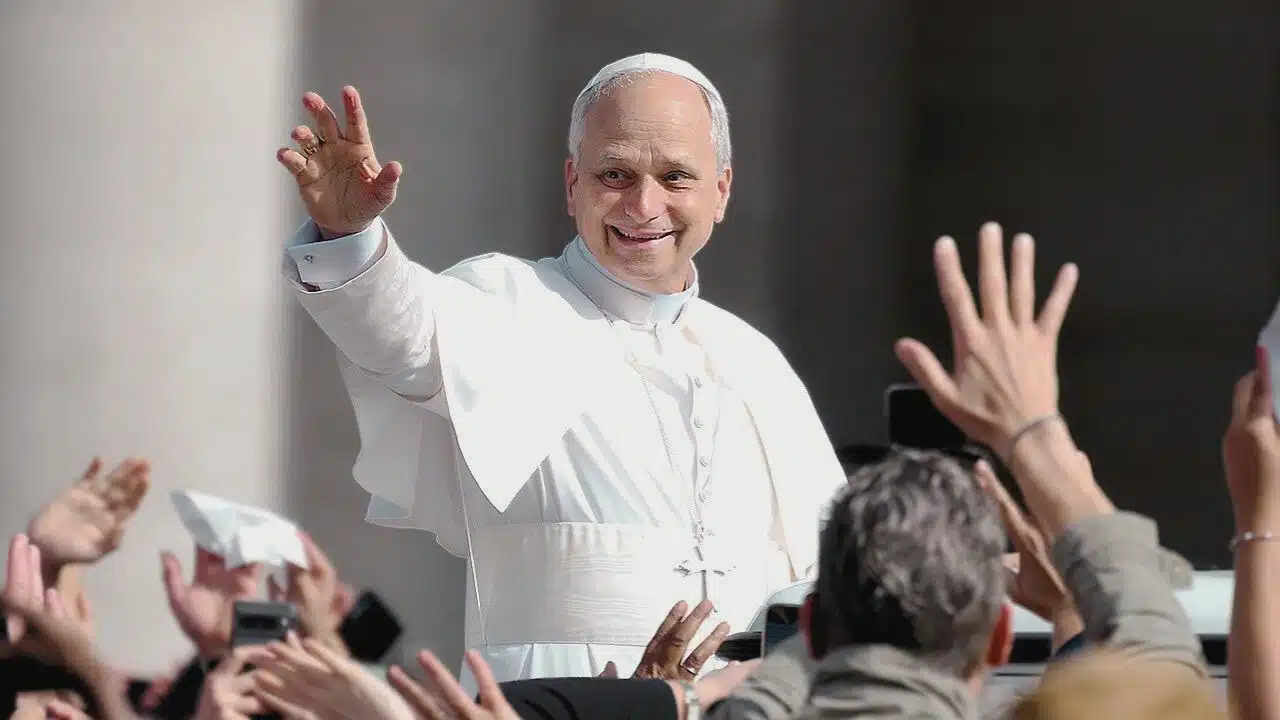
Pope Leo XIV has welcomed a constellation of Hollywood stars to the Vatican for a special gathering celebrating the power of cinema, urging filmmakers and actors to protect struggling movie theaters, resist algorithm‑driven culture, and use their art to give voice to the marginalized.
A Remarkable Scene Inside the Vatican
The gathering took place inside a frescoed audience hall of the Apostolic Palace, where dozens of actors, directors, and screenwriters from Hollywood and beyond were received by the first American‑born pope. The audience, organized by the Vatican’s Dicastery for Culture and Education along with the Dicastery for Communication, was conceived as an encounter between the Church and the global film industry at a time when cinema’s influence is being reshaped by streaming and digital platforms. For the Vatican, it was also a highly symbolic act of outreach to the secular creative world, echoing earlier meetings Pope Francis held with comedians and artists but with a distinctly cinematic focus under Pope Leo XIV.
Star‑Studded Guest List
Among the most prominent figures in attendance were Oscar‑winning actor Cate Blanchett and director Spike Lee, who have long been associated with socially engaged cinema. They were joined by filmmaker Greta Gerwig, actor Viggo Mortensen, and directors such as George Miller, Gus Van Sant, and Italian auteur Giuseppe Tornatore, creating a guest list that read like a who’s who of contemporary film. Other names reported on the Vatican invite list included Chris Pine, Judd Apatow, Leslie Mann, and a broader group of international filmmakers and actors whose work spans independent films, blockbusters, and auteur‑driven cinema.
The Pope’s Message: Cinema as a Moral Art
In his address, Pope Leo XIV described cinema as “a popular art in the noblest sense, intended for and accessible to all,” warning that its deepest value is threatened when stories are reduced to products optimized only for clicks and views. He urged his guests to resist the tyranny of algorithms that increasingly decide what audiences see, arguing that storytellers must safeguard spaces for complex narratives, human fragility, and uncomfortable truths. “When cinema is authentic, it does not merely console, but challenges,” he said, adding that films can articulate the questions that dwell within people and sometimes “provoke tears we did not know we needed to shed.”
Plea to Save Neighborhood Cinemas
One of Pope Leo’s clearest appeals was for the survival of neighborhood movie theaters, which he said have been disappearing from communities worldwide. He lamented that cinemas, once central cultural and social meeting points, are being replaced by isolated viewing on personal screens, eroding a sense of shared experience. Calling on governments, institutions, and cultural leaders not to “give up,” he urged cooperation “to affirm the social and cultural value” of cinemas as places where people gather in the dark to encounter stories and, in doing so, one another.
Voices for the Marginalized
Throughout his remarks, Leo XIV repeatedly returned to the theme of representation and inclusion, asking filmmakers to focus on lives and experiences that often remain invisible. He cited violence, poverty, exile, loneliness, addiction, and forgotten wars as wounds that demand to be seen and understood, warning that entertainment that ignores such realities risks becoming escapism without conscience. Cinema, he suggested, can become a “language of peace” when it chooses empathy over cynicism and gives narrative dignity to people at the margins of society.
A Pope Formed by Movies
For Leo XIV, the gathering had a personal dimension: the 70‑year‑old Chicago‑born pontiff has spoken openly about growing up in the heyday of Hollywood films. In a video released ahead of the event, he named four favorite films that “speak to my heart”: Frank Capra’s “It’s a Wonderful Life,” “The Sound of Music,” “Ordinary People,” and “Life Is Beautiful.” Commentators noted that each of these films charts journeys through despair, tyranny, family trauma, and atrocity toward forms of grace and human resilience, mirroring themes the pope often highlights in his preaching.
Star Reactions: Awe and Agreement
Celebrities leaving the Apostolic Palace described the experience as both surreal and intellectually stimulating, with many expressing surprise at the depth of the pope’s engagement with film. Cate Blanchett said the pope’s words showed he understood cinema’s ability to transcend borders and tackle painful issues without deepening divisions, emphasizing that filmmaking is about entertainment but also about including voices that are usually sidelined. She praised his description of watching films “in the dark with strangers” as a way of reconnecting with what unites people rather than what separates them, arguing that this communal ritual is precisely what is at risk as theaters close.
Spike Lee’s Knicks Gift and Light Moments
Despite the gravity of his message, the audience also featured lighter, human moments that hinted at a warm rapport between Pope Leo and his guests. Spike Lee presented the pope with a New York Knicks basketball jersey emblazoned with the number 14 and “Leo” on the back, a nod to Leo XIV’s papal name and to Lee’s lifelong fandom. The gesture was particularly playful given the pope’s known affection for the Chicago Bulls, with Lee reportedly joking that the Knicks now have three players from Villanova University, the pope’s alma mater.
A Carefully Inclusive Guest List
The Vatican’s choice of invitees signaled a willingness to engage with artists whose work has sometimes been critical of the Church and of power more broadly. Directors such as Marco Bellocchio, whose film “Rapito” sharply criticizes the 19th‑century papacy of Pius IX, and provocateurs like Gaspar Noé were among those expected or reported to be on the broader list of participants. By opening the Apostolic Palace to such voices, the Vatican projected an image of an institution ready to listen and converse rather than to control the moral vocabulary of culture.
Bridging Faith and the “Seventh Art”
Analysts of Vatican culture policy say the event marks a renewed phase in the Church’s relationship with the “seventh art,” picking up threads from the late John Paul II’s 1999 “Letter to Artists.” That earlier text described artists as “custodians of beauty,” and Leo XIV’s gathering seemed to update that language for a digital era, framing filmmakers as custodians not only of beauty but also of memory, trauma, and the fragile hope of communities in crisis. Rather than treating cinema as a rival to religion, the pope described it as one of the modern arenas in which humanity’s longing for meaning, justice, and redemption is played out.
Vatican Strategy: Reaching Beyond the Church
The Hollywood audience forms part of a broader Vatican strategy to reach beyond practicing Catholics and speak into secular conversations about culture, politics, and technology. In recent years the Holy See has convened meetings with comedians, digital creators, and scientists, but bringing film luminaries into the heart of the Apostolic Palace represents one of its most visible cultural gestures yet. By centering the event on cinema’s social function rather than overt religious messaging, the Vatican positioned itself as a partner in reflection on global issues rather than as a distant moral arbiter.
The Stakes for Cinema’s Future
Underlying Leo XIV’s remarks was a sober assessment of the pressures reshaping the film industry, from streaming algorithms and market consolidation to declining theatrical attendance. He cautioned that if commercial logic alone determines which stories are told and which are sidelined, entire communities and experiences will vanish from the cultural imagination. The pope’s appeal to his guests was ultimately a call to conscience: that even as they navigate platform demands and financial realities, they treat cinema as a “house for those who search,” a space where art can still act as a language of peace in a fractured world.