Poland and nearly forty of its allies—including the twenty-six other members of the European Union, the United States, Canada, Japan, and Ukraine—have strongly condemned the recent intrusion of Russian drones into Polish airspace. Officials described the incident as a blatant violation of international law and the United Nations Charter. Warsaw, backed by its allies, emphasized that these incursions represented one of the most serious security breaches in the region in years, bringing Europe closer to a potential conflict with Russia.
Poland requested an emergency meeting of the United Nations Security Council, which convened to discuss the crisis. The coalition of countries that signed the joint statement stressed that Moscow must immediately halt its military provocations and withdraw from aggressive operations that threaten the sovereignty of its neighbours. The coordinated move highlighted how the drone incident is being viewed not as an isolated act but as part of a wider pattern of Russia’s ongoing war against Ukraine and its broader attempts to destabilize Eastern Europe.
NATO Steps Up Military Defence in Eastern Europe
In direct response to the incursions, NATO announced significant reinforcements to its eastern flank. France, Germany, and Denmark confirmed that they would contribute fighter jets, advanced radar systems, and other military assets to secure Polish airspace. The United Kingdom also signaled its readiness to support these efforts through its participation in Operation Eastern Sentry, a mission designed to defend against hostile drones and missile threats across NATO territory.
Operation Eastern Sentry will extend beyond Poland. It will gradually expand from the Arctic in the north to the Black Sea and Mediterranean in the south, ensuring that the alliance’s air and missile defences cover a much broader geographical area. NATO officials have emphasized that these measures are not only about protecting Poland but also about safeguarding Europe’s collective security.
The reinforcements mark one of the largest expansions of NATO’s deterrence posture since the outbreak of Russia’s full-scale invasion of Ukraine in 2022. By deploying assets across multiple countries, the alliance seeks to create a layered defence capable of intercepting drones, cruise missiles, and other emerging threats before they reach critical targets.
Escalating Tensions: Russian and Belarusian Military Drills
Even as NATO strengthens its defences, Russia has escalated its military posture with the start of large-scale joint exercises alongside its closest ally, Belarus. The drills, named Zapad 2025, began on Friday and span multiple regions, including areas near the borders with Poland and Lithuania. Exercises are also taking place in the Baltic Sea and the Barents Sea.
Russia’s defence ministry released footage showing armoured vehicles, heavy artillery, helicopters, and naval ships mobilized for the drills. Analysts note that these exercises are designed not only for military readiness but also as a show of strength aimed at intimidating neighbouring NATO states.
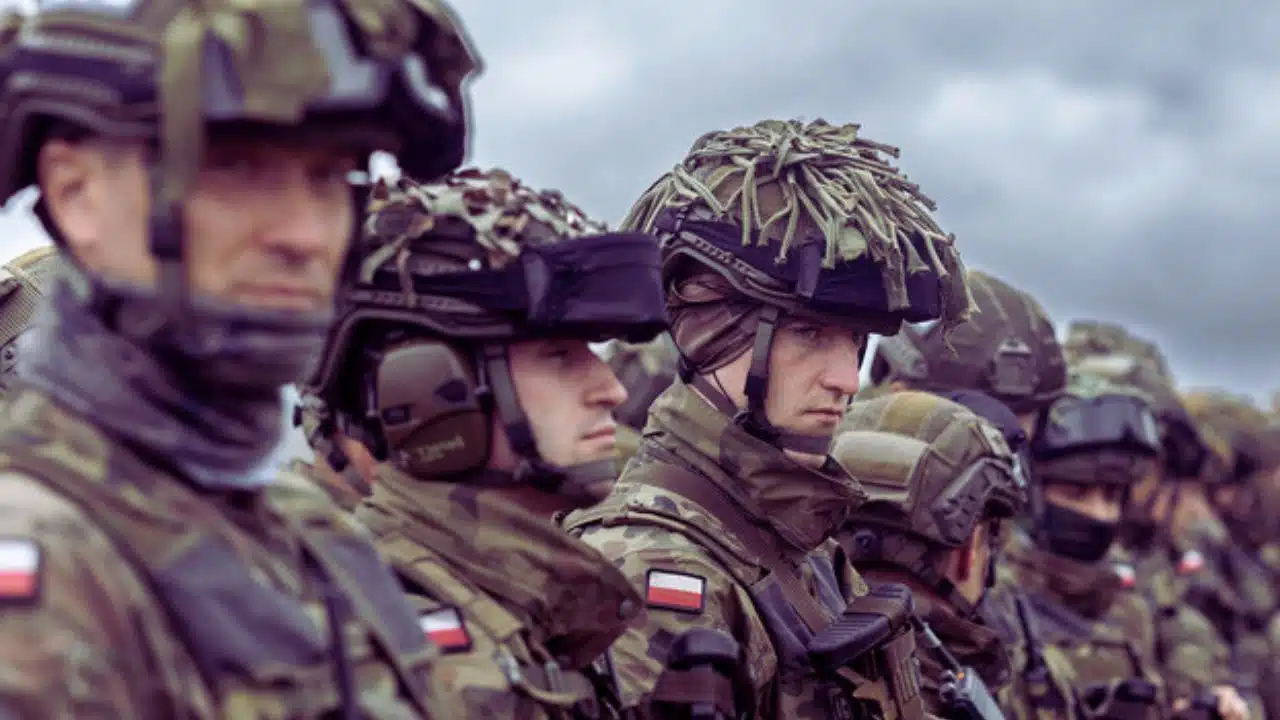
In response, Poland announced the deployment of approximately 40,000 troops near the Belarusian border for the entire duration of the exercises. This massive mobilization reflects Warsaw’s concern that the drills could be used as cover for provocations or hybrid attacks. It also signals Poland’s determination to defend its territory in coordination with NATO allies.
Diplomatic Fallout: Peace Talks on Hold
At the same time, diplomatic efforts to resolve the ongoing Russia–Ukraine war have stalled. The Kremlin confirmed that negotiations with Ukraine are currently on pause, acknowledging that while communication channels remain technically open, no progress is being made toward a settlement. Russia has accused European nations of obstructing talks by continuing to provide military and financial support to Ukraine.
Ukrainian President Volodymyr Zelenskyy warned that Moscow’s objectives remain unchanged. He stressed that Russia still seeks to occupy the whole of Ukraine and that President Vladimir Putin has set the war machine in motion in a way that cannot be reversed without decisive pressure. Zelenskyy has called on Ukraine’s allies not only to maintain but to intensify their support, particularly by encouraging China to use its influence over Russia to push for de-escalation.
Symbolic Support: Prince Harry’s Visit to Kyiv
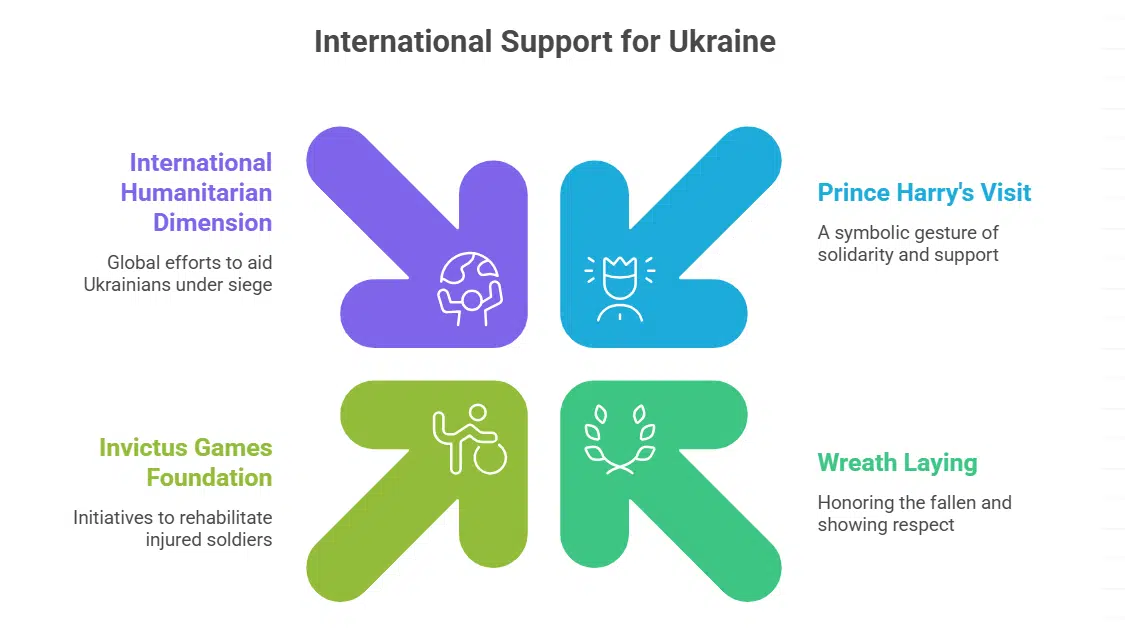
In a surprising diplomatic and humanitarian gesture, Prince Harry visited Kyiv to demonstrate solidarity with Ukraine. He laid a wreath at a memorial in Maidan Square in honour of the thousands of Ukrainians who have died in the war. His presence was widely reported in Ukraine as a morale boost during a time of uncertainty and continued violence.
During his visit, Prince Harry and his team from the Invictus Games Foundation announced new initiatives to support the rehabilitation of soldiers seriously injured in the conflict. The long-term aim is to expand rehabilitation programs across Ukraine, providing assistance to those who have sustained life-changing injuries. His involvement adds an international humanitarian dimension to the war, showing how cultural figures and charitable organisations are joining governments in offering support to Ukrainians under siege.
International Voices: Calls for Stronger Action
While European leaders and NATO partners focus on deterrence and diplomacy, voices from abroad have also weighed in. Former U.S. President Donald Trump, in a televised interview, warned that his patience with Moscow’s ongoing war was running thin. He argued that repeated missed opportunities for ceasefire agreements had prolonged the conflict unnecessarily. He suggested that unless Putin changed course, the United States would be forced to adopt an even stronger position in support of Ukraine.
This reflects growing frustration in the international community that intermittent discussions of peace have failed to produce tangible results. Both Russia and Ukraine have, at different times, signaled willingness to negotiate, but the talks have consistently broken down, leaving the conflict unresolved and highly volatile.
Why the Drone Crisis Matters
The drone intrusions into Poland may seem small compared to Russia’s full-scale military operations in Ukraine, but they carry major implications. They highlight the vulnerability of NATO states to spill-over effects from the war, raise fears of accidental escalation, and test the alliance’s credibility in defending its members. By mobilizing large numbers of troops and initiating Operation Eastern Sentry, NATO is sending a signal that it will not tolerate violations of allied airspace.
The broader picture is one of rising tension on multiple fronts: NATO strengthening its defences, Russia staging massive drills, Poland reinforcing its borders, peace talks stalling, and humanitarian support trying to fill the gaps left by diplomacy. Together, these developments point to a dangerous moment in the Russia–Ukraine war, where the potential for miscalculation is high and the path to peace appears increasingly uncertain.