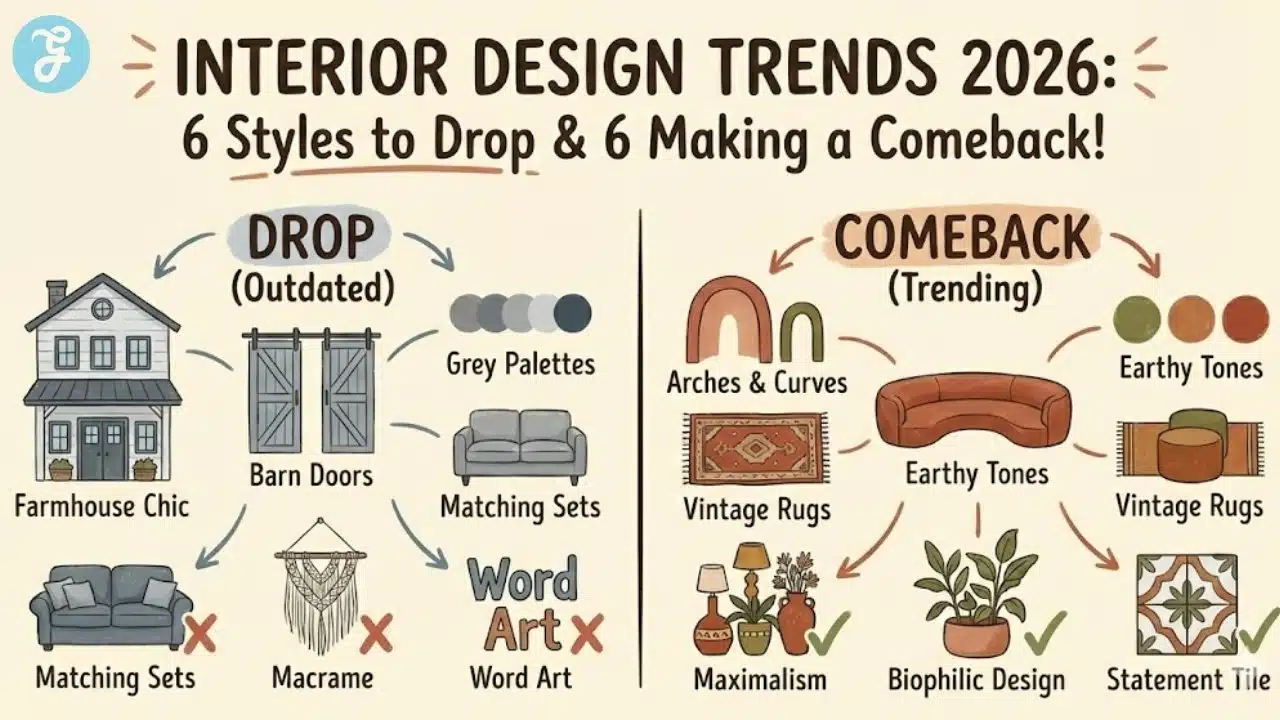
Outdated interior design trends 2026 are finally closing the door on cold minimalism, mass-produced “fast furniture,” and rooms that look perfect in photos but feel uncomfortable in real life. The mood heading into 2026 is warmer and more human. People want homes that support daily routines, changing seasons, and the messy reality of living—without feeling like a staged showroom.
That shift is showing up everywhere: richer colors, more meaningful materials, and a renewed respect for craftsmanship. Instead of chasing the next viral look, homeowners are leaning into choices that feel personal and lasting. The question isn’t “What’s trending?” as much as “What will still feel good next year—and five years from now?”
If you’re renovating, decorating a new space, or just tired of a room that feels flat, it helps to know what design decisions are losing momentum. Some styles are fading because they’ve been overdone. Others are falling out of favor because they don’t function well in real homes. And a few are simply being replaced by better options that offer more comfort, depth, and character.
Below, you’ll find six trends that are officially on their way out, followed by six design movements making a confident comeback in 2026—along with practical ways to update your space without redoing everything from scratch.
Outdated Interior Design Trends 2026 to Leave Behind
Most outdated styles this year share one flaw: they prioritize appearance over experience. If a room looks pristine but feels tense, cold, or generic, it’s likely part of the wave that’s fading.
1) Stark White and Cool Gray Minimalism
For more than a decade, white-on-white kitchens and cool gray living rooms were treated like the safest choice. Minimalism promised calm, cleanliness, and “timeless” appeal. In practice, though, many of these interiors ended up feeling sterile—especially when paired with glossy finishes, bright LED lighting, and hard surfaces that amplify sound.
The biggest issue is emotional temperature. A home can be neat without feeling clinical. But when everything is white, gray, and flat, the space can feel more like an office lobby than a place to unwind. Cool gray flooring in particular can make rooms feel gloomy in low light, and stark white upholstery looks great until life happens—coffee spills, pets, kids, or just normal wear.
Why it’s fading:
People are recognizing that a home should reduce stress, not add to it. When the design is too precious or too cold, it creates a constant pressure to keep everything “perfect.” In 2026, the idea of comfort is winning over the fear of color.
What to do instead:
You don’t have to abandon light neutrals. The upgrade is warmth and depth. Think creamy whites, warm beiges, and soft clay tones. Swap cool gray for “greige” or warmer taupes. Add texture—linen drapes, woven shades, plaster walls, and wood accents—so neutral rooms feel layered instead of blank.
Quick update ideas:
- Replace cool-toned bulbs with warmer temperature lighting in living spaces.
- Add one natural material (wood, stone, rattan, or wool) for instant warmth.
- Paint the trim a softer white instead of bright, stark white for a calmer look.
2) Modern Farmhouse Overload
Modern farmhouse isn’t “bad” design. The problem is the mass-produced version of it that became the default setting for every renovation. White shiplap, black matte hardware, barn doors, and distressed wood signs were repeated so often that they stopped feeling charming. They started feeling like a template.
When a style becomes that predictable, it loses personality. It also dates quickly because it’s linked to a specific era of design content and home makeover TV aesthetics. In many homes, barn doors were installed where they don’t function well (bathrooms, anyone?), and shiplap was used as a filler rather than a meaningful architectural choice.
Why it’s fading:
Oversaturation kills the magic. In 2026, homeowners want interiors that feel more specific to them and less like a copy of the same mood board everyone used for years.
What to do instead:
The more modern evolution is often described as Modern Cottage, Organic Traditional, or even New Americana—styles that keep warmth and comfort but replace clichés with authentic materials and heritage-inspired details.
Quick update ideas:
- Replace barn-door hardware with a real door solution if privacy matters.
- Swap high-contrast black accents for aged brass, bronze, or softer iron tones.
- Introduce traditional elements like picture-frame molding or a classic rug pattern to add history.
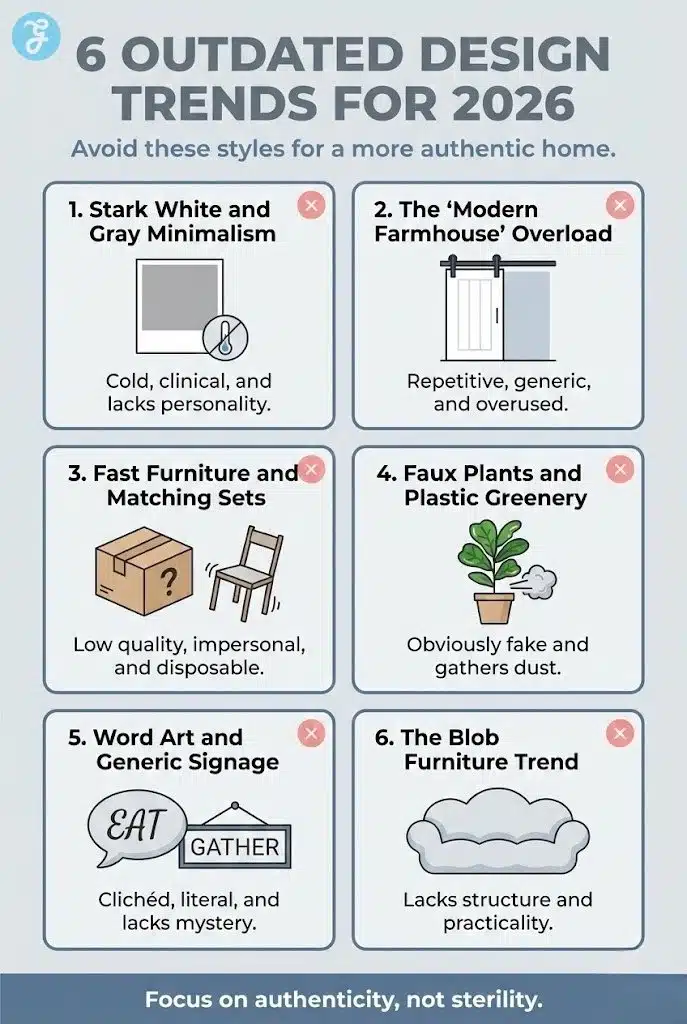
3) Fast Furniture and Perfectly Matching Sets
Matching bedroom sets and perfectly coordinated living room collections once felt like the easy route. Everything “goes,” nothing clashes, and the room looks finished in a day. The downside is that it often looks lifeless. When every piece matches, the space can feel flat—like a catalog spread rather than a home built over time.
Fast furniture made the issue worse. Cheap materials, quick assembly, and short lifespans mean pieces sag, wobble, or peel after a few years (sometimes sooner). People are also more aware of the environmental cost of disposable furniture, especially when replacing it becomes part of the cycle.
Why it’s fading:
Sustainability and quality are becoming mainstream priorities. People would rather buy fewer things that last than refill a room every few years with items that don’t age well.
What to do instead:
Aim for a collected mix. It doesn’t have to be expensive. The goal is variety in finish, scale, and texture so a room feels dimensional. Mix vintage with new. Pair a clean-lined sofa with a more traditional chair. Let wood tones vary, as long as the undertones feel cohesive.
Quick update ideas:
- Break up a matching set by swapping one nightstand for a small vintage table.
- Replace one piece (like a coffee table) with something sculptural or antique.
- Invest in upholstery quality before decorative extras.
4) Faux Plants and Plastic Greenery Everywhere
Greenery is still in. Plastic greenery is not. Faux fiddle-leaf figs and artificial succulents surged because they offered the “look” with zero maintenance. But as 2026 trends move toward authenticity, plastic plants often read as exactly what they are—decor that imitates life without providing any of the benefits of real nature.
There’s also a sensory difference. Real plants change with light, growth, and season. They add softness and movement. Faux plants tend to sit still, gather dust, and feel like visual filler.
Why it’s fading:
People are craving realness. The same cultural push toward natural materials and tactile surfaces makes plastic stand out as out of place.
What to do instead:
If you can’t keep plants alive, you still have options that feel honest. Dried florals, sculptural branches, moss arrangements, and high-quality ceramics can bring organic energy without pretending to be living greenery.
Quick update ideas:
- Choose two easy real plants (pothos, snake plant, or ZZ plant) instead of many faux ones.
- Use dried eucalyptus or pampas grass in a modern vessel—sparingly, not everywhere.
- Add nature through materials: wood bowls, stone lamps, and linen textiles.
5) Word Art and Generic Signage
The “Eat” sign in the kitchen. The “Gather” sign in the living room. The “Wash” sign in the bathroom. These pieces became popular because they were easy décor—affordable, simple, and widely available. Now they feel dated because they aren’t personal, and they don’t add meaning.
Walls can do so much more than repeat instructions. Art can change the mood of a room. It can reflect your taste, your memories, and your identity. Literal signage often feels like a placeholder—a quick solution that leaves a space looking generic.
Why it’s fading:
Personalization is a major theme in 2026. Mass-produced décor that could belong to anyone is losing appeal.
What to do instead:
Choose pieces with a story. Photography from a trip. Original prints. A vintage mirror. A textile wall hanging. Even a gallery wall of family photos can look elevated when framed consistently and arranged thoughtfully.
Quick update ideas:
- Replace a one-word sign with a large framed print for immediate impact.
- Use a vintage piece (mirror, tapestry, or map) as a conversation starter.
- If you love typography, choose it in a more artistic, less literal format (like abstract letterpress).
6) Blob Furniture and Overdone Bouclé
Curves aren’t going away entirely. But the exaggerated “blob” aesthetic—amorphous sofas, cloud-like chairs, chunky rounded tables—has peaked. These pieces were everywhere on social media because they photograph well. But many don’t hold up in real use. Some lack structure, proper support, or practical proportions for everyday life.
Bouclé, which often accompanied this look, has also hit saturation. It can be beautiful, but it’s high-maintenance and has been used so heavily that it’s starting to feel like a trend marker rather than a timeless texture.
Why it’s fading:
Practicality is overtaking virality. People still want comfort, but they also want furniture that lasts, cleans easily, and supports the way they actually live.
What to do instead:
Look for refined curves—structured silhouettes, rounded edges, and classic forms with softer lines. Choose durable performance fabrics or textured weaves that can handle daily life.
Quick update ideas:
- If you already own a curved sofa, balance it with more structured pieces (square rug, angular side table).
- Swap bouclé pillows for woven, velvet, or linen textures.
- Choose one “soft shape” statement piece, not a whole room of blobs.
Interior Design Trends Making a Comeback in 2026
If the outdated trends were about sameness and surface-level polish, the comeback trends are about depth, texture, and emotional warmth. These are not “flash-in-the-pan” looks. They’re grounded in classic design principles and upgraded for modern living.
1) Rich Earth Tones and Warm Color Palettes
Color is returning in a big way—but not the loud, neon kind. The palette of 2026 is rooted in nature: terracotta, clay, rust, olive, ochre, warm beige, deep brown, and muted mustard. These shades make rooms feel anchored. They also create a sense of comfort that cooler neutrals struggle to deliver.
Warm palettes are surprisingly flexible. You can use them boldly with a moody paint color, or subtly through textiles and accent pieces. A warm base neutral paired with layered earth tones can feel both modern and timeless.
Why it’s rising:
Warm colors feel stable. They support the idea of home as a refuge. They also change beautifully with daylight, adding life and softness to a space.
How to use it well:
- Start with one warm neutral (cream, sand, or warm beige) and build from there.
- Add earth tones through rugs, pillows, art, and ceramics if you’re not ready to paint.
- Use darker earth tones to create “grounding” zones, like a reading nook or bedroom.
2) Dark and Heritage Woods
Light oak and pale woods have dominated for years. In 2026, darker woods are making a sophisticated return: walnut, mahogany, dark-stained oak, and warm espresso tones. These finishes add richness and make a space feel established.
Dark wood also helps anchor airy rooms. It creates contrast and weight in the best way—especially when paired with soft wall colors and textured fabrics.
Why it’s rising:
Darker woods communicate longevity and craftsmanship. They feel “real,” and they pair naturally with the warmer palettes trending now.
How to use it well:
- Mix dark wood with lighter upholstery to avoid heaviness.
- Use dark wood as a focal point: a dining table, a console, or a cabinet.
- Pair with aged metals like brass or bronze for a warm, classic vibe.
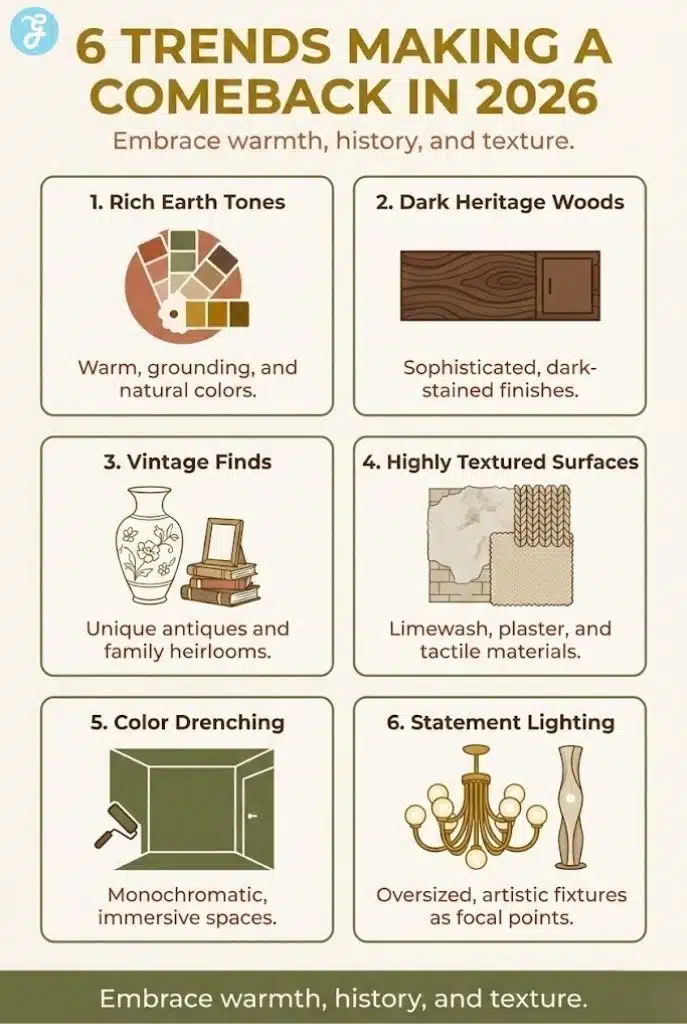
3) Grandmillennial Layering and Vintage Finds
The “Grandmillennial” idea has matured into something broader: a renewed appreciation for vintage layering. Instead of matching sets and identical finishes, homeowners are mixing eras and styles to create rooms that look collected over time.
This doesn’t mean clutter. It means character. A mid-century chair next to a traditional rug. A modern sofa with an antique side table. A contemporary lamp on a vintage chest.
Why it’s rising:
Vintage pieces bring story and uniqueness. They also often offer better craftsmanship than cheap new items. Most importantly, they make a home feel personal.
How to use it well:
- Choose one consistent thread (color palette, wood tone family, or material) to tie the mix together.
- Let one “special” vintage piece lead the room, then build around it.
- Don’t try to make everything match—aim for harmony, not uniformity.
4) Highly Textured Surfaces and Tactile Materials
Texture is one of the biggest design upgrades of 2026. Flat walls and smooth, glossy surfaces are giving way to tactile finishes like limewash, plaster, microcement, wood paneling, and natural stone. Even subtle texture adds depth, shadow, and movement.
Texture also improves how a home feels acoustically. Soft materials absorb sound. Rougher wall finishes reduce that “empty echo” effect common in modern minimalist spaces.
Why it’s rising:
Design is becoming sensory again. People want homes that feel cozy, grounded, and comforting—not just visually appealing.
How to use it well:
- Try a limewash or plaster-effect paint in one room for subtle movement.
- Use texture in layers: a wool rug, linen curtains, a boucle-free woven
- Add natural materials that age well, like wood
5) Moody, Color-Drenched Rooms
Color drenching is for anyone tired of timid design. It involves painting walls, trim, ceiling, and sometimes even doors in the same rich hue to create a cocoon-like effect. Done well, it can make small spaces feel more expansive by reducing visual breaks.
Popular choices include forest green, deep navy, burgundy, and warm charcoal. The key is choosing a color that feels comforting, not harsh, and pairing it with warm lighting.
Why it’s rising:
It’s a rejection of “resale beige.” People are designing for themselves and embracing bolder emotional atmospheres.
How to use it well:
- Start with a smaller room, like a powder room or an office
- Use satin or eggshell finishes on walls and a slightly different sheen on trim for subtle dimension.
- Add contrast with art, brass accents, and natural textures.
6) Statement and Modular Lighting
Lighting is being treated as the jewelry of the home again. Instead of relying solely on recessed cans, homeowners are bringing back layered lighting: pendants, sconces, floor lamps, table lamps, and accent lighting that creates mood.
Statement fixtures—sculptural pendants, blown glass, and ceramic lamps—are also becoming central design pieces. Modular lighting is rising too, allowing adjustments for different activities: work, entertaining, and relaxing.
Why it’s rising:
Lighting changes everything. It shapes how colors look, how textures read, and how comfortable a room feels at night.
How to use it well:
- Aim for three layers: ambient, task, and accent lighting.
- Use dimmers wherever possible for
How to Update Your Home Without Starting Over
You don’t need a full renovation to move away from outdated interior design trends in 2026. Small upgrades can shift the whole mood of a room, especially when you focus on warmth and texture.
Start by noticing what feels “flat” in your space. Is it the lighting? The lack of contrast? Too many matching items? Then address one category at a time.
A practical, low-stress update plan:
- Fix the lighting first. Warm bulbs, layered lamps, and a statement fixture can transform a room faster than new furniture.
- Add texture second. Rugs, curtains, throws, and wall finishes create depth without a major spend.
- Introduce warmth through color. Paint is the biggest impact per dollar. Even one accent wall in a warm, earthy shade can shift the entire feel.
- Swap one “generic” piece. Replace a matching item or mass-produced decor with something vintage, handmade, or meaningful.
- Edit what feels trendy. If your room is dominated by one viral look (all bouclé, all blobs, all signs), remove 20–30% and rebalance with timeless shapes.
The goal isn’t to chase a new trend. It’s to build a home that supports how you live—and still feels like you next year.
Designing Homes That Feel Good in 2026
The shift away from outdated interior design trends in 2026 is bigger than a style change. It’s a mindset change. Homes are no longer designed just to look good in a square photo on a phone screen. They’re designed to feel good on an ordinary weekday—when dishes are in the sink, a blanket is on the sofa, and the day needs softness.
Warmth, texture, history, and craftsmanship are leading the way because they create emotional comfort. They also age better than trends built on shock value or social media aesthetics. If you want your home to feel current in 2026, focus less on perfection and more on personality.
Start small if you need to. Swap out one plastic plant. Replace harsh lighting. Add a warm rug. Choose a paint color that makes you exhale. Those changes add up, and they steer your home toward a style that doesn’t just look right—it feels right.
Frequently Asked Questions
Here are the answers to some of the most common questions readers have:
Is gray completely out of style in 2026?
Gray isn’t forbidden, but cool, blue-toned gray is definitely declining. Warmer grays and greige shades are more aligned with 2026 design because they pair well with earth tones, dark woods, and soft textures. If you love gray, keep it warm and add natural materials so it doesn’t feel cold.
What is replacing the modern farmhouse look?
The modern farmhouse style is evolving into warmer, more refined styles like modern cottage and organic traditional. These keep comfort and simplicity but drop the clichés. You’ll see more heritage materials, softer hardware finishes, vintage furniture, and details that feel historically inspired rather than mass-produced.
How can I update my home without buying new furniture?
Paint and lighting are the two biggest upgrades with the least cost. Swap harsh bulbs for warmer ones, add layered lamps, and update one light fixture if you can. Then use textiles—rugs, curtains, pillows—to introduce warmth and texture. You can also break up matching sets by swapping one piece for a thrifted or vintage find.
Are open floor plans going away in 2026?
Fully open floor plans are losing popularity, but connected living isn’t disappearing. The trend is moving toward “broken plan” layouts—spaces that feel open but have defined zones for privacy, focus, and noise control. Bookcases, screens, partial walls, or glass partitions are common solutions.
What is the biggest color trend for 2026?
The biggest shift is toward earthy warmth. Terracotta, olive green, warm beige, rust, brown, and ochre are leading the way because they feel grounding and comforting. These colors also work well with heritage woods, natural textures, and layered lighting.
What’s the safest way to follow 2026 trends without making my home feel dated later?
Choose trends that are rooted in timeless principles: warm neutrals, quality materials, texture, and layered lighting. Avoid designs that rely on gimmicks or one viral material used everywhere. If you’re unsure, apply trends through paint, textiles, and decor first—then commit to bigger changes once you’re confident.