Running a logistics business is tough. High costs, delays, and inefficient routes can eat into your profits. You need smart solutions to keep things smooth without breaking the bank.
Good news: Open Source Tools For Logistics Optimization can help. These free tools use advanced tech to plan better routes, cut costs, and speed up deliveries. In this post, we’ll break down five top options that fit different needs.
Find the right tool for your business below.
What Are Open Source Tools for Logistics Optimization?

Open source tools for logistics optimization are free software solutions that help businesses manage supply chains better. These tools handle tasks like route planning, warehouse management, and freight tracking without costly licenses.
Popular examples include Google’s OR-Tools, GraphHopper, and Openrouteservice. They calculate efficient routes and even show travel time ranges with isochrone maps.
These tools use AI and machine learning to cut costs and boost efficiency in transportation and inventory control. Options like OpenBoxes or ERPNext logistics let companies customize features for their needs.
With strong community support, these programs keep improving over time. Businesses get real-time optimization without breaking the bank, making them smart picks for smarter logistics.
Benefits of Using Open Source Tools in Logistics
Open source tools save money and give you full control over your logistics setup. They also adapt fast to changes, keeping your operations sharp and efficient.
Cost-effectiveness
Open source logistics tools save money. Businesses don’t need to pay hefty licensing fees, making them a budget-friendly choice. Google’s OR-Tools and GraphHopper let companies optimize routes without breaking the bank.
These tools cut costs while boosting efficiency. They handle tasks like route planning and inventory management, reducing the need for expensive proprietary software. With options like OpenBoxes and ERPNext, small firms get big-league tools for free.
Flexibility and customization
Open source tools for logistics optimization let you tweak the software to fit your needs. Unlike rigid paid options, you can modify features like route planning or demand forecasting.
GraphHopper and Openrouteservice, for example, allow changes to match your delivery schedules or warehouse setups.
These tools grow with your business. Need to scale up during peak seasons? OptaPlanner and pgRouting adapt without extra costs. You get real-time updates, better integration, and control over your supply chain.
The open source community constantly improves these tools, so you’re never stuck with outdated tech.
Real-time optimization
Real-time optimization helps logistics teams make quick decisions on the fly. Tools like OR-Tools and GraphHopper use AI to adjust routes instantly based on traffic, weather, or delivery changes.
This slashes delays and keeps costs low while boosting efficiency.
Businesses can track shipments live and reroute trucks to avoid slowdowns. Open source options like Openrouteservice calculate fast paths, ensuring smoother deliveries without extra fees.
These updates happen in seconds, so companies stay ahead of problems before they grow.
Community support and updates
Open-source logistics tools thrive on strong community backing because users actively contribute fixes & improvements daily! Take projects like GraphHopper & OSRM—they get constant upgrades thanks developers worldwide sharing ideas freely without red tape slowing things down!
Need help troubleshooting? Active forums around these platforms mean quick answers plus fresh features roll out faster than proprietary systems stuck waiting corporate approval cycles!
Top 5 Open Source Tools for Logistics Optimization
Looking for free ways to streamline your supply chain? These five open-source tools can help cut costs while boosting speed and accuracy without breaking your budget!
From route planning to warehouse tracking each one tackles tough logistics challenges head-on saving time money—and headaches—for businesses big or small
Open Source Routing Machine (OSRM)
The Open Source Routing Machine (OSRM) is a fast, free route planning tool. It calculates the shortest paths for cars, bikes, and foot traffic using real-world map data. Companies use it to optimize delivery routes and cut transportation costs.
OSRM supports real-time optimization, helping logistics teams adapt to traffic or road changes instantly. It integrates easily with other supply chain tools, making it a flexible choice for businesses.
With strong community support, OSRM stays updated and reliable for logistics management needs.
GraphHopper
GraphHopper is a fast, open-source route planning tool for logistics optimization. It calculates the quickest or shortest routes for deliveries, using real-time traffic data when available.
Businesses love it because it’s flexible and works well with other systems like transportation management software.
This tool supports multiple modes of transport, including cars, bikes, and trucks. Its API makes integration easy for developers. GraphHopper also offers features like distance matrices and turn-by-turn navigation.
With strong community support, it keeps improving to meet modern supply chain needs.
OptaPlanner
OptaPlanner is a powerful open-source tool for logistics and supply chain optimization. It uses AI and machine learning to solve complex planning problems, like route scheduling or warehouse management.
Businesses love it because it cuts costs and boosts efficiency without hefty licensing fees.
This tool works well with Java, making integration smooth for developers. It handles everything from delivery routes to workforce shifts, adapting as your needs grow. With strong community support, OptaPlanner keeps improving over time, giving you reliable updates for free.
pgRouting
pgRouting is a powerful open-source tool for logistics optimization. It extends PostgreSQL, adding route planning and network analysis features. Businesses use it to solve complex transportation problems, like finding the shortest path between multiple stops.
This tool supports real-time optimization, making it ideal for delivery management and supply chain operations. It integrates easily with other systems, helping companies streamline their logistics workflows.
With strong community support and regular updates, pgRouting keeps improving over time. Its scalability works well for both small businesses and large enterprises looking to cut costs and boost efficiency in their distribution networks.
Valhalla
Valhalla is a powerful open source tool for logistics optimization, built by Mapzen. It focuses on route planning and offers features like turn-by-turn navigation, time-distance matrices, and isochrone maps.
The tool works well for businesses needing real-time route calculations to improve delivery management and transportation efficiency.
With Valhalla, companies can customize routing options based on traffic conditions or vehicle types. It integrates smoothly with other supply chain management tools, making it flexible for different logistics operations.
The active developer community keeps improving its AI-driven features to enhance cost reduction and operational efficiency in freight management systems.
Key Features of Each Tool
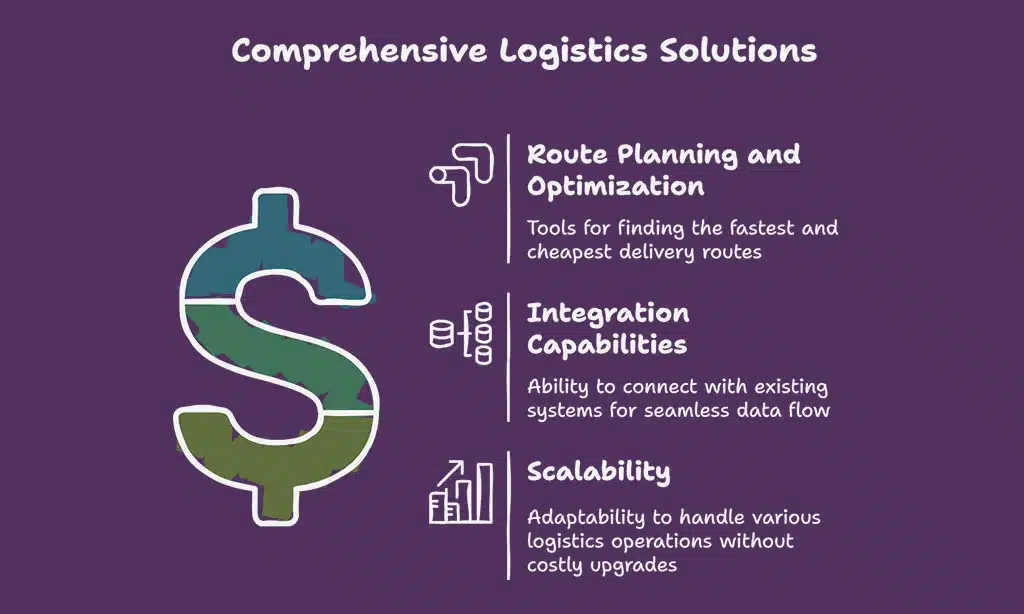
These tools pack a punch, offering smart route planning and smooth integration to fit any logistics setup. Whether you handle local deliveries or global supply chains, each tool scales effortlessly to keep operations running like clockwork.
Route planning and optimization
Route planning and optimization tools help businesses find the fastest, cheapest routes for deliveries. Open source options like OSRM, GraphHopper, and Valhalla use AI to calculate efficient paths, saving time and fuel.
These tools also handle real-time traffic updates, making sure drivers avoid delays.
Google’s OR-Tools and Openrouteservice offer features like isochrone maps, showing reachable areas within a set time. This helps logistics teams plan better schedules and reduce costs.
With open source software, companies can customize these tools to fit their specific needs without breaking the bank.
Integration capabilities
Good logistics tools play nice with others. Open source options like GraphHopper and OR-Tools easily connect with existing systems, from warehouse management software to demand forecasting platforms.
They use APIs to sync data in real time, so your delivery updates or inventory changes flow smoothly between apps without manual work.
Oracle SCM shows how powerful integration can be, linking AI-driven supply chain tools with other business systems. OpenBoxes and ERPNext also let you plug into accounting software or e-commerce platforms.
This means fewer headaches when scaling operations or adding new features down the road. The best part? These tools adapt as your needs grow, whether you’re optimizing routes or tracking freight costs across multiple locations.
Scalability for different logistics operations
Open source logistics tools like GraphHopper and OptaPlanner can handle small deliveries or large freight operations. They grow with your business, adapting to more routes, warehouses, or vehicles without costly upgrades.
These tools use AI and machine learning to optimize supply chains, whether you manage local deliveries or global distribution. For example, pgRouting works for both single trucks and complex fleets, while Valhalla scales from city routes to cross-country shipping.
No need to switch systems as your logistics needs expand.
How to Choose the Best Open Source Tool for Your Needs
First, know your logistics needs inside out—what works for a small delivery fleet may not fit a global supply chain. Then, test the tools that match your goals, because hands-on beats guesswork every time.
Evaluate your logistics requirements
Choosing the right open source logistics tool starts with knowing your needs. Look at what your supply chain lacks, like route planning, warehouse management, or freight tracking. Tools like GraphHopper and Openrouteservice excel in route calculation, while ERPNext handles inventory control.
Match the software to your operation size and goals. Small businesses might prefer pgRouting for simple tasks, but larger networks could need AI-powered options like OptaPlanner. Check if it integrates with your current systems—Oracle SCM works well for complex setups but requires more tech know-how than Valhalla’s straightforward API.
Compare features and community support
Picking the right open source logistics tool means checking what each one offers. GraphHopper excels in route calculation, while OptaPlanner focuses on AI-driven supply chain optimization.
Some tools, like pgRouting, work best with PostgreSQL databases. Others, such as Valhalla, handle large-scale routing with ease. Look for features that match your needs—route planning, real-time updates, or warehouse management.
Community support matters just as much as features. Tools like OSRM and OpenBoxes have active communities that provide quick fixes and updates. Google’s OR-Tools has strong documentation but may lack community interaction compared to smaller projects.
A lively forum or GitHub page means faster help when issues pop up. Bigger isn’t always better—smaller tools often offer more personalized support from dedicated users who know the software inside out.
Consider ease of integration
The best open source logistics tools, like GraphHopper or OR-Tools, should fit smoothly into your existing systems. Check if they work with your transportation management software or warehouse setup without needing extra coding headaches.
Some tools, such as OpenBoxes and ERPNext logistics, offer plug-and-play compatibility for common supply chain platforms. Look for APIs or pre-built connectors to save time and avoid costly IT overhauls.
Takeaways
Finding the right open source tools can transform your logistics game. We covered five powerful options like OSRM and GraphHopper, all free yet packed with smart features. These tools cut costs, boost efficiency, and adapt to your needs without breaking the bank.
Ready to streamline routes or optimize deliveries? Pick one, test it, and watch operations run smoother. The future of logistics is open source—don’t get left behind!