History is rarely made in a single day, but certain dates serve as incredible cross-sections of human achievement, tragedy, and revolution. March 17 is one of those extraordinary dates. From the birth of a nation’s founding father in the Bengal delta to the signing of declarations that reshaped Europe, this day is packed with events that echo through time.
Whether you are a history enthusiast, a student of global affairs, or simply curious about who shares your birthday, this comprehensive guide dives deep into the major historical events, famous births, and notable deaths that occurred on March 17.
Let’s take a journey back in time.
The Bangalee Sphere & South Asia
The Indian subcontinent holds a profound connection to March 17, featuring events that shaped the economic, political, and cultural destiny of the region.
The Birth of Bangabandhu Sheikh Mujibur Rahman (1920)
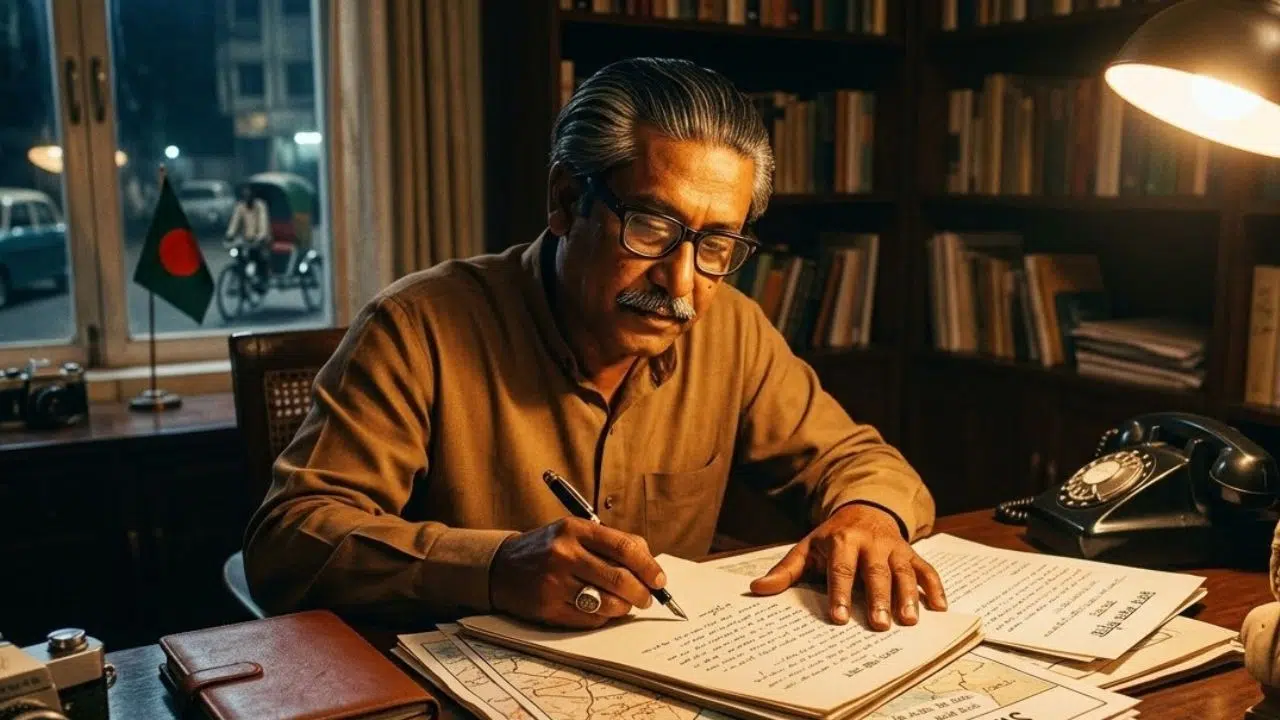
Perhaps the most significant milestone in the modern history of the Bangalee sphere on this date is the birth of Sheikh Mujibur Rahman in 1920 in the village of Tungipara. Known affectionately as “Bangabandhu” (Friend of Bengal), he became the driving force behind the independence of Bangladesh. Bangabandhu Sheikh Mujibur Rahman is the founder and the architect of Bangladesh. In the history of the Bengalee people, the nation of Bangladesh and the legacy of Bangabandhu are inextricably linked.
His political journey—from his crucial role in the Bengali Language Movement of 1952 to his historic 6-point demand in 1966—culminated in the 1971 Liberation War.
The Economic Suppression of Bengal Weavers (1769)
On a darker note, March 17, 1769, marks a devastating day for the economy of Bengal. The British East India Company (EIC) issued a strict decree to the Bengal government ordering that local, highly skilled silk weavers could only be employed as winders in British factories.
-
The Impact: This effectively criminalized independent local textile entrepreneurship. The policy was designed to eliminate any competition for British manufactured silk. It deliberately destroyed the self-sufficient artisanal economy of Bengal, pushing thousands into poverty and setting a grim stage for the Great Bengal Famine of 1770.
The Dalai Lama’s Escape to India (1959)
Geopolitics in South Asia shifted forever on this day when Tenzin Gyatso, the 14th Dalai Lama, fled a violent Chinese military crackdown in Lhasa, Tibet. Enduring a treacherous journey across the Himalayas on foot, he eventually sought and was granted asylum in India. This event not only established the Tibetan government-in-exile in Dharamshala but also permanently strained Sino-Indian relations.
Cricket World Cup Glory (1996)
On a cultural and sporting note, on March 17, 1996, Sri Lanka defeated Australia by 7 wickets in Lahore, Pakistan, to win the ICC Cricket World Cup. This marked a massive shift in world cricket, cementing South Asia’s dominance and passion for the sport on the global stage.
International Observances & Holidays
March 17 is celebrated globally, with millions of people participating in cultural, national, and religious observances.
St. Patrick’s Day
Originally a modest religious feast day honoring Saint Patrick, the patron saint of Ireland who died around 461 AD, this observance has exploded into a global phenomenon. Today, St. Patrick’s Day is a massive celebration of Irish culture, heritage, and the diaspora. From the green-dyed river in Chicago to massive parades in Dublin, New York, and Sydney, it is one of the most widely celebrated national festivals on earth.
Evacuation Day (United States)
In Suffolk County, Massachusetts (which includes the city of Boston), March 17 is an official holiday known as Evacuation Day. It commemorates the exact day in 1776 when British forces, commanded by General William Howe, evacuated the city of Boston. This retreat was a direct result of George Washington’s successful siege, marking Washington’s first major victory in the American Revolutionary War.
Global History: The Non-Bangalee World
Beyond South Asia, March 17 has been a day of scientific breakthroughs, political reformations, and regime changes.
United States & The Americas
-
1941 — The National Gallery of Art Opens: President Franklin D. Roosevelt officially inaugurated the National Gallery of Art in Washington, D.C. Funded by Andrew W. Mellon, it opened with one of the most remarkable collections of European and American art, making world-class masterpieces accessible to the American public.
-
1958 — Vanguard 1 Launched: The United States launched the Vanguard 1 satellite. Although communication with it was lost in 1964, it remains the oldest human-made object still orbiting the Earth today, serving as a silent testament to the early days of the Space Race.
-
1985 — The Shamrock Summit: US President Ronald Reagan and Canadian Prime Minister Brian Mulroney met in Quebec City. Dubbed the “Shamrock Summit” because both leaders shared Irish heritage and met on St. Patrick’s Day, this diplomatic meeting was crucial. It smoothed over lingering bilateral tensions, established joint environmental protocols to combat acid rain, and laid the foundation for the historic Canada-US Free Trade Agreement.
Europe
-
45 BC — Julius Caesar’s Final Victory: At the Battle of Munda in southern Hispania (modern-day Spain), Julius Caesar decisively defeated the Optimate forces led by the sons of Pompey the Great. This was Caesar’s final military victory before his assassination, solidifying his absolute control over the Roman Republic.
-
1861 — The Unification of Italy: After decades of the Risorgimento (the ideological and literary movement for unification), the scattered states of the Italian peninsula were officially unified into a single nation. The Kingdom of Italy was proclaimed, with Victor Emmanuel II taking the throne as its first king.
-
1905 — Albert Einstein’s Miracle Year Begins: A 26-year-old patent clerk named Albert Einstein finished his groundbreaking scientific paper explaining the photoelectric effect by proposing that light consists of discrete quantized particles (photons). This paper eventually won him the Nobel Prize and laid the foundational groundwork for quantum mechanics.
Africa & The Middle East
-
1969 — Israel Elects Golda Meir: Following the sudden death of Levi Eshkol, Golda Meir was elected Prime Minister of Israel. She was the first—and remains the only—female head of government in the Middle East, leading the nation through a highly turbulent period, including the Munich Olympics massacre and the Yom Kippur War.
-
1992 — The Fall of Apartheid Begins: In a watershed moment for human rights, white South Africans went to the polls in a national referendum. A resounding 68.7% voted “yes” to end the brutal system of apartheid, officially empowering President F.W. de Klerk to negotiate a new, multiracial democratic constitution alongside Nelson Mandela.
Famous Birthdays on March 17
This day has seen the birth of pioneering scientists, legendary artists, influential statesmen, and aerospace heroes. Here is a glance at some of the most notable figures born on this day.
| Year | Name | Nationality | Profession | Legacy & Contribution |
| 1834 | Gottlieb Daimler | German | Engineer | Pioneer of internal-combustion engines and automobile development; co-founder of the company that would become Mercedes-Benz. |
| 1919 | Nat King Cole | American | Musician | Legendary jazz pianist and vocalist whose velvety voice broke massive racial barriers in the US music and television industries. |
| 1920 | Sheikh Mujibur Rahman | Bangladeshi | Statesman | The Founding Father of Bangladesh. He led the nation to independence in 1971 and served as its first President. |
| 1951 | Kurt Russell | American | Actor | Iconic Hollywood star known for generation-defining roles in classics like Escape from New York, The Thing, and Tombstone. |
| 1955 | Gary Sinise | American | Actor/Philanthropist | Award-winning actor (Lt. Dan in Forrest Gump) and massive advocate for military veterans through the Gary Sinise Foundation. |
| 1962 | Kalpana Chawla | Indian-American | Astronaut | The first woman of Indian origin to travel to space. She tragically perished in the Space Shuttle Columbia disaster in 2003. |
| 1969 | Alexander McQueen | British | Fashion Designer | A visionary designer renowned for his emotional, darkly romantic, and technically brilliant runway artistry. |
| 1990 | Saina Nehwal | Indian | Badminton Player | Former world no. 1, she brought massive popularity to Indian badminton and won over 24 international titles. |
| 1992 | John Boyega | British | Actor | BAFTA-winning actor globally recognized for playing Finn in the Star Wars sequel trilogy and for his civil rights advocacy. |
Notable Deaths on March 17
March 17 also marks the passing of several individuals who left an indelible mark on history, philosophy, and science.
| Year | Name | Nationality | Cause/Legacy |
| 180 AD | Marcus Aurelius | Roman | Emperor and renowned Stoic philosopher (Meditations). His death marked the tragic end of the Pax Romana (Roman Peace). |
| c. 461 AD | Saint Patrick | Romano-British | The primary patron saint of Ireland who is credited with introducing Christianity to the island nation. |
| 1782 | Daniel Bernoulli | Swiss | Brilliant mathematician and physicist, best remembered for his applications of mathematics to mechanics, particularly fluid mechanics. |
| 1956 | Irène Joliot-Curie | French | Chemist, Nobel Laureate, and daughter of Marie Curie. She died of leukemia, directly caused by her hazardous pioneering work with artificial radioactivity. |
| 2012 | Pope Shenouda III | Egyptian | The 117th Pope of Alexandria and Patriarch of the See of St. Mark. He led the Coptic Orthodox Church for 40 years through a period of massive expansion. |
“Did You Know?” — Fascinating Trivia
Need some quick facts for your next conversation? Here are a few lesser-known historical quirks associated with this day:
-
The Simple Rubber Band Was Born Today: Can you imagine an office without rubber bands? On March 17, 1845, a London businessman named Stephen Perry officially patented the rubber band. He invented it to hold envelopes and papers together, changing office organization forever.
-
A Medieval Mouse Evacuation: According to historical German folklore, on March 17, 1233, an uncontrollable, apocalyptic swarm of millions of mice invaded the region of Freising. The infestation was so severe that it forced the complete evacuation of several surrounding towns.
-
Saint Patrick Wasn’t Actually Irish: Despite being the global face of Irish heritage, Saint Patrick was born in Roman Britain. At the age of 16, he was kidnapped by Irish raiders, sold into slavery in Ireland, escaped, and only later returned as a Christian missionary.
Quote of the Day
To conclude our historical dive, here is a powerful reflection from one of the most prominent figures born on this day:
“My greatest strength is the love for my people, my greatest weakness is that I love them too much.” > — Sheikh Mujibur Rahman, Founding Father of Bangladesh (Born March 17, 1920)
Final Thoughts
March 17 stands as another remarkable day in the pages of history, marked by significant events, influential births, and notable losses that have shaped societies across the world. From political milestones and cultural achievements to the lives of individuals who left lasting legacies, this day reflects how history unfolds through both triumphs and challenges.
Remembering these moments not only helps us understand the past but also offers perspective on the present and inspiration for the future. As we reflect on the events associated with March 17, we are reminded that every day carries stories that contribute to humanity’s shared journey. Exploring these historical highlights allows us to appreciate the people and events that continue to influence our world today.