February 28 marks the end of the second month of the year—unless it is a leap year—and historically, it has served as a dramatic closing chapter for world-changing events, groundbreaking scientific discoveries, and pivotal geopolitical shifts.
From the laboratories of colonial Kolkata to the high-stakes political arenas of the Middle East, February 28 is a date etched into the global archives. Whether you are an SEO professional tracking historical trends, a student of global anthropology, or a curious reader, this comprehensive guide breaks down exactly what happened “On This Day,” covering the Bangalee sphere, global milestones, and the legacies of those born and lost.
The Bangalee Sphere
The Indian subcontinent, particularly the Bangalee cultural sphere, has witnessed profound scientific breakthroughs, cultural renaissances, and tragic socio-political events on this date.
Historical Events & Scientific Milestones
-
1928 — The Discovery of the Raman Effect (Kolkata, India): Working out of the Indian Association for the Cultivation of Science in Kolkata, the brilliant physicist Sir C.V. Raman confirmed the inelastic scattering of photons—a phenomenon where light changes its wavelength and frequency upon interacting with molecules.
-
Why It Matters Today: This discovery revolutionized molecular spectroscopy, allowing scientists to identify the chemical composition of materials without destroying them. It earned Raman the 1930 Nobel Prize in Physics, making him the first Asian scientist to achieve this honor. Today, Raman spectroscopy is used globally in everything from pharmaceuticals to exploring the surface of Mars.
-
-
2002 — The Gujarat Riots (India): A dark chapter in modern South Asian history unfolded as profound religious violence swept through the state of Gujarat. On this specific day, the Naroda Patiya massacre and the Gulbarg Society massacre took the lives of 97 and 69 people, respectively. The socio-political ramifications of these events deeply polarized the nation and continue to influence Indian politics, civil rights discourse, and electoral strategies to this day.
Famous Births
-
Girish Chandra Ghosh (1844–1912): Born in Bagbazar, Calcutta, Ghosh was an actor, director, and the undisputed pioneer of modern Bengali theatre. Often referred to as the “Garrick of Bengal,” he co-founded the National Theatre in 1872, transforming regional performing arts from elite parlor entertainment into a public, ticketed cultural institution.
-
Ravindra Jain (1944–2015): Despite congenital blindness, Jain became one of the most prolific and beloved music composers and lyricists in Indian cinema, deeply influencing the soundscape of the 1970s and 1980s Bollywood and television epics like Ramayan.
Famous Deaths
-
Dr. Rajendra Prasad (1884–1963): The first President of independent India (serving from 1950 to 1962). A key leader of the Indian National Congress during the independence movement, Prasad was the stabilizing force who served as the President of the Constituent Assembly, helping to draft the Constitution that guides the world’s largest democracy today.
International Observances & Holidays
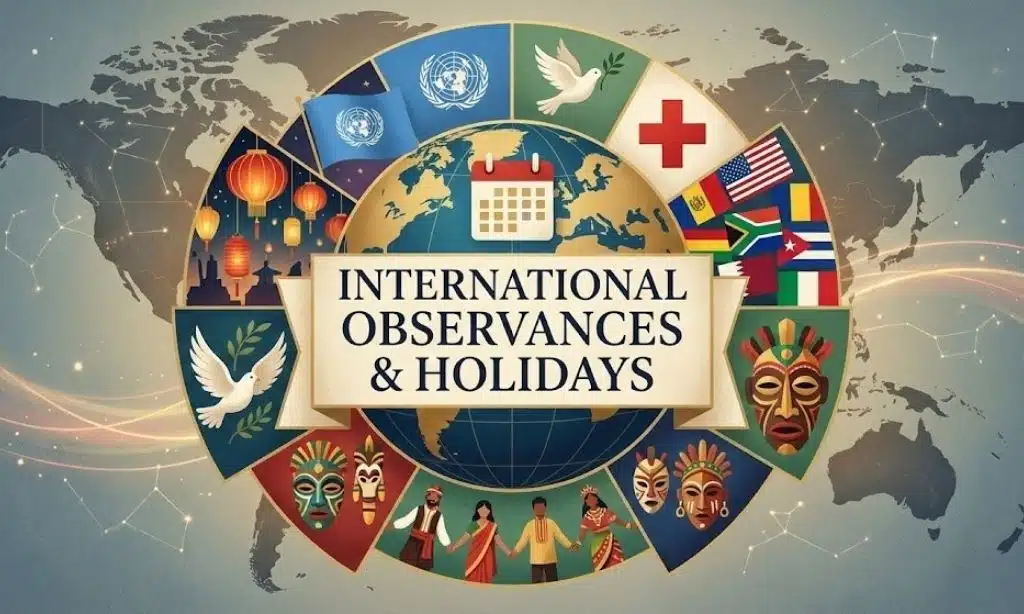
Across the globe, February 28 serves as a day of national pride, medical advocacy, and solemn remembrance.
Major International Days
-
Rare Disease Day: Observed on the last day of February (the 28th, or 29th in leap years), this vital awareness campaign highlights the medical, social, and psychological challenges faced by the estimated 300 million people worldwide living with a rare disease. It advocates for equity in healthcare access, faster diagnoses, and increased funding for orphan drug research.
National Days & Regional Observances
-
Peace Memorial Day (Taiwan): Commemorating the tragic 228 Incident of 1947, this public holiday is dedicated to remembering the victims of the anti-government uprising that was brutally suppressed. It is a day focused on transitional justice, healing historical wounds, and ensuring democratic transparency.
-
National Science Day (India): Directly tied to C.V. Raman’s discovery, India dedicates this day to promoting scientific temper, encouraging youth in STEM (Science, Technology, Engineering, and Mathematics), and celebrating the practical applications of science in daily life.
-
Andalusia Day (Spain): Marks the 1980 referendum that established Andalusia as an autonomous community, celebrating the unique Moorish-influenced culture, flamenco heritage, and history of southern Spain.
-
Kalevala Day (Finland): Also known as Finnish Culture Day, celebrating the 1835 publication of the Kalevala, Finland’s national epic poetry collection compiled by Elias Lönnrot.
Global History
History is an interconnected web. Here is how the world transformed on February 28 across different continents.
United States
- 1953 (Science & Tech): American biologist James D. Watson and British physicist Francis Crick walked into The Eagle pub in Cambridge, England, and announced they had discovered the “secret of life.” On this day, they finalized their model of the DNA double helix, completely transforming the fields of genetics, evolutionary biology, and modern forensics.
- 1991 (Military & Politics): Operation Desert Storm officially ended. Following a massive coalition air and ground campaign, U.S. President George H.W. Bush ordered a ceasefire, successfully expelling Iraqi forces from Kuwait. The conflict reshaped Middle Eastern geopolitics and established modern, tech-driven warfare doctrines.
- 1993 (Law Enforcement): The Waco Siege commenced. Agents from the Bureau of Alcohol, Tobacco, and Firearms (ATF) attempted to raid the Branch Davidian compound in Texas. The resulting gunfight sparked a horrific 51-day standoff that deeply influenced American anti-government militia movements for decades.
China & Taiwan
-
202 BC (Empire Building): Liu Bang was enthroned as the Emperor of China, establishing the mighty Han Dynasty. Ruling for four centuries, this dynasty established the Silk Road, invented paper, and created the civil service examination system, deeply defining the cultural identity of the modern Han Chinese majority.
-
1947 (Civil Rights): The 228 Incident began in Taiwan. After a cigarette vendor was violently arrested by Nationalist (Kuomintang) authorities, massive native Taiwanese protests erupted. The government’s brutal crackdown resulted in tens of thousands of deaths and initiated the “White Terror,” a period of martial law that lasted until 1987.
United Kingdom & Europe
-
1922 (Colonial History): The UK unilaterally ended its protectorate status over Egypt, formally recognizing it as an independent sovereign state. While the British maintained strategic military control over the Suez Canal, this was a massive domino falling in the post-WW1 decolonization of the Middle East and North Africa.
-
1975 (Infrastructure): The Moorgate Tube Crash occurred in London. A passenger train failed to brake and crashed into the dead end of a tunnel, killing 43 people. It remains the deadliest peacetime accident in the history of the London Underground and led to the widespread implementation of automated train stopping systems (“Moorgate protection”).
-
1986 (Assassination in Sweden): Swedish Prime Minister Olof Palme was assassinated in cold blood while walking home from a cinema in Stockholm with his wife. The murder of the outspoken pacifist and anti-apartheid advocate sent shockwaves through the politically neutral nation. Despite hundreds of confessions over the decades, the case officially remains a historical mystery.
Rest of the World
-
1525 (South America/Mexico): Cuauhtémoc, the last sovereign king of the Aztec Empire, was executed on the orders of Spanish conquistador Hernán Cortés. This execution definitively stamped out the final embers of indigenous Aztec imperial resistance against Spanish colonial rule.
-
2013 (Vatican City): Pope Benedict XVI officially resigned the papacy at 8:00 PM Rome time. Citing advanced age and declining health, he became the first Pope to voluntarily step down from the position since Pope Gregory XII in 1415, fundamentally modernizing the expectations of the papacy.
Notable Births (Global)
February 28 has birthed visionaries in architecture, Nobel laureates, and entertainment icons.
Science, Architecture & Literature
-
Michel de Montaigne (1533–1592, French): Philosopher of the French Renaissance, credited with popularizing the essay as a literary genre.
-
Linus Pauling (1901–1994, American): A giant of 20th-century chemistry. He is the only person in history to win two unshared Nobel Prizes—the Nobel Prize in Chemistry (1954) for his work on the nature of the chemical bond, and the Nobel Peace Prize (1962) for his anti-nuclear activism.
-
Frank Gehry (1929–Present, Canadian-American): One of the most important contemporary architects in the world. His deconstructivist style gave the world sweeping, metallic masterpieces like the Guggenheim Museum in Bilbao and the Walt Disney Concert Hall.
-
Paul Krugman (1953–Present, American): Distinguished macroeconomist, New York Times columnist, and winner of the 2008 Nobel Memorial Prize in Economic Sciences for his analysis of trade patterns.
Entertainment & Sports
-
Bugsy Siegel (1906–1947, American): Infamous American mobster who was highly influential in the development of the Las Vegas Strip.
-
Mario Andretti (1940–Present, Italian-American): A motorsport legend. He is one of only three drivers to win races in Formula One, IndyCar, World Sportscar Championship, and NASCAR.
-
Bernadette Peters (1948–Present, American): Critically acclaimed Broadway actress and singer, known for her definitive interpretations of Stephen Sondheim’s musicals.
-
John Turturro (1957–Present, American): Highly versatile character actor famous for his roles in The Big Lebowski, O Brother, Where Art Thou?, and Severance.
-
Karolína Kurková (1984–Present, Czech): High-fashion supermodel and former Victoria’s Secret Angel.
-
Luka Dončić (1999–Present, Slovenian): NBA superstar and generational basketball talent playing for the Dallas Mavericks.
Notable Deaths (Global)
On this day, the world bid farewell to literary giants, historical historians, and beloved entertainers.
-
Cuauhtémoc (Died 1525, Aztec): The final Tlatoani (Emperor) of Tenochtitlan, remembered today as a symbol of indigenous resistance in Mexico.
-
Henry James (Died 1916, American-British): A transitional figure between literary realism and literary modernism. He authored psychological masterpieces such as The Portrait of a Lady and The Turn of the Screw.
-
Friedrich Ebert (Died 1925, German): The pivotal first President of Germany (the Weimar Republic) following the collapse of the German Empire after World War I.
-
Arthur Schlesinger Jr. (Died 2007, American): Two-time Pulitzer Prize-winning historian and social critic who served as a special assistant to President John F. Kennedy.
-
Paul Harvey (Died 2009, American): Legendary conservative radio broadcaster whose program “The Rest of the Story” was a staple of American media for decades.
-
Jane Russell (Died 2011, American): Iconic Hollywood Golden Age actress and sex symbol, famous for starring alongside Marilyn Monroe in Gentlemen Prefer Blondes.
-
Yaşar Kemal (Died 2015, Turkish): One of Turkey’s leading writers and a fierce human rights activist, best known for his novel Memed, My Hawk.
-
George Kennedy (Died 2016, American): Academy Award-winning character actor known for his rugged roles in Cool Hand Luke and the Naked Gun series.
“Did You Know?” Trivia
Looking for smart facts to share at the dinner table? Here are three lesser-known trivia points about February 28:
-
The Most-Watched Goodbye: When the television series MASH* aired its final episode, “Goodbye, Farewell and Amen,” on February 28, 1983, it drew an astonishing 106 million viewers. It remains the most-watched finale of any television series in history, a record that will likely never be broken in the streaming era.
-
A Cheap Nobel Prize: Sir C.V. Raman’s groundbreaking optical experiments in 1928, which won him the Nobel Prize, were conducted using equipment that cost barely 200 rupees (including a basic spectroscope, a narrow slit, and the sun). It stands as a testament that human ingenuity transcends expensive laboratories.
-
The Miracle Fabric: On February 28, 1935, Wallace Carothers, a chemist at DuPont, successfully invented Nylon. This synthetic polymer changed the fashion industry forever, replacing silk in women’s stockings, and became a critical military material for parachutes during World War II.
Quote of the Day
“The best way to have a good idea is to have a lot of ideas.”
— Linus Pauling, Dual Nobel Laureate (Born February 28, 1901)
Final Thoughts
February 28 stands as a powerful reminder that history is never static—it is a living narrative shaped by triumphs, turning points, creative brilliance, and profound loss. From world-changing political milestones and scientific achievements to the birthdays of influential figures and the remembrance of remarkable lives, this day reflects the dynamic rhythm of human progress.
Each event tied to February 28 adds another layer to our shared global story, showing how decisions, discoveries, and individual contributions ripple across generations. By revisiting the moments that define this date, we gain deeper insight into how the past continues to influence our present and shape our future.
As we close the chapter on February 28, we are reminded that every day in history carries lessons, inspiration, and perspective—encouraging us not only to remember what has been, but also to thoughtfully shape what is yet to come.