Hey there, are you concerned about the air in your home? Maybe you’ve noticed odd smells, or your family keeps experiencing allergies and irritations. Indoor air pollution is a genuine issue, and it can affect your health in subtle ways, like causing skin irritation or even heart issues.
Here’s a quick fact to consider: adopting non-toxic living can improve your gut health, clear up your skin, and stabilize your hormones. That’s right, the items in your home, from paints to rugs, can have a significant impact.
In this post, we’re exploring “The Air-Purifying Home: 6 Non-Toxic Materials For Healthier Living” to help you eliminate toxic chemicals and breathe more freely. We’ll share easy changes, like VOC-free flooring and air-purifying indoor plants, to refresh your space.
Stay with us, it’s worth it!
Key Takeaways
- Non-toxic paints with GreenGuard Gold or CARB certifications cut down on VOCs, reducing headaches and risks from formaldehyde.
- VOC-free flooring like cork, bamboo, or hardwood with non-toxic seals keeps air clean and avoids heart issues.
- Natural fiber rugs made of wool or jute, with Oeko-Tex certification, skip harmful PFAS and flame retardants.
- Organic bedding and mattresses with CertiPUR-US certification lower VOCs, ensuring safer sleep without skin allergies.
- Air-purifying plants like Spider Plant and Peace Lily reduce indoor pollutants, which can be 2 to 5 times higher than outdoor air.
Non-Toxic Paints

Let’s talk about non-toxic paints, folks. You might not think about it, but regular paints can release harmful stuff like VOCs, or volatile organic compounds, into your home. These nasty chemicals can linger for months, even years, messing with your air quality.
Breathing them in isn’t a joke, as they can cause headaches or worse. So, switching to safer options is a smart move for a healthy lifestyle.
Now, check for labels like GreenGuard Gold or CARB certifications when picking paint. These tags mean low-VOC content, so you’re not inviting toxic chemicals into your space. Imagine painting your living room without that harsh chemical smell stinging your nose.
It’s like a breath of fresh air, literally. Plus, you dodge risks from stuff like formaldehyde, a known carcinogen often hiding in traditional paints. Stick with these safer choices, and you’re on your way to a cleaner, sustainable living space.
VOC-Free Flooring Options
Hey there, readers, let’s chat about keeping your home safe with VOC-free flooring options. Volatile Organic Compounds, or VOCs, are nasty chemicals that sneak out of many floors over months or even years.
They mess with your air quality and can harm your health. Think headaches, dizziness, or worse, like heart problems. So, picking the right flooring isn’t just about looks; it’s a big step for a healthy lifestyle.
Now, check out some solid choices that won’t pollute your space with toxic chemicals. Go for materials like cork or bamboo, which are natural and often carry labels like GreenGuard Gold or CARB certifications for low VOC emissions.
Hardwood is another great pick if it’s unfinished or sealed with non-toxic stuff. Watch out for sneaky toxins like formaldehyde, a known carcinogen, often hiding in glues for laminate floors.
Stick with sustainable options, and you’ll breathe easier, literally, while dodging airborne contaminants in your air-purifying home.
Natural Fiber Rugs and Carpets
Natural fiber rugs and carpets can transform your home into a haven of non-toxic living. Think wool, jute, or sisal, folks, these materials skip the harmful chemicals often found in synthetic options.
Unlike conventional cotton, which is loaded with pesticides, these fibers keep your space cleaner and safer. Plus, they add a cozy, earthy vibe to any room. Who doesn’t love a soft rug underfoot that’s also kind to the planet?
Stick with organic or Oeko-Tex-certified fabrics to dodge toxic nasties like PFAS, formaldehyde, and flame retardants often hiding in synthetic fabrics. Many “antibacterial” or “stain-resistant” labels sneak in harmful stuff, so pass on those unless they’re clearly PFAS-free.
Opt for pure, natural weaves to cut down on VOCs, those pesky volatile organic compounds that mess with your air quality. Your lungs will thank you for this simple switch to a healthier, sustainable lifestyle.
Sustainable and Chemical-Free Furniture
Moving from natural fiber rugs, let’s talk about filling your home with sustainable and chemical-free furniture. Your cozy couch or sturdy dining table shouldn’t harm your health, right? Many standard pieces hide toxic chemicals like formaldehyde, a known carcinogen often found in glues and resins.
These nasties, along with VOCs, lead, and phthalates, can linger in your air for months or even years. That’s a sneaky threat to your family’s well-being.
Opt for furniture with GreenGuard Gold or CARB certifications, as they signal low-VOC emissions. Think solid wood over particleboard, and pick items free from harmful finishes. It’s like choosing a fresh apple over a sugary snack, simple but smart for a healthy lifestyle.
Want to dodge those endocrine-disrupting chemicals? Hunt for brands that prioritize non-toxic materials. Your home deserves to be a safe haven, not a hotspot for polluted air.
Organic Bedding and Mattresses
Shifting from eco-friendly furniture, let’s chat about something just as vital for your home, your sleep space. Organic bedding and mattresses can transform your bedroom into a safe haven, free from harmful stuff.
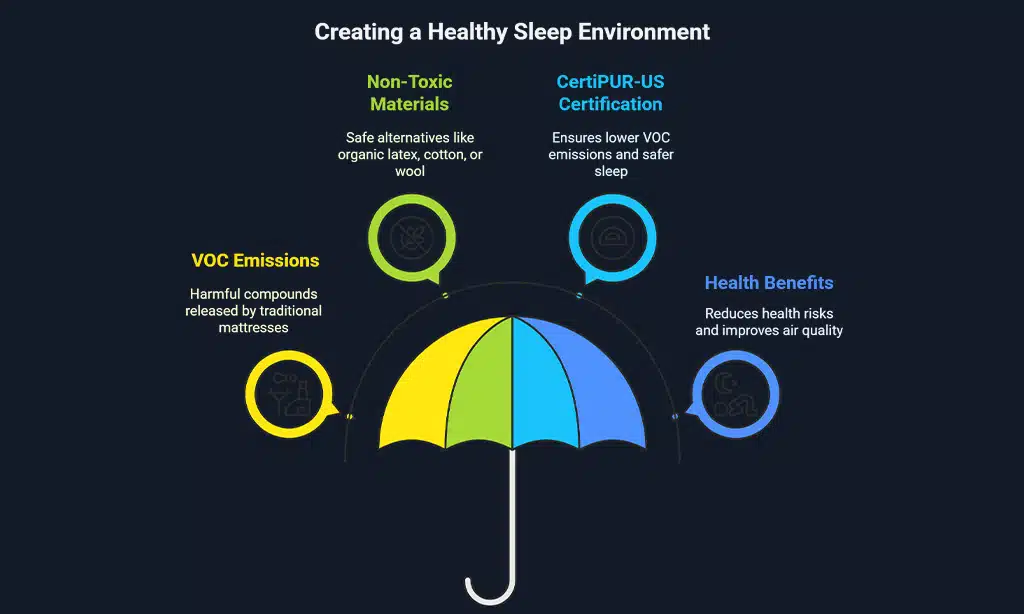
Traditional mattresses often release VOCs, or volatile organic compounds, because of polyurethane foam and flame retardants. That’s a sneaky health risk, right under your nose while you snooze! Going for non-toxic options means you dodge these toxic chemicals and breathe easier at night.
Opting for organic latex, cotton, or wool mattresses is a smart move for a healthier lifestyle. These materials skip the nasty stuff like formaldehyde, a known carcinogen found in some glues and resins.
Plus, look for CertiPUR-US certification on products; it means lower VOC emissions and safer sleep. Imagine sinking into bed, knowing your setup isn’t messing with your air quality or risking skin allergies.
Isn’t that a sweet dream worth chasing? Let’s keep that bedroom a pure, clean zone with these natural picks.
Air-Purifying Indoor Plants
Indoor air can get pretty stuffy, huh? Let’s talk about some green buddies that clean up those nasty toxins like VOCs and formaldehyde.
- First up, the Spider Plant is a champ at fighting indoor pollutants. It’s super easy to care for, even if you forget to water it sometimes. This plant sucks up harmful stuff from the air, making your home safer. Since indoor pollutants can be 2 to 5 times higher than outdoors, that’s a big win. Plus, it looks cute hanging in a pot by your window.
- Next, meet the Peace Lily, a pretty plant with a powerful punch. It tackles toxins like ammonia and benzene, often found in household cleaners. Keep it in a shady spot, and it’ll thrive while purifying your space. With 90% of our time spent indoors, having this helper is a game-changer. Oh, and its white blooms add a nice touch to any room.
- Then there’s the Snake Plant, tough as nails and great for air quality. It filters out nasty volatile organic compounds (VOCs) that sneak into your home. Best part? It releases oxygen at night, so pop it in your bedroom. Considering common indoor toxins like lead and phthalates, you’ll breathe easier. Low maintenance too, just don’t overwater it.
- Don’t skip on Aloe Vera, a dual-purpose green gem for your place. It clears out formaldehyde, a sneaky toxin in many products. Plus, its gel soothes burns if you nick yourself cooking. With so much time indoors, cutting pollutants is key. Keep it in sunlight, and watch it work its magic.
- Finally, the Boston Fern is a lush option to freshen things up. It battles pollutants like VOCs, keeping your air clean and crisp. It loves humidity, so a bathroom spot works perfect. Since indoor air quality matters a ton for environmental health, this fern helps a lot. Mist it now and then to keep it happy and thriving.
Takeaways
Hey there, ready to breathe easy in your own home? Switching to non-toxic materials is a game-changer for your health, and it’s simpler than you might think. Picture your space filled with clean air, free from harmful junk.
Take that first step today, and watch how a healthier lifestyle unfolds right before your eyes. Let’s make your home a safe haven, one choice at a time!
FAQs on Non-Toxic Materials For Healthier Living
1. What are some non-toxic materials for a healthier home?
Hey there, let’s talk about kicking toxic chemicals to the curb with non-toxic living. Think about using certified organic textiles for your clothes and garments; they cut down on allergic reactions and textile dermatitis. Or, swap out those chemical-laden air fresheners for a simple air purifier or humidifier to keep your space fresh without VOCs, those nasty volatile organic compounds.
2. How do everyday products like cosmetics harm my health?
Listen up, because those lipsticks and shampoos in your bathroom might be sneaky little troublemakers. Many personal care products and skin care items hide endocrine disrupting chemicals, or EDCs, that mess with hormonal disruptions and could even link to obesity or diabetes.
3. Why should I ditch non-stick pans and plastics?
Yo, those non-stick pans might make cooking a breeze, but they’re often loaded with toxic chemicals that can seep into your food. Same goes for plastics; they can release junk like polycyclic compounds into your meals. Go for safer cookware and storage to dodge that slow accumulation of harmful stuff in your body.
4. Can switching to organic foods really make a difference?
Absolutely, my friend, choosing organic foods over processed foods is like giving your body a high-five. It cuts down on exposure to nasties like DDT or weed killer residues that sneak into non-organic grub and mess with your healthy diet.
5. What’s the deal with bug spray and weed killer around my home?
Let me paint you a picture, pal; bug spray and weed killer are like uninvited guests that overstay their welcome. They often carry toxic chemicals that can linger in contaminated groundwater or even breast milk, posing risks to environmental health sciences and your family’s well-being.
6. How can I freshen up my personal care routine without risks?
Hey, let’s rethink that cologne or hair care stash, shall we? Swap out products with coal tar or artificial sweeteners for safer picks like essential oils in your beauty industry buys, or check ratings from the Environmental Working Group to dodge chromium and other baddies in sunscreens. It’s a small step for big wins in non-toxic living and dodging IBS or other woes.