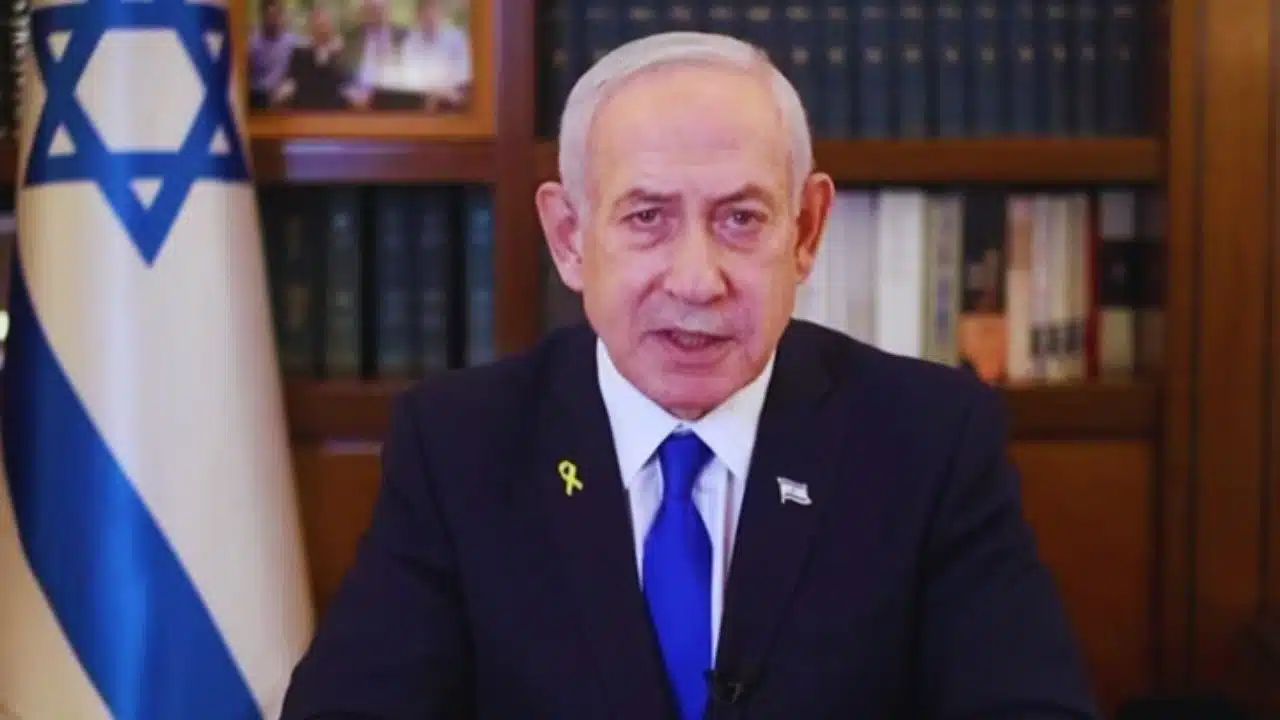
Benjamin Netanyahu, the longest-serving prime minister in Israel’s history, has formally requested a pardon from President Isaac Herzog amid his ongoing corruption trials. This request marks an extraordinary moment in Israeli politics, as Netanyahu has been on trial since 2020 facing serious allegations of bribery, fraud, and breach of trust across three separate cases. Despite denying any wrongdoing and pleading not guilty, Netanyahu argues that the trial has become a divisive force weakening the country and that granting a pardon would promote national unity and allow him to better serve Israel’s security and diplomatic interests.
Netanyahu’s Pardon Request and Its Context
Netanyahu submitted a detailed request including a comprehensive 111-page legal appeal along with a personal letter, both delivered to President Herzog’s office for review. Herzog’s office acknowledged the “extraordinary” nature of this request, noting that it carries significant implications and will be carefully considered after consulting the Ministry of Justice and legal advisers. The Israeli president holds constitutional authority to grant pardons, potentially even before a final conviction, in cases where doing so aligns with the public interest or involves exceptional personal circumstances. Netanyahu’s legal team insists that this decision is one of public necessity rather than personal benefit, aiming to reduce domestic tensions.
In a video message released by Netanyahu’s Likud party, he emphasized the drain on his time and his ability to govern effectively due to the trial’s demands, including testifying up to three times per week—something he claims no other citizen experiences. He also expressed hope that public support will back his step to seek the pardon for the sake of Israel’s welfare. Netanyahu stressed that the trial has deepened divisions in Israeli society at a time when the country faces profound security challenges and diplomatic opportunities, making national unity a pressing need. This stance comes despite his original preference to see the judicial process through to a conclusion, confident he would be cleared of charges.
Details of the Corruption Trials
Benjamin Netanyahu stands accused in three distinct cases, all centering on bribery, fraud, and breach of trust. The first case alleges that Netanyahu received expensive gifts, including cigars and champagne, from wealthy businessmen in exchange for political favors. The second involves accusations that he sought to influence media coverage by offering favors to a newspaper in return for positive publicity. The third case deals with claims that he promoted regulatory decisions favoring a telecom company’s controlling shareholder, expecting favorable online coverage as a quid pro quo. Throughout these years, Netanyahu has vehemently denied all accusations, calling the court proceedings a politicized “witch hunt” spearheaded by his political adversaries.
These legal battles have been prolonged and deeply contentious, dominating Israeli politics and public discourse for half a decade. Netanyahu is unique in Israeli history as the first sitting prime minister to be criminally indicted and prosecuted. His trials have sparked heated debate regarding the separation of powers, the rule of law, and the impact of legal proceedings on the functioning of the government.
Political and Public Reactions
Netanyahu’s request has ignited strong reactions across Israel’s political spectrum. His supporters, particularly within the right-wing Likud party and allied factions, view the pardon as a necessary step to stabilize the country and allow Netanyahu to focus on governance without being hampered by continuous court appearances. Among them, figures like National Security Minister Itamar Ben-Gvir have publicly endorsed the pardon as vital for Israel’s security amid ongoing threats.
Opposition leaders, including Yair Lapid and Yair Golan, have strongly opposed the request, asserting that pardons should not be granted without an admission of guilt, sincere remorse, and Netanyahu’s retirement from political life. They warn that granting clemency in this case would undermine Israel’s legal system’s credibility and damage democratic principles by effectively placing Netanyahu above the law. Many Israelis have taken to the streets in protests demanding that President Herzog reject the pardon request, highlighting concerns that this move could erode judicial independence.
This political drama unfolds against a backdrop of recent upheaval, including large public protests sparked by government plans for judiciary reform and the impact of the October 2023 Hamas attacks in Gaza, which intensified national security concerns. Internationally, Netanyahu faces additional pressure, with the International Criminal Court issuing an arrest warrant last year accusing him and a former defense minister of war crimes related to the Gaza conflict—charges he has denounced as antisemitic and unjust.
President Herzog’s office has committed to a thorough and responsible examination of the pardon request, consulting legal authorities before making a decision. The process is expected to take weeks, with possibilities ranging from outright pardon, conditional arrangements, or alternative legal solutions such as a plea deal. The outcome will have profound implications for Israel’s political landscape, judicial credibility, and national cohesion during a tumultuous period in the country’s history.