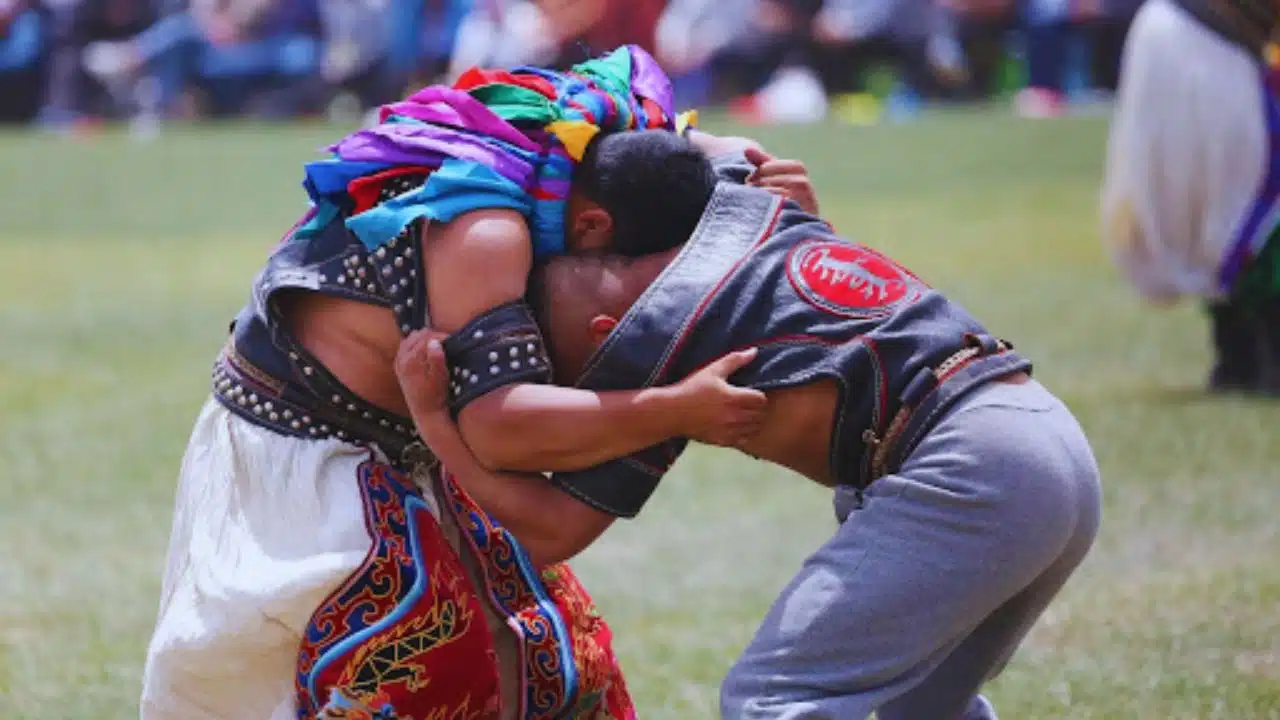
In Mongolia’s boundless, rolling steppes, where the steppe winds carry the tales of history, the Naadam Festival has been the pulse of national pride for centuries. At its center is wrestling, the most exalted of the “Three Manly Sports,” where physical strength is combined with strategic genius. Mongolia’s greatest wrestlers converge annually to challenge each other, with triumph earning not only renown but titles of tradition and respect. Among the myriad of champions, a chosen few have stood out, building legacies that resonate in yurts and stadia equally.
Let us enter the green arena and introduce the ten most titled wrestlers to have ever dominated the Naadam Festival, where spirit and strength collide and history is made one match at a time.
Wrestling Greatness Over the Centuries
Naadam wrestling, or Bökh as it is technically known in Mongolia, is unlike any other form of wrestling. No weight classes, and no time limits — just one-on-one fighting where experience, training, and sheer willpower triumph. Champions are rewarded with titles like “Lion,” “Elephant,” and ultimately “Titan” for their advancing position in the hierarchy of wrestling.
The quest for these titles has shaped the lives of most of Mongolia’s best athletes. Fans throughout the steppe mobilize behind their heroes in a passion equal to the manner supporters elsewhere in the world support sports such as football or basketball. Perhaps rather unexpectedly, as Naadam’s popularity grew, online forums monitoring not just Mongolian sport but foreign leagues appeared. This is why, each festival season, you will find Mongolian sports enthusiasts routinely checking the news on sites such as Melbet — either current wrestling match outcomes or even NBA odds, combining old and new sports enthusiasm in a special way unique to today’s world culture. But let’s get our attention back in the ring, where the most successful wrestlers have fought their way up through decades of relentless competition.
The Naadam Festival’s Legendary Wrestlers’ Names
There are winners of individual tournaments, but few, a select few, have consistently dominated the Naadam Festival year by year, even decade by decade. They are the cream of Mongolian wrestling tradition.
Below is the list of most decorated winners in Naa Dam’s rich history, and what makes them special:
| Wrestler Name | Titles Won | Active Era |
| Bat-Erdene Batbayar | 11 | 1980s–2000s |
| Dagvadorj Dolgorsürengiin (Asashoryu) | 6 | 2000s |
| Batsükh Mönkhbat | 9 | 1970s–1980s |
| Khishigbat Erdenebat | 7 | 1990s–2010s |
| Bayanjargal Bayarjavkhlan | 8 | 2000s–2010s |
| Tsogtbaatar Tserendorj | 6 | 1980s |
| Nyamjav Tserenpuntsag | 7 | 1960s–1970s |
| Ganbaatar Davaajav | 6 | 1990s–2000s |
| Erdene-Ochir Bat-Erdene | 8 | 2000s–2010s |
| Batbayar Jargalsaikhan | 5 | 1990s–2000s |
All of these athletes added their portion to Naadam’s tale. Bat-Erdene Batbayar, for example, is not only famous for holding a record number of titles, but for his sportiness throughout his life and, subsequently, his impact on Mongolian society outside the arena of wrestling.
While some of these legends remained within Bökh’s purview, others such as Asashoryu brought their talents overseas — he became a legendary Yokozuna in the sport of sumo wrestling, demonstrating that Mongolian competitors could excel too in far-flung fight sports.
Over generations, these names became more than winners — they became national icons and pride.
Beyond Strength: The Mental Game of Naadam Wrestling
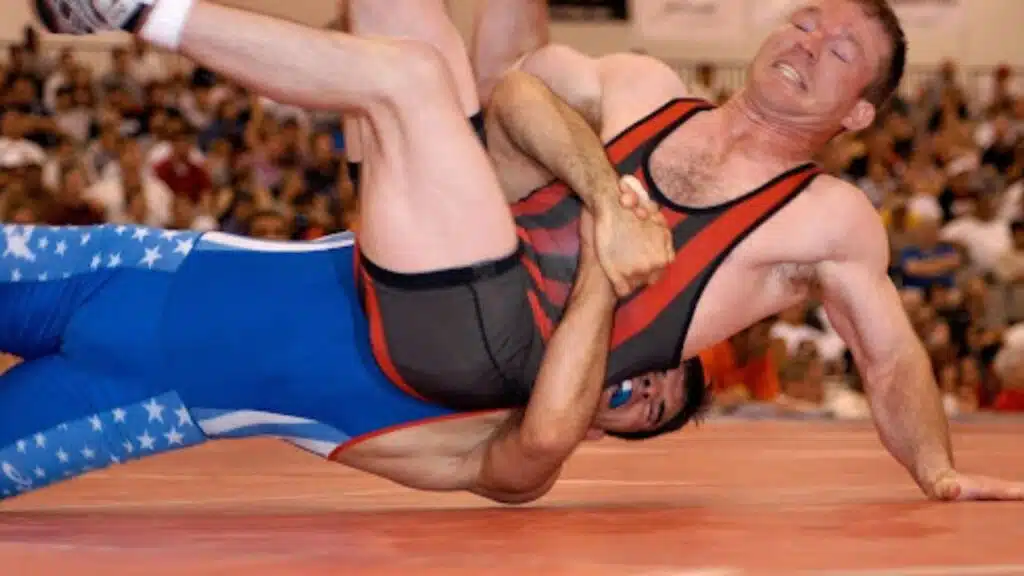
Naadam virtuosity is not brute force. The psychological advantage a wrestler possesses in the ring is generally the fine line between winning and losing. A champion must be patient, wait for his opportunity, and have the ability to read an opponent’s slightest gesture.
Each of the wrestlers trains not only the body but the mind. Meditation, control of breathing, and tactical thought are all part of training as much as heaving boulders or engaging in hundreds of training matches. The Naadam ground, open and vast, results in each match being an open test of bravery as much as strength.
To the astonishment of many, the popularity and celebrity of these wrestlers today reach far beyond Mongolian borders. Similar to how the internet enables fans to follow global sporting leagues, sites like Melbet have brought mass sporting events, reaching large viewerships from those who like to bet on the victor of wrestling matches as well as contemporary games. Melbet’s move into mass sporting events illustrates the increasing demand for combining cultural heritage with international sporting entertainment.
But for the wrestlers themselves, it is what happens in the ring that counts — and the opportunity to don once more the eagle-stitched jacket of Naadam champion.
The New Face of Naadam Champions
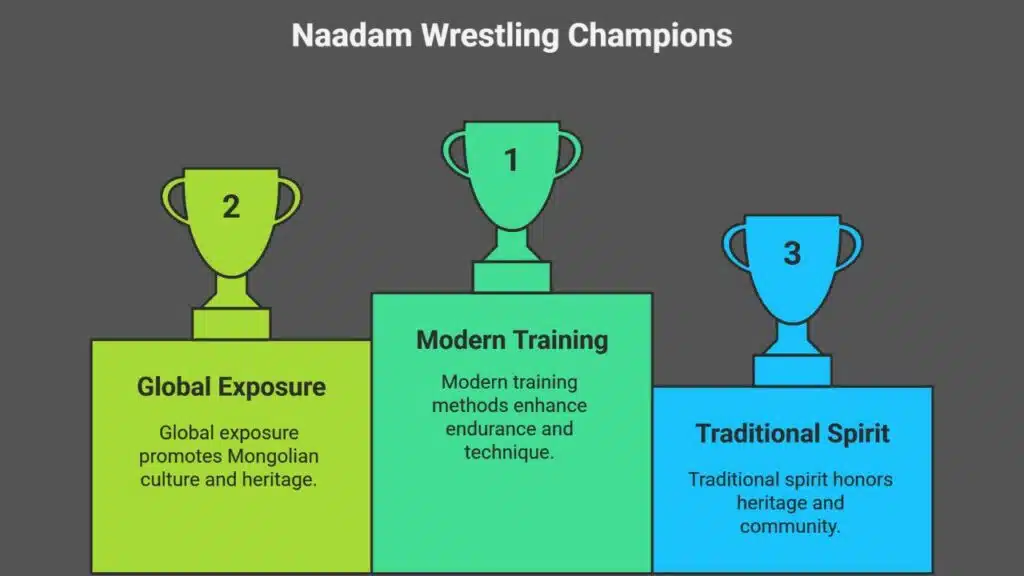
Naadam wrestlers now have a new path to follow from their ancestors. The new champions now incorporate traditional ways of training with modern ways. Diet, sports science, and even video analysis have been incorporated into the preparation phase, so endurance is just as important as technique.
A second difference is public exposure. Former winners were heralded in their own nations, while contemporary athletes are watched on national TV, social media, and even sometimes international sporting shows. This visibility has encouraged the spread of Mongolia’s culture globally, with Naadam festivals being marketed as UNESCO heritage events.
Where there has been modernization, the spirit has not been altered. The Naadam is still everything to Mongolian wrestlers. Not every win is a personal victory only — it’s a tribute to the tradition of their coaches, families, and tribes that fought across the steppes long ago.
Why These Legends Still Matter
Titles are tallied, but legacies are experienced. The fighters on this list did not simply win bouts — they bridged the gap between tradition and tomorrow. Their wins flooded villages with pride and brought the ancient sport of Bökh to the doorstep of the new world.
And in a world where foreign sports such as basketball or football dominate the front pages, Naadam champions are living testimony that some competition means so much more than points or dollars. They bear the weight of the people’s tale.