Plumbing rarely demands attention when everything works. Water appears on demand, drains disappear, and fixtures behave. The reality inside the walls is less tidy. Aging pipes, hard water, shifting temperatures, and everyday habits all combine to create common household plumbing problems that repeat across homes and neighborhoods.
Left alone, small drips and slow drains become soaked cabinets, mold, and insurance claims. Yet most issues start with simple warning signs and avoidable mistakes. By understanding how these problems develop and by adopting basic plumbing maintenance tips, homeowners can prevent many emergencies before they start.
Why Common Household Plumbing Problems Keep Coming Back
Even well-built homes are not immune to plumbing trouble. A few forces keep the same failures appearing again and again:
- Aging materials. Rubber washers harden, metal corrodes, and seals lose flexibility over time. Older homes often carry decades of deferred maintenance in their pipes.
Agora Architects - Hard water and mineral buildup. Minerals from hard water collect in aerators, showerheads, and inside pipes. Over time, this narrows the passageways, contributing to low pressure and clogs.
Plumbing Sniper - Every day misuse. Grease down the sink, wipes in the toilet, hair in the shower, and harsh chemicals in drains all accelerate wear and blockages.
- Weather and temperature swings. Freezing winters, hot summers, and shifting ground can stress buried lines, joints, and exposed pipes.
Prevention works because the most common household plumbing problems develop slowly. A drip, a stain, a faint smell, or a noisy pipe is often the first sign. Responding to those early cues—rather than waiting until a pipe bursts—keeps both water and repair bills under control.
10 Most Common Household Plumbing Problems (And How to Prevent Them)
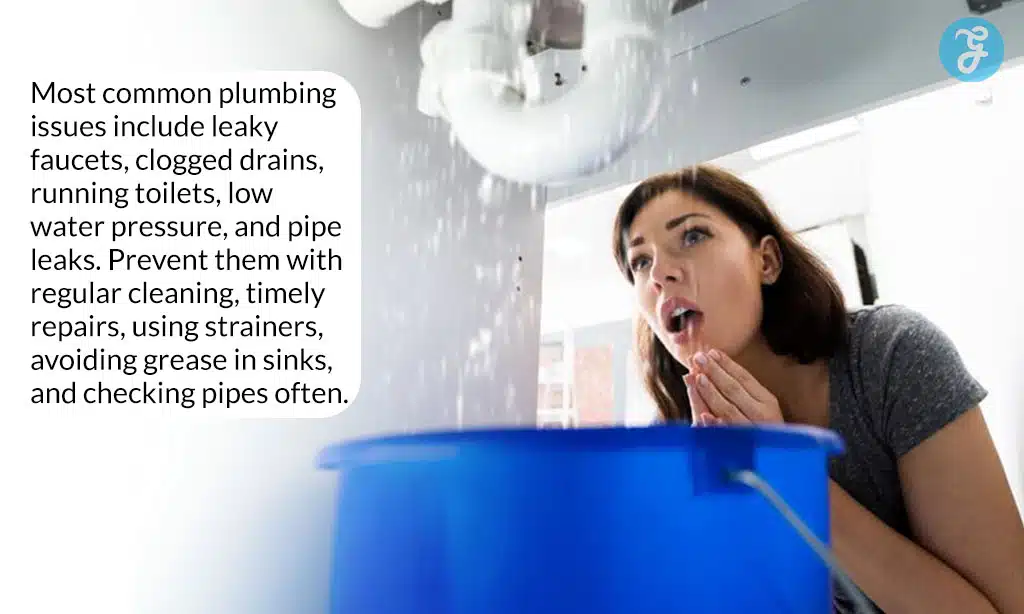
This section breaks down the 10 most common household plumbing problems—from leaks and clogs to low pressure and frozen pipes—and explains the simple, practical steps homeowners can take to prevent them before they become costly repairs.
1. Leaky or Dripping Faucets
A tap that never fully shuts off. You may see a slow but steady drip from the spout, damp spots around the base, or hear irregular dripping at night.
Why it happens
Inside most faucets, small components such as washers, O-rings, or cartridges create a water-tight seal. Over time, these parts wear, crack, or become coated with mineral deposits, allowing water to seep through. The pressure in the supply line makes even a tiny gap visible as a drip.
Leaks matter. The U.S. Environmental Protection Agency estimates that household leaks can waste around 10,000 gallons of water per home each year, with dripping faucets among the main culprits.
How to prevent it
- Avoid over-tightening taps. Cranking handles hard stresses internal parts and shortens their life.
- Install quality fixtures. Cheaper faucets often use lower-grade seals that fail sooner.
- Clean aerators regularly. Unscrew the tip of the spout and soak it in vinegar to dissolve mineral buildup.
- Schedule periodic inspection. In older homes, a plumber can replace worn cartridges and seals as part of routine plumbing maintenance tips, before leaks start.
2. Running Toilets That Never Stop Filling
After a flush, the toilet should refill and fall quiet. With a running toilet, you hear a constant trickle or intermittent hissing. Sometimes the bowl refills on its own with no one using it.
Why it happens
Inside the tank, a flapper lifts to release water into the bowl, then drops back onto the flush valve. When this rubber flapper warps, cracks, or accumulates mineral deposits, it no longer seals properly. Water escapes around it, the tank keeps refilling, and the toilet “runs.” Faulty fill valves or improperly set float heights can also keep water flowing. A single running toilet can waste hundreds of gallons per day, depending on the severity of the leak.
How to prevent it
- Lift the tank lid occasionally. Listen for hissing, check that the water level sits below the overflow tube, and inspect the flapper for wear.
- Use quality replacement parts. Universal flapper and fill-valve kits are inexpensive; better components last longer.
- Address hard water. Where mineral deposits are heavy, regular cleaning inside the tank and installing a water softener can reduce build-up.
- Teach gentle use. Slamming handles or tank lids can disturb internal mechanisms over time.
3. Clogged or Slow Drains in Sinks and Showers
Water pools at your feet in the shower or backs up in the sink. You may notice gurgling sounds as water drains or catch a sour smell near the plughole.
Why it happens
Bathroom drains collect hair, soap scum, toothpaste, and skin oils. Kitchen sinks face food scraps, grease, coffee grounds, and fibrous peels. Over time, these materials cling to the inside of pipes, narrowing the passage until even normal use causes slow draining or full blockages.
Harsh chemical drain cleaners can sometimes clear a minor clog, but frequent use can damage pipes and fixtures.
How to prevent it
- Use drain strainers. Fit simple mesh screens in sinks and shower drains to catch hair and food before it enters the pipe.
- Dispose of grease correctly. Let fats and oils cool in a container and throw them away, rather than rinsing them down the sink.
- Rinse with hot water. Periodic hot-water flushes help dissolve soap and oils before they solidify.
- Clean routinely. Remove and clean strainers weekly; use a non-caustic enzyme cleaner occasionally if recommended for your plumbing.
- Act early. At the first sign of slow draining, use a plunger or a manual drain snake. It is easier to clear a developing clog than a fully blocked pipe.
4. Clogged Toilets and Frequent Blockages
The bowl fills but drains slowly or not at all. You may see the water level rise alarmingly close to the rim. Repeated plunging becomes part of your routine.
Why it happens
Toilets are designed to handle human waste and toilet paper. Many clogs trace back to materials that do not dissolve easily: wipes, sanitary products, cotton pads, dental floss, excessive paper, or small items dropped by children. Tree roots and older, rough-walled pipes can also slow waste flow and trap debris.
How to prevent it
- Follow the “three P” rule. Only flush pee, poop, and (reasonable amounts of) toilet paper.
- Keep bins in every bathroom. Make it easy for guests and children to dispose of wipes and other items correctly.
- Talk to household members. Clear, simple rules prevent many clogs, especially in homes with children or frequent visitors.
- Address recurring issues. If one toilet clogs often despite careful use, have a plumber check the vent stack, trap design, and main line. Underlying design or root intrusion may be at fault.
5. Low Water Pressure Around the House
Showers feel weak, faucets take a long time to fill a pot, and spray patterns look uneven or patchy. The problem may affect one fixture or the entire home.
Why it happens
Low pressure has several common causes:
- Localized mineral buildup or debris inside aerators and showerheads
- Partially closed shutoff valves
- Failing pressure regulators
- Hidden leaks or corroded pipes reduce effective flow
Typical household water pressure should sit around 40–60 psi. Significant drops below that range lead to poor performance and may signal deeper plumbing issues.
How to prevent it
- Clean aerators. Unscrew faucet tips, rinse out debris, and soak in vinegar to dissolve mineral deposits.
- Check valves. Confirm main and individual fixture shutoff valves are fully open after repairs or renovations.
- Monitor pressure. A simple gauge on an outdoor tap shows if whole-house pressure is drifting outside the normal range.
- Plan for aging systems. In older homes with galvanized steel pipes, consider phased replacement with modern materials before severe corrosion restricts flow.
6. Leaky Pipes and Hidden Plumbing Leaks
Not all leaks are obvious drips under a sink. Hidden leaks often show up as:
- Unexplained increases in water bills
- Damp patches on walls, ceilings, or floors
- Musty smells or visible mold
- Warm spots on floors above hot-water lines
Why it happens
Leaks occur where pipes join, at fittings, and where materials weaken. Corrosion, shifting foundations, temperature changes, and manufacturing defects all contribute. Even a small, constant trickle can cause structural damage and mold growth over time.
How to prevent it
- Watch your water bill. A sharp, unexplained jump often points to a leak.
- Use the meter test. Turn off all fixtures, note the meter reading, and check again after 1–2 hours. Movement suggests water is escaping somewhere.
- Inspect regularly. Look under sinks, around water heaters, behind appliances, and along exposed pipes for rust, discoloration, or moisture.
- Protect vulnerable pipes. In garages, crawl spaces, and basements, insulate exposed runs to reduce condensation and temperature stress.
- Act quickly. When you see a stain or suspect a leak, call a plumber before the damage spreads.
7. Water Heater Problems (No Hot Water or Inconsistent Heat)
Showers suddenly go cold, hot water runs out faster than usual, or the temperature fluctuates. You may hear rumbling or popping from the tank, or see discolored water at the hot tap.
Why it happens
Sediment from the water supply settles at the bottom of storage tanks over time. This layer insulates the water from the heating element or burner, reducing efficiency and capacity. Thermostats and heating elements can fail, while older tanks eventually corrode and leak.
How to prevent it
- Flush the tank regularly. Annual draining (or as recommended by local professionals) helps remove sediment and extend the heater’s life.
- Check temperature settings. Keep the thermostat at a safe, efficient setting (often around 49–54°C / 120–130°F, depending on local guidance).
- Insulate pipes and the tank. In colder climates, insulation sleeves reduce heat loss and ease the workload on the heater.
- Schedule professional inspections. A periodic check can spot corroded anode rods, failing valves, or venting issues before they cause outages or leaks.
8. Kitchen Sink Backups and Grease-Related Clogs
Water backs up into the sink when you run the dishwasher or garbage disposal. You may notice a slow swirl even with small amounts of water, or smell stale food from the drain.
Why it happens
Kitchens handle dense, sticky waste: oils, fats, starches, rice, pasta, and coffee grounds. Grease poured down the drain cools and hardens on pipe walls, catching food scraps and narrowing the passage. When a garbage disposal is present, overloading it or running it without enough water accelerates buildup.
How to prevent it
- Keep grease out of drains. Wipe pans with paper towels and discard them in the bin. Pour cooled fat into a container and throw it away.
- Use plenty of water with disposals. Run cold water during and after use to help carry particles away.
- Avoid certain foods. Fibrous skins, eggshells, large bones, coffee grounds, and large quantities of starchy foods belong in the trash or compost, not the disposal.
- Clean routinely. Periodically grind ice cubes and a small amount of baking soda in the disposal to help scrape residue and freshen the unit.
9. Sewer Line Backups and Persistent Bad Odors
Multiple fixtures clog or drain slowly at the same time. You may hear gurgling in toilets when running sinks, or notice foul odors from floor drains and yard clean-outs. In severe cases, wastewater backs up into tubs, showers or basements.
Why it happens
Sewer lines carry all waste away from the house. Over the decades, they can sag, crack, or become invaded by tree roots. Grease, wipes, and other non-flushables also accumulate, forming stubborn blockages. Heavy rain can overwhelm older systems and push wastewater back toward the home.
How to prevent it
- Respect what goes down drains. Many “flushable” wipes do not break down quickly and contribute to clogs.
- Plant trees carefully. Keep deep-rooted species away from the path of buried sewer lines.
- Schedule preventive cleaning. In older homes or properties with a history of sewer issues, periodic camera inspections and cleaning help catch developing problems.
- Install a backwater valve where appropriate. In flood-prone or older neighborhoods, a licensed plumber can advise whether a backflow prevention device makes sense.
- Sewer problems sit at the serious end of common household plumbing problems. Here, early professional advice is usually the most cost-effective step.
10. Frozen and Burst Pipes in Cold Weather
In cold climates, faucets suddenly stop delivering water during a freeze. You may see frost on exposed pipes, bulging sections, or hear unusual noises. After temperatures rise, water appears in unexpected places as damaged pipes thaw and leak.
Why it happens
When water freezes inside a pipe, it expands. If pressure builds with nowhere to go, the pipe can crack or burst. Pipes in unheated spaces—attics, crawlspaces, exterior walls, and garages—face the highest risk. Plumbing experts note that pipes become especially vulnerable when temperatures fall to around −6.6°C (20°F) or lower.
How to prevent it
- Insulate exposed pipes. Foam sleeves or insulation tape significantly reduce freezing risk in basements, crawlspaces, and along exterior walls.
- Seal gaps. Close openings where cold air enters around cable penetrations, hose bibs, and vents.
- Let faucets drip during hard freezes. A slow trickle keeps water moving, easing pressure in vulnerable runs.
Homes and Gardens - Disconnect outdoor hoses and shut exterior valves. This prevents trapped water in exterior lines from freezing and damaging interior sections.
- Maintain indoor heat. Even when away, keeping the home above a minimum temperature helps protect pipes in walls and ceilings.
Simple Plumbing Maintenance Tips to Prevent Problems
Preventing common household plumbing problems does not require a full tool kit or technical training. Instead, it depends on regular attention and a few repeatable habits.
Consider these plumbing maintenance tips as a baseline:
- Do a monthly walkthrough. Look under sinks, behind toilets, and around your water heater. Check for moisture, rust, stains, or musty smells.
- Test little-used fixtures. Run water through guest bathrooms and basement sinks to keep traps full and reduce odor.
- Listen for changes. New hissing, dripping, banging, or gurgling sounds are often early warning signs.
- Track your bill. A steady rise in water use without a change in habits often signals hidden leaks.
- Protect drains. Strainers in showers and sinks, kitchen grease discipline, and clear “what not to flush” rules reduce clogs dramatically.
- Book periodic professional checks. For older systems or homes with a history of issues, a routine inspection can identify small problems before they become emergencies.
A Quick Home Plumbing Maintenance Checklist
You can adapt this simple checklist to your own household and climate.
Every month:
- Check under all sinks for dampness or stains
- Inspect around toilets for rocking, leaks, or constant running
- Clean faucet aerators and shower strainers
- Run water through seldom-used fixtures
Every three to six months:
- Flush sediment from the water heater if your model allows it
- Inspect visible pipes in basements, crawlspaces, and garages
- Clear debris from outdoor drains and gutter downspouts
- Review water bills for unexplained increases
Before winter or cold snaps:
- Insulate or double-check insulation on exposed pipes
- Disconnect outdoor hoses and shut off exterior taps
- Open cabinet doors under sinks on exterior walls during hard freezes
- Let at-risk faucets drip during extreme cold
Ongoing:
- Keep grease, wipes, and hygiene products out of drains
- Educate everyone in the home about the proper use of plumbing fixtures
- Call a licensed plumber promptly when you notice persistent problems
Final Thoughts: Treat Plumbing as Part of Routine Home Care
Most common household plumbing problems are predictable. Faucets drip, toilets run, drains clog, and pipes age. What changes the outcome is how quickly homeowners notice and respond.
By pairing basic awareness with a few plumbing maintenance tips, you reduce the likelihood of sudden, costly emergencies. You protect your property, conserve water, and avoid the stress of dealing with leaks at midnight or sewer backups on a holiday.
Plumbing may sit out of sight, but it does not have to remain out of mind. A simple, consistent approach to prevention is often the best answer to the question of how to prevent plumbing problems, and keep your home’s water system quietly doing its job in the background.