


Medical negligence and malpractice are typically used interchangeably but represent distinct legal concepts. Understanding the differences between the two is crucial for patients who believe they’ve suffered harm due to a healthcare provider’s actions. While both involve substandard care, the legal implications and requirements for proving each claim vary significantly.
Read on what is considered medical negligence and how it differs from malpractice.
Defining Medical Negligence
Medical negligence occurs when a medical professional fails to provide the standard of care that a reasonably competent practitioner would do under similar circumstances. This failure doesn’t necessarily involve intentional harm but rather a deviation from accepted medical practices. Examples include misdiagnosis, surgical errors, medication mistakes, or failure to obtain informed consent.
Moreover, to establish a negligence claim, four key elements must be proven, including:
- Duty of Care: The healthcare provider had a legal obligation to treat the patient according to medical standards.
- Breach of Duty: The provider failed to meet the expected standard of care.
- Causation: The breach directly caused harm to the patient.
- Damages: The patient suffered measurable harm, such as physical injuries, emotional suffering, or financial losses.
Unlike malpractice, negligence doesn’t require proof of intentional wrongdoing or gross incompetence. It focuses on whether the provider’s actions fell below the accepted standard. Therefore, patients who suspect they’ve been victims of substandard medical treatment may benefit from consulting a medical negligence lawyer in Orlando or similar locations to evaluate their case. Legal professionals can help determine whether the situation qualifies as negligence or malpractice and guide victims through the appropriate legal steps.
Understanding Medical Malpractice

Medical malpractice represents a serious breach of professional duty that goes beyond ordinary negligence. Unlike simple medical errors in judgment, malpractice involves reckless behavior, intentional harm, or such a profound failure in care that it violates ethical and legal standards. Some examples include performing surgery while intoxicated, deliberately ignoring critical symptoms, or falsifying medical records.
To prove malpractice, plaintiffs must demonstrate that the provider’s actions were not merely substandard but demonstrated a willful or grossly negligent disregard for patient safety. This situation can make malpractice cases more complex, often resulting in stricter legal consequences.
Key Differences Between Negligence and Malpractice
While both concepts involve substandard care, malpractice carries greater legal consequences due to its intentional or egregious nature. Some critical distinctions include:
Intent or Gross Negligence
Malpractice cases hinge on intentional harm or extreme recklessness, such as a surgeon operating under the influence. Negligence, however, may involve an unintentional error, like misreading a lab result. The key distinction lies in the provider’s state of mind, such that malpractice suggests willful disregard for safety, while negligence typically results from oversight without malicious intent.
Legal Consequences
Medical malpractice claims carry harsher penalties, including punitive damages designed to punish egregious misconduct. Negligence cases usually award compensatory damages, covering medical bills and lost wages. Courts can impose stricter sanctions in malpractice suits due to the severity of misconduct, whereas negligence rulings can focus on restoring the victim’s losses rather than penalizing the provider.
Burden of Proof
Malpractice demands stronger evidence, proving the provider acted recklessly or intentionally, beyond incompetence. Negligence only requires showing a deviation from standard care. Expert testimony is critical in both, but malpractice cases face higher scrutiny, as plaintiffs must establish a mistake and a blatant violation of professional duty.
When Does Negligence Become Malpractice?
The line between negligence and malpractice is crossed when a healthcare provider’s conduct shows deliberate indifference or extreme recklessness toward patient welfare. While negligence might involve an accidental oversight, malpractice requires proof of intentional harm or such gross deviation from accepted standards that shocks the conscience.
Some clear examples include a doctor operating under the influence of drugs or knowingly disregarding life-threatening test results. These actions go beyond mere carelessness, representing a fundamental betrayal of medical ethics and professional responsibility, warranting stronger legal consequences.
Legal Recourse for Victims
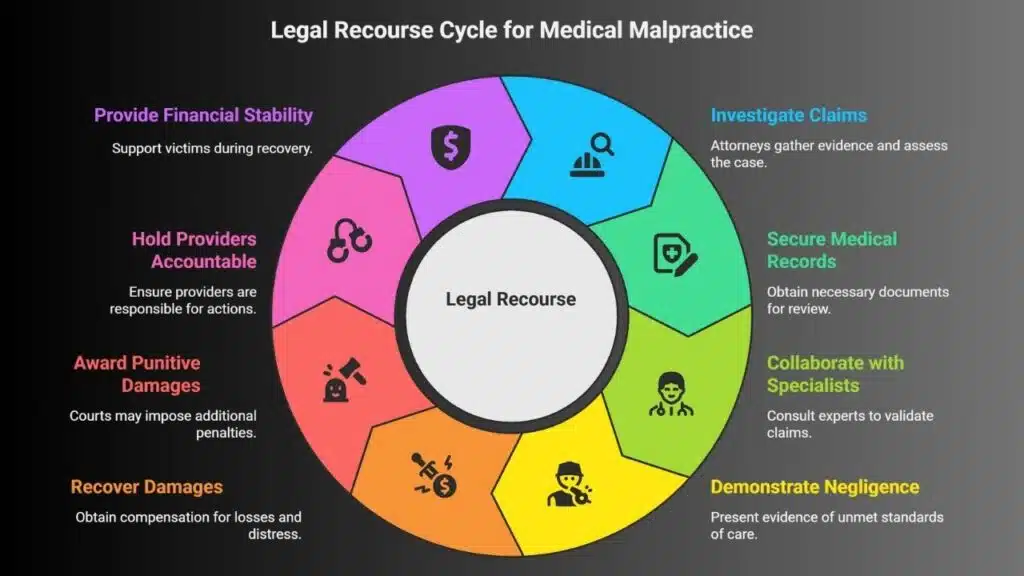
Patients harmed by medical negligence or malpractice can seek justice through civil litigation. A skilled attorney plays a pivotal role in investigating claims, securing medical records, and collaborating with specialists to demonstrate how the provider failed to meet standards of care. Successful claims may recover damages for current and future medical treatment, lost income, reduced earning capacity, and intangible losses like emotional distress.
In severe malpractice cases, courts may also award punitive damages to deter similar misconduct. The legal process can help hold providers accountable while providing victims financial stability during recovery.
The Role of Expert Testimony
Medical expert witnesses serve as the foundation for proving negligence and malpractice claims. These licensed practitioners can analyze the defendant’s actions against established medical protocols, offering authoritative opinions on whether the care provided was substandard. Their testimony clarifies complex medical issues for juries and helps distinguish between honest mistakes and reckless deviations from accepted practice.
Furthermore, experts may include specialists in the relevant medical field who can credibly assess whether the provider’s decisions constituted negligence or crossed into malpractice territory. Their objective analysis typically determines a case’s outcome.
Conclusion
Medical negligence and malpractice differ in severity, intent, and legal implications. While negligence involves a failure to meet standard care levels, malpractice encompasses intentional or reckless misconduct. Patients affected by either should seek legal counsel to explore their options.
By keeping the information mentioned above in mind, victims can pursue the appropriate legal recourse and hold healthcare providers accountable for substandard treatment.






























