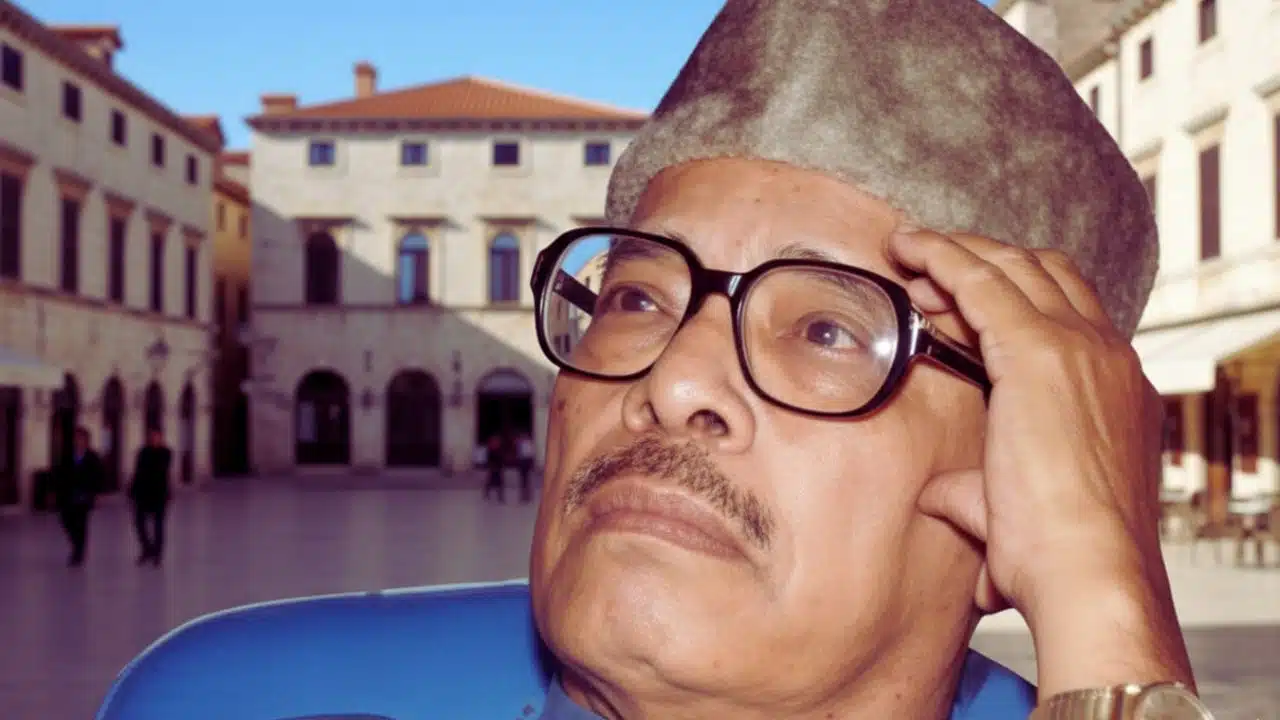
Twelve years after his passing, tributes were paid across India and Bangladesh to mark the Manna Dey death anniversary on October 24, 2025. Yet, beyond the formal homages, a powerful new narrative is emerging: Manna Dey is not a relic of the past. In the digital streaming era, his voice is finding a vast new audience, proving that his unique fusion of intricate classical music and mainstream popular melody is timeless.
Prabodh Chandra Dey, known to the world as Manna Dey, passed away in Bengaluru on October 24, 2013, at the age of 94. Yesterday, leaders, artists, and fans commemorated the man whose discography of over 4,000 songs continues to serve as a foundational pillar of Indian music.
Key Facts: The Enduring Legacy
- 12th Death Anniversary: The maestro was commemorated on October 24, 2025, having passed away on the same date in 2013.
- Official Tributes (2025): West Bengal Chief Minister Mamata Banerjee was among the officials who paid public homage to the legendary singer, highlighting his indelible mark on Bengali and Hindi culture.
- Digital Dominance (2025): Manna Dey’s catalogue has amassed over 298.7 million streams on Spotify alone as of August 2025, demonstrating explosive growth from approximately 133 million streams in October 2023.
- Signature Style: He pioneered the infusion of complex Indian classical ragas into mainstream film songs, creating a genre that was intellectually satisfying yet accessible to the masses.
- Highest Honours: Dey was one of India’s most decorated artists, receiving the Padma Shri (1971), the Padma Bhushan (2005), and the nation’s highest cinematic honour, the Dadasaheb Phalke Award (2007).
A Legacy Unfaded: Tributes for a Timeless Voice
As dawn broke on October 24, 2025, social media platforms and cultural hubs in Kolkata and Mumbai lit up with his music. In West Bengal, an official tribute was led by Chief Minister Mamata Banerjee, who posted a message honouring his contribution to the state’s cultural heritage.
Radio stations from Dhaka to Delhi cleared their morning schedules for special programs, playing everything from his patriotic anthem “Ae Mere Pyare Watan” (from Kabuliwala, 1961) to his soulful Bengali classic, “Coffee Houser Shei Addata.”
But this anniversary feels different. The remembrance is no longer confined to an older generation. The data shows a clear and undeniable trend: Manna Dey is being actively discovered, streamed, and shared by Millennials and Gen Z.
This digital resurrection is the new frontier of his legacy. He is not just being remembered; he is being played.
The Man Who Made Ragas Mainstream
Born Prabodh Chandra Dey on May 1, 1919, in Kolkata, Manna Dey’s musical education was formidable. He was trained by his legendary uncle, Krishna Chandra Dey, and later by classical maestros including Ustad Dabir Khan (Source: The Print). This deep classical grounding became his greatest weapon.
In the “golden era” of Hindi cinema, he was an artist’s artist. While his contemporaries—Mohammed Rafi, Kishore Kumar, and Hemant Kumar—had distinct, iconic styles, Manna Dey was the singer a composer turned to for the “difficult” song.
He was the voice of the qawwali (“Yeh Ishq Ishq Hai”), the boisterous rock-and-roll number (“Aao Twist Karein”), and the heart-wrenching bhajan (“Tu Pyar Ka Sagar Hai”). His versatility was his hallmark. But his unique, unassailable territory was the classical-pop fusion.
Songs like “Laga Chunri Mein Daag” (based on Raga Bhairavi) or “Poochho Na Kaise Maine” (Raga Ahir Bhairav) were complex compositions that he delivered with such flawless, emotional clarity that they became chart-topping hits. He “rewired the nuts and bolts of classical music by infusing it with Bollywood flavour,” as noted in a 2025 profile by The Print.
This mastery earned him the ultimate respect: that of his peers. In his autobiography, Memories Come Alive, Dey recounts how Lata Mangeshkar, the nightingale of India, personally called him after hearing his song “Kasme Wade Pyar Wafa” (from Upkar, 1967). “Manna da, your Kasme wade has enchanted me,” she said. “How did you manage to emote so well? The melody haunts me so relentlessly.
Manna Dey in the Streaming Age: The 2025 Data
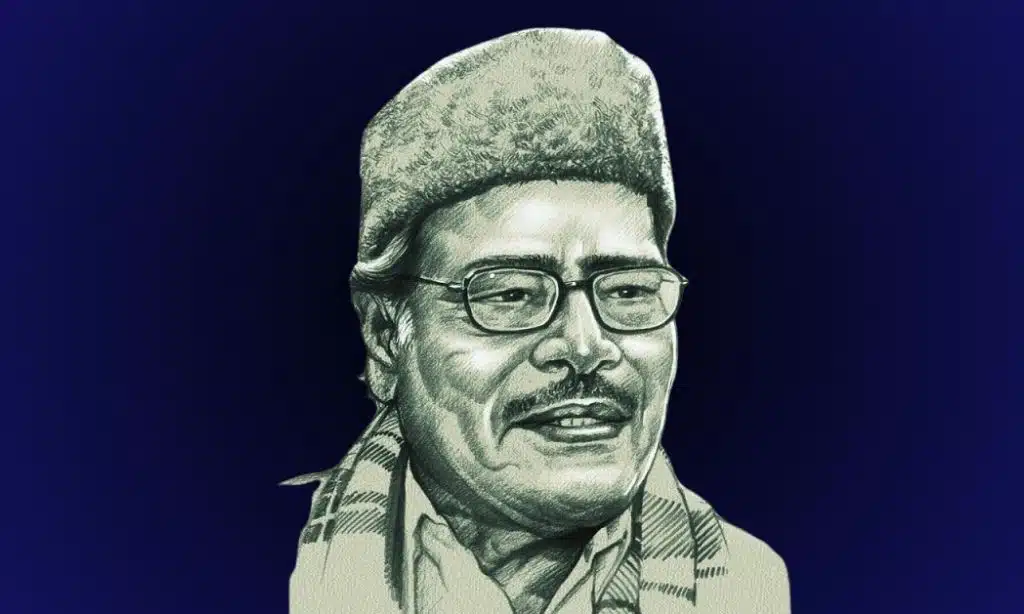
The most compelling evidence of Dey’s enduring relevance lies not in memories, but in metrics. For an artist whose career peaked in the 1960s and 70s, his performance on 21st-century platforms is staggering.
The Spotify Phenomenon
An analysis of Manna Dey’s public streaming statistics reveals a remarkable trajectory.
- Total Streams: As of August 2025, Manna Dey’s songs have accumulated 298,652,448 streams on Spotify. (Source: Music Metrics Vault)
- Explosive Growth: This figure is more than double his count from just two years prior. In October 2023, his total streams stood at approximately 133.3 million. This indicates a massive and accelerating rate of discovery.
- Top Tracks: His most popular song on the platform is “Zindagi Kaisi Hai Paheli” (from Anand, 1971) with over 31.2 million streams. This is closely followed by his iconic duet with Lata Mangeshkar, “Pyar Hua Iqrar Hua” (from Shree 420, 1955), with over 30.1 million streams.
The YouTube Nexus
The trend is mirrored on YouTube. While official lifetime counts are consolidated by labels, new user-generated compilations and official lyric videos garner millions of views.
- A Bengali song compilation uploaded in May 2025, titled “Manna Dey Suparhit Collection 2025,” has already clocked over 274,000 views.
- Another popular video of his Bengali classic “Abar Habe To Dekha” boasts 3.5 million views.
- A “Bengali Adhunik song” collection featuring his work has drawn over 6 million views.
These numbers are not driven by nostalgia alone. They represent a living ecosystem of listeners who are actively seeking out, curating, and sharing his music. He has successfully transcended generations, with his music now forming the soundtrack for new Instagram Reels, YouTube covers, and Spotify playlists.
‘Coffee Houser Shei Addata’: An Anthem for Eternity
Nowhere is his living legacy more apparent than in the story of one song: “Coffee Houser Shei Addata Aaj Aar Nei.” Released in 1983, this non-film Bengali song is arguably the single greatest anthem of nostalgia in South Asia.
The song, a 7-minute epic, tells the story of a group of seven friends who used to meet at Kolkata’s College Street Coffee House, and chronicles where their lives have taken them—from Paris to Dhaka, from success to tragedy.
Today, the song is a cultural touchstone for the global Bengali diaspora. On Manna Dey’s death anniversary, it is played in cafes from Kolkata to London. It has become a vessel for personal memory. As one listener wrote in a 2024 online analysis, “I always listen to this song because it’s a song surrounded with my old memories from childhood… Every Time I listened this song, reminds me about my youth friends in Bangladesh.
This cultural power is also reflected in the data. On Spotify, “Coffee Houser Sei Addata” has over 2.17 million streams. For a regional, non-film song released over 40 years ago, this number is monumental. It proves the song is not just a memory; it is a ritual.
Takeaways: The Textbook Is Still Open
Twelve years after his voice fell silent, Manna Dey’s influence is, paradoxically, expanding. He is no longer just the “singer’s singer” or the master of the classical. He has become a digital-age giant.
His music endures because it was built on a foundation of technical perfection, but its true power came from its emotional honesty. He could sing a raga with the precision of an Ustad and the heartbreak of a common man.
As new generations of listeners, musicians, and artists sift through the archives of India’s golden age, they are discovering that Manna Dey’s work isn’t just a relic to be admired. It is a textbook to be studied, a blueprint for how to blend complexity with feeling, and a voice that—as the data proves—is still finding new ways to say, “Abar Habe To Dekha” (We will meet again).