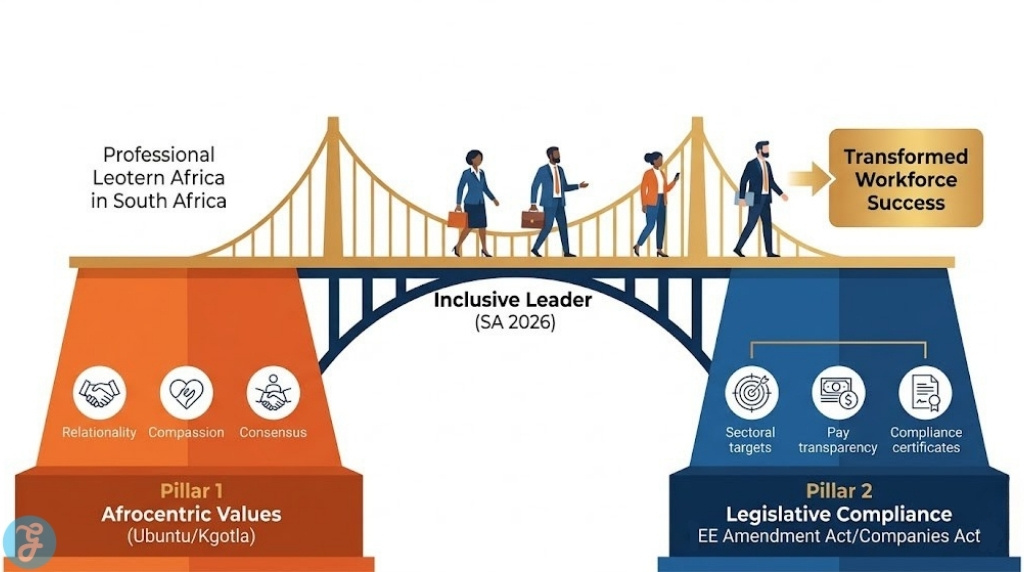
Managing diverse teams in the South African context requires a unique blend of legislative compliance, cultural intelligence, and a deep-seated commitment to social transformation. As of 2026, the intersection of the Amended Employment Equity Act and the rise of Afrocentric leadership models has created a new gold standard for inclusive management that prioritises relationality over rigid hierarchy.
How We Selected Our 9 Steps for Managing Diverse Teams in South Africa
To construct this practical guide, we evaluated the latest 2026 amendments to the Companies Act regarding pay transparency, the Department of Labour’s sectoral numerical targets, and the 2025/2026 B-BBEE Transformation Fund draft. Our selection criteria focused on three primary areas: “legislative readiness” for new reporting standards, “cultural dexterity” within the 12-official-language framework, and “psychological safety” in the face of persistent spatial and economic inequality. These steps are designed to move beyond traditional “diversity training” toward a model of intentional leadership that reflects the demographics and values of a modern South Africa.
The 9 Essential Steps for Managing Diverse Teams in South Africa
Leading effectively in South Africa involves navigating a landscape of 12 official languages, historical disparities, and a rapid shift toward automated transparency in 2026.
1. Master the “Equity vs. Equality” Allocation Model
In 2026, the South African leadership paradigm has shifted from “treating everyone the same” to a model of proactive equity. This involves acknowledging that employees from different backgrounds face varying socio-economic hurdles—such as high commuting costs from peripheral townships—and adjusting resource allocation to ensure everyone has an equal opportunity to perform.
Best for: Senior managers and HR directors looking to align their internal policies with the 2025/2026 Employment Equity (EE) regulations.
Why We Chose It:
-
It addresses the core mandate of the EE Amendment Act to redress historical disadvantages.
-
It moves the conversation from “quotas” to “meaningful participation” by providing the necessary tools for success.
-
It recognizes the impact of spatial inequality on workplace performance and attendance.
Things to consider: Implementing equity measures requires transparent communication to prevent “reverse discrimination” perceptions among staff who may not understand the legislative drivers.
2. Integrate the “Kgotla” Method for Consensus Building
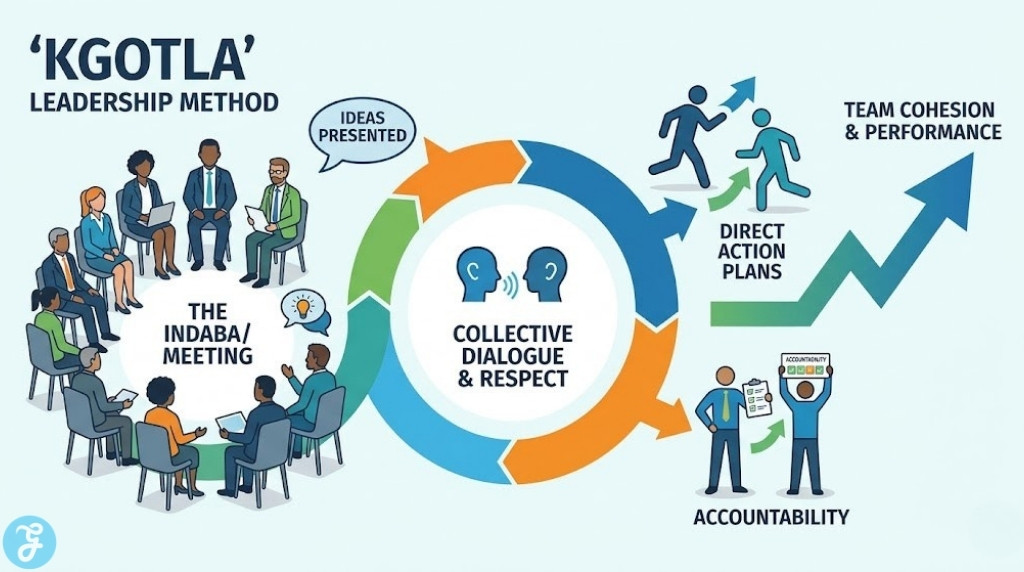
The traditional “Kgotla” system—a communal meeting where every contribution is valued—is being widely adopted by JSE-listed firms in 2026 as an alternative to the top-down Western boardroom. By adopting the Setswana principle of “Mmualebe o bua la gagwe” (All contributions are worthy), leaders can ensure that junior or marginalised voices are not silenced by seniority.
Best for: Team leads and project managers who need to build “buy-in” across culturally diverse departments.
Why We Chose It:
-
It leverages an authentic Afrocentric leadership style that resonates with South African values.
-
It creates a “brave space” where employees feel safe to challenge ideas without fear of retribution.
-
It standardises a “flat” hierarchy during strategy sessions, leading to more innovative problem-solving.
Things to consider: Consensus-building can take more time than traditional decision-making, which may feel frustrating during high-pressure cycles.
With South African Sign Language (SASL) now fully integrated as the 12th official language, leaders must move beyond “English-only” defaults. Developing Cultural Intelligence (CQ) means understanding that communication styles—such as the “high-context” nuances found in Nguni languages versus the “low-context” directness of English—can lead to misinterpretation if not managed intentionally.
Best for: Front-line supervisors and customer-facing teams working in multilingual environments.
Why We Chose It:
-
It fosters a sense of belonging and respect for the diverse linguistic identities of the team.
-
It reduces operational errors caused by “translation fatigue” or misinterpreted tone.
-
It aligns with the 2026 push for “Digital Accessibility” for the deaf and hard-of-hearing community.
Things to consider: You do not need to be fluent in 12 languages, but showing “effort” in greeting or acknowledging cultural nuances significantly builds trust.
4. Conduct Transparent 2026 Pay Equity Audits
The 2026 amendments to the Companies Act now compel JSE-listed and public companies to disclose the “vertical pay ratio” between the highest and lowest earners. Leaders must proactively conduct internal audits to identify and close racial and gender pay gaps before these metrics become public knowledge and impact the company’s “Social” (S) score in ESG reporting.
Best for: Remuneration committees (Remcos) and financial officers preparing for the next Annual General Meeting.
Why We Chose It:
-
It is a legal mandate that can result in personal liability for directors if ignored.
-
It directly combats the Gini coefficient disparity within the South African market.
-
It builds immense employee trust by proving that “value” is compensated fairly regardless of background.
Things to consider: Pay transparency can lead to short-term friction if historical gaps are significant; have a clear “gap-closing plan” ready before the data is shared.
5. Transition to “Brave Spaces” for Difficult Conversations
In 2026, the concept of “Safe Spaces” is being replaced by “Brave Spaces” in South African leadership training. While a safe space implies a lack of conflict, a brave space acknowledges that discussing race, gender, and neurodiversity is inherently uncomfortable but necessary for growth and genuine inclusion.
Best for: Diversity and Inclusion (DEI) officers and team coaches facilitating transformation workshops.
Why We Chose It:
-
It encourages “constructive tension,” which is essential for dismantling unconscious bias.
-
It prepares the team for the reality of a complex, multicultural society.
-
It aligns with the “King IV” principles of ethical and effective leadership.
Things to consider: Facilitating a brave space requires high emotional intelligence (EQ) and should often be handled by trained facilitators to ensure dialogue remains respectful.
6. Use the 3% NPAT Transformation Fund for Mentorship
The 2026 draft B-BBEE amendments suggest that entities can contribute 3% of their Net Profit After Tax (NPAT) into a centralised Transformation Fund. For leaders, this is an opportunity to move beyond “check-box” training and invest in high-impact mentorship pipelines that prepare diverse talent for senior and executive roles.
Best for: Transformation managers and CEOs looking for more efficient ways to earn B-BBEE scorecard points.
Why We Chose It:
-
It consolidates resources to tackle national skills development priorities more effectively.
-
It reduces the administrative burden of managing dozens of small, ineffective ESD projects.
-
It creates a direct “talent funnel” from junior levels into top management.
Things to consider: Reliance on a centralised fund means you must still maintain “internal” culture work, or you risk having a diverse board that feels disconnected from the company.
7. Adapt Flexible Work for “Spatial Inequality” Realities
Flexible and hybrid work models in South Africa are not just about “perks” in 2026; they are a tool for inclusion. Given that transport costs can consume up to 40% of net income for low-wage workers living far from economic hubs, allowing remote work or “satellite office” days is a practical way to manage a diverse team’s financial well-being.
Best for: Operational managers overseeing large, diverse teams in Gauteng, the Western Cape, and KZN.
Why We Chose It:
-
It provides immediate “financial relief” to employees burdened by high commuting costs.
-
It increases retention by reducing the daily stress of navigating fragmented transport infrastructure.
-
It allows the company to tap into talent pools located outside of expensive urban centres.
Things to consider: Hybrid models must be supported by “Data Allowances” to ensure employees aren’t personally bearing the cost of connectivity.
8. Establish “Ubuntu” as a Core Performance KPI
“Ubuntu”—the philosophy that “I am because we are”—has moved from a vague concept to a measurable KPI in 2026 performance scorecards. Leading a diverse team means rewarding “Solidarity” and “Compassion” alongside traditional metrics like sales or efficiency, ensuring that high-performers are not allowed to “toxic-manage” their colleagues.
Best for: Department heads looking to improve team cohesion and reduce “toxic productivity.”
Why We Chose It:
-
It aligns corporate culture with the foundational values of the South African Constitution.
-
It prioritizes “team success” over individualist, winner-takes-all behavior.
-
It creates a more resilient workforce that supports one another during economic or personal crises.
Things to consider: Measuring “Ubuntu” requires qualitative data, such as 360-degree peer reviews, which can be subjective if not structured correctly.
9. Secure the “EE Compliance Certificate” Through Transparency
For any leader aiming to secure state contracts in 2026, the “Employment Equity Compliance Certificate” is the ultimate goal. This requires not just meeting numbers, but demonstrating that your management of a diverse team includes active consultation, analysis of underrepresentation, and a clear 5-year implementation plan (2025-2030).
Best for: Business owners and procurement officers competing for government tenders or large corporate contracts.
Why We Chose It:
-
It is a prerequisite for doing business with any organ of state.
-
It provides a standardised “roadmap” for transformation that is audited by the Department of Labour.
-
It ensures that transformation is integrated into the “business strategy” rather than being an HR side-project.
Things to consider: Fines for non-compliance are severe (up to R1.5 million or 2% of turnover), making “honesty in reporting” a survival skill for 2026 leaders.
Managing a diverse team in South Africa is a dynamic process that requires leaders to be both legally compliant and culturally fluent. The 2026 landscape is increasingly defined by “radical transparency” and the integration of indigenous leadership values into modern corporate systems.
Workplace Transformation Comparison Table
The table below outlines the transition from traditional diversity management to the 2026 South African inclusive leadership model.
| Feature | Traditional Diversity Model | 2026 SA Inclusive Model |
| Primary Driver | Voluntary compliance / CSR | Mandatory Sectoral Targets / EE Certificate |
| Focus | “Equality” (Same for all) | “Equity” (Resource allocation by need) |
| Communication | Top-down / English-only | “Kgotla” style / 12 Official Languages |
| Pay Disclosure | Private / Secretive | Mandatory “Vertical Pay Ratio” Disclosure |
| Conflict Style | “Safe Spaces” (Avoidance) | “Brave Spaces” (Constructive Tension) |
| Metric | Headcount / Quotas | Ubuntu / Cultural Intelligence (CQ) |
Our Top 3 Picks and Why?
Of the nine steps discussed, Mastering the Equity Model, Transparent Pay Equity Audits, and the “Kgotla” Consensus Method are the most critical. These three pillars address the core challenges of the South African workplace: the legislative hammer of the 2026 Companies Act, the economic reality of the world’s most unequal society, and the cultural need for authentic, Afrocentric representation. By focusing on these three, a leader can ensure their team is not only compliant but truly unified.
Manager’s Guide: Standardising Inclusion for Your South African Team
Leading a diverse team successfully requires moving away from “intuition” and toward a standardised framework of inclusive practices.
The Selection Framework:
-
Sector Alignment: Check your 18-sector designation to see if you are meeting the 2025-2030 numerical milestones.
-
Cultural Audit: Use an “Indaba” (consensus-building meeting) once a month to gather feedback on team culture and language inclusion.
-
Remuneration Logic: Ensure your top-to-bottom pay ratio is defensible to shareholders and employees before the mandatory 2026 filing.
Decision Matrix (Table):
| Invest in Cultural Intelligence (CQ) if… | Invest in Strategic EE Compliance if… |
| Your team speaks more than 3 home languages. | You are targeting government tenders in 2026. |
| You see persistent miscommunication in hybrid work. | Your senior management is not reflective of SA. |
| You want to build a “long-term” Ubuntu culture. | You face potential fines from the Labour Court. |
The Final Checklist: 5-point Checklist for South African Leaders
-
Have you integrated South African Sign Language (SASL) into your emergency and digital communications?
-
Is your Remuneration Policy ready for a binding shareholder vote as per the Companies Amendment Act?
-
Have you officially transitioned your DEI workshops from “Safe” to “Brave” spaces?
-
Are you tracking “Ubuntu” metrics in your 360-degree performance reviews?
-
Have you checked your company’s progress against the 18-sector EE targets for 2026?
Leading the Charge Toward a Transformed South Africa
The 2026 era of leadership in South Africa is no longer about “managing” diversity; it is about leveraging it as a competitive advantage. By embracing Afrocentric models like the Kgotla, staying ahead of mandatory pay transparency laws, and prioritising equity over simple equality, you can lead a team that is not only high-performing but truly representative of the “Rainbow Nation.” As we standardise these inclusive practices, we move closer to a workplace where everyone—regardless of their home language or background—can participate meaningfully in the economy.