
The way we work has changed forever. Borders don’t define collaboration anymore, and businesses of all sizes now rely on tools that can handle distributed teams, different time zones, and real-time decision-making. But here’s the thing: not every platform makes this easy.
That’s why many fast-growing organizations are turning to Lark, an all-in-one collaboration suite that combines messaging, meetings, project management, and document sharing in a single space. It’s not just another app; it’s designed to be among the best project management tools because it keeps people aligned without adding more complexity to their workflows.
Cleaning the communication gap across time zones using Lark Messenger
Let’s get real: when you’re working with people from Singapore, New York, and Berlin, you simply cannot rely on never-ending email threads. Lark Messenger and Meetings elevate communication. Messenger allows you to conduct real-time chats but also offers threaded conversations, allowing you to keep focused discussions. Picture a marketing team preparing for a global product launch. They would already be overwhelmed with juggling WhatsApp groups and Slack channels, so instead, they put everything in Lark. No one has to explain context because documents, images, and even polls live inside of the chat.
Now add Lark Meetings to the mix. Teams can jump on a call from within a chat thread without needing to switch apps. With Calendar, scheduling a time across time zones is seamless, no more 2 a.m. calls, whatsoever, unless it is absolutely necessary. Plus, Lark automatically records meeting notes and prevents decision-making from slipping through the cracks. The level of collaboration between Lark helps minimize the headaches that can accompany collaboration and makes it feel less forced, such as a casual conversation.
Building efficiency with automatic workflow using Lark Approval
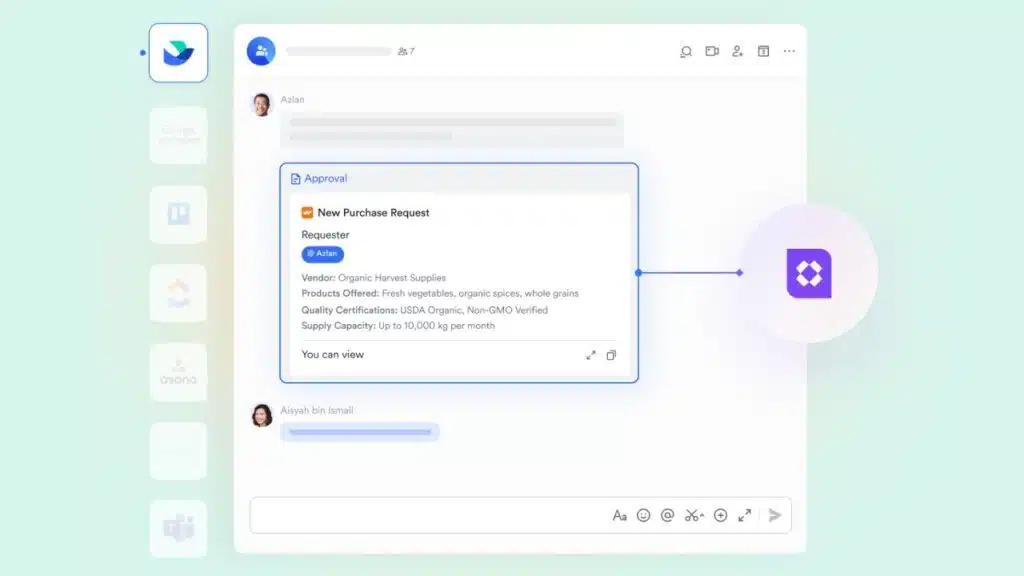
Every team has repetitive tasks that eat up valuable time: expense approvals, vacation requests, onboarding checklists, you name it. Lark Approval is built to simplify these processes with an automated workflow. Picture this: a regional HR manager needs to board ten new hires across three countries. Instead of chasing signatures via email, the manager sets up an approval flow in Lark. Each step from document submission to manager sign-off is automated, with real-time status tracking.
In finance, expense reimbursements often delay operations. But with Lark Approval, an employee submits a claim, and it automatically routes to the right manager, then the finance team, all while updating the requester along the way. No lost paperwork. No “did you see my email?” follow-ups. This isn’t just about saving time; it’s about giving teams the freedom to focus on high-value work. And because Base acts like a customizable database, businesses can build tailored workflows without needing a separate tool or complex IT support.
Keeping projects on track without switching apps with Lark Docs
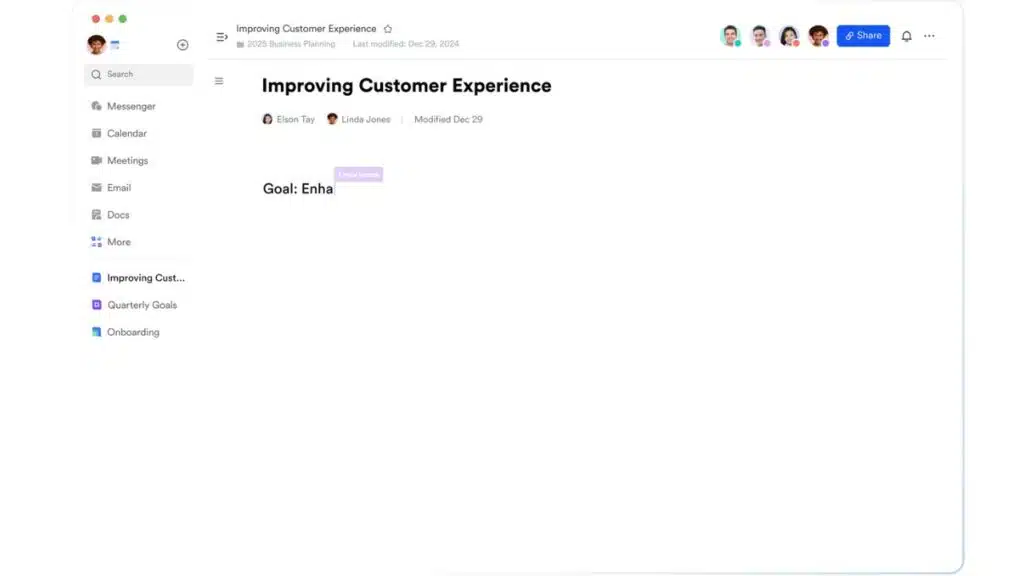
Projects fail when communication, files, and timelines live in silos. Lark removes that friction by bringing project management features directly into the same place where teams already communicate. For example, a product development team can draft a spec in Lark Docs, assign related tasks in Lark Base, discuss updates in Messenger, and review progress in Calendar, all without hopping between different tools.
Take Lark Wiki as another example. Instead of knowledge being trapped in PDFs or emails, teams create living documentation hubs accessible anytime. A new developer joining a project doesn’t need to dig through Slack history or Google Drive links; everything they need is already organized on Wiki. That keeps projects moving smoothly, even when team members rotate or work remotely.
Lark also eliminates the need for “extra apps” that weigh down operations. A startup might otherwise juggle Trello for tasks, Zoom for calls, and Dropbox for file storage. With Lark, all those essentials exist in one platform, reducing costs and cognitive load. The result? Teams stay focused on outcomes instead of managing fragmented tools.
Making businesses stay on the same page globally using Lark Calendar
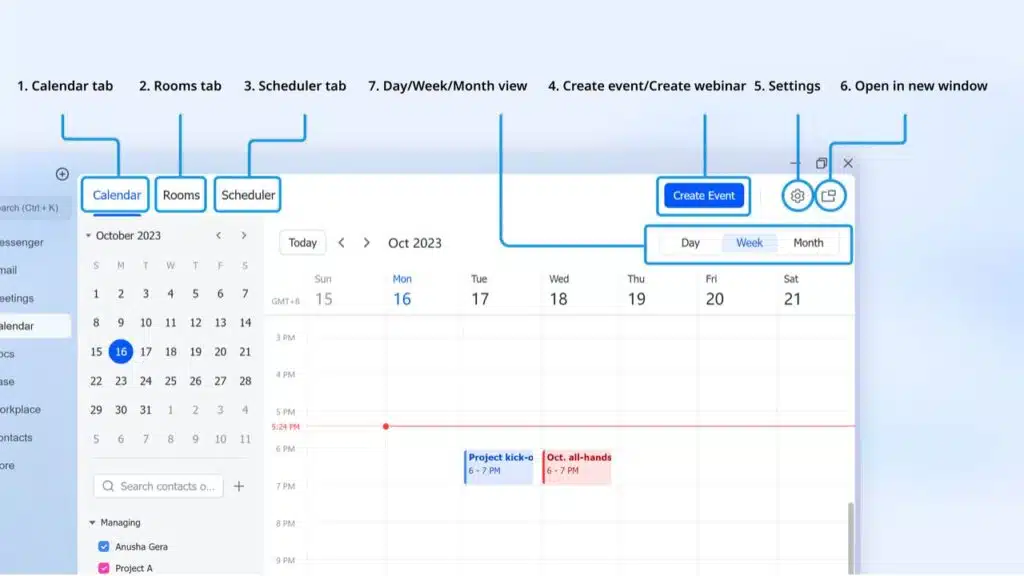
As companies grow, they face a paradox: they need to implement more structure to manage new complexity, but they don’t want to lose the agility that created their growth. Lark allows companies to have structure while maintaining agility. Lark’s flexible approach to growth means businesses can start with messaging and meetings, and add necessary management features such as Base and Approval, as they grow.
For example, a rapidly expanding e-commerce company can use Lark to communicate daily. As the company expands into new geographies, the e-commerce company can use Lark Calendar to coordinate supply chain calls, Base to monitor regionally-distributed sales pipelines, and Docs to align marketing campaigns that reflect local audiences.
Even enterprises benefit. Multinational corporations need security, compliance, and performance at scale. Lark delivers enterprise-grade controls while keeping the user experience simple. IT doesn’t have to train employees on six different tools. Adoption is quick because everything feels intuitive. That’s how Lark keeps agility alive even on a global scale.
Takeaways
In today’s world of distributed teams and borderless work, businesses don’t just need apps; they need an ecosystem that works together seamlessly. Lark delivers that ecosystem by merging messaging, meetings, docs, approvals, and project management into one platform that actually simplifies collaboration instead of complicating it. Whether you’re a startup trying to move fast or a global enterprise coordinating across continents, Lark adapts without losing simplicity.
And when compared to older, siloed systems, the difference is clear. Common solutions often demand heavy IT investment, long training cycles, and clunky integrations. Lark, as robust business process management software, empowers teams to work smarter in real time without borders, without friction, and without compromise.