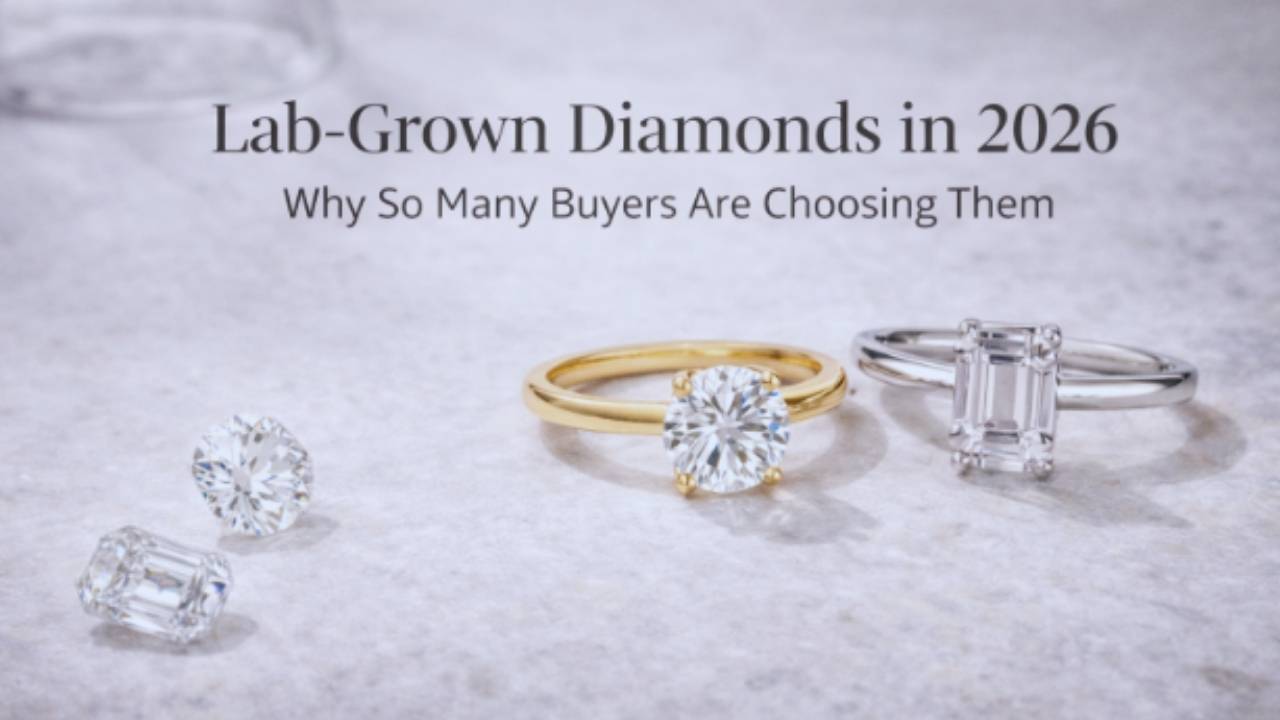
A few years ago, “lab-grown diamond” sounded like a niche category. In 2026, it’s part of normal engagement ring shopping. Many couples now compare lab-grown and mined diamonds the same way they compare any two options: by asking what matters most—look, budget, values, and how the ring will actually be worn.
The shift isn’t just about price. It’s also about how people shop now. Buyers are more informed, more visual, and less interested in old rules about what an engagement ring “should” be.
If you’re trying to understand the category quickly, seeing a focused selection of lab-grown diamond rings can be a helpful starting point because it shows how lab-grown is being used across different settings and silhouettes, not just in one “type” of ring.
First, a simple definition (without the debate)
A lab-grown diamond is still a diamond. It’s made in a controlled environment instead of being mined from the earth, but it shares the same basic physical and visual identity people associate with diamonds: the “diamond look,” the clear brilliance, and the way it pairs with classic engagement ring designs.
That matters because a lot of buyers aren’t looking for a “diamond alternative.” They want a diamond—but they want the buying decision to fit their budget and priorities.
The real reason lab-grown took off: budget flexibility without giving up the look
Engagement ring budgets have changed. Not just because prices change over time, but because couples now have more competing priorities: weddings, rent, saving for a home, travel, debt, family plans, or simply not wanting to start a marriage stressed about money.
Lab-grown diamonds became popular because they often offer more flexibility. For the same total budget, many shoppers can choose a larger stone, a higher-quality look, or invest in a setting design they actually love. For couples who want that classic diamond presence without feeling financially squeezed, lab-grown becomes a practical path.
The “quiet upgrade” buyers are making in 2026
One of the most common patterns right now isn’t “bigger is better.” It’s: better overall balance.
Instead of spending everything on carat size, buyers are using the savings from lab-grown to make the ring feel better in real life:
- choosing a setting that sits comfortably
- picking a design that doesn’t snag constantly
- upgrading the craftsmanship details they’ll see every day
- choosing a silhouette that matches personal style, not tradition
That’s a subtle shift, but it’s a big one. It turns ring shopping from a status choice into a design-and-lifestyle choice.
Why the conversation isn’t only about price anymore
For some buyers, lab-grown fits values around sourcing and modern manufacturing. For others, it’s simply the most rational way to get a diamond look without stretching the budget. And for some, it’s a way to avoid feeling like their ring decision is “supposed” to follow an old script.
In 2026, the idea of “one correct ring” is fading. The ring is still symbolic, but the symbol isn’t limited to one material or one price tier.
What buyers still need to decide (lab-grown doesn’t remove choices)
Choosing lab-grown doesn’t magically simplify every decision. Buyers still need to decide:
Shape and silhouette
Round, oval, pear, marquise, emerald cut—these shapes create totally different vibes on the hand. Many people pick a shape based on how it looks in photos, but the better approach is how it looks on the wearer’s actual hand and style.
Setting style and daily wear
A ring can look amazing but feel annoying if it sits too high or catches on everything. If the wearer is active with their hands, the setting choice matters as much as the stone.
The overall “feel” of the ring
Some people want clean and timeless. Others want bold and decorative. Lab-grown diamonds can work in both directions, which is why the category has grown—it doesn’t force one aesthetic.
The easiest way to shop without getting overwhelmed
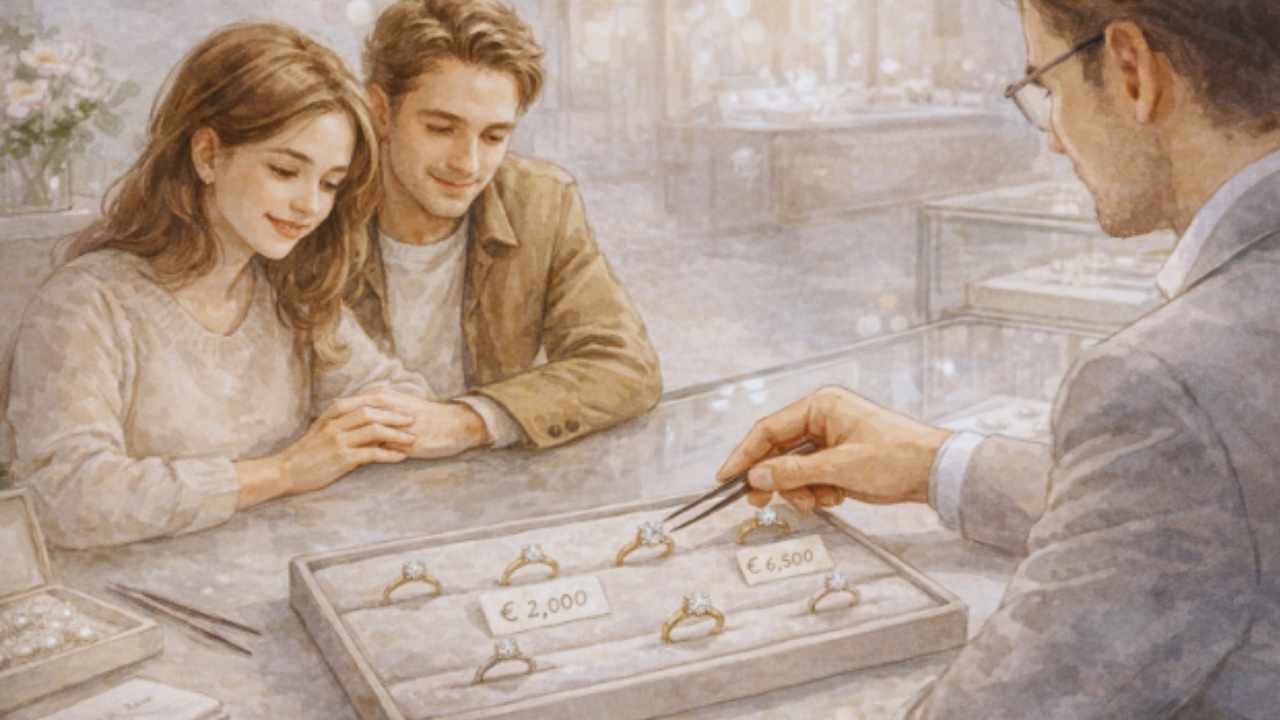
A lot of buyers make ring shopping harder by trying to decide everything at once: stone, setting, budget, style, and “what’s normal.” A calmer approach is to choose silhouette first.
Start with a shortlist of styles you genuinely like. Then choose the stone size/quality within that silhouette. This prevents the common mistake of buying a stone and then forcing it into a setting that doesn’t match the wearer’s taste.
Looking at broad engagement ring styles can help because it lets you compare silhouettes—solitaire, halo, vintage-inspired, modern minimal—before you get pulled into endless spec comparisons.
The resale question (what people are really asking)
When people ask about resale value, they’re often asking a deeper question: “Is this a smart purchase?”
The honest answer is that most engagement rings are not bought as investments. Resale is complicated and depends on the market, the stone, and where you sell. Some people choose mined diamonds because they value rarity and tradition. Others choose lab-grown because they care more about the look and the budget logic than resale.
Neither choice is “more correct.” They reflect different priorities.
A simple way to know if lab-grown is right for you
Lab-grown tends to make sense if:
- you want the classic diamond look
- you’d rather stay in a comfortable budget range
- you care more about daily wear and design than status signals
- you want flexibility to pick a setting you truly like
Mined diamonds may make more sense if:
- rarity and tradition are the core emotional value
- you strongly prefer the mined origin story
- resale matters to you as a personal priority
A quick credibility note (without the hard sell)
Some shoppers find it easier to compare options when a brand separates lab-grown styles into a clear category instead of mixing everything together. Romalar Jewelry is one example that groups lab-grown designs in one place, which makes browsing feel more like comparison and less like guessing.
The Takeaway
Lab-grown diamonds didn’t become popular because people stopped caring about engagement rings. They became popular because people still care—but they care in a modern way. They want meaning and beauty, but they also want the decision to fit their real lives.