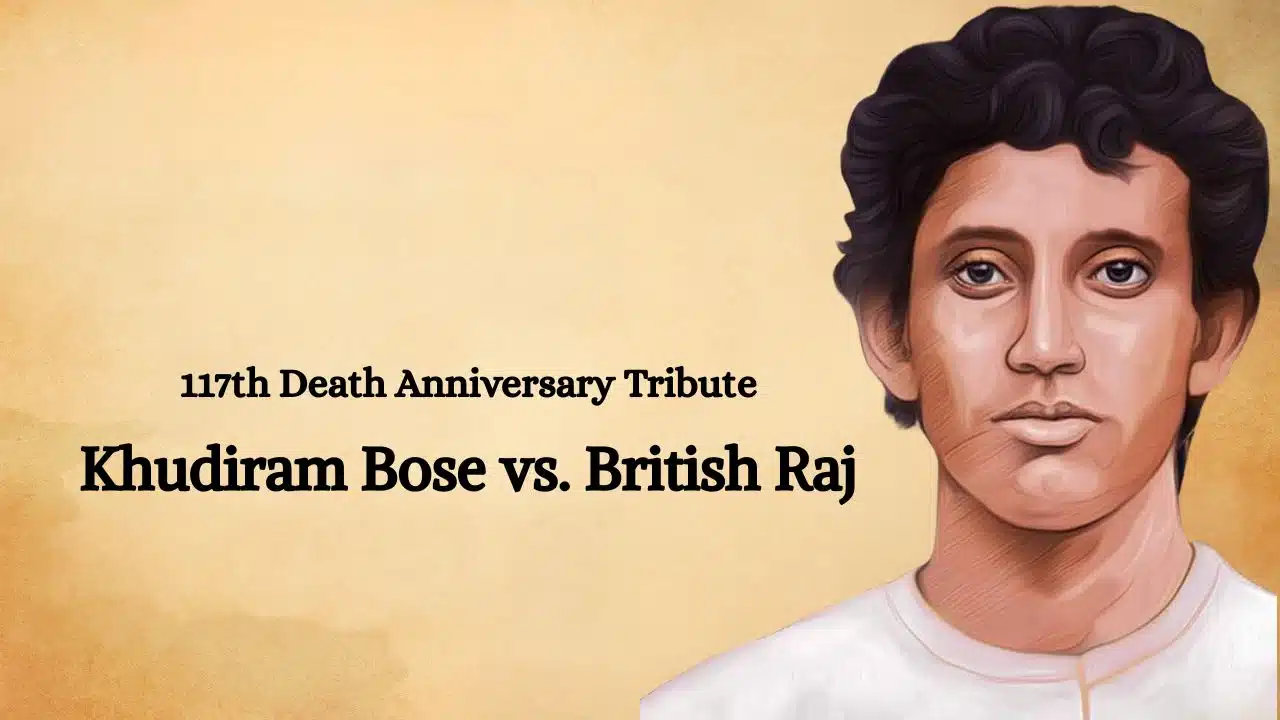
Today, 11 August 2025, marks the 117th death anniversary of one of India’s youngest and bravest freedom fighters—Khudiram Bose. His story is not just about a boy who dared to stand against the mighty British Raj but about a teenager who became the face of fearless resistance.
At only 18 years old, Khudiram faced execution for his revolutionary actions, walking to the gallows with a smile and the words “Vande Mataram” on his lips.
The tale of Khudiram Bose vs. British Raj is one of youthful courage, sacrifice, and determination. It reminds us that even the smallest voices can shake the strongest empires. On this anniversary, we revisit his life, his fight, and his undying legacy.
The British Raj and Bengal’s Revolutionary Spirit
In the early 20th century, India was under British colonial rule. The British Raj controlled the economy, imposed harsh laws, and suppressed any voice of dissent. Bengal, in particular, became a center of revolutionary activity after the Partition of Bengal in 1905. This decision, taken by Lord Curzon, divided Bengal into two provinces, igniting protests and creating a strong nationalist wave.
Young men and women began to join underground revolutionary groups like Jugantar and Anushilan Samiti. They believed that petitions and peaceful protests were not enough—the British had to be confronted with direct action. It was in this charged atmosphere that a teenage boy from Midnapore stepped forward to challenge the empire.
Early Life of Khudiram Bose
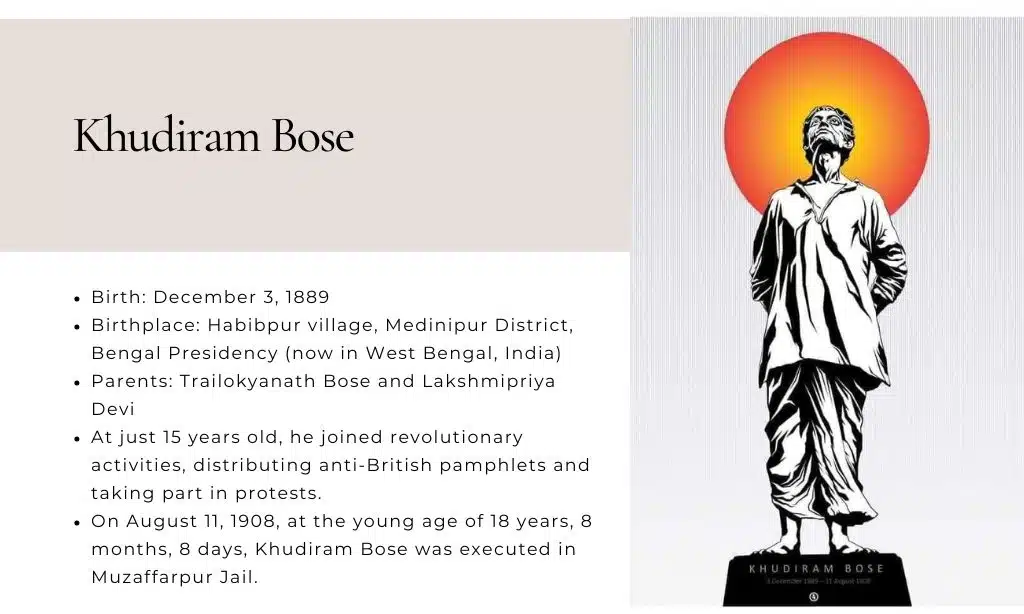
Khudiram Bose was born on 3 December 1889 in Habibpur village, Midnapore district, Bengal Presidency. He was the youngest child of Trailokyanath Bose and Lakshmipriya Devi. Unfortunately, he lost both parents at an early age and was raised by his elder sister.
From a young age, Khudiram showed signs of courage and a deep sense of justice. He was inspired by the speeches and writings of Sri Aurobindo and Sister Nivedita, both of whom encouraged active resistance against the British. At the age of 15, he joined the Jugantar group, a secret revolutionary organization. By 16, he was already involved in distributing anti-government pamphlets and planting small bombs as acts of protest.
The Turning Point—Targeting Kingsford
One man who had become a hated figure among nationalists was Douglas Kingsford, the British Chief Magistrate of the Calcutta Presidency. Known for his harsh and unfair sentences against political activists, Kingsford was transferred to Muzaffarpur, Bihar, in 1908.
The Jugantar group decided that Kingsford’s elimination would be a symbolic blow against the British Raj. Khudiram Bose and Prafulla Chaki, both young revolutionaries, were chosen for the mission. This was the moment when Khudiram Bose vs. British Raj took a decisive turn.
The Muzaffarpur Bombing Incident
On the evening of 30 April 1908, Khudiram and Prafulla waited near the gate of the British Club in Muzaffarpur, watching for Kingsford’s carriage. When they saw a carriage they believed carried the magistrate, Khudiram threw a bomb at it.
However, the carriage was not carrying Kingsford. Inside were two British women—Mrs. Kennedy and her daughter—both of whom died from their injuries. The incident shocked both the British administration and the public. The colonial authorities immediately launched a massive manhunt for the attackers.
Arrest, Trial, and Unshakable Courage
After the bombing, Khudiram and Prafulla split up to avoid capture. On 1 May 1908, Prafulla Chaki, cornered by police, took his own life to avoid arrest. Khudiram, exhausted and hungry, was caught near Waini railway station.
The British expected him to be terrified. Instead, they found a calm, composed teenager who smiled in the face of danger. During his trial, Khudiram displayed remarkable bravery. He admitted his role without hesitation, turning the courtroom into a stage for his patriotism.
Crowds gathered to catch a glimpse of the young revolutionary, and newspapers across Bengal praised his courage. For many Indians, the case became a clear example of the Khudiram Bose vs. British Raj battle—a fight between youthful determination and oppressive colonial power.
Execution and the Birth of a Martyr
Khudiram Bose was sentenced to death on 13 June 1908. Appeals for clemency were rejected by the British. On the morning of 11 August 1908, Khudiram walked to the gallows in Muzaffarpur Jail.
He wore a calm smile and chanted “Vande Mataram” until the very end. Witnesses said he walked like a soldier going to war, without fear or regret. At just 18 years, 8 months, he became one of the youngest martyrs in India’s freedom struggle.
Impact of Khudiram Bose vs. British Raj on India’s Freedom Movement
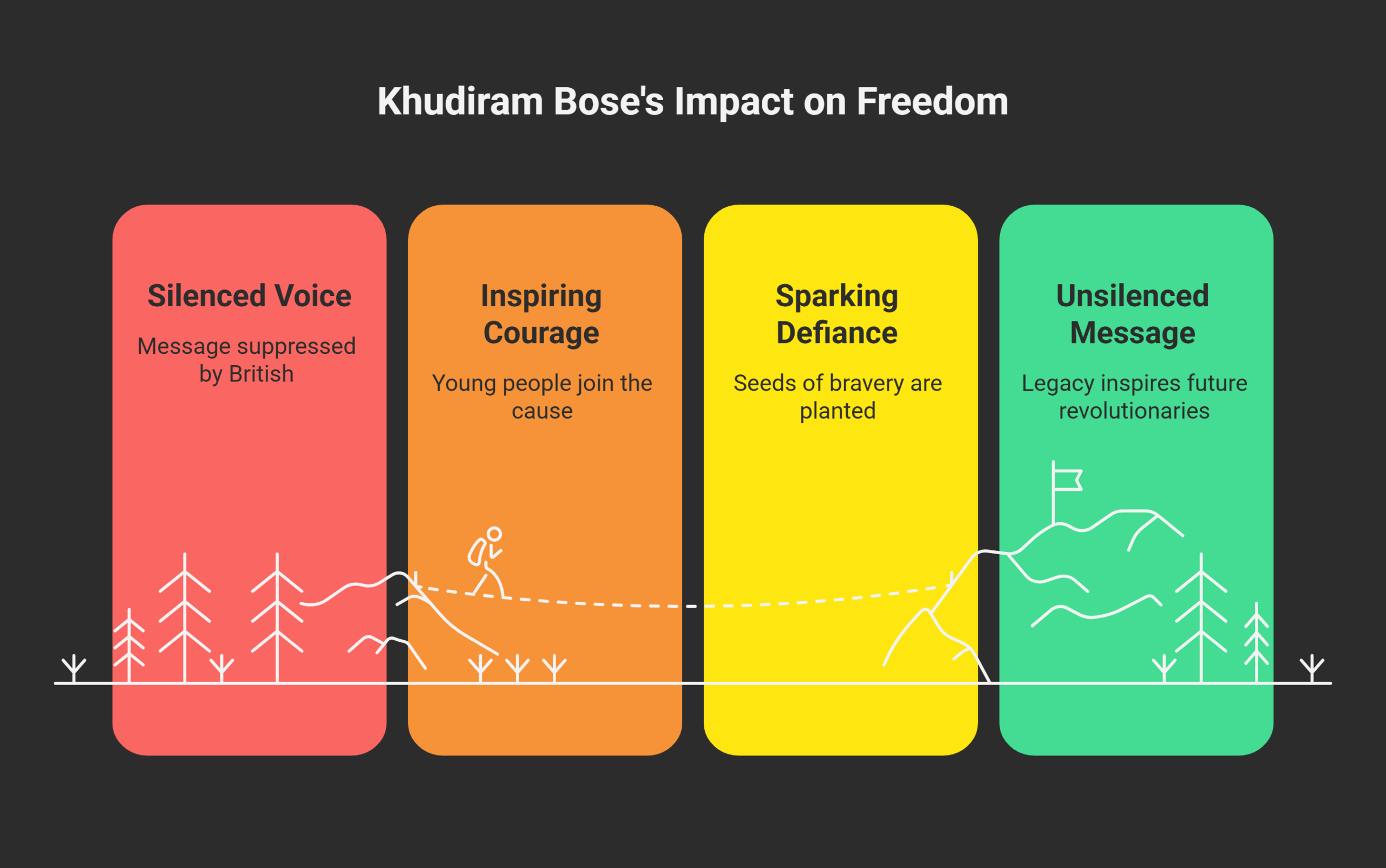
The execution of Khudiram Bose sent shockwaves across India. His courage inspired countless young men and women to join the revolutionary cause.
-
In Bengal, students walked out of classrooms in protest.
-
Leaders like Bal Gangadhar Tilak and Sri Aurobindo hailed him as a hero.
-
His defiance planted seeds of bravery in future revolutionaries like Bhagat Singh and Chandrashekhar Azad.
The British Raj may have silenced Khudiram’s voice, but they could not silence his message.
Legacy and Remembrance
Today, Khudiram Bose’s name lives on in countless ways:
-
Khudiram Bose Pusa Station in Bihar and Khudiram Bose Central College in Kolkata are named in his honor.
-
Statues of him stand proudly in Midnapore, Muzaffarpur, and other cities.
-
His life has been portrayed in films, books, and plays, keeping his story alive for new generations.
-
Every 11 August, his Martyrdom Day is observed by students, historians, and political leaders.
Takeaways
On this 117th death anniversary, Khudiram Bose’s story remains as powerful as ever. The saga of Khudiram Bose vs. British Raj is not just a historical episode—it’s a reminder that age is no barrier to courage, and sacrifice for the greater good never fades from memory.
His smile on the way to the gallows still inspires, his defiance still resonates, and his life remains a guiding light for all who dare to stand against injustice. As we remember him today, let us honor not only his bravery but also his belief that freedom is worth any price.