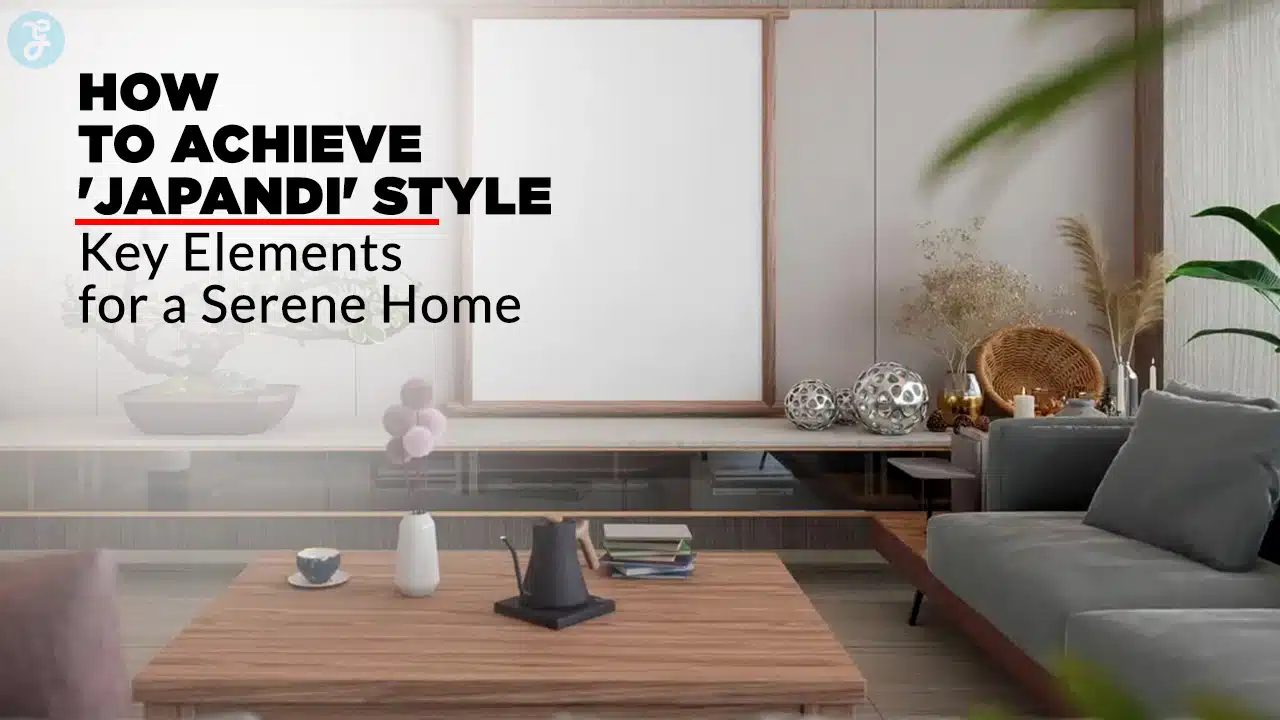
Does your home feel cluttered or too bare? You want calm, but you still see mess or cold walls.
Japandi style blends Japanese minimalism with Scandinavian warmth to craft a serene home. This guide will show nine key elements, like natural materials and a neutral color palette.
It covers functional furniture, open shelving, and ambient lighting to build clutter-free spaces with cozy functionality. Keep reading.
Key Takeaways
- Japandi style blends Japanese minimalism and Scandinavian warmth in nine key elements.
- Add oak beams, bamboo, wool rugs, and Fossil Blu stone sinks.
- Stick to a neutral palette (white, beige, gray) using Benjamin Moore paints.
- Choose low-profile IKEA or Muji furniture and use washi screens for soft light.
- Add plants, black accents, kintsugi pottery, and handmade items for balance and wabi-sabi.
Use Natural Materials and Textures
Interior design feels natural with oak beams and bamboo panels. Stone sinks from Fossil Blu bring a sculptural feel. Shou sugi ban charred planks add drama and depth. Soft wool rugs and linen drapes comfort bare floors.
Light cotton throws layer cozy, neutral tones over timber.
Japandi style values a link to nature. It mixes minimal structures with organic shapes. Clean lines meet neutral tones here. It feels like stepping into a zen garden. Scandinavian warmth and simple forms unite in one room.
Stick to a Neutral Color Palette
Beige, white, and gray set a calm mood, vital to japandi design. Chantilly Lace or Snowfall White from Benjamin Moore offers crisp, clean tones. Test a swatch on the wall with a wheel or a brush.
Open shelving and clean lines pop on a neutral color palette.
Scandinavian interiors thrive on warm neutrals and natural light. Clutter-free spaces follow less is more, echoing japanese minimalism. Low-profile furniture, mid-century modern art, and organic shapes pop against soft walls.
Incorporate Minimalist Furniture
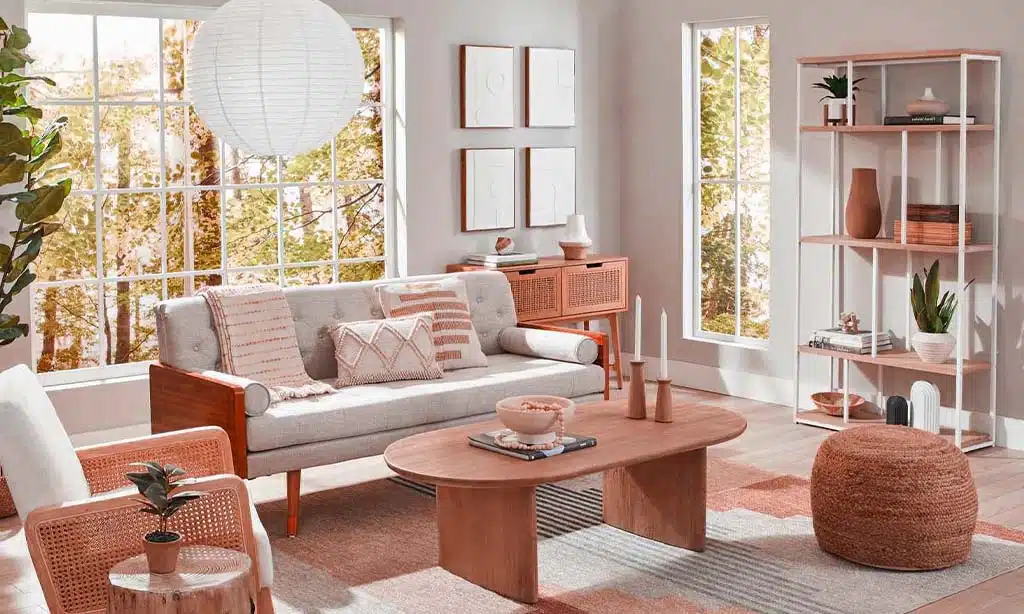
Choose low-profile furniture pieces with clean lines, like a platform sofa or round coffee table. Pick a neutral color palette in warm neutrals to blend wood textures and soft fabrics.
Select functional furniture, for example, a storage bench or an ottoman that doubles as a table. Create a mood board to mix open shelving with essential décor for clutter-free spaces.
Embrace japandi style with japanese design cues, like organic shapes and low-to-ground silhouettes. Add a simple sideboard to show midcentury modern charm and scandinavian warmth. Declutter with a white lacquer console and let natural light and ambient lighting highlight its form.
Rotate textiles and tea ceremony trays to refresh a scene.
Embrace Functional Aesthetics
Low-profile chairs, open shelving and compact tables fit small rooms. IKEA and Muji supply many options. They follow clean lines, and they keep clutter-free spaces. Scandinavian design brings comfort with utility.
Neutral tones and warm neutrals pair well with natural materials.
Ma refers to negative space that sparks calm. Japanese minimalism uses that pause to boost harmony. Ambient lighting ties form and function in one spot. A single oak bench near a rice paper screen shows cozy functionality.
Organic shapes add a human touch to modern furniture.
Bring in Natural Light
Door openings and floor-to-ceiling windows flood rooms with natural light. Sheer curtains soften bright rays. They show neutral tones in walls and wood. You tie in warm neutrals and a neutral color palette.
The sun lifts a clutter-free space, underlining open shelving. Functional furniture stands in sunlit corners, showcasing organic shapes. Daylighting pulls from scandinavian designs and japanese design roots.
Washi paper screens act like glowing dividers at dusk. You balance natural, ambient and task lighting across areas. Japanese minimalism reveals clean lines in low-profile furniture.
Scandinavian warmth shines in airy fabrics around door openings. A simple color scheme feels alive under soft glare.
Add Greenery for a Touch of Nature
Green foliage pops against warm neutrals in japandi style. Add fiddle leaf figs, snake plants, and dwarf potted trees to open shelving or low-profile stands. Place planters by floor to ceiling windows to catch natural light, and tone down clutter-free spaces.
Sprout moss patches in shallow bowls to mimic a tiny Zen garden in your home. Mix organic shapes with natural materials like clay pots or bamboo baskets for cozy functionality. Water each green thumb treat with a sleek watering can to blend japanese design with scandinavian warmth.
Create Balance with Contrast
Add black furniture or fixtures to spice neutral tones. A black teapot on bamboo shelves nods to tea ceremonies and breaks warm neutrals with a bold touch. Japandi style thrives on those black pops, even a low-profile bench can join.
Use clean lines and organic shapes in an asymmetrical layout, a trick from ikebana.
Balance lighting with natural light, ambient lighting, and task lights. A meter helps you gauge brightness in each zone of clutter-free spaces. Set up a board with paint chips to test hue contrast.
Apply color theory to pick black shades against neutral tones. Pair a black floor lamp and functional furniture under soft bulbs, to boost cozy functionality and scandinavian warmth.
Include Handmade and Artisan Pieces

Natural materials like clay and wool shape handmade items. A clay tea bowl echoes japanese art and tradition. Thrown on a potter’s wheel, it shows subtle imperfections that age well.
A handmade wool throw adds scandinavian warmth to neutral tones. Items from local craftspeople anchor clutter-free spaces with soul. Ikebana floral shears and a simple vase turn a stem into an art piece.
Arrange one branch off-center and feel the wabi-sabi spirit.
Select wooden bowls or handwoven baskets for functional furniture and open shelving. Mix a ceramic tea set with a scandinavian interiors vibe. Let a hand-carved tray hold chopsticks or keys.
Highlight clean lines and organic shapes against a neutral color palette. Ambient lighting can shine on aged surfaces, showing cracks like fine lines on a wise face. A single artisan plate can tell a story in japandi design.
Apply the Wabi-Sabi Philosophy
Wabi-sabi honors flawed beauty and fleeting moments. It grants charm to worn edges. Kintsugi pottery glows where gold fills cracks in clay bowls. Architect Masa Kaneko echoes wabi-sabi in plain frames and honest wood.
Japanese design emphasizes craftsmanship in every joint.
Use weathered furniture to echo aged surfaces in your japandi style space. Pair soft wood tables and simple chairs with open shelving. Place them by a window that invites natural light and ambient lighting.
Let warm neutrals dominate your walls and rugs. Mix organic shapes in ceramics and textiles. Keep clutter-free spaces for calm.
Use Rice Paper or Soft Lighting
Washi sheets form room dividers or sliding screens. They diffuse sunlight and cast a soft glow. Clean lines on timber frames link japanese minimalism with scandinavian warmth. Straw mats anchor a small rock garden.
Isamu Noguchi inspired simple paper lantern designs. His lanterns offer ambient lighting that soothes the eye. Linen, cotton, and wool cushions add soft texture. Soft shades warm a neutral color palette.
Takeaways
You can seal this style with calm choices. Oak floors, cane shades, and linen throws merge Japanese minimalism with Scandinavian warmth. Low-profile sofas and open shelf units keep rooms airy.
Soft glow from paper lanterns adds a cozy beam at dusk. Green plants and simple vases recall wabi-sabi. This guide sparks ideas that fit your space.
FAQs
1. What is Japandi style?
Japandi style blends Japanese minimalism with Scandinavian warmth. It uses natural materials, clean lines, and a neutral palette. Think calm, like a samurai sipping cocoa in a pine cabin.
2. How do I pick furniture for Japandi design?
Choose low-profile furniture that works hard and looks good. Seek organic shapes and cozy functionality. Add open shelving to show neat books or hide odds and ends.
3. What colors fit a serene Japandi home?
Stick with neutral tones on walls and floors. Add warm neutrals in pillows or rugs. A neutral color palette soothes the eye, like a quiet morning light.
4. How do I light a room the Japandi way?
Let natural light flood in through big windows. After dusk, add soft lamps for ambient lighting. This keeps clutter-free spaces feeling warm and calm.
5. How do I keep a clutter-free space in Japanese style?
Use simple storage, like open shelving or neat boxes. Limit your decor to a few choice pieces. This Japanese interior design trick makes each item stand out.