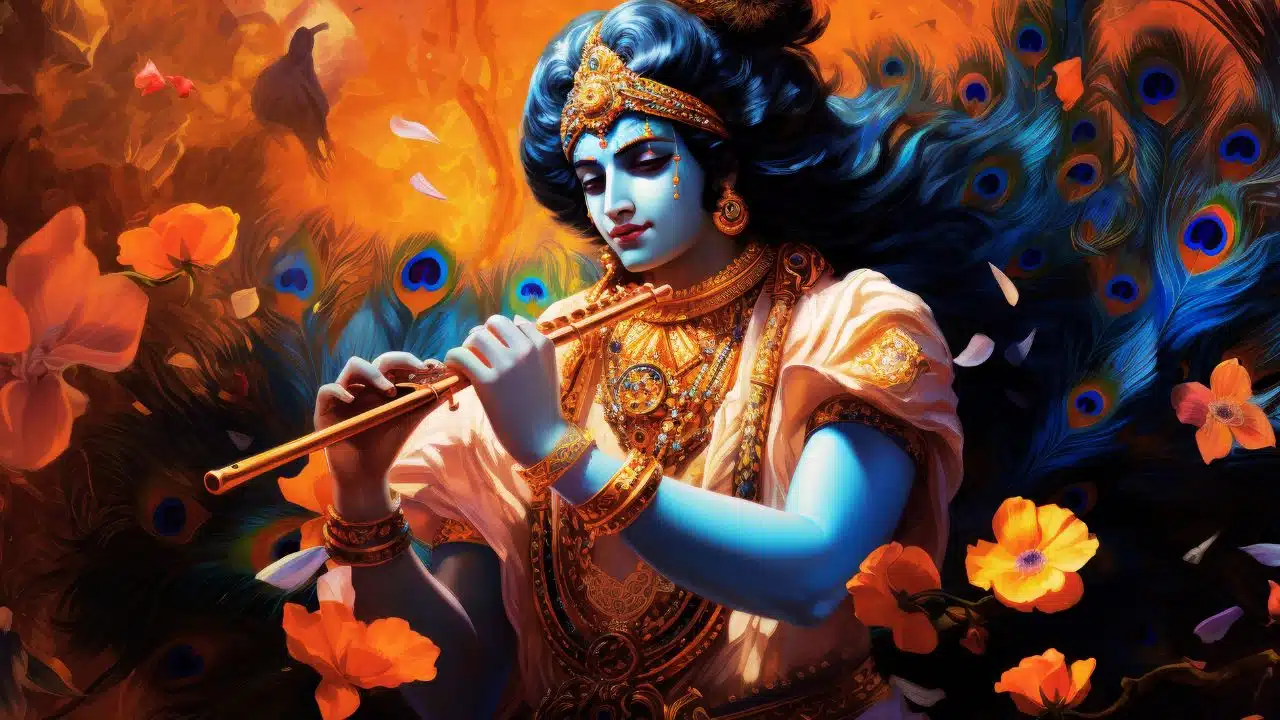
Krishna Janmashtami, also known as Gokulashtami or Krishna Janmotsava, is one of the most revered festivals in Hindu tradition. It marks the divine birth of Lord Krishna, the eighth incarnation of Lord Vishnu, who is remembered for his wisdom, charm, and role in preserving dharma. The festival is not just a religious observance but also a cultural phenomenon celebrated across India and around the world.
In 2025, Janmashtami falls on August 16, marking the 5,252nd birth anniversary of Lord Krishna. Devotees across India and in Hindu communities globally will celebrate the day with fasting, devotional singing, temple rituals, and cultural performances.
Janmashtami 2025 Date and Auspicious Timings
The festival is observed according to the Hindu lunar calendar on the Ashtami Tithi of Krishna Paksha in the month of Bhadrapada. As per the Panchang (Hindu almanac), these are the significant timings for the 2025 celebration:
-
Ashtami Tithi Begins: August 15, 2025 – 11:49 PM
-
Ashtami Tithi Ends: August 16, 2025 – 09:34 PM
-
Nishita Puja (Midnight Ritual): August 16, 2025 – 12:04 AM to 12:47 AM
-
Parana (Breaking of Fast): August 16, 2025 – after 09:34 PM
-
Rohini Nakshatra Begins: August 17, 2025 – 04:38 AM
-
Rohini Nakshatra Ends: August 18, 2025 – 03:17 AM
The Nishita Puja, performed at midnight, is considered the most auspicious time for Janmashtami worship, as it is believed Krishna was born at this hour. Some traditions may also observe Janmashtami on August 15 because the Ashtami Tithi starts late that night, though the main puja falls on August 16.
Religious and Spiritual Significance
Janmashtami holds immense spiritual importance. Lord Krishna’s life and teachings, recorded in texts like the Bhagavad Gita and Bhagavata Purana, continue to inspire generations. The festival represents the triumph of good over evil, devotion over ego, and truth over deceit.
For devotees, observing Janmashtami is believed to bring divine blessings, fulfillment of desires, and prosperity. It is also a day to reflect on Krishna’s message of love, duty, and righteousness. Many people fast on this day, offer prayers, chant mantras, and visit temples to seek the blessings of Lord Krishna.
Traditions and Celebrations Across India
Mathura and Vrindavan
As Krishna’s birthplace and childhood home, Mathura and Vrindavan host some of the grandest celebrations. Temples are decorated with flowers and lights, while priests perform special abhisheks (ritual bathing of idols). Devotees reenact episodes from Krishna’s early life, including his playful acts of stealing butter, through dramatic performances called Rasa Lila. The atmosphere is charged with devotion, dance, music, and chanting of Hare Krishna mantras.
Maharashtra – Dahi Handi
In Maharashtra, particularly in Mumbai and Pune, the festival is synonymous with the Dahi Handi tradition. Inspired by Krishna’s love for butter and curd, teams of young men and women form tall human pyramids to reach and break an earthen pot filled with curd, butter, or milk, which is tied high above the ground. The event is celebrated with excitement, competition, and large crowds, often accompanied by music and cultural programs. In recent years, Dahi Handi has been recognized as an organized sport in Maharashtra.
Gujarat and Rajasthan
In states like Gujarat, where Krishna is widely worshipped as Dwarkadhish (Lord of Dwarka), temples are beautifully decorated, and processions featuring Krishna idols are taken out. Devotees in Rajasthan also observe fasts and hold night-long bhajans, keeping the festive energy alive until dawn.
South India
In Tamil Nadu, Andhra Pradesh, and Karnataka, people decorate their homes with small footprints made of rice flour, symbolizing Krishna’s steps into their homes. Children are dressed as Krishna and Radha, and devotional songs are sung throughout the day and night.
Global Celebrations
Beyond India, Janmashtami is observed in countries like the United States, United Kingdom, Nepal, Mauritius, Fiji, and South Africa. ISKCON temples around the world organize grand festivities, including cultural performances, Gita recitations, and midnight aartis, making the festival a truly global event.
Rituals and Devotional Practices
Fasting (Vrat)
Devotees observe different types of fasts. Some consume only fruits, milk, and vrat-friendly dishes, while others keep a nirjala vrat, abstaining from both food and water until midnight. Fasting is seen as a way to purify the body and mind, dedicating oneself entirely to Krishna.
Midnight Puja and Abhishek
The midnight puja is the highlight of Janmashtami. Idols of Krishna are bathed with Panchamrit—a mixture of milk, curd, ghee, honey, and sugar—before being adorned with new clothes, jewelry, and flowers. Devotees sing bhajans, chant mantras, and celebrate the birth of Krishna with great enthusiasm.
Bhajans and Cultural Programs
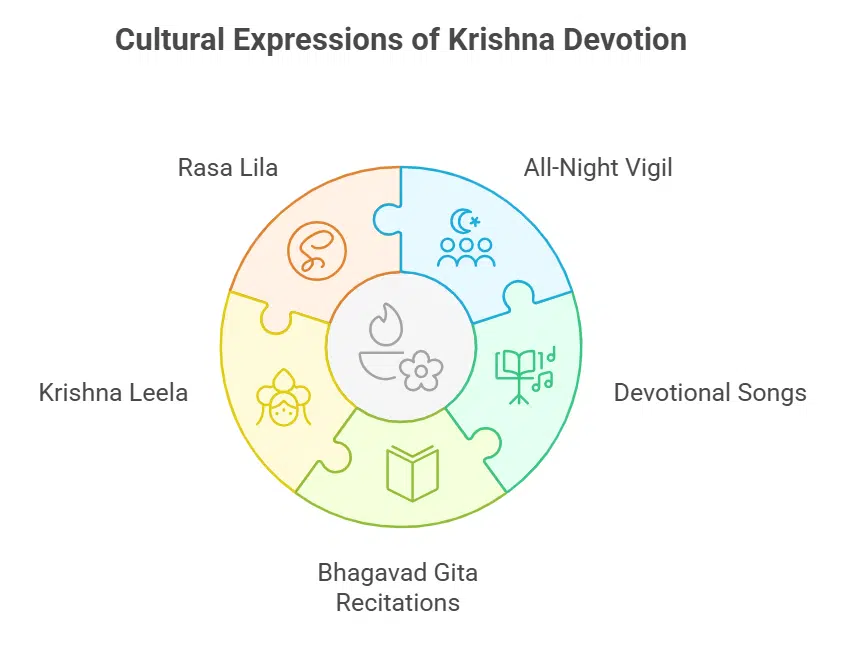
All-night vigil and singing of devotional songs, along with recitations from the Bhagavad Gita, are common. In several regions, dance-dramas known as Krishna Leela or Rasa Lila depict episodes from Krishna’s life, from his mischievous childhood to his role in guiding Arjuna during the Mahabharata.
Popular Krishna Mantras for Janmashtami
Devotees chant sacred mantras throughout the day and during puja rituals:
-
Om Namo Bhagavate Vasudevaya
-
Om Kleem Krishnaya Namah
-
Krishnaya Vasudevaya Haraye Paramatmane Pranatah Klesh Nashaya Govindaya Namo Namah
-
Hare Ram Hare Ram Ram Ram Hare Hare, Hare Krishna Hare Krishna Krishna Krishna Hare Hare
These mantras are believed to bring spiritual energy, peace of mind, and divine blessings.
Symbolism and Charity
Janmashtami also emphasizes acts of charity and selflessness. Devotees often donate food, clothes, or money to the poor. Traditional offerings include yellow or saffron garments, flutes, grains, and sweets, each symbolizing aspects of Krishna’s divine play.
Why Janmashtami Remains Relevant Today
Krishna Janmashtami is not only a religious occasion but also a festival of culture, art, music, and devotion. It unites people across regions and communities, reminding them of Krishna’s timeless teachings—love without condition, the importance of duty, and the eternal triumph of good over evil.
In 2025, as millions gather in temples, homes, and cultural centers, the festival will once again reaffirm the enduring presence of Krishna’s legacy in the modern world.