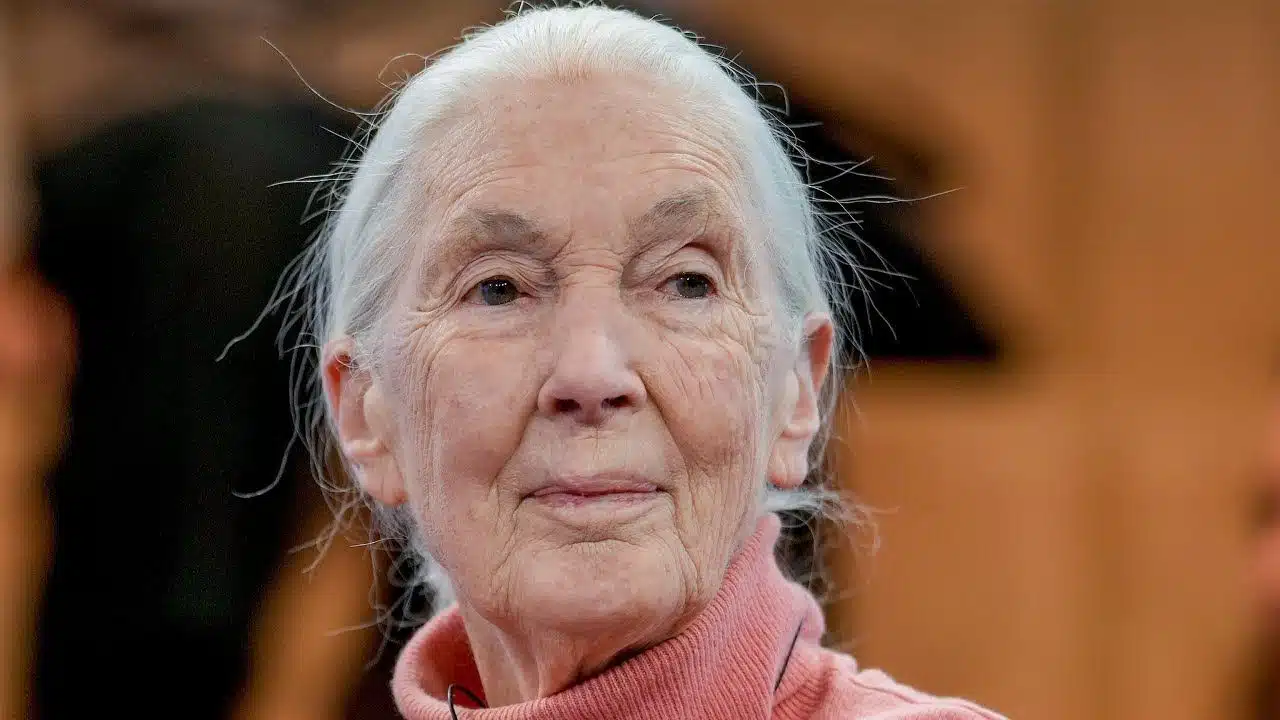
Jane Goodall, the legendary British primatologist, anthropologist, and tireless conservationist whose groundbreaking work with wild chimpanzees transformed our understanding of the animal kingdom, died on Wednesday, October 1, 2025, at the age of 91, the Jane Goodall Institute confirmed. She passed away of natural causes in Los Angeles, California, while on a U.S. speaking tour, leaving behind an extraordinary 65-year legacy of scientific discovery and unwavering advocacy for the natural world.
A Revolution in Gombe: Redefining ‘Man’ and ‘Tool’
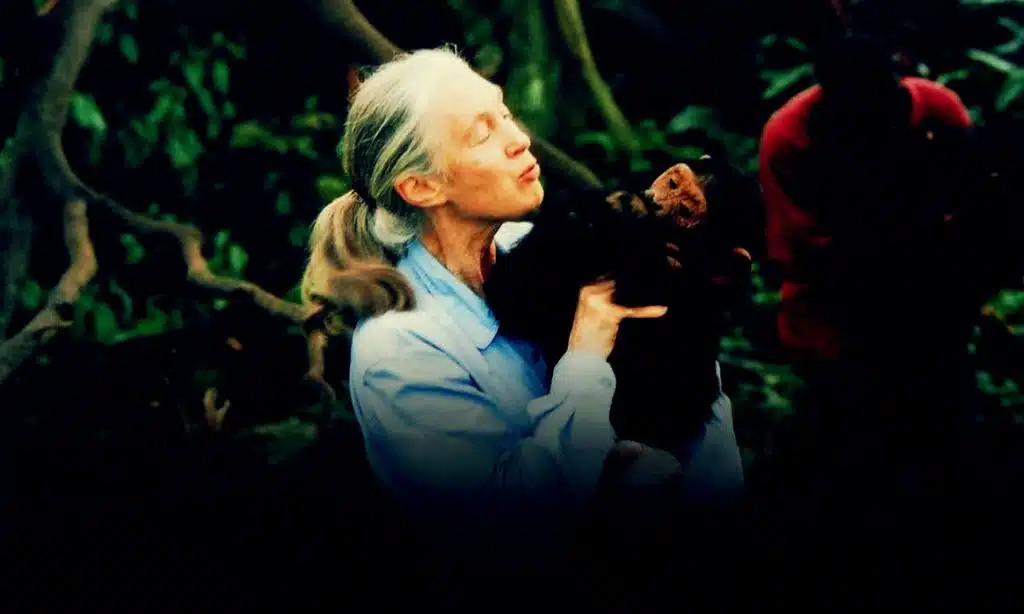
The death of Dr. Goodall marks the end of an era defined by a deep, empathetic connection between a scientist and the subjects of her study. Her life’s work began in 1960 when, with virtually no formal training, the then 26-year-old journeyed to what is now Gombe Stream National Park in Tanzania, funded by famed paleoanthropologist Louis Leakey. It was here that she eschewed the cold scientific norms of the time, opting to name the chimpanzees she observed—such as David Greybeard and Fifi—instead of assigning them numbers, a move that was initially scorned by the academic community but which humanized the primates for the public.
Her observations over the next few months led to one of the most significant discoveries in the history of primatology: chimpanzees not only used tools, but they also made them. She witnessed a male chimpanzee, David Greybeard, stripping leaves from a twig and using it to “fish” for termites in a mound.
Upon hearing this revelation, Leakey famously declared: “Now we must redefine man, redefine tool, or accept chimpanzees as humans!”. This single observation challenged the long-held belief that tool use was an exclusive trait of Homo sapiens, forcing a fundamental re-evaluation of the line between humans and animals.
Latest Data & Statistics on Her Legacy
Goodall’s study in Gombe became the longest-running study of a single species in the wild, providing a wealth of data that continues to be invaluable to ethologists and conservationists.
- Gombe Research Continuity: The long-term chimpanzee research project she initiated has run for over 65 years as of October 2025, providing an unparalleled, multi-generational view into chimp social structure, communication, and behaviour.
- Global Reach of Advocacy: The Jane Goodall Institute and its youth movement, Roots & Shoots, now operate in more than 60 countries worldwide, empowering millions of young people to take action for animals, people, and the environment.
- Habitat Conservation Impact: Through its community-centered conservation approach (TACARE), the JGI has put 3.4 million acres of chimpanzee habitat under conservation action plans, working directly with 130 local communities living near these critical ecosystems as of its most recent reports.
Official Responses and Global Tributes
Tributes poured in instantly from world leaders, fellow scientists, and conservation organizations, underscoring her monumental influence across multiple fields.
The Jane Goodall Institute (JGI) released a statement confirming her passing, saying: “Dr. Goodall’s discoveries as an ethologist revolutionized science, and she was a tireless advocate for the protection and restoration of our natural world”.
Former U.S. President Barack Obama, reflecting on her impact, stated: “Jane Goodall had a remarkable ability to inspire us to connect with the natural wonders of our world, and her groundbreaking work on primates and the importance of conservation opened doors for generations of women in science.”.
United Nations Secretary-General António Guterres, who appointed her a UN Messenger of Peace in 2002, expressed deep sadness: “I’m deeply saddened to learn about the passing of Jane Goodall, our dear Messenger of Peace. She is leaving an extraordinary legacy for humanity & our planet.”.
Expert Analysis: From Scientist to Activist
Experts highlight that a pivotal shift occurred in the mid-1980s, transforming Goodall from a researcher into a full-time activist. A 1986 conference in Chicago on chimpanzee behaviour and conservation made her realise the sheer scale of the threats facing the primates she loved—habitat destruction, illegal trafficking, and medical testing.
“She had this epiphany that the research was great, fascinating, but ultimately didn’t matter if the animals go extinct,” says Dr. Ben Stanford, a primatologist who worked alongside JGI (paraphrased from Smithsonian Magazine). This moment spurred her to abandon her long-term residence in Gombe and begin traveling an estimated 300 days a year to advocate for conservation.
Her scientific methodology—combining rigorous, long-term observation with an unprecedented level of immersion and empathy—was also radical. She was criticized for “anthropomorphizing” the chimpanzees by describing their personalities, emotions, and complex social interactions. However, her approach ultimately prevailed, leading to a richer, more accurate understanding of animal cognition and social lives.
Impact on People and Future Generations
Beyond science, Dr. Goodall’s most enduring legacy may be her message of “hope through action.” Even in her later years, well into her 90s, she maintained a grueling travel schedule, delivering speeches that balanced grim realities about the climate and biodiversity crises with an optimistic call to action.
Her youth program, Roots & Shoots, is a cornerstone of this legacy. Launched in 1991, it encourages young people to implement hands-on environmental and humanitarian projects in their communities. This focus on empowerment reflects her lifelong belief that every individual, regardless of age or background, can make a difference. As Goodall often said: “Every single one of us makes a difference every day – it is up to us as to the kind of difference we make”.
A short anecdote shared by a former student volunteer, Maya K. (name changed, paraphrased from JGI project reports), perfectly captures this spirit: “I met Dr. Goodall when I was 16 at a Roots & Shoots event. She didn’t talk to us about her fame or her books; she asked about the community garden we were trying to start. She listened intently to the smallest details of our tiny, local project and told us that was the most important work in the world. She made the vast problem of saving the planet feel personal and possible.”
What to Watch Next: Continuing the Mission
The Jane Goodall Institute has pledged to continue her work, ensuring the research in Gombe is sustained and her global conservation programs expand. The immediate focus will be on the continuation of the TACARE program, which combines conservation with local economic development, and ensuring the continued growth of Roots & Shoots. Her passing serves as a rallying cry for the global environmental movement, urging adherence to the principles of compassionate science and community-led conservation she championed. The world has lost its most prominent chimpanzee whisperer, but her vision for a harmonious relationship between humans and nature is now the baton passed to future generations.
Dame Jane Goodall was a rare figure who bridged the gap between the rigorous demands of science and the popular appeal of a cultural icon. From her quiet, groundbreaking observations in the forests of Gombe to her powerful, global pleas for the planet, she taught humanity profound lessons about its closest relatives and, by extension, itself. Her work permanently altered the course of ethology and galvanized the modern conservation movement. Her death is a moment of global mourning, yet it is also a powerful reminder of her message: the future lies in our hands, and hope lives in action.