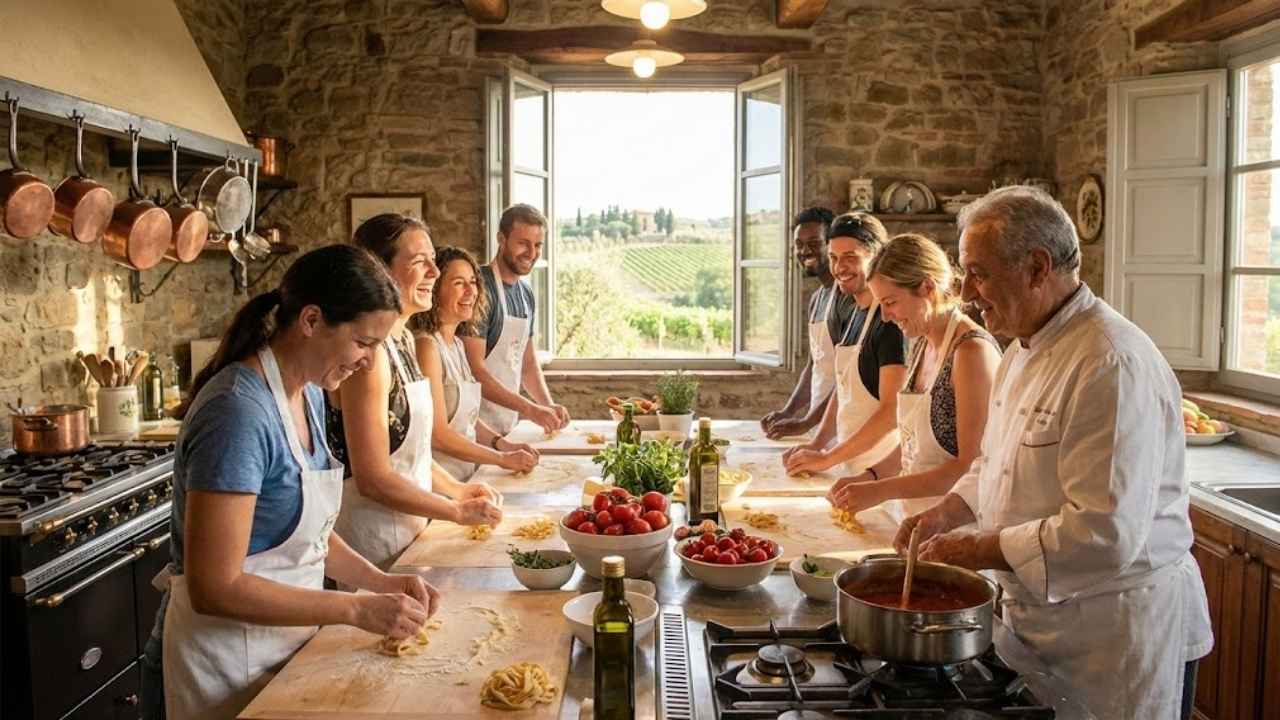
There is a moment in every Italian kitchen — the moment the pasta dough comes together under your hands, or the first scent of soffritto hits the pan — when you understand that Italian food is not really about recipes. It is about rhythm. Patience. The particular confidence of someone who has made the same dish a hundred times and still cares about getting it right.
That is exactly what you cannot get from a cookbook. And it is precisely what a cooking class in Italy delivers.
Whether you are planning a week in Rome, a long weekend in Florence, or a slow meander through Bologna and Verona, adding a hands-on cooking lesson to your itinerary transforms a holiday from sightseeing into something you actually bring home with you.
Why Learn to Cook in Italy?
Italy has one of the most regionally distinct food cultures in the world. What people eat in Naples bears little resemblance to what lands on a table in Venice. The pasta shapes of Bologna are different from those of Palermo. The olive oil in Tuscany has a different character to the one pressed in Puglia.
Travelling through Italy without engaging with this regional depth is a little like visiting a museum and only reading the signs. A cooking class puts you inside the work itself — guided by local chefs who learned these techniques not from culinary school curricula but from family kitchens, market habits, and decades of practice.
Platforms like Cooking Italy offer cooking experiences across the country’s most beloved cities, connecting travellers with exactly this kind of local expertise. From Rome to Siena, Florence to Bari, the emphasis is on authenticity: real recipes, real kitchens, and instructors who cook this food every day of their lives.
What to Expect From an Italian Cooking Class
Most classes follow a satisfying arc. You begin with the ingredients — often sourced that morning from a local market — and by the end of the session, you sit down to eat what you have made together.
For pasta and pizza, the process is deeply tactile. You will learn the correct ratio of flour to egg for fresh pasta, how to read the dough by feel rather than by timer, how to roll it to the right thickness and cut it cleanly. For pizza, you will develop an appreciation for exactly why Neapolitan dough behaves differently to any imitation you have made at home — and you will learn how to coax it properly.
Beyond technique, a good class teaches you context. Why does cacio e pepe use only two ingredients? What makes a true Bolognese so different from the version most of the world knows? Why does a Florentine chef reach instinctively for a particular cut of meat?
These are the questions that a short lesson in Rome or Florence can answer more vividly than any food documentary.
Where in Italy Can You Take a Cooking Class?
The good news is that wherever your Italian itinerary takes you, a world-class cooking experience is within reach.
Rome is perhaps the most popular starting point for culinary travellers. The city’s food culture is bold and unfussy — cacio e pepe, carbonara, amatriciana — dishes built on a handful of perfect ingredients. Cooking Class in Rome offers immersive pasta and pizza making sessions led by local chefs, set in the heart of the city. It is the kind of experience that gives Rome a different dimension entirely, away from the Colosseum queues and into the living culture of the place.
Florence and the surrounding Tuscany region are where Italian food becomes refined without losing its soul. Expect handmade pappardelle, ribollita, and a deep education in the region’s celebrated olive oils and wines.
Bologna has an entirely justified reputation as the gastronomic capital of Italy. A class here means learning ragù from the people who invented it — a humbling and delicious experience.
Naples is the home of pizza, and making one here with a Neapolitan chef is a rite of passage for any food-focused traveller. The dough, the San Marzano tomatoes, the fior di latte — there is a reason the world has spent decades failing to replicate it.
Venice, Milan, Verona, Bari, Palermo, and Siena each bring their own culinary character to the table. From the seafood traditions of Sicily to the risotto culture of northern Italy, every city offers a lesson that could not have been learned anywhere else.
Tips for Choosing the Right Class
Not all cooking experiences are created equal. A few things worth considering before you book:
Class size matters: Smaller groups mean more hands-on time with the chef and a more personal experience. Look for classes capped at around eight to twelve people.
Timing in your trip: Consider booking a class early in your stay rather than at the end. Learning to make pasta on day two means you will spend the rest of the trip looking at restaurant menus with entirely new eyes.
Market visits as an add-on: Some classes begin with a guided tour of a local market before moving to the kitchen. This is worth seeking out — understanding where ingredients come from is half the lesson.
Dietary requirements: Most reputable operators will accommodate vegetarian, vegan, or allergy-specific needs. Confirm this before booking.
The Dish You Bring Home
There is a practical argument for cooking classes in Italy that often gets overlooked: you leave with skills.
Not just a memory of a nice afternoon and a full stomach, though that too is guaranteed. You leave knowing how to make pasta from scratch, how to build a proper sauce from simple ingredients, how to taste as you cook rather than following a recipe by the letter.
That knowledge travels well. It lands on your kitchen counter back home and stays there — the most durable souvenir Italy offers.
Plan Your Italian Cooking Experience
If this has made its way onto your itinerary radar, explore what is available across Italy through Cooking Italy, where you can find classes in Rome, Florence, Venice, Milan, Bologna, Verona, Naples, Bari, Palermo, Siena, and beyond.
For those with Rome as the centrepiece of their trip, Cooking Class in Rome is a strong starting point for an experience that the city will thank you for.
Italy has been feeding the world for centuries. For a few hours, it can teach you how.