You may feel your tech lags behind world leaders. Bits can only solve so much math. Quantum computing can help. You want clear steps. Ways Israel Could Lead In Quantum Technology Research will give you real paths.
Key Takeaways
- Israel funds 1.25 billion shekels (~$350 million USD) for a National Quantum Computing Center. It runs a 20-qubit machine since late 2024.
- About 20 startups in Israel work on quantum cryptography and qubit algorithms. Examples include Quantum Source Labs and Quantum Machines.
- Classiq raised $110 million in May 2025. Quantum Machines netted $170 million in Q1 2025.
- Researchers at Weizmann Institute and Hebrew University team with startups via shared labs and hackathons. They speed up new quantum algorithm work.
- Israel builds post-quantum security with quantum key distribution and random number generators. It defends against future Shor’s algorithm attacks.
Enhancing Quantum Algorithms and Cryptography in Israel
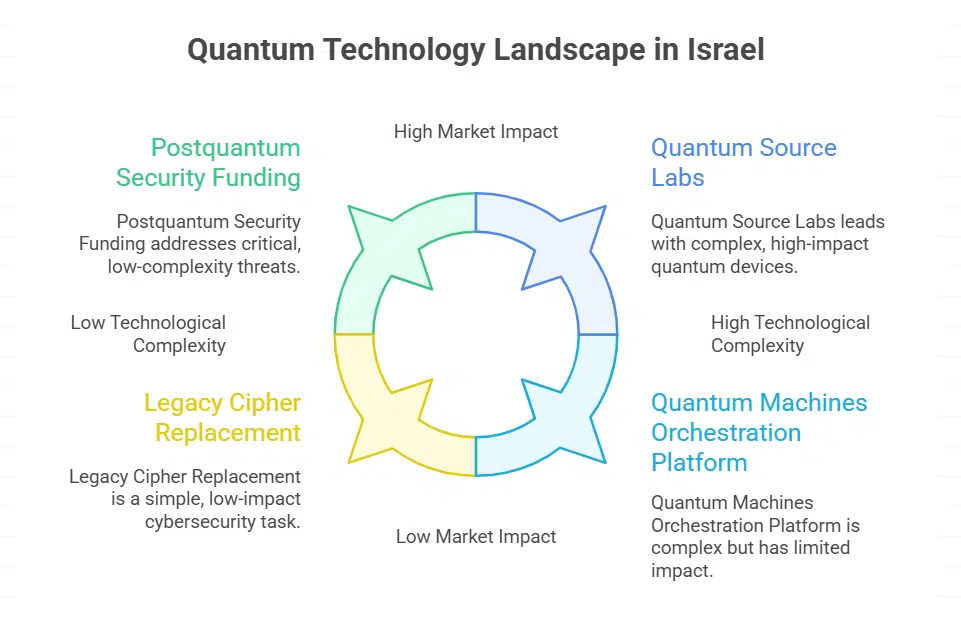
Israel hosts about 20 quantum firms, most tackle cryptography with a cybersecurity twist. They toss legacy ciphers like hot potatoes, and build control systems, fancy encryption tools, and fresh algorithms.
Quantum Source Labs crafts scalable devices for quantum computing tasks in cryptography, material science, and AI. Quantum Machines runs its Orchestration Platform to merge cryptography and machine learning.
Leaders pour funds into postquantum security to stop hackers who hope to break current encryption. A quantum computer using Shor’s algorithm could factor huge numbers in seconds, and that threat could collapse digital infrastructure.
Israel’s cyber power fame puts it at the front of this race. Researchers team up on quantum systems and encryption schemes that stand firm in the future.
Creating Israel’s National Quantum Computing Center
Creating Israel’s National Quantum Computing Center sets up an open playground infrastructure for hardware. The Israeli Quantum Computing Center deploys a multi-vendor, open-architecture design.
Research groups test quantum gates on different systems at once. Teams compare devices from many firms side by side. Developers mix quantum and classical machines in one framework.
This model breaks barriers to entry. It speeds breakthroughs in quantum computing research.
Israel’s National Quantum Initiative funds the center with 1.25 billion shekels, about $350 million USD. Israel Aerospace Industries launched a domestic 20-qubit machine in late 2024.
Scientists expand projects in drug discovery and materials science. Engineers run simulations in finance, manufacturing, and logistics. Developers use Python’s Qiskit and Google’s Cirq to build quantum circuits.
Experts from physics and computer science share labs and ideas. Joint teams write code and run joint tests. A collaborative culture drives standards and cuts time to innovation.
Fostering Collaboration Between Startups and Academia in Israel
Researchers at the Weizmann Institute and Hebrew University team with more than 20 startups on quantum ventures. Veterans from elite Unit 8200 launch firms that turn theory into hardware.
The IQCC model drives collaboration between academia and startups with shared labs, joint grants, and hackathons on entanglement and qubit control. Some teams program quantum circuits in an open-source framework on a cloud platform to speed development of new algorithms.
Entrepreneurs demo prototypes at IBM Research Israel and Google Israel technology hubs, and some link with U.S labs or EU research teams. Officials channel over two-thirds of investment into public labs, while venture funds fill the private gap.
Classiq and Quantum Machines score three to five times more value than peers that skip academia links.
Building Quantum-Resistant Cybersecurity Measures in Israel

Israel holds a global edge in cybersecurity and adapts it right to quantum cryptography. Startups tap this skill to build post-quantum cryptography protocols. They use quantum key distribution towers.
The chip industry shapes secure hardware modules and quantum random number generators. Quantum Machines ships advanced control systems for encryption.
The government funds labs and startups. It backs joint projects with universities and defense firms. One out of every 300 tech companies works on quantum computing, vs one out of 2,000 in the U.S. These moves guard digital infrastructure like servers and data centers.
They strengthen public key infrastructure and error correction steps. They craft quantum-resistant defenses to block future hacks by quantum computers.
Boosting International Investments in Israel’s Quantum Research
Boosting international investments in Israel’s quantum research hit a new peak in mid-2024 and matched 2023 totals. Funding first spiked in 2020 and grew fast. Classiq raised 110 million dollars in May 2025.
Quantum Machines netted 170 million in the first quarter of 2025. Startups thrive on fresh capital and government R&D grants.
Global partners jumped in. U.S. firms and EU projects link teams for superconducting qubit tests and ion trap chips. IBM Research Israel and Google Israel labs host joint innovation tasks.
Denmark works closely with Classiq and Quantum Machines under an open lab model. These ties drive funding, spark startup growth, and secure long-term resilience in quantum technology.
Takeaways
Israel can grab the quantum crown with bold moves. The nation can link up labs and startups to test qubit ideas fast, like kids in a candy store. It can tune algorithms in Qiskit and other toolkits to chase superposition gains.
Leaders can push quantum key distribution on global nets to shield data. Private funds can spark error correction projects in local hubs. These steps paint a bridge to tomorrow’s tech scene in Israel.
FAQs
1. How can Israel build a strong quantum tech talent base?
Israel can plant the seeds in its colleges, teach students about qubits and quantum math, and run lab sessions that feel like a science fair. It can invite top mentors to coach teams, spark hackathons, and guide young minds. Think of it as growing a garden, you need good soil, fresh seeds, and daily care.
2. What can Israel do to boost quantum startups?
It can roll out grant programs, cut red tape fast, and set up co-work hubs near research labs. It can link lab discoveries with eager teams, so ideas take flight. Give a new firm the right wings, and you spark a tech bird in flight.
3. How can the government fund quantum technology research?
The state can carve out a large budget for quantum grants, match private cash with public funds, and open a simple call for projects. It can partner with firms that want to back algorithms, sensors, and comm links. Money plus smart deals can push labs forward.
4. How can global ties lift Israel’s quantum research?
Israel can make pacts with top overseas centers, swap students, trade data, and run joint tests. It can sign clear, no-nonsense accords that get labs talking. When minds meet across borders, a small spark can light a big fire.