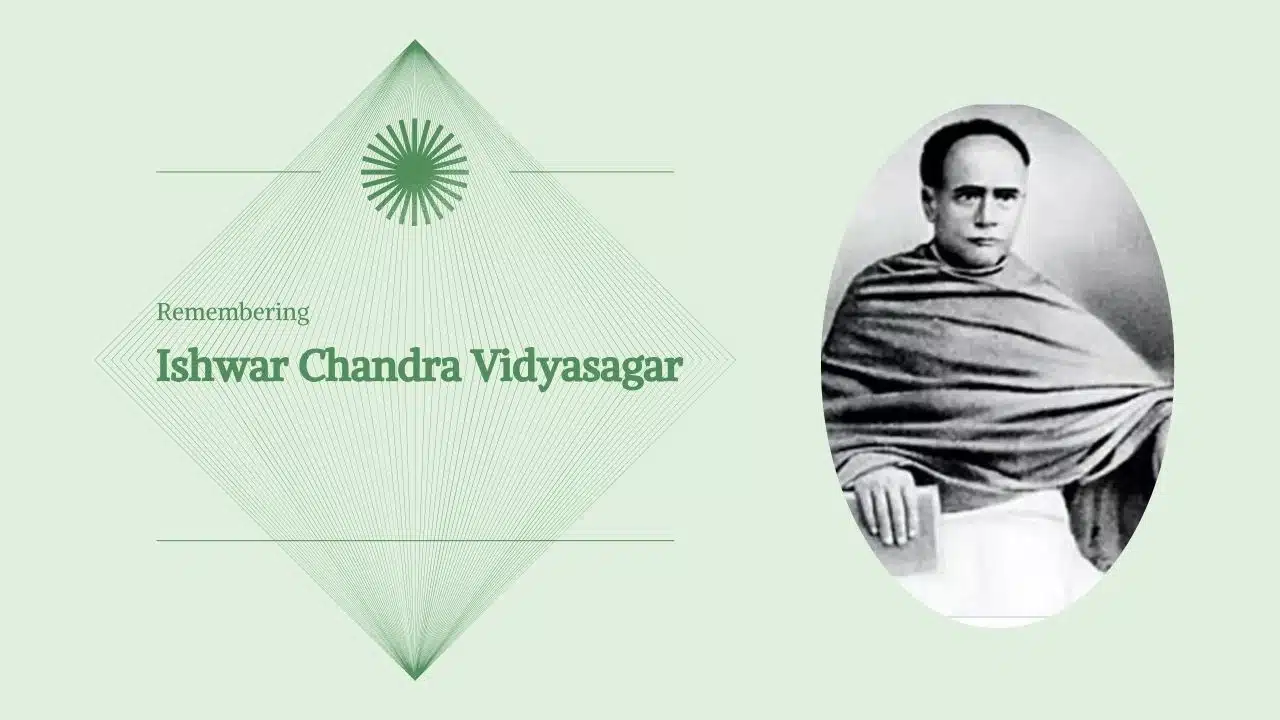
Do you wonder why some societies struggle to provide equal opportunities, especially for women and the underprivileged? Many people still search for ways to bridge gaps in education and social justice. Learning about real-life leaders who created positive change can be both inspiring and practical.
Ishwar Chandra Vidyasagar was a famous educator, reformer, and intellectual during the nineteenth century Bengal Renaissance. He worked hard to improve schools, support women’s rights, and modernize society from within. Today, July 29th on 2025, is his 134th death anniversary.
This post will highlight his life’s work so you can see how one person’s courage made a difference—maybe sparking ideas or hope for your own challenges. Discover what made Ishwar Chandra Vidyasagar an icon worth remembering!
Key Takeaways
- Ishwar Chandra Vidyasagar was born in 1820 in Calcutta. He became a leading educator, writer, and social reformer during the Bengal Renaissance.
- Vidyasagar worked to improve education by setting up schools and training teachers. He introduced admission and tuition fees in schools across Bengal.
- He fought for women’s rights, especially widow remarriage, at a time when society strongly opposed it.
- Vidyasagar is known as the “Father of Bengali prose” because he made Bengali writing simple and clear for everyone to read.
- His legacy lives on today through schools, books, films, and annual events that honor his work for education and social change.
Ishwar Chandra Vidyasagar was born in 1820 in Calcutta. He became a leading educator, writer, and philanthropist of nineteenth-century India. As a Bengali Sanskrit pundit and intellectual, he helped start the Bengal Renaissance.
He worked hard to bring social reform from within society.
Vidyasagar set up teachers’ training schools and brought changes to the education system by introducing admission and tuition fees in Bengal. He stood out as an activist for women’s rights and cultural revival.
His efforts shaped modern literature and learning during this era of enlightenment in India.
Contributions of Ishwar Chandra Vidyasagar
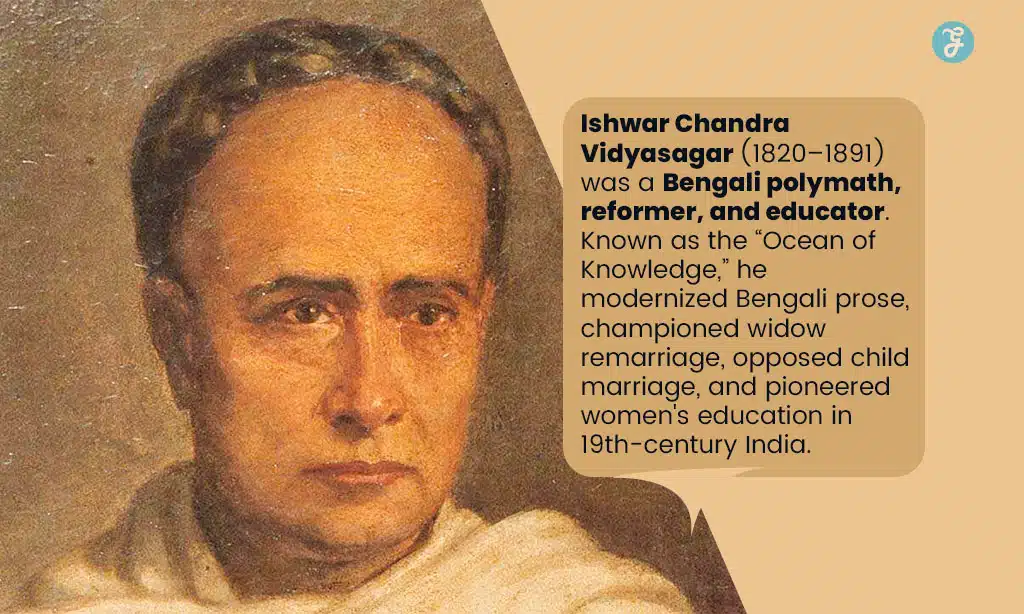
Ishwar Chandra Vidyasagar worked hard to improve education, especially for women. He also fought for the rights of widows to remarry.
Efforts in promoting education and women’s rights
Ishwar Chandra Vidyasagar worked hard to promote education for everyone. He believed that learning was key to change. In the 19th century, he introduced admission fees and tuition fees in Bengal schools.
These changes helped many children get an education. Vidyasagar also focused on women’s rights. He fought for widow remarriage at a time when society did not accept it.
Vidyasagar set up a teachers’ training school to improve teaching methods. His goal was to create better educators who could inspire students. He wanted women to have access to education too, believing they deserved the same chances as men.
His efforts made a lasting mark on society and opened doors for future generations in India.
Advocacy for widow remarriage
Ishwar Chandra Vidyasagar was a strong supporter of widow remarriage. In the 19th century, many widows faced harsh treatment in society. They had limited rights and were often shunned.
Vidyasagar believed this was unfair. He worked hard to change these views.
He advocated for laws that allowed widows to remarry. This was a bold step during his time. His efforts helped improve the lives of many women in Bengal. By promoting widow remarriage, he aimed to bring fairness and dignity back to their lives.
His actions made him a key figure in the Bengali Renaissance and an important social reformer in India’s history.
Modernization of Bengali prose
Ishwar Chandra Vidyasagar played a key role in the modernization of Bengali prose. He aimed to make it simple and clear for everyone. Vidyasagar wrote many texts that used everyday language.
This helped more people understand literature. He made Bengali prose popular with his style. His work set a high standard for future writers.
Vidyasagar’s efforts changed how people viewed the Bengali language. Before him, many writings were complex and hard to read. By simplifying prose, he opened doors for new ideas in education and culture during the Bengal Renaissance.
His contributions laid the foundation for modern Bengali literature and inspired countless authors after him.
Impact and Legacy of Ishwar Chandra Vidyasagar
Ishwar Chandra Vidyasagar changed Indian society through his focus on education and women’s rights. He is known as the ‘Father of Bengali prose’ for modernizing the language. His work earned him respect and recognition across India.
Many still feel his influence in today’s culture and social issues. Discover more about his lasting impact!
Popularly known as the ‘Father of Bengali prose’
Ishwar Chandra Vidyasagar is often called the “Father of Bengali prose.” His work greatly changed Bengali literature. He modernized the language and made it accessible to many people.
Vidyasagar wrote important texts that helped shape Bengali prose.
His efforts opened doors for new writers and thinkers. Education was also a big part of his life. He introduced fees in schools, which helped improve learning for students. By making education better, he supported literacy in Bengal and beyond during the 19th century Renaissance.
Recognition and accolades for his contributions
Ishwar Chandra Vidyasagar earned many accolades for his hard work. He was recognized as an important educator, social reformer, and philanthropist in the nineteenth century. His efforts to promote education and women’s rights were widely praised.
Vidyasagar is often called the “Father of Bengali Prose” for modernizing literature in Bengal.
His contributions had a lasting impact on Indian society and culture. Many institutions honor him for his role in the Bengali Renaissance. Schools, streets, and awards bear his name today.
His legacy continues to inspire new generations who value education and social change.
Influence on Indian society and culture
Ishwar Chandra Vidyasagar, a key figure in the Bengal Renaissance, influenced Indian society and culture greatly. He fought for women’s rights and supported widow remarriage. His work made education accessible to many, which changed lives.
Vidyasagar introduced fees in schools, making them more structured. His efforts helped improve the education system in India.
Vidyasagar is known as the “Father of Bengali prose.” He modernized language through literature and writing. This inspired many writers after him. He was an educator and philanthropist who established teachers’ training schools to uplift teaching standards.
Through his activism, he impacted social norms that shaped 19th-century India significantly.
Notable Works and Achievements of Ishwar Chandra Vidyasagar
Ishwar Chandra Vidyasagar translated and edited many important texts. He also started schools and colleges to promote education for all.
Translation and editing of important texts
Ishwar Chandra Vidyasagar played a vital role in translation and editing important texts. He worked hard to make Sanskrit works accessible to Bengali readers. His efforts helped bridge the gap between languages.
This work was crucial for education and culture in Bengal.
Vidyasagar translated many key texts into Bengali. These translations made complex ideas easier for many people to understand. He also edited works that shaped modern Bengali literature.
By doing this, he helped grow the intellectual landscape of Bengal during the 19th century. His contributions in this area mark him as a key figure in the Bengali Renaissance movement.
Establishment of educational institutions
Ishwar Chandra Vidyasagar worked hard to improve education in Bengal. He set up schools that focused on quality learning. His efforts included establishing a teachers’ training school.
This school helped train better teachers for the students of Bengal.
Vidyasagar introduced new ideas, like admission and tuition fees, in schools. These changes made education more accessible for many families. Through his work as an educator and activist, he contributed greatly to the Bengali Renaissance and modernized teaching methods in India.
Social activism and philanthropy
Ishwar Chandra Vidyasagar was a strong advocate for social change. He worked hard to improve education and help women. His efforts in philanthropy made a big impact on many lives. Vidyasagar set up schools to train teachers, which helped raise the quality of education in Bengal.
He supported widow remarriage and fought for women’s rights. This was very important in 19th century India when many women faced hardships. Vidyasagar aimed to create better opportunities within society itself rather than starting new systems.
He left a lasting legacy as both an activist and philanthropist during the Bengal Renaissance.
Ishwar Chandra Vidyasagar In Popular Culture
Ishwar Chandra Vidyasagar appears in many stories and films. His life inspires artists and writers today.
Depiction of Ishwar Chandra Vidyasagar in literature, films, etc.
Ishwar Chandra Vidyasagar appears in many forms of literature and film. His life inspires stories that highlight his role as a social reformer. Writers celebrate him for promoting education and women’s rights.
Films often show his fight for widow remarriage and the need to modernize Bengali prose.
Many people remember his values through theater, books, and documentaries. These works show how he changed society in the 19th century. They bring attention to his impact on Indian culture.
Vidyasagar’s legacy lives on in popular culture today, reminding us of his dedication to education and social change.
Commemoration and celebration of his legacy in modern times
Ishwar Chandra Vidyasagar’s legacy is celebrated in various ways today. Schools and colleges honor his name for his work in education. His life inspires many as a social reformer and intellectual leader of the Bengal Renaissance.
Events are held each year to remember him, showing how he changed society.
In literature, films, and art, people depict Vidyasagar’s contributions. His efforts for women’s rights and education keep his memory alive. Discussions about his impact continue in modern culture.
Many praise him as the Father of Bengali prose for his role in modernization of language and literature during the 19th century in India.
FAQs on Ishwar Chandra Vidyasagar
He fought for better rights for women, improved education, and helped end unfair customs in Indian society. His actions shaped the Bengali Renaissance.
2. How did Vidyasagar help with education in Bengal?
As an educator and Sanskrit pundit, he started new schools for boys and girls. He wrote simple books to teach reading and made learning open to more people.
3. Why is Ishwar Chandra Vidyasagar called a philanthropist?
Vidyasagar gave his own money to help poor families go to school or get food. His work showed kindness as well as strong action.
4. How did literature play a role in the life of this Bengal icon?
This activist used literature to spread ideas about justice and modernization across th century India; his writings inspired others during the cultural renaissance of Bengal.