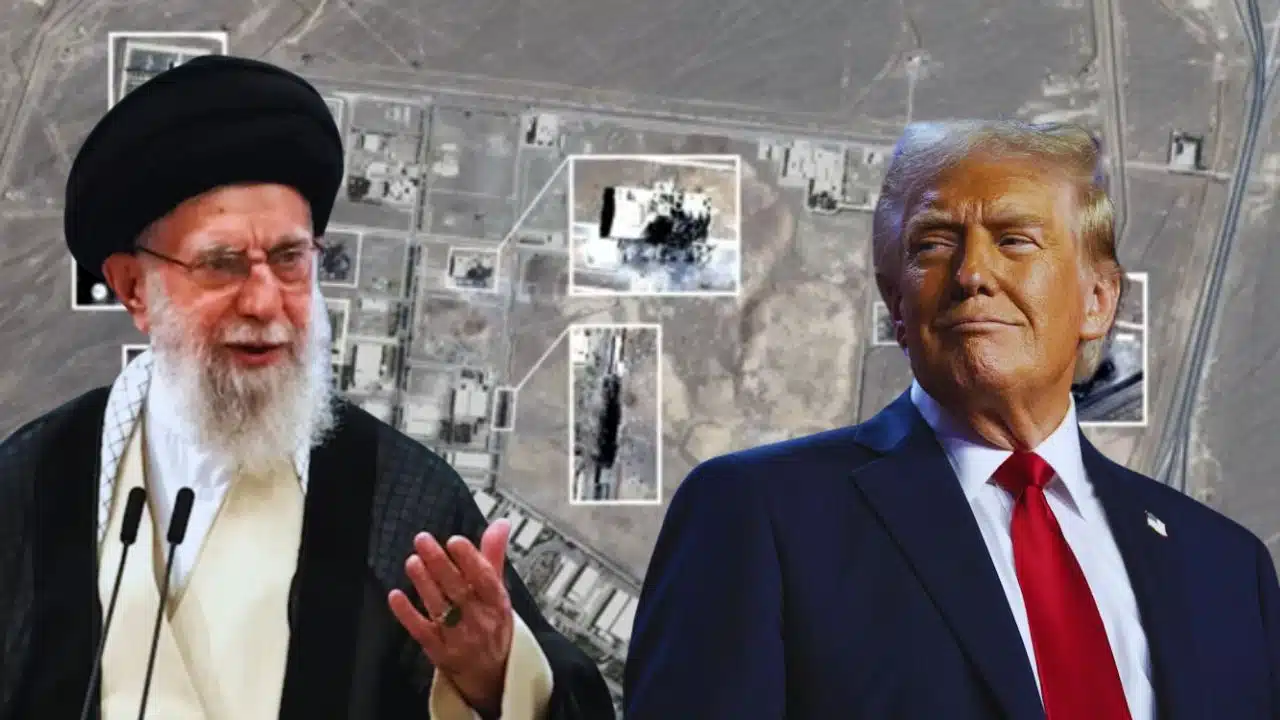
Iran’s Foreign Ministry announced on Friday that any continued negotiations with the United States over its nuclear program have become “meaningless,” following what it described as the largest Israeli military assault ever conducted on Iranian territory. The remarks came after Israel launched a powerful and coordinated strike against multiple Iranian targets, escalating regional tensions and prompting international concern over the collapse of diplomatic efforts.
According to Iran’s semi-official Tasnim News Agency, Foreign Ministry spokesperson Esmaeil Baghaei strongly criticized Washington’s role in the unfolding conflict. He accused the US of hypocrisy, saying,
“The other side [the United States] acted in a way that makes dialogue meaningless. You cannot claim to negotiate and at the same time divide responsibilities by allowing the Zionist regime [Israel] to target Iran’s territory.”
Baghaei went further to claim that Israel’s assault was likely carried out with US approval, and that “without Washington’s green light, such a large-scale attack would not have occurred.” He argued that the Israeli government had successfully manipulated the diplomatic process and sabotaged any remaining hope for meaningful dialogue on the nuclear issue.
US-Iran Nuclear Talks in Jeopardy After Military Escalation
The latest round of indirect nuclear talks between Iran and the United States was scheduled to take place on Sunday in Muscat, Oman—part of ongoing international efforts to return to the 2015 Joint Comprehensive Plan of Action (JCPOA), or a modified version of it. However, following Israel’s attacks, the status of the upcoming meeting has become uncertain.
Iranian officials have indicated that they may cancel their participation altogether, citing the new geopolitical environment created by what they describe as “unprovoked acts of aggression” by Israel. They argue that continuing negotiations in this climate would legitimize aggression and undermine Iran’s sovereignty.
Though Iran has not yet made a final decision about withdrawing from talks, sources close to the government suggest that the leadership sees little point in continuing, unless the United States explicitly condemns the Israeli strikes and guarantees Iran’s territorial integrity.
US Denies Allegations of Involvement, Urges Iran to Remain in Talks
In response to Iran’s accusations, US officials at the United Nations Security Council strongly denied any involvement in Israel’s latest military operation. A spokesperson for the US delegation stated that Washington was not involved in the planning or execution of the Israeli offensive and maintained that the United States still sees diplomatic negotiations as the “most responsible path forward.”
In a statement, the US urged Iran to return to the table, arguing that
“It would be wise to continue nuclear negotiations to prevent further escalation and ensure regional stability.”
However, reports from Reuters indicated that US President Donald Trump told the press that he and his administration “knew the Israeli attacks were coming,” but he still believes there is room for a comprehensive accord between Washington and Tehran. This revelation, while carefully worded, added fuel to Iran’s assertion that the US had foreknowledge of the military strikes and thus bore some moral responsibility.
Background: Israel’s Largest-Ever Strike on Iranian Territory
Tensions between Israel and Iran escalated dramatically after Israel launched a massive military operation against what it described as Iranian military and nuclear targets deep inside Iran. Codenamed “Operation Rising Lion,” the offensive reportedly targeted over 100 locations, including key research and uranium enrichment facilities like the Natanz nuclear site.
According to local and international reports:
- The strikes resulted in the deaths of more than 100 people, including senior Iranian Revolutionary Guard officers and nuclear scientists.
- Infrastructure damage included missile factories, fuel storage depots, and suspected drone launch pads.
- Several Iranian air defense systems were reportedly neutralized, allowing Israeli fighter jets and drones to operate with little resistance.
The Iranian military later confirmed that at least three high-ranking commanders were killed in the operation, and that civilian casualties also occurred in surrounding urban areas. This scale of destruction marked the most severe Israeli strike on Iranian soil to date.
Iran Responds with Missile and Drone Attacks on Israel
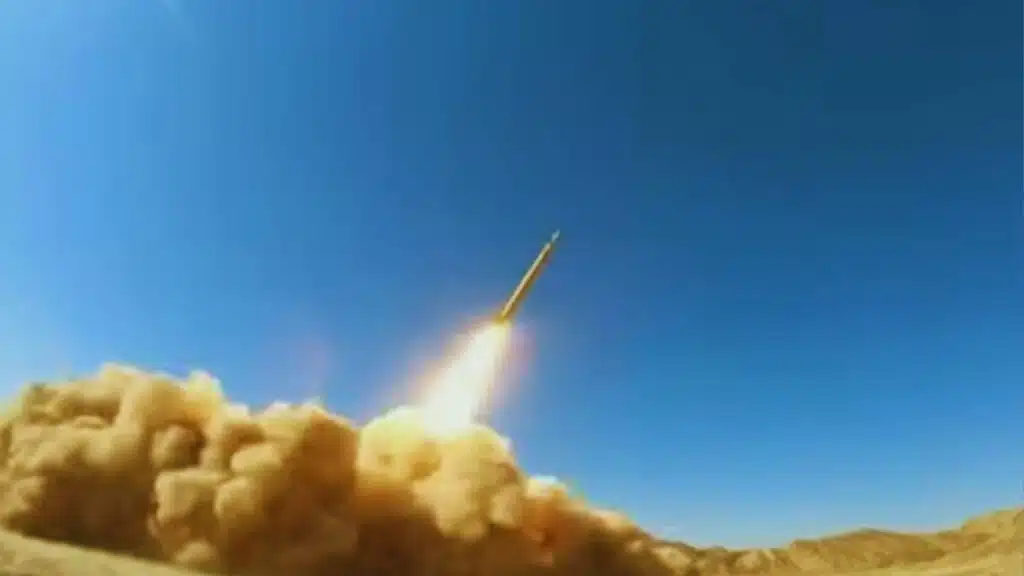
In retaliation, Iran launched a series of ballistic missiles and drone attacks on multiple Israeli cities, including Tel Aviv, Jerusalem, and Haifa.
- Iran’s state-run media dubbed the counterattack as part of the operation “Honest Promise 3”, continuing a series of military responses aimed at deterring further Israeli aggression.
- The strikes led to civilian injuries and property damage in at least three Israeli cities.
- Israel’s Iron Dome air defense system intercepted many of the incoming threats, but some missiles and drones reportedly slipped through, causing power outages and structural damage.
Despite the escalating violence, both nations claimed they were acting in self-defense, while global powers expressed alarm over the potential for a full-scale regional war.
Nuclear Program Still at the Heart of the Dispute
Iran continues to insist that its uranium enrichment program is purely for peaceful, civilian purposes, including energy production and medical research. Iranian officials have consistently denied allegations that the country is pursuing nuclear weapons, calling such claims “baseless fabrications pushed by Israel and its Western allies.”
Israel, however, remains unconvinced and has repeatedly warned that Iran is closer than ever to developing nuclear weapons capability. Israeli Prime Minister Benjamin Netanyahu said this week that “decisive action is needed to stop a rogue regime before it’s too late.”
In contrast, the International Atomic Energy Agency (IAEA) has stated that while Iran’s uranium stockpile has grown significantly, no conclusive evidence of weaponization has been found as of their latest inspection. However, the IAEA has limited access to some Iranian nuclear facilities due to ongoing disputes.
International Reactions: Widespread Concern and Calls for De-escalation
World leaders and international bodies have reacted with growing alarm over the latest flare-up.
- The European Union, United Nations, and China have all issued urgent calls for both sides to show restraint and return to diplomacy.
- Russia warned that the situation could “spiral into uncontrollable conflict” if further military actions occur.
- Oil prices surged, and financial markets reacted negatively amid fears of broader instability in the Middle East.
The UN Secretary-General António Guterres called for an emergency session to address the crisis, emphasizing the need for immediate de-escalation and the reactivation of the nuclear diplomacy framework.
What’s at Stake Now?
With talks in Muscat hanging in the balance and rhetoric intensifying on both sides, the path to peace appears more fragile than ever.
- If Iran formally withdraws from negotiations, it may accelerate its nuclear program, triggering new sanctions and international isolation.
- If the US and its allies cannot rebuild trust, the window for diplomacy may close permanently, ushering in a new era of open conflict in the region.
- A broader regional war—involving proxy forces in Lebanon, Syria, and Iraq—could erupt if either side escalates again.
Iran’s declaration that talks with the United States are “meaningless” marks a significant turning point in one of the world’s most dangerous geopolitical standoffs. As accusations fly and missiles land, the delicate web of diplomacy may unravel, leaving the Middle East on the brink of a new and unpredictable conflict.
For now, all eyes are on Muscat—and whether even a sliver of diplomacy can still be salvaged from the wreckage of war.
The Information is Collected from AP News and Money Control.