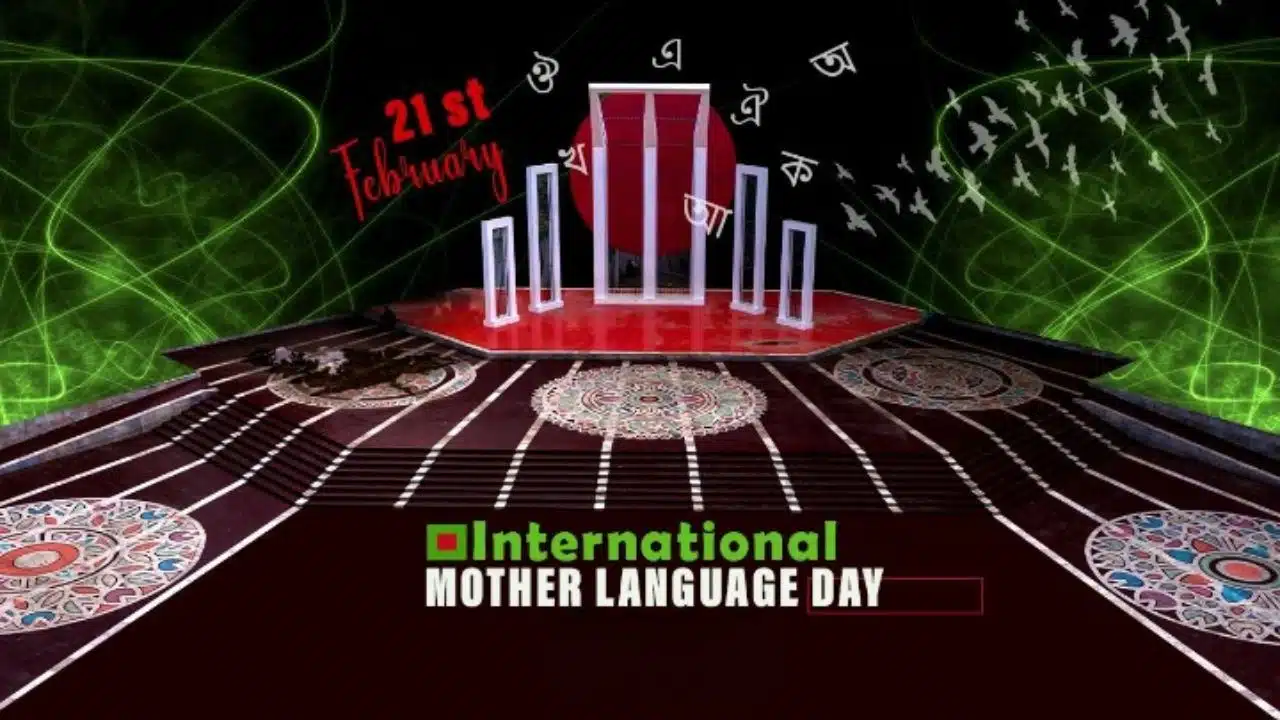
Every year on February 21, the world observes International Mother Language Day to highlight the importance of linguistic diversity and the preservation of languages worldwide. This global observance, led by UNESCO, aims to protect endangered languages, encourage multilingual education, and promote cultural heritage. As many indigenous languages face extinction due to globalization, lack of institutional support, and declining native speakers, it has become increasingly crucial to revive and safeguard them.
In 2025, the celebration holds special significance as it marks the 25th anniversary (Silver Jubilee) of International Mother Language Day, commemorating its declaration by UNESCO in 1999. This milestone serves as an opportunity to reflect on the progress made in language preservation and to reinforce global efforts in maintaining linguistic diversity for future generations.
2025 Theme: Silver Jubilee Celebration
The theme for International Mother Language Day 2025 is “Silver Jubilee Celebration of International Mother Language Day.” This year’s theme highlights two key aspects:
- Celebrating Progress: Over the past 25 years, significant strides have been made in promoting linguistic diversity, developing policies for mother tongue-based education, and raising awareness about the importance of language rights.
- Strengthening Future Commitments: The theme encourages continued global action to revitalize endangered languages, integrate multilingualism in education systems, and recognize the role of mother tongues in fostering social inclusion and cultural identity.
UNESCO emphasizes that language is more than a medium of communication; it is an essential part of human heritage that carries traditions, knowledge, and history. As a result, the observance calls upon governments, educators, and communities worldwide to reinforce policies that safeguard linguistic heritage.
The Origin and Historical Significance
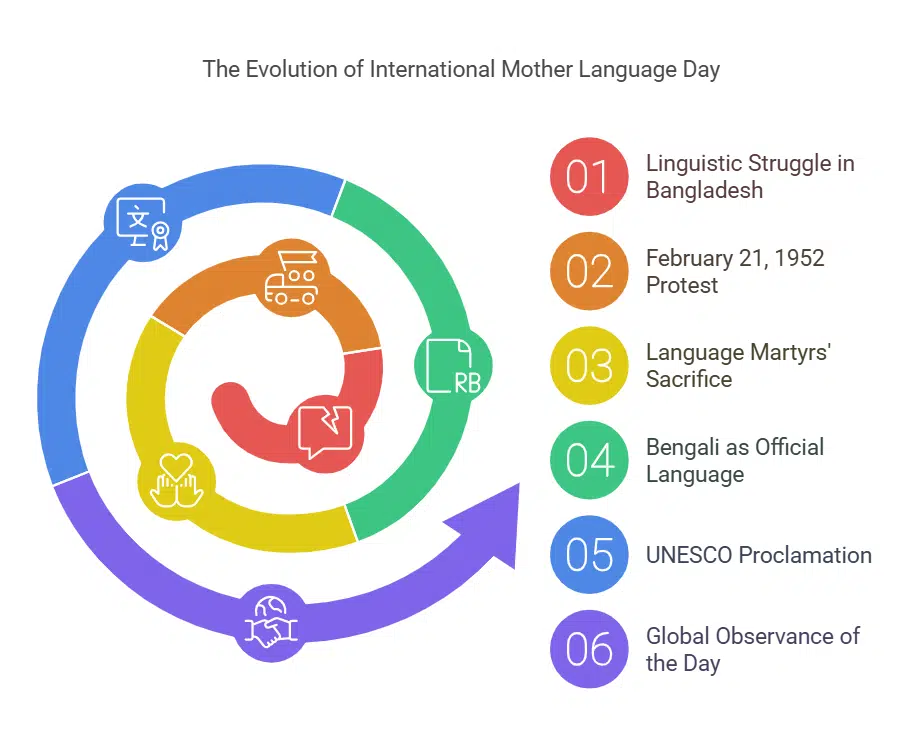
International Mother Language Day originated in Bangladesh, a country with a profound history of linguistic struggle and sacrifice. On February 21, 1952, students and activists in Dhaka protested to demand official recognition of Bengali (Bangla) as one of the state languages of then-East Pakistan (now Bangladesh). The movement turned tragic when several protestors were shot and killed by police during demonstrations.
These individuals, later honored as “Language Martyrs”, played a pivotal role in shaping Bangladesh’s linguistic identity. Their sacrifice was instrumental in securing Bengali as an official language, and the movement eventually led to the country’s independence in 1971.
In 1999, UNESCO recognized the importance of this movement and proclaimed February 21 as International Mother Language Day to promote linguistic and cultural diversity globally. Since then, the day has been observed annually to honor the significance of mother languages worldwide.
The Role of Multilingual Education in Cognitive and Social Development
One of the primary objectives of International Mother Language Day is to advocate for multilingual education, particularly mother tongue-based education from early childhood. UNESCO and linguistic experts argue that learning in one’s native language enhances:
- Cognitive development – Research indicates that children who receive instruction in their first language develop stronger cognitive and critical thinking skills.
- Academic performance – Students taught in their mother tongue show higher literacy rates and better understanding of subjects.
- Social and emotional growth – Learning in one’s native language strengthens cultural identity, self-esteem, and community engagement.
- Language retention and preservation – Education in indigenous languages helps prevent language extinction.
Despite these benefits, over 40% of the world’s population lacks access to education in their native language. UNESCO urges governments to implement mother tongue-based multilingual education as part of national education policies to bridge learning gaps, promote inclusivity, and support cultural diversity.
Linguistic Diversity in India: Challenges and Efforts
India is one of the most linguistically diverse countries in the world, with 22 officially recognized languages under the Eighth Schedule of the Constitution and over 1,600 spoken languages and dialects. This incredible diversity is both a strength and a challenge. While it showcases the country’s rich heritage, it also raises concerns about language extinction and the dominance of certain languages over others.
- After the 1971 Census, languages spoken by fewer than 10,000 people were excluded from official records, leading to the loss of more than 220 languages over the past five decades.
- The Government of India has taken steps to preserve linguistic heritage by expanding official language recognition and promoting multilingual education under the National Education Policy (NEP) 2020.
- Efforts to protect indigenous languages include the establishment of Central Universities and institutions dedicated to classical languages.
Global Language Statistics: The Urgency to Preserve Linguistic Diversity
- 7,000+ languages exist worldwide, but nearly 40% are endangered.
- Only a few hundred languages are used in formal education and digital communication.
- Papua New Guinea has the highest linguistic diversity, with 840+ languages spoken.
- Half of the world’s population speaks just 0.3% of all languages, including Mandarin, Spanish, English, and Arabic.
- Around 40% of people worldwide speak one of the top eight most common languages: Mandarin, Hindi, Spanish, English, Bengali, Portuguese, Arabic, or Russian.
- Many tribal languages face extinction, with some having only a few thousand or even fewer than 1,000 speakers.
- In London alone, around 300 languages are spoken, reflecting immense linguistic diversity.
These figures highlight the urgent need for policies that support language preservation, encourage multilingual education, and promote linguistic rights.
Government Initiatives to Promote Linguistic Diversity
Recognizing the importance of language preservation, several governments and organizations worldwide have launched initiatives to protect endangered languages:
- India has officially recognized 11 classical languages and introduced multilingual education reforms.
- UNESCO’s Indigenous Languages Program works with native communities to revive dying languages.
- Several countries provide financial aid to support linguistic research and language revitalization projects.
- Online platforms and AI-driven tools are being developed to document and teach endangered languages.
These initiatives emphasize that language diversity must be protected as a shared global responsibility.
Inspirational Quotes on Language and Identity
- “If you talk to a man in a language he understands, that goes to his head. If you talk to him in his language, that goes to his heart.” – Nelson Mandela
- “Language is the blood of the soul into which thoughts run and out of which they grow.” – Oliver Wendell Holmes Sr.
- “What is a nation without a mother tongue?” – Jack Edwards
- “Rhythm is our universal mother tongue. It’s the language of the soul.” – Gabrielle Roth
- “For us Indians, I don’t think English can ever exude that magic of emotions which our mother tongue can.” – Kailash Kher
A Call to Preserve Linguistic Heritage
The Silver Jubilee of International Mother Language Day 2025 reminds us that languages are more than just communication tools; they embody history, tradition, and cultural identity. By preserving linguistic diversity, we contribute to a more inclusive, innovative, and culturally enriched world.
As the world faces an increasing threat of language extinction, it is crucial to promote multilingual education, support linguistic policies, and encourage communities to take pride in their native languages. Only through collective global efforts can we ensure that mother languages continue to thrive for future generations.