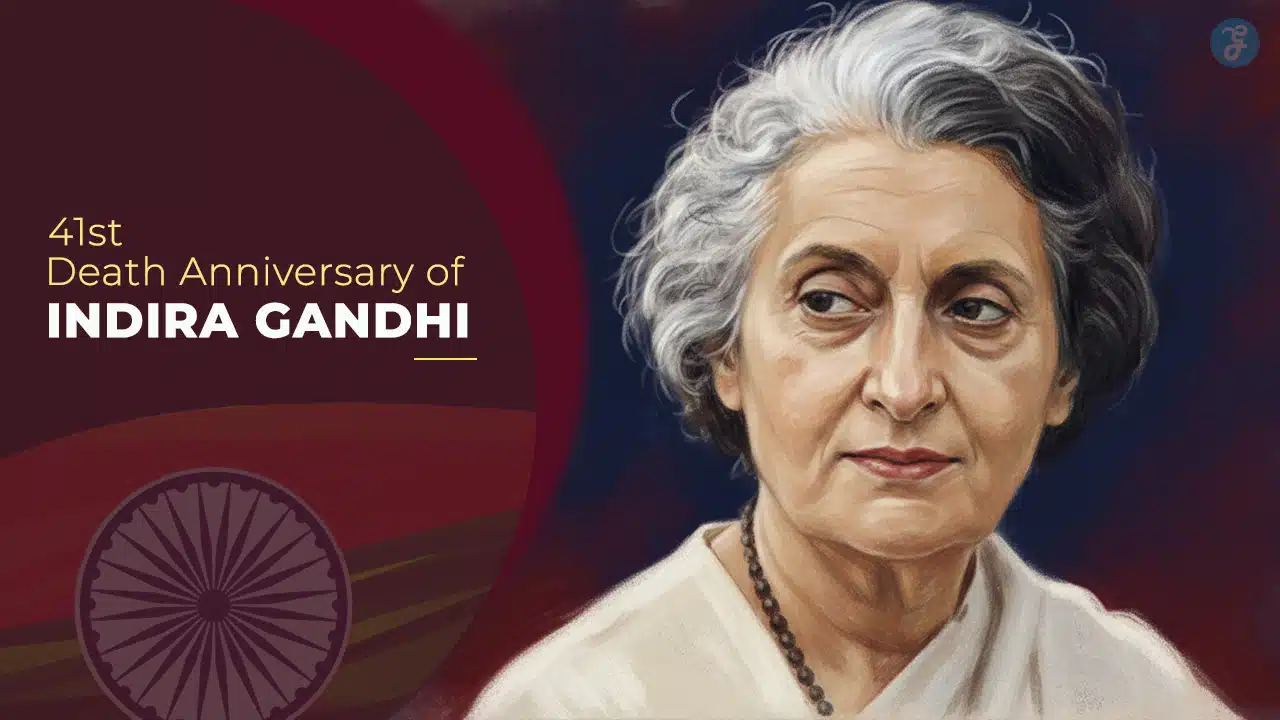
Have you ever wondered why Indira Gandhi is such a big deal in Indian history, or how her decisions still ripple through India today?
It can feel like a puzzle, trying to connect the dots between India’s independence, its democratic journey, and the massive changes that happened on her watch.
Here’s a simple fact to start with: Indira Gandhi was India’s first and, so far, only female Prime Minister. She was in charge during some of the most intense moments in the nation’s history, like wars and major reforms. She even ruled by decree for a time.
We’re going to walk through how her unique childhood shaped her as a leader, the huge challenges she tackled as Prime Minister, and how her bold moves forever changed India. You’ll get the full picture, from glowing praise to sharp criticism, and see why The Influential Legacy Of Indira Gandhi In Indian History is still a conversation worth having.
Key Takeaways
- Indira Gandhi was India’s first and only female Prime Minister, serving from 1966 to 1977 and again from 1980 until her assassination in 1984.
- She championed the Green Revolution, which increased food production significantly. Wheat production, for example, jumped from 12 million tons in 1964 to 20 million by 1970. She also nationalized 14 major banks in July 1969 to make credit more accessible to farmers.
- She led India to a decisive victory in the 1971 Bangladesh Liberation War against Pakistan. However, she also declared a controversial State of Emergency from 1975 to 1977, during which civil liberties were suspended and over 100,000 people were jailed.
- Her decision to order Operation Blue Star at the Golden Temple in Amritsar in June 1984 drew heavy criticism. This event directly led to her assassination by two of her Sikh bodyguards on October 31, 1984, which then triggered horrific anti-Sikh riots where over 3,000 Sikhs were killed in Delhi.
- Indira Gandhi received India’s highest civilian honor, the Bharat Ratna, in 1972. She remains a powerful symbol of women’s empowerment and shaped India’s foreign policy through key alliances, most notably the 1971 Indo-Soviet Treaty of Peace, Friendship and Cooperation.
Early Life and Political Beginnings
Indira grew up in a home that was the nerve center of India’s freedom struggle. Her childhood wasn’t just about games; it was a front-row seat to history, watching her family challenge British rule with both powerful words and defiant actions.
How did Indira Gandhi’s childhood and family influence her?
Born on November 19, 1917, in Allahabad, she was the daughter of Jawaharlal Nehru, who would become India’s first Prime Minister, and the granddaughter of Motilal Nehru, another key leader. Her family home, Anand Bhavan, was constantly buzzing with freedom fighters like Mahatma Gandhi, making politics a part of her daily life.
She was their only child, as her younger brother passed away when he was little. This created a very strong bond between her and her parents.
From a young age, she was involved in the independence movement. As a girl, she organized the “Vanar Sena,” or Monkey Brigade, a network of children who helped the cause by running messages and putting up posters, acting as a thorn in the side of the British authorities.
Seeing such powerful leaders up close gave her an early education in strength, sacrifice, and the duties of leadership. These experiences planted the seeds for the decisive, and sometimes controversial, leader she would become.
What was her education and early political involvement like?
Indira Gandhi’s education was a mix of schooling in India and Europe. She attended schools in Switzerland and England, including Badminton School in Bristol and later Somerville College at Oxford University. However, her studies were often interrupted by her family’s political activities and her own poor health.
She officially joined the Indian National Congress in 1938. In these early years, she was more of an observer and helper, attending rallies and watching her father and his colleagues navigate the complex world of politics.
Her direct involvement grew as she began to see the importance of women’s voices in the fight for freedom and social change.
What role did she play in the Indian independence movement?
Her activism started early and was quite hands-on. The Vanar Sena she created grew to an impressive 60,000 members, serving as a clever messenger service for the Congress party, distributing secret notes and information that adult activists couldn’t.
Her commitment wasn’t just play-acting. During the Quit India Movement, she was arrested in September 1942 for her activities supporting the resistance. She remained in jail until April 1943. This experience, even at a young age, showed she was willing to make personal sacrifices for the cause, standing firmly alongside her father and other freedom fighters.
First Tenure as Prime Minister (1966-1977)
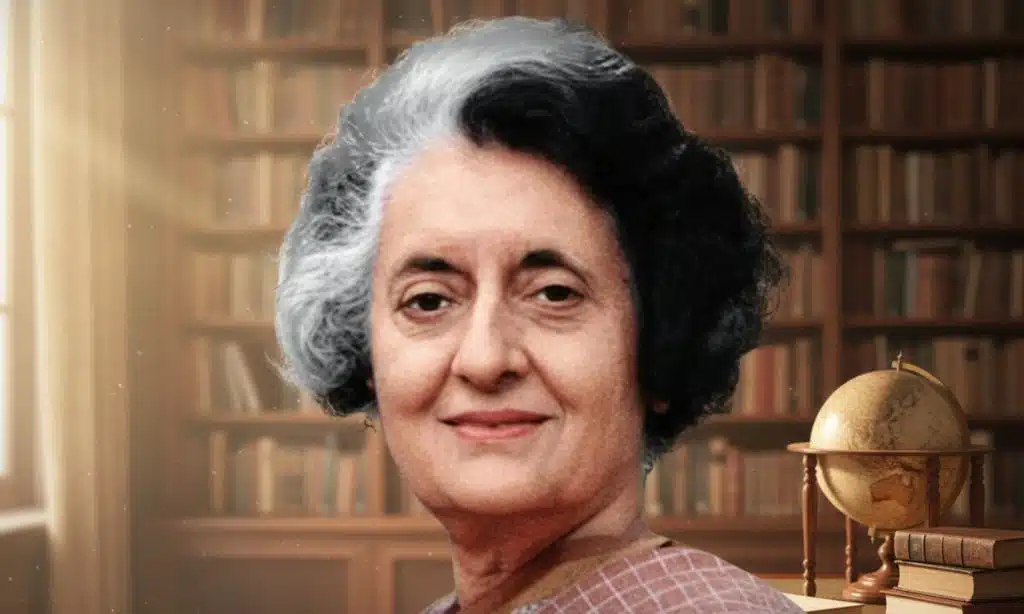
When Indira Gandhi first took office, she walked right into a storm. India was facing food shortages, a shaky economy, and political infighting. She responded with bold, sweeping changes that reshaped the nation’s farms, banks, and its standing in the world.
What were the initial challenges and policy reforms during her first term?
Taking over as Prime Minister in January 1966, after Lal Bahadur Shastri’s sudden death, was anything but easy. She inherited an economy hit hard by drought and a Congress party divided by internal power struggles, with senior leaders like Morarji Desai openly challenging her.
Prices were soaring, and food was scarce. She acted quickly to consolidate power, a move that would define her leadership style. One of her first major economic decisions was to devalue the Indian rupee to address the economic crisis.
To tackle poverty and bring financial services to the masses, she made a game-changing move. She nationalized 14 of India’s largest private banks, including the Central Bank of India, Bank of Baroda, and Punjab National Bank. This was designed to ensure that poor farmers and small businesses could finally get loans, shifting the country’s economic focus away from just serving the wealthy.
How did the Green Revolution impact India?
The Green Revolution was a turning point for India’s agriculture. Under her leadership, the government promoted the use of high-yield seeds, modern irrigation, and chemical fertilizers. This effort was spearheaded by agricultural scientist M.S. Swaminathan, who is often called the “Father of the Green Revolution in India.”
The results were stunning. Wheat production skyrocketed from 12 million tons in 1964 to 20 million tons by 1970, helping the nation become self-sufficient in food grains. Regions like Punjab and Haryana transformed into the country’s breadbaskets.
This agricultural boom reduced hunger and poverty in rural areas. It was a key part of her famous slogan, “Garibi Hatao,” or “Remove Poverty,” and it restored a sense of national pride by ending India’s reliance on foreign food aid.
Why were banks nationalized under her leadership?
Indira Gandhi nationalized 14 major private banks in July 1969. The primary goal was to shift the focus of the banking sector from profit to public welfare. Before this, most banks were controlled by big industrial families and primarily served large corporations and cities.
By bringing them under government control, she aimed to achieve several things:
- Expand rural banking: She wanted to open more bank branches in villages to serve farmers and artisans.
- Prioritize lending: The government could now direct banks to provide loans to agriculture, small-scale industries, and other neglected sectors.
- Curb monopolies: It broke the hold of a few wealthy families over the country’s financial system.
This move was incredibly popular with the public and helped solidify her image as a leader who cared about the poor.
What was Indira Gandhi’s role in the 1971 Bangladesh Liberation War?
Her leadership during the 1971 war is widely seen as one of her greatest achievements. When a brutal crackdown by the Pakistani army in East Pakistan (now Bangladesh) sent nearly 10 million refugees pouring into India, she took decisive action.
She skillfully managed the crisis on multiple fronts. She launched a global diplomatic campaign to build support for Bangladesh’s independence. At the same time, she secured a crucial alliance by signing the Indo-Soviet Treaty of Peace, Friendship and Cooperation in August 1971, which deterred the US and China from intervening on Pakistan’s behalf.
In December 1971, she ordered the Indian military to intervene. The war was swift and decisive. In just 13 days, the Indian army defeated the Pakistani forces, leading to the surrender of over 93,000 soldiers under General A.A.K. Niazi. This victory led to the creation of Bangladesh and established India as the dominant power in South Asia.
What happened during the Emergency from 1975 to 1977?
On June 25, 1975, Indira Gandhi declared a national Emergency, a period that remains one of the most controversial in India’s history. Citing internal threats, she suspended fundamental rights, censored the press, and arrested thousands of political opponents, including prominent leaders like Jayaprakash Narayan and Atal Bihari Vajpayee.
During this time, her son Sanjay Gandhi wielded immense power without holding any official office. He pushed controversial programs like forced sterilizations and slum demolitions. The Emergency lasted for 21 months and was a dark chapter for Indian democracy, marked by human rights violations and the suppression of dissent.
Opposition and Political Comeback (1977-1980)
After the Emergency, it seemed like her political career was over. Critics celebrated her downfall, and a new government took charge. But anyone who counted her out was in for a surprise. She staged a political comeback that was as dramatic as her fall from power.
What led to her fall from power after the Emergency?
The public’s anger over the excesses of the Emergency was the main reason for her downfall. When she called for elections in 1977, she completely misjudged the mood of the nation. People were tired of the suspended civil liberties, the jailing of opposition leaders, and forced programs.
A coalition of opposition parties, called the Janata Party, united against her with the simple slogan of restoring democracy. The election results were a landslide against her. The Congress party lost heavily, dropping from 350 seats to just 153. Indira Gandhi herself lost her own parliamentary seat, a stunning defeat that forced her from office.
The new government also established the Shah Commission to investigate the abuses committed during the Emergency, further tarnishing her reputation at the time.
How did she make her political comeback in 1980?
Her comeback was a masterclass in political resilience. The Janata Party government that replaced her was a chaotic mix of different ideologies and personalities. They spent more time fighting each other than governing, and the country soon faced economic instability and political drift.
Indira Gandhi seized the opportunity. She split from the old guard of her party and formed a new one, Congress(I), with the “I” standing for Indira. She traveled tirelessly across the country, apologizing for the mistakes of the Emergency and reminding people of the stability she had once provided.
By 1980, voters were fed up with the Janata government’s infighting. They longed for a strong, decisive leader again. In the general elections that year, she led Congress(I) to a massive victory, winning 353 seats. On January 14, 1980, Indira Gandhi was sworn in as Prime Minister once more.
Second Tenure as Prime Minister (1980-1984)
Indira Gandhi’s final term as Prime Minister was marked by some of the toughest challenges of her career. From violent insurgency to economic struggles, her decisions during these years were bold and had long-lasting consequences for India’s politics, security, and scientific progress.
What was Operation Blue Star and its impact?
Operation Blue Star was a military operation carried out in June 1984 to remove Sikh militant leader Jarnail Singh Bhindranwale and his followers from the Golden Temple in Amritsar, Sikhism’s holiest shrine. Bhindranwale had been advocating for the Anandpur Sahib Resolution, which called for greater autonomy for Punjab, and his armed followers had fortified the temple complex.
The operation was bloody and resulted in hundreds of casualties, including soldiers, militants, and civilians. The Indian army used tanks to storm the complex, causing significant damage to the Akal Takht, a sacred building within the temple. The assault deeply wounded the sentiments of Sikhs worldwide, who saw it as a desecration of their holy site.
The impact was catastrophic. It created a deep rift between the Sikh community and the Indian government. The immediate and most tragic consequence was Indira Gandhi’s own assassination just a few months later, on October 31, 1984, by two of her Sikh bodyguards seeking revenge.
How did she address economic challenges and policy adjustments?
Her second term began with India facing high inflation and a struggling economy. To tackle this, her government secured a massive $5 billion loan from the International Monetary Fund (IMF) in 1981, the largest in the fund’s history at the time. This came with conditions that pushed her towards more market-friendly reforms, a slight shift from her earlier socialist policies.
She also launched the Sixth Five-Year Plan, which focused on strengthening infrastructure and rural development. Programs like the Integrated Rural Development Programme (IRDP) were expanded to provide self-employment opportunities to the rural poor through subsidies and bank credit. These measures aimed to control prices and create jobs, bringing a degree of stability back to the economy.
How did she strengthen national security and the military?
National security was a top priority for her. She continued to modernize the Indian armed forces, investing in new tanks, fighter jets, and naval equipment, much of it sourced through the strong relationship with the Soviet Union.
A landmark achievement during this period was the launch of the Integrated Guided Missile Development Programme (IGMDP) in 1983. She entrusted this ambitious project to Dr. A.P.J. Abdul Kalam, who would later become President of India. The program aimed to make India self-reliant in missile technology and led to the development of powerful missiles like the Prithvi and Agni, forming the backbone of India’s strategic defense for decades to come.
What progress was made in India’s nuclear program during this time?
After India’s first successful nuclear test, “Smiling Buddha,” in 1974 during her first term, the program continued to advance under her leadership. While there were no further tests during her second tenure, crucial research and development work was carried out at facilities like the Bhabha Atomic Research Centre.
This period was about quietly building capacity. The focus was on mastering the full nuclear fuel cycle and developing more sophisticated designs. This groundwork was essential for India to later declare itself a full-fledged nuclear power. Her unwavering support ensured that India maintained its strategic autonomy, refusing to bow to international pressure to halt the program.
Foreign Policy Initiatives
On the world stage, Indira Gandhi was a formidable presence. She skillfully navigated the complexities of the Cold War, championing the cause of developing nations while forging strong alliances that protected India’s interests.
Leadership role in the Non-Aligned Movement
Indira Gandhi was a towering figure in the Non-Aligned Movement (NAM), a forum of countries that refused to take sides with either the United States or the Soviet Union during the Cold War. She saw NAM as a way to maintain India’s independence and promote global peace.
Her leadership culminated in hosting the 7th NAM Summit in New Delhi in 1983. Over 100 world leaders attended, and she used the platform to advocate for nuclear disarmament and a more just international economic order. Her powerful voice made India a key player in global diplomacy.
Relations with the Soviet Union and Eastern Bloc countries
The relationship with the Soviet Union was the cornerstone of her foreign policy. This partnership was formalized with the signing of the Indo-Soviet Treaty of Peace, Friendship and Cooperation in 1971. This treaty provided India with diplomatic and military support, which proved crucial during the Bangladesh Liberation War.
The Soviet Union became India’s largest trading partner and its most reliable supplier of military hardware, from fighter jets to tanks. This alliance gave India the strategic backing it needed to counter the influence of the US-Pakistan-China axis in the region.
Engagement strategies with Western nations
Her relationship with Western nations, particularly the United States, was often strained. US President Richard Nixon and his administration were openly supportive of Pakistan during the 1971 war, which created deep mistrust. Her decision to conduct a nuclear test in 1974 further cooled relations.
However, she was also a pragmatist. She maintained open lines of communication and sought cooperation on economic and technological fronts. She built strong personal rapports with European leaders like Margaret Thatcher of the UK and Willy Brandt of Germany, ensuring that India’s voice was heard even when disagreements arose.
Outreach efforts toward Asia-Pacific and Africa
Indira Gandhi was a strong advocate for developing nations in Asia and Africa. She was a fierce opponent of apartheid in South Africa and a vocal supporter of liberation movements across the African continent. She used platforms like the Commonwealth to push for sanctions against the apartheid regime.
In Asia, she worked to build regional cooperation. A key diplomatic move was the peaceful handover of the island of Katchatheevu to Sri Lanka in 1974 to settle a maritime boundary dispute. These efforts helped position India as a leader and a trusted partner for newly independent countries across the two continents.
Contributions to India’s Economic Development
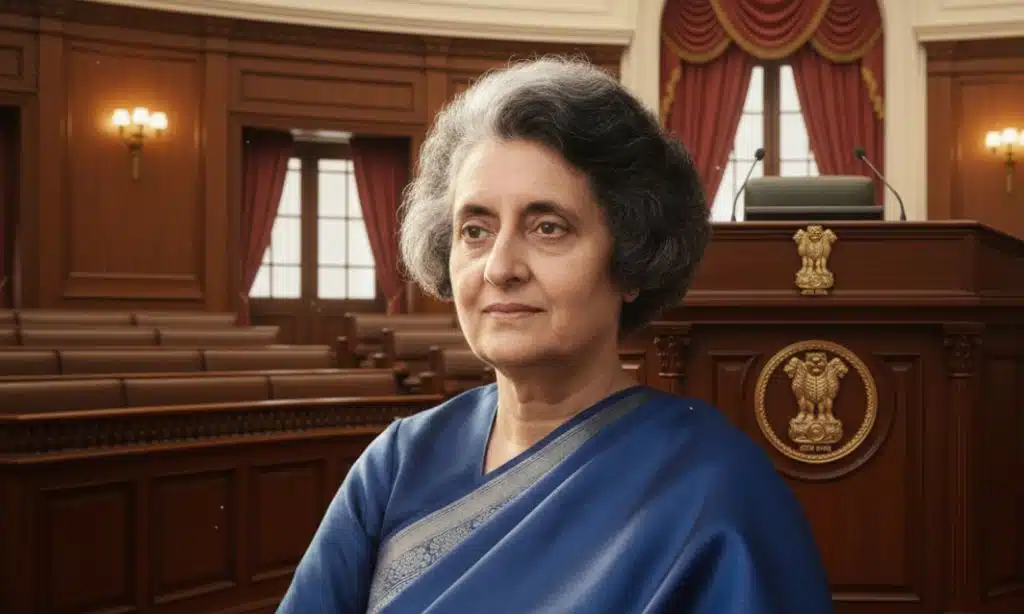
Indira Gandhi’s economic policies were a mix of socialist ideals and pragmatic decisions aimed at making India self-reliant. From the farms to the factories, her focus was on building a strong, independent national economy.
What was the long-term impact of her agricultural reforms?
The Green Revolution, which she championed, had a lasting impact. By making India self-sufficient in food grains, it ended the cycle of famine and dependence on foreign aid that had plagued the country for decades. India transformed from a food-deficient nation into a leading agricultural producer.
This agricultural boom created jobs in rural areas and fueled economic growth. The increase in farm income led to higher demand for goods and services, helping to stimulate other sectors of the economy. The foundation of food security she helped build continues to support India’s massive population today.
How did she focus on industrial growth?
She believed in a state-led model for industrialization. Her government used the Five-Year Plans to make massive investments in heavy industries like steel, mining, and energy. The nationalization of banks, coal mines, and other key sectors was done to give the government direct control over the country’s economic resources.
Policies like the Monopolies and Restrictive Trade Practices (MRTP) Act were designed to prevent the concentration of economic power in the hands of a few private companies. While this approach has been criticized for slowing down private enterprise, it did help create a strong industrial base for the country.
How did she address inflation and unemployment?
Inflation and unemployment were persistent problems. Her government implemented various social welfare programs to provide a safety net for the poor. The famous slogan “Garibi Hatao” (Remove Poverty) was backed by policies aimed at creating jobs and controlling prices.
One key initiative was the Integrated Rural Development Programme (IRDP), which provided loans and subsidies to the rural poor to start their own small businesses. To tackle inflation, the government sometimes resorted to price controls on essential commodities. These measures provided relief to millions, though they didn’t always solve the underlying economic issues.
Advocacy for Social Reform
Beyond politics and economics, Indira Gandhi used her power to push for significant social changes. She was a powerful voice for women and worked to build a more unified India, though her methods were sometimes controversial.
How did Indira Gandhi promote women’s empowerment and gender equality?
As India’s first and only female Prime Minister, her very presence in the highest office was a powerful statement. She became a role model for millions of women and girls, proving that gender was no barrier to reaching the top. Polls in France in 1967 and 1968 named her the most admired woman in the world.
She often spoke about the need for women to participate in public life and backed policies that supported their education and employment. In 1999, a BBC poll named her the “Woman of the Millennium.” Her life story became a symbol of strength and shattered many traditional notions about the role of women in Indian society.
What was her approach to language policy and national integration?
Managing India’s incredible diversity of languages was a huge challenge. She promoted Hindi as an official language but was careful to respect the sentiments of non-Hindi speaking regions, especially in South India.
Her government supported the “three-language formula” in education, where students would learn English, Hindi, and their regional language. This policy was aimed at promoting national unity while preserving regional identities. She believed that India’s strength lay in its ability to be a “unity in diversity,” and her language policies were a delicate balancing act to maintain that harmony.
Assassination and Legacy
Indira Gandhi’s life ended in a shocking act of violence that plunged the nation into grief and chaos. Today, her legacy is a complex tapestry of admiration and criticism, reflecting the powerful and often divisive impact she had on India.
What events led to her assassination?
The chain of events began with Operation Blue Star in June 1984. The military action to clear Sikh militants from the Golden Temple deeply angered many in the Sikh community, who viewed it as an unforgivable attack on their holiest shrine.
On October 31, 1984, as she was walking in the garden of her New Delhi residence, two of her own Sikh bodyguards, Beant Singh and Satwant Singh, assassinated her in an act of revenge. They fired more than 30 bullets, and she was declared dead shortly after arriving at the hospital.
How did India and the world react immediately afterward?
The news of her assassination sent shockwaves across India and the world. But grief quickly turned to rage. In the days that followed, horrific anti-Sikh riots erupted in Delhi and other parts of the country. Mobs, in some cases allegedly led by political figures, targeted Sikh neighborhoods.
The violence was brutal and widespread. The worst-affected areas in Delhi included neighborhoods like Trilokpuri and Sultanpuri. Official estimates say around 2,800 Sikhs were killed in Delhi alone, though many believe the actual number was much higher. Her son, Rajiv Gandhi, succeeded her as Prime Minister and was sworn in just hours after her death.
What is Indira Gandhi’s enduring influence on Indian politics?
Indira Gandhi’s legacy is fiercely debated. Her supporters remember her as a strong, decisive leader who modernized India, defended its security, and stood up for the poor. They point to the Green Revolution, the victory in the 1971 war, and her powerful presence on the world stage.
Her critics, however, focus on her authoritarian tendencies, especially during the Emergency, which they argue damaged India’s democratic institutions. Her style of centralizing power and weakening state leaders also set a new precedent in Indian politics.
One of the most lasting parts of her legacy is the continuation of the Nehru-Gandhi family’s influence in the Congress party, which has shaped Indian politics for generations. Love her or loathe her, no one can deny that she fundamentally changed the course of Indian history.
Awards and Honors
Throughout her career, Indira Gandhi received numerous awards and honors from both India and the international community, recognizing her as a major global leader.
What national recognitions did she receive?
In 1972, Indira Gandhi was awarded the Bharat Ratna, which is India’s highest civilian honor. This was given in recognition of her leadership during the 1971 Bangladesh Liberation War. She also received the Sahitya Vachaspati, a Hindi literary award, in 1976. These awards celebrated her immense contributions to the nation.
What international awards and diplomatic impacts did she have?
Her influence was felt far beyond India’s borders. She received several international honors, including the Mexican Academy Award in 1972 and the FAO’s Annual Medal in 1973. In 1953, she received the Mother’s Award in the USA.
Her diplomatic achievements had a lasting impact. In 2011, she was posthumously awarded the Bangladesh Freedom Honour, the highest honor given to a foreigner, for her role in their liberation. In 2020, Time magazine included her in its list of the 100 most powerful women who defined the last century, a testament to her enduring global legacy.
Representation in Popular Culture
Indira Gandhi’s dramatic life and powerful personality have made her a compelling subject for filmmakers, writers, and artists. Her story continues to be told and re-examined in books and on screen.
How has she been portrayed in films and documentaries?
She is often depicted as a strong, complex, and sometimes ruthless leader. During her lifetime, films that were critical of her, especially those touching on the Emergency like the 1975 film Aandhi, often faced political trouble. After her death, many more films and documentaries have explored her life and career.
These portrayals range from celebrating her as a national hero to scrutinizing her more controversial decisions. Documentaries often use archival footage to capture the intensity of the times she lived in, ensuring that her powerful story continues to engage new generations.
What literature and academic studies focus on her?
There is a vast amount of literature on Indira Gandhi. She herself wrote books like “The Years of Challenge” and “The Years of Endeavour,” which provide her own perspective on her time in office. Many biographies have been written about her, with some of the most well-known being by authors like Pupul Jayakar and Sagarika Ghose.
In academic circles, her tenure is studied extensively in courses on political science, gender studies, and modern Indian history. Scholars continue to analyze her economic policies, her leadership style, and her impact on India’s democratic fabric, making her one of the most studied figures in 20th-century politics.
Takeaways
Indira Gandhi left a mark on Indian politics that is impossible to ignore. Her bold decisions, from the Green Revolution to the nationalization of banks, directly impacted the lives of millions.
She led India through times of great triumph and deep turmoil.
Her story is a powerful reminder of how one leader’s courage, ambition, and even flaws can shape a nation’s destiny. Every time we discuss strong leadership or the future of India, we are, in many ways, continuing the conversation that she started.
FAQs on The Influential Legacy Of Indira Gandhi In Indian History
1. What made Indira Gandhi’s legacy so influential in Indian history?
Indira Gandhi shaped modern India through decisive actions like nationalizing 14 major banks in 1969 and leading the country to victory in the 1971 Indo-Pakistani War. Her strong-willed leadership style dramatically changed the nation’s economy and its role on the world stage.
2. How did Indira Gandhi impact women’s roles in Indian politics?
By becoming India’s first and only female Prime Minister in 1966, she powerfully demonstrated that women could lead at the highest level, inspiring generations across the country.
3. What were some key events during Indira Gandhi’s time leading India?
Key moments include the Green Revolution, which made India self-sufficient in food grains, and the creation of Bangladesh after the 1971 war. Her tenure also saw the controversial Emergency from 1975 to 1977, when civil liberties were suspended.
4. Why do people remember Indira Gandhi both for progress and controversy?
She is praised for advancing India’s food security and foreign policy, but she is also criticized for authoritarian actions like the Emergency and authorizing Operation Blue Star in 1984. This mix of celebrated achievements and divisive policies defines her complex legacy.