
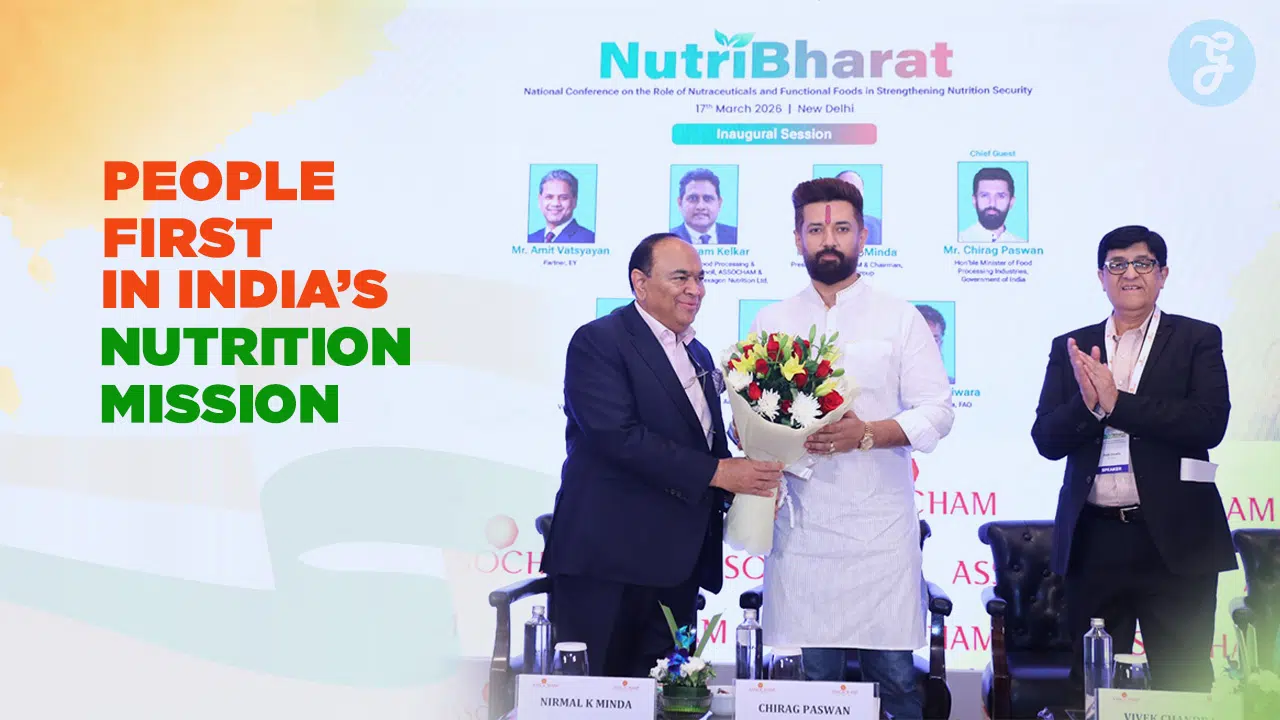
As I entered Sovereign I at Le Méridien New Delhi on Janpath for the National Conference “NutriBharat 2026: Role of Nutraceuticals and Functional Foods in Nutrition Security,” one phrase echoed across conversations, panels, and policy statements: nutrition security. The air was thick with more than just the scent of expensive coffee. It was the weight of another word: “NutriBharat.” These terms are widely used today, but inside that room, they felt less like jargon and more like a national turning point. The discussions focused on a healthy, resilient population as the core of the Viksit Bharat 2047 vision.
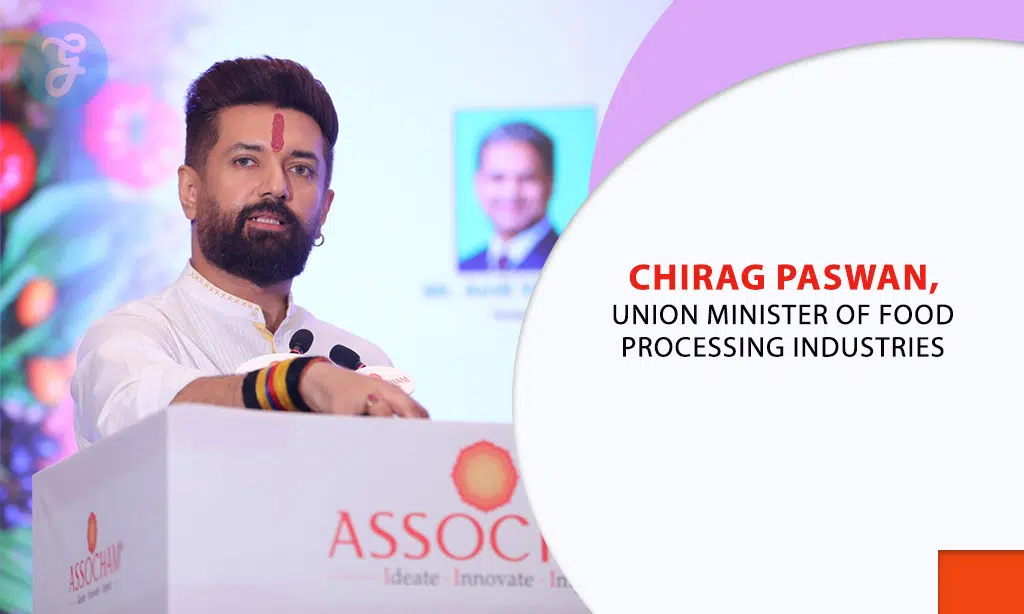
The hall was filled with policymakers, scientists, regulators, and industry leaders. At the centre of it all was Chirag Paswan, Union Minister of Food Processing Industries, who framed the government’s role as a bridge between high level policy and industry innovation. He was clear that while this sector is growing, there is no room for compromise on quality and safety standards.
 Yet, before the policy discourse began, something quieter unfolded. The national anthem played. Everyone stood. There was a shared stillness that momentarily dissolved hierarchy and designation. In that brief pause, the conversation shifted from policy ambition to collective identity.
That sense of unity, however fleeting, framed the deeper question that would stay with me throughout the day. As India’s nutraceutical industry expands rapidly, largely driven by urban consumers and premium markets, how do we ensure that nutrition security does not become an elite privilege?
When I posed this question, the room acknowledged its urgency. Responses came from across the panel, including industry voices such as Monojit Indra, Program Leader for Asia at the Food Fortification Project under Millers for Nutrition, among others. Yet it was the perspective of Arun Om Lal, Industry Chair Professor at NIFTEM (Nutraceuticals & Food Fortification), that lingered long after the session ended. His analogy was striking in its simplicity. Just as the automobile market serves everyone from budget buyers to luxury consumers, nutraceuticals too can evolve across price points. Then came a line that grounded the entire discussion. “Khichdi has always been there. You may call it a nutraceutical.”
In that moment, the conversation moved beyond capsules and commerce, returning to something deeply Indian, deeply accessible, and deeply relevant.
What Are Nutraceuticals?
Nutraceuticals are products derived from food sources that offer additional health benefits beyond basic nutrition. They include dietary supplements, fortified foods, functional beverages, and bioactive compounds such as vitamins, minerals, probiotics, and plant extracts. Unlike conventional food, nutraceuticals are positioned at the intersection of nutrition and preventive healthcare, aiming to reduce the risk of disease and support overall well-being.
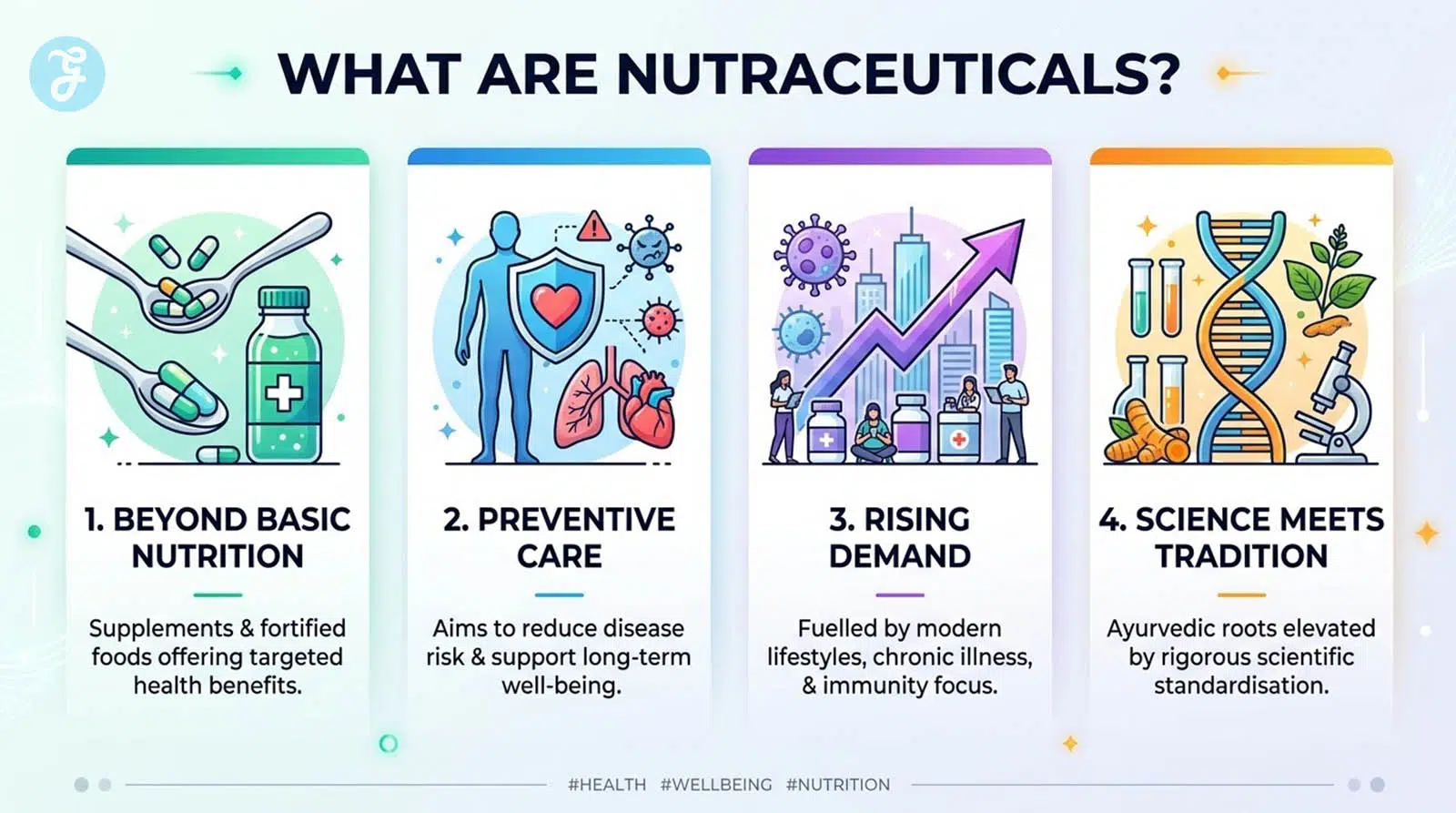 Their growing relevance stems from changing lifestyles, rising chronic illnesses, and increasing awareness about immunity and long-term health. In India, the concept is not entirely new. Many traditional foods and practices rooted in Ayurveda and regional diets have long delivered similar benefits, even if they were never labelled as such. What is new, however, is the scientific validation, standardisation, and commercial scale that now define the modern nutraceutical sector.
The Shift from Food Security to Nutrition Security
India has achieved a remarkable transformation over the decades. From a nation once grappling with food scarcity, it has moved steadily towards food security. As Chirag Paswan emphasised in his address, the next frontier is nutrition security. This is not merely about ensuring that people have enough to eat, but that what they eat nourishes them adequately.
This distinction is critical. Calorie sufficiency does not guarantee nutritional adequacy. India today faces a dual burden. On one hand, persistent malnutrition and micronutrient deficiencies continue to affect large sections of the population. On the other, urban populations are witnessing a rise in lifestyle diseases linked to poor dietary patterns.
The transition from food security to nutrition security, therefore, demands more than increased production. It requires a rethinking of what constitutes food value. It requires aligning agriculture, food processing, public health, and consumer awareness into a cohesive ecosystem.
The Role of Food Processing and Nutraceuticals
The conference, organised by ASSOCHAM, brought this ecosystem into focus. Food processing is no longer just about preservation or convenience. It is increasingly about value addition, safety, and nutrition delivery.
Chirag Paswan brought the conversation back to something disarmingly simple. Long before “food processing” became an industry term, he said, it was already alive in Indian homes. The achar and papad prepared by our nanis and grandmothers were early forms of food processing, rooted not in commerce but in care, preservation, and lived wisdom. In that reminder lay a powerful idea: India’s nutrition future does not begin in factories alone, it begins in kitchens.
This framing is important. It reminds us that innovation does not always mean invention. Sometimes, it means recognition and scaling of what already exists.
Nutraceuticals and functional foods represent the modern extension of this idea. They sit at the intersection of food and medicine, offering preventive health benefits alongside basic nutrition. As global diets become more processed and lifestyles more sedentary, these products are gaining prominence as tools to bridge nutritional gaps.
The Food Safety and Standards Authority of India, represented by Dr Alka Rao at the conference, is already working on science-based regulatory frameworks for emerging categories such as probiotics and functional foods. This regulatory clarity is essential. Without it, the sector risks being driven by marketing claims rather than measurable health outcomes.
The Accessibility Paradox
Yet, the central challenge remains unresolved. Nutraceuticals today are largely positioned as premium products. They are marketed to urban consumers, priced accordingly, and distributed through channels that do not reach the most vulnerable populations.
This creates a paradox. The very tools that can address nutritional deficiencies are often inaccessible to those who need them the most.
Arun Om Lal’s automobile analogy offers one pathway. Just as the car industry has diversified across price segments, the nutraceutical sector must innovate for affordability. This is not merely a question of pricing. It is a question of design, sourcing, manufacturing, and distribution.
India has a unique advantage here. Its traditional diets already incorporate nutritionally dense, low cost foods. Khichdi, millets, pulses, fermented foods, and regional preparations offer balanced nutrition without the need for expensive processing.
The challenge, therefore, is not to replace these foods with capsules, but to integrate scientific validation, standardisation, and scalability into them.
Industry, Policy, and the Road to 2047
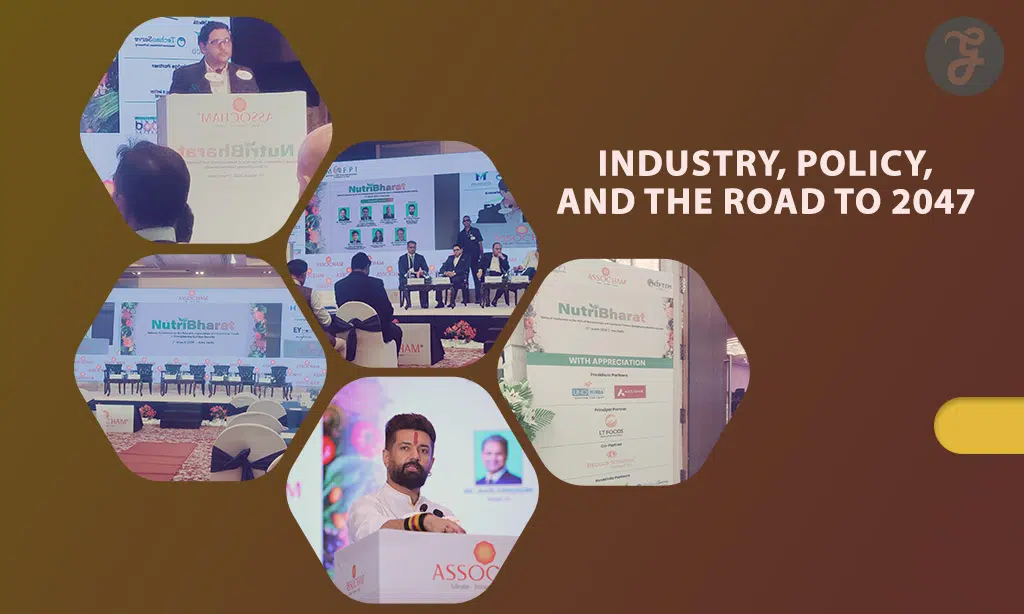
The vision articulated at NutriBharat 2026 aligns with India’s broader ambition of becoming a developed nation by 2047. This vision, however, requires a clear roadmap. Chirag Paswan called for defined milestones across one year, five year, and ten year horizons. This structured approach is essential in a sector that intersects multiple domains.
The consensus among the experts was clear: India is moving from basic calorie counting to a high stakes pursuit of nutritional quality. Nirmal K Minda, President of ASSOCHAM, opened the dialogue by shifting the focus toward micronutrient deficiencies. He argued that the industry must move past simple talk to drive real world results. This means aligning policy with active implementation and bringing MSMEs into the fold to make wellness accessible.
 Takayuki Hagiwara from the Food and Agriculture Organization added a global weight to the room. He observed that the entire world is pivoting toward nutrition security. For Hagiwara, nutraceuticals are the bridge over the widening gaps in modern diets. He called for agri food systems that are not just innovative but deeply rooted in hygiene and consumer trust.
The conversation deepened with Vivek Chandra of LT Foods, who viewed India as a potential global hub for processed nutrition. He pushed for a strategy where industry efforts mirror national priorities. Vikram Kelkar of Hexagon Nutrition echoed this, noting that while we have conquered food availability, we are now battling lifestyle diseases. He sees a future where scientific innovation meets India’s rich Ayurvedic heritage to create a sustainable, global leadership in functional foods.
Finally, Amit Vatsyayan of EY India offered a technical yet human roadmap. He envisions an agriculture powered ecosystem where biofortified millets and plant proteins form a farm to formulation value chain. This model relies on digital traceability and transparent testing to turn India’s vast biodiversity into trusted global products. For Vatsyayan, the success of this transition depends on investing in farmer partnerships and rural incomes. Together, these voices painted a picture of a nation ready to trade generic food security for a precise, science backed wellness economy that serves every citizen.
Science, Standards, and Trust
One of the most critical aspects of this journey is trust. As Chirag Paswan pointed out, even a single rejected consignment at an international port can damage India’s reputation.
This underscores the importance of quality and standards. Nutraceuticals, by their very nature, make health related claims. These claims must be backed by rigorous scientific evidence.
The knowledge paper released in collaboration with EY India emphasised the need for a farm to formulation value chain. This includes integrating agricultural practices, biofortified crops, and digital traceability systems.
Such an approach not only enhances product credibility but also creates opportunities for farmers. By linking agricultural output to high value nutraceutical markets, rural incomes can be strengthened.
Bridging Tradition and Innovation
Perhaps the most powerful insight from the conference was the recognition that India does not need to choose between tradition and modernity. It can build a bridge between the two.
India’s traditional knowledge systems, including Ayurveda, offer a rich repository of nutritional and medicinal insights. When combined with modern scientific validation, these systems can form the basis of globally competitive nutraceutical products.
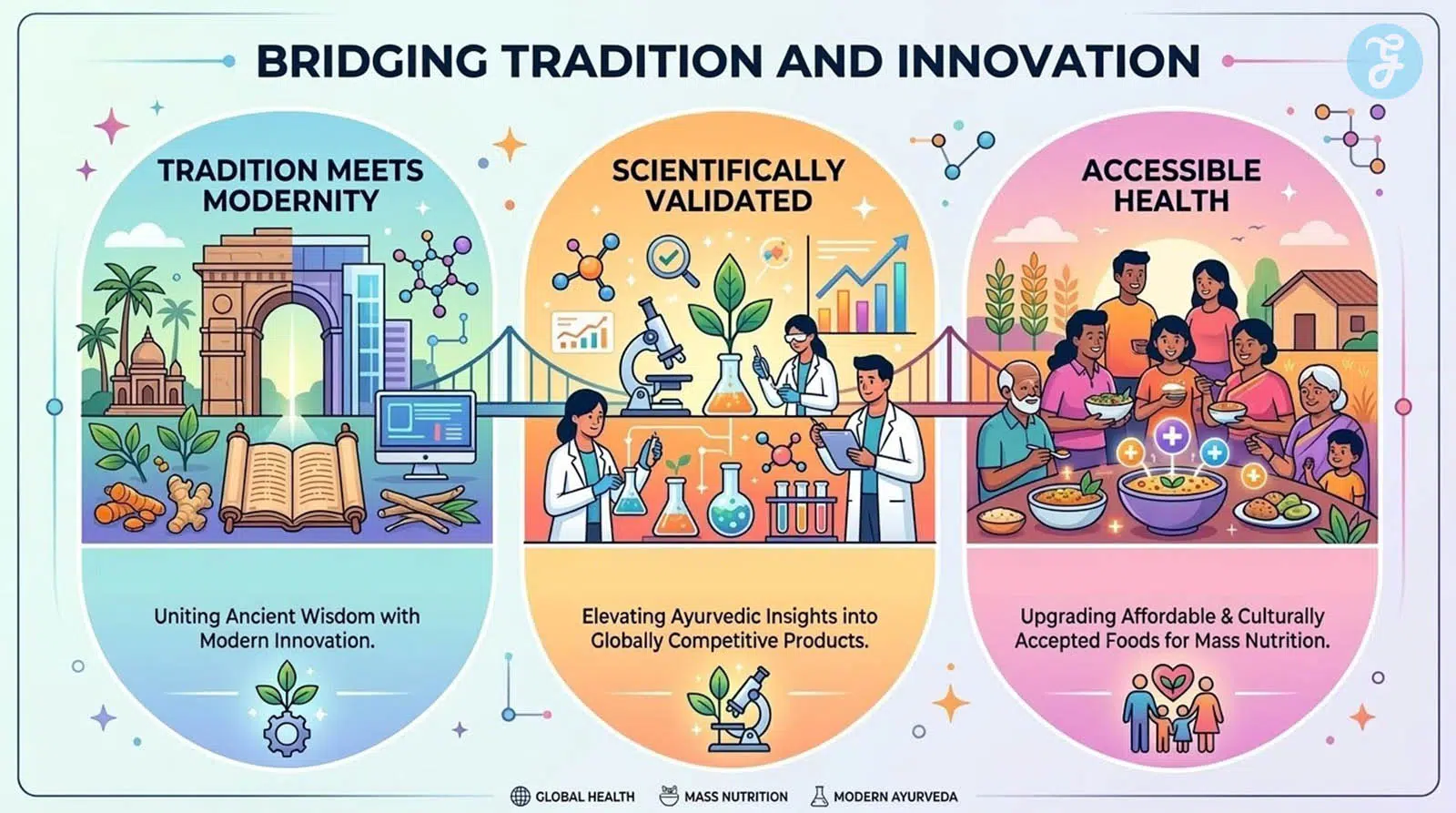
This approach also addresses the accessibility challenge. Traditional foods are inherently affordable and culturally accepted. By enhancing their nutritional profile and ensuring quality standards, they can serve as effective tools for mass nutrition.
The Way Forward
The path to nutrition security in India must be inclusive, evidence based, and rooted in reality. It cannot rely solely on high end products or urban markets. It must reach the last mile.
This requires coordinated action across multiple fronts:
- First, policy frameworks must incentivise affordable innovation. Subsidies, tax benefits, and public private partnerships can play a role here.
- Second, industry must invest in research and development that prioritises accessibility. This includes developing low cost formulations and leveraging local ingredients.
- Third, awareness campaigns must educate consumers about nutrition, not just products. Behavioural change is as important as product availability.
- Fourth, regulatory bodies such as the Food Safety and Standards Authority of India must continue to strengthen standards while ensuring that compliance is not overly burdensome for smaller players.
- Finally, there must be a conscious effort to integrate traditional foods into the nutrition security narrative. Khichdi should not remain a metaphor. It should become a model.
Making Nutrition Security Real
As the conference drew to a close, the conversations lingered. The policy frameworks, the industry insights, the global perspectives all pointed towards a common goal. Yet, it was the simplest idea that stayed with me.
Nutrition security in India will not be achieved solely through innovation in laboratories or expansion of premium markets. It will be achieved when the wisdom of the past meets the science of the present to serve the needs of the future.
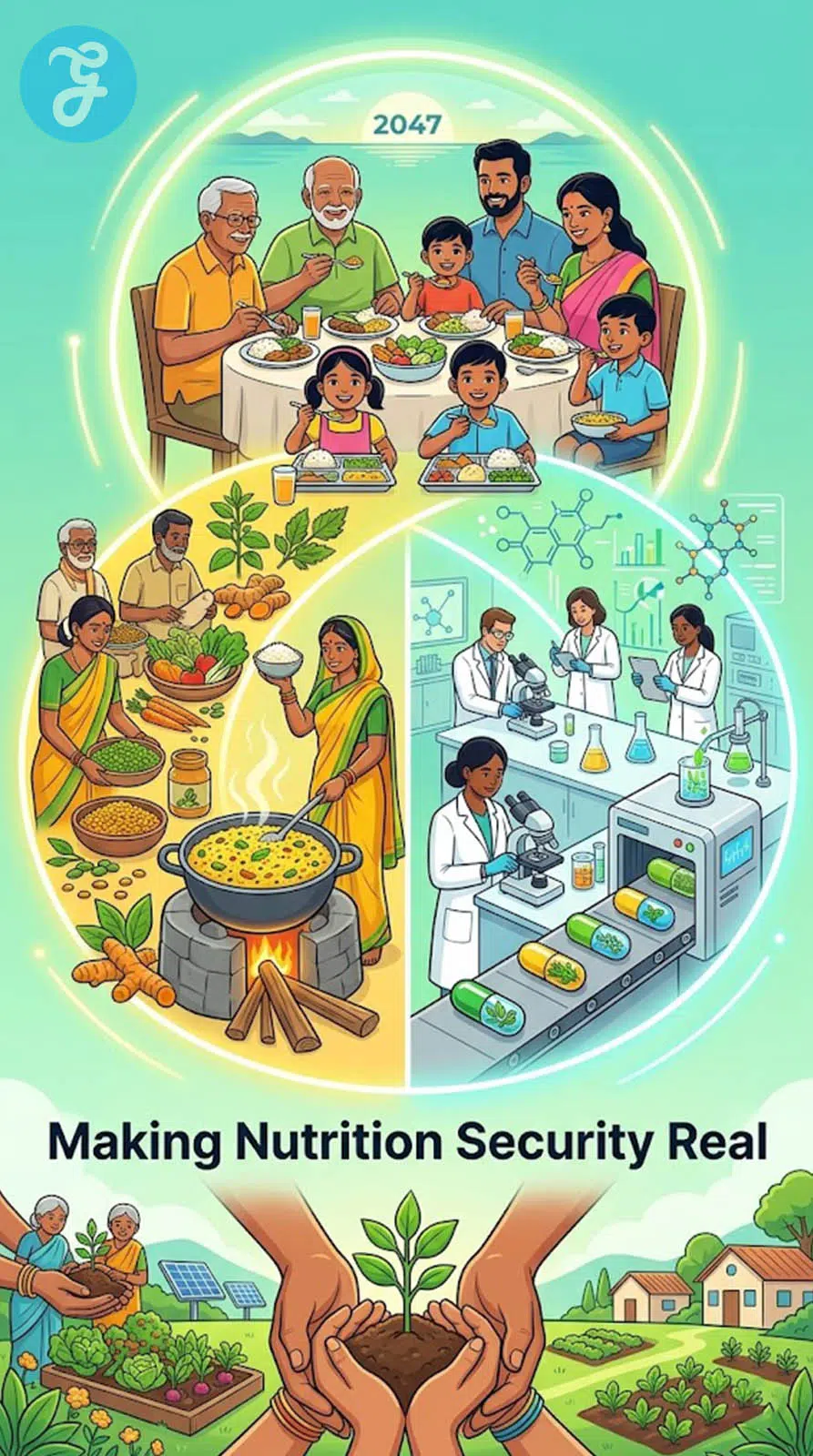 In that sense, the journey from khichdi to capsules is not a linear progression. It is a circle, one that brings us back to where we began, but with greater understanding and greater responsibility.
India stands at a pivotal moment. The choices it makes today will determine not just the health of its population, but the credibility of its ambitions. If nutrition security is to become a reality by 2047, the roadmap must begin with the people at the grassroots, not the policy at the top.
This Opinion story is a first-person account of the author’s experience as a delegate at the NutriBharat 2026 National Conference.