Selling your business quickly requires strategic planning and avoiding common pitfalls. Overpricing, disorganized data, and poor communication can severely hinder your efforts. Understanding the value of your business is crucial to setting a realistic price from the start. To achieve this, it’s essential to estimate the value of your business accurately.
The importance of accurate valuation
Accurate valuation of your business is fundamental in establishing a fair market price, which is key to selling your business fast. This not only attracts serious buyers but also prevents prolonged negotiations that can occur due to overpricing. A precise valuation involves analyzing financial records, market trends, and future earning potential. It helps in creating a comprehensive picture that both sellers and buyers can agree on.
By setting a realistic price, you demonstrate transparency and confidence in what you offer, making it easier for buyers to see the value they are getting. Moreover, an accurate valuation allows you to have informed discussions with prospective buyers, streamlining the negotiation process. Avoiding inflated prices also reduces the risk of deals falling through at later stages, which can be costly and time-consuming.
Working with experienced advisors or using specialized tools can greatly assist in determining an accurate value for your business. These resources provide insights into current market conditions and comparable sales within your industry. Having a solid understanding of these factors not only aids in pricing but also boosts credibility during buyer interactions.
Another critical aspect of accurate valuation is understanding your business’s intangible assets. These may include intellectual property, brand recognition, customer relationships, and proprietary processes that add significant value beyond tangible assets. Many business owners overlook these elements when calculating their company’s worth, potentially leaving money on the table. A comprehensive valuation should factor in both tangible and intangible assets, market positioning, and growth potential to present a complete picture to potential buyers.
Organized sales data’s role
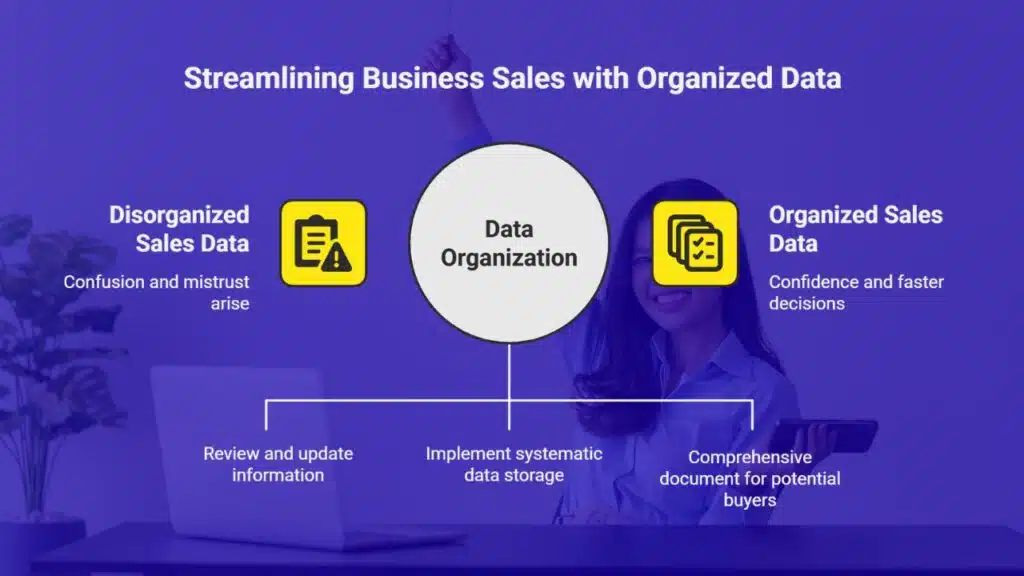
Maintaining organized sales data is crucial when presenting your business to potential buyers, especially when aiming to sell your business fast. Disorganized records can lead to confusion and mistrust, causing delays in the sale process. Buyers expect detailed information on financial performance, customer demographics, and operational efficiency to make informed decisions.
Having well-structured documentation readily available instills confidence in buyers about the reliability of the information provided. It ensures that all necessary data is accessible for due diligence processes without unnecessary hold-ups. This level of organization reflects professionalism and attention to detail, qualities that are highly attractive to investors.
It’s advisable to conduct an internal audit before listing your business for sale. This involves reviewing financial statements, updating any outdated information, and addressing discrepancies that may raise red flags during buyer evaluations. Such proactive measures minimize complications down the line and contribute positively to speeding up transactions.
Creating a systematic approach to data organization can significantly streamline the sales process. This includes implementing digital filing systems, maintaining updated inventory records, and documenting standard operating procedures. Regular financial reporting and performance metrics should be easily accessible and clearly presented. Consider creating a comprehensive business overview document that includes key performance indicators, market analysis, and growth projections. This level of preparation demonstrates professionalism and can help potential buyers make decisions more quickly.
Effective communication with potential buyers
Open and effective communication with potential buyers plays a vital role in expediting the business sale process. Clear dialogues help establish trust and facilitate smoother negotiations by ensuring both parties are aligned on expectations and terms. Miscommunications or delayed responses can lead to missed opportunities or even lost deals.
Engaging with potential buyers requires more than just providing information; it involves actively listening to their needs and concerns. Tailoring discussions to address these points shows empathy and understanding, which can significantly enhance buyer engagement. Regular updates about any changes or developments related to the sale are essential in keeping all stakeholders informed and involved.
Utilizing digital communication tools can enhance efficiency by enabling quick exchanges of information and documents between parties regardless of their location. This technological advantage not only saves time but also expands the pool of potential buyers who might be interested in acquiring your business.
With the right help, you can estimate the value of your business. By utilizing expert analysis and industry-specific insights, you’ll gain a clear understanding of your business’s worth, which is crucial for setting a fair price and attracting serious buyers. This service not only aids in pricing but also enhances your credibility during negotiations, making the sale process smoother and more efficient.