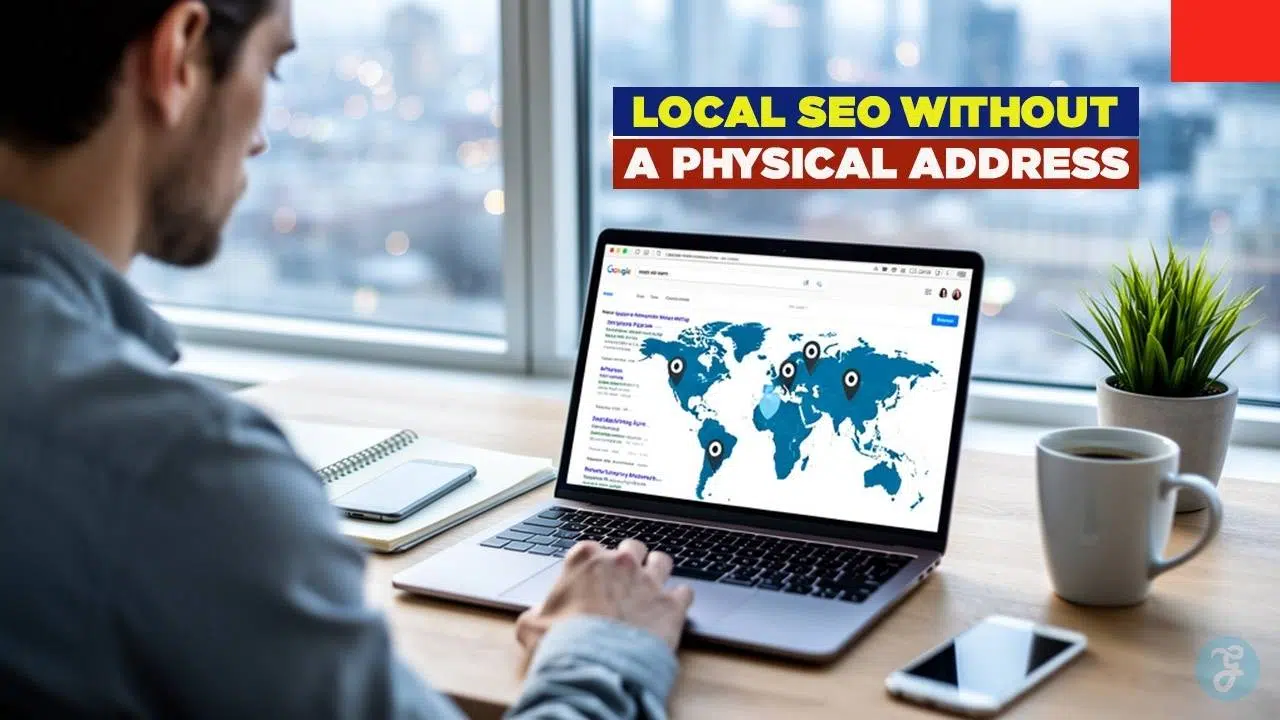
Have you ever wondered why your online business refuses to show up when someone searches for exactly what you do nearby? Maybe you run a mobile pet grooming service or work as an online tutor, so you do not have a traditional storefront. It can feel like you are shouting into an empty room. If you are focused on how to optimize for near me searches without a physical address, I have a helpful secret I want to share. Nearly half of all Google searches are from people looking for something local.
You absolutely can get found by these customers, even without a public building. I will walk you through the exact steps I use to fix this. Grab a cup of coffee, and let’s go through it together.
What Are “Near Me” Searches?
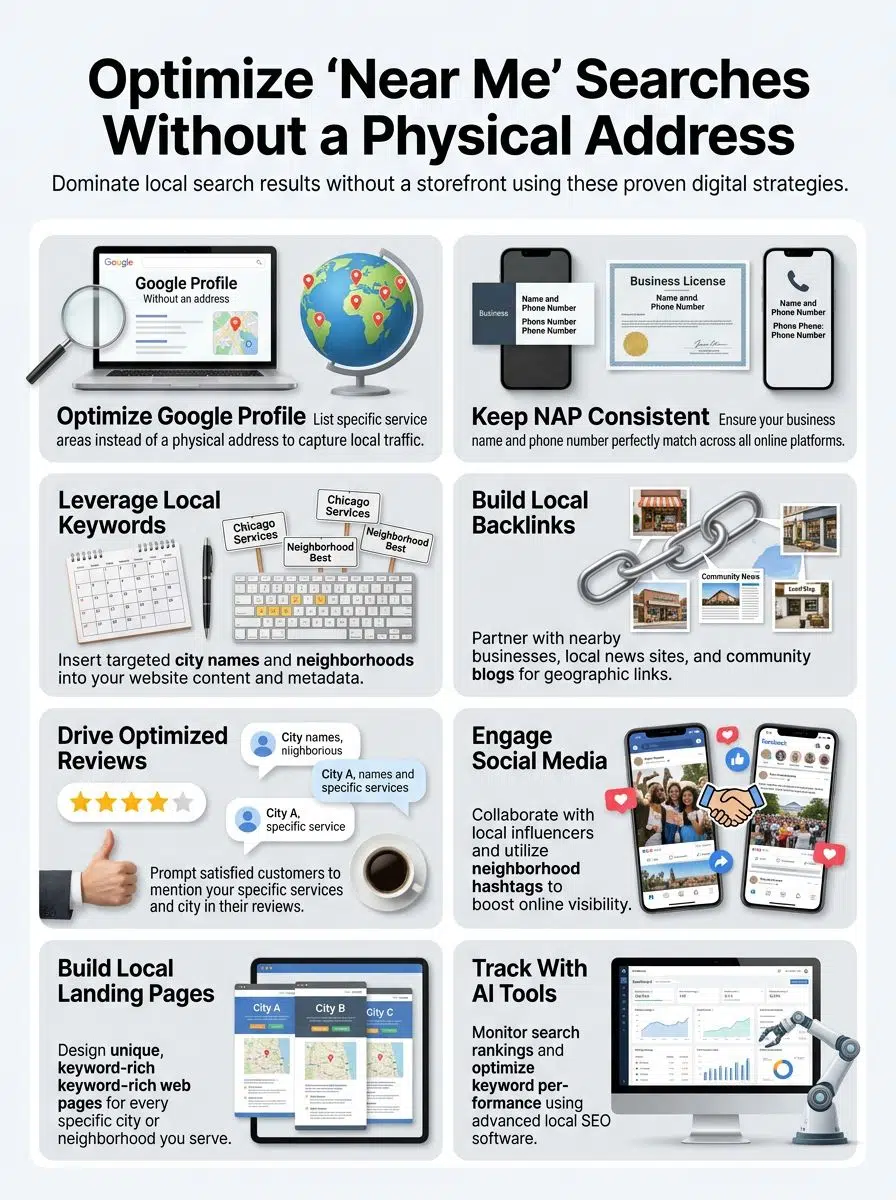
You know how we all use our phones to find things on the go. “Near me” searches are simply those quick requests people type or speak into their devices.
They might look for “pizza delivery near me” or “plumber near me.” Users want immediate answers close to their current location.
A recent report from SeoProfy found that a massive 76% of all voice searches now include a “near me” or local component.
This means people are literally asking Apple Siri or Google Assistant for help finding their exact services. Because Google uses the searcher’s phone location or IP address, you do not need a public storefront to appear in these results. With the right setup, your digital service area business can pop up exactly when local customers are ready to buy.
Why Optimize for “Near Me” Searches Without a Physical Address?
People search for services close to them every single day. If you show up in those results, you can grow incredibly fast.
The rise of mobile and voice searches
More people than ever are using their smartphones to handle daily tasks. In fact, 2025 data from Digital SEO Land shows that 60% of mobile users contact a business directly right from their search results. That number is huge, and it proves that local searches carry incredible commercial intent.
People are not just browsing. They are actively trying to spend money or book an appointment right now. When you optimize your service area, you capture this immediate traffic.
Opportunities for online-only businesses
Online-only and mobile businesses have a massive advantage right now. Without the overhead of a retail space, you can focus entirely on your digital footprint.
By setting specific target neighborhoods using smart geotargeting, you attract customers who are ready to act.
This approach turns your digital presence into a highly visible signpost on the busiest virtual street in town. It brings in high commercial intent clicks from nearby searchers looking for immediate solutions.
Key Factors That Impact “Near Me” Rankings
Search engines play favorites with what they think people want nearby. Cracking their code can boost your online visibility in a snap.
Relevance
Relevance is how Google decides if your business actually provides what the searcher needs. If someone searches for “dog walker in Brooklyn,” your site needs to prove you offer that exact service in that exact borough.
You build relevance by matching your website words to their search words. Adding neighborhood names and specific service details tells search engines you are the perfect fit.
Prominence
Prominence simply means how well-known or important your business looks online. Search engines look for mentions of your brand across the web.
- Web Mentions: Getting featured on local blogs or regional news sites makes you look important.
- AI Search Visibility: Tools like Semrush’s AI Visibility Toolkit now measure how often your brand is cited by AI assistants, which is a massive 2025 trend.
- Directory Listings: Consistent profiles on Yelp, Bing Places, and Apple Maps build serious trust.
The more your name appears in credible places, the higher you climb in local results.
User engagement metrics
Google pays close attention to how people interact with your website. If a user searches, clicks your profile, and immediately calls you, that sends a huge positive signal.
Conversely, if they click and leave your site right away, it hurts your ranking. You can improve these metrics by adding a simple “Click-to-Call” button on your mobile site.
Fast loading times and clear answers keep visitors happy and tell algorithms you are a top choice for localized searches.
Strategies to Optimize for “Near Me” Searches Without a Physical Address
Even without a street sign out front, you can still grab more local attention with clever tweaks.
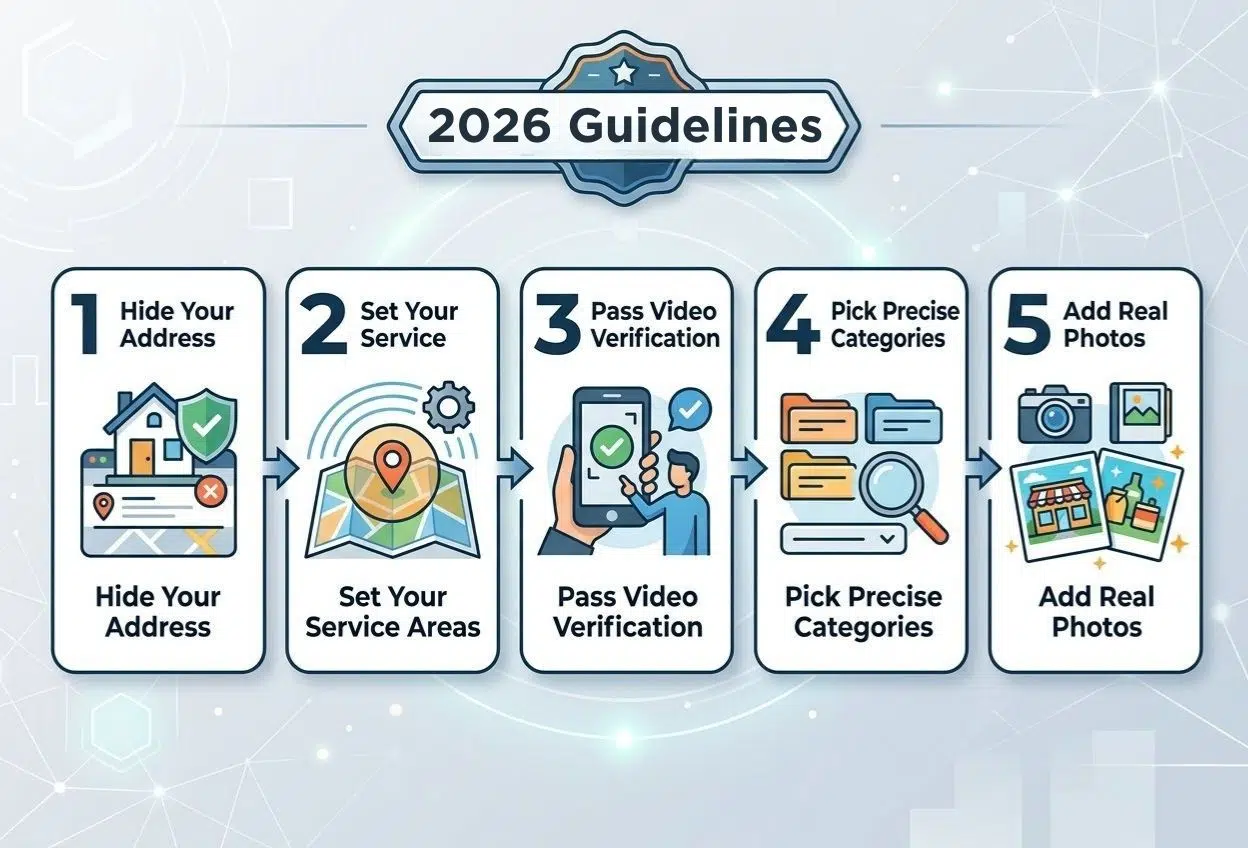
Claim and optimize your Google Business Profile
Your Google Business Profile is the absolute foundation of your local presence. Even without a storefront, you can create a powerful profile as a Service Area Business.
- Hide Your Address: Select the option to hide your street address so Google knows you travel to customers.
- Set Your Service Areas: According to Google’s 2025 guidelines, you can add up to 20 specific service areas, like ZIP codes or cities, but they should be within a two-hour drive.
- Pass Video Verification: Verification now heavily relies on video. You will need to record your branded vehicle, tools, or business documents to prove you exist.
- Pick Precise Categories: Choose the exact category for your work, like “Mobile Pet Groomer” instead of just “Pet Care.”
- Add Real Photos: Upload actual photos of your team working to boost trust and online visibility.
Maintain consistent NAP details across platforms
NAP stands for Name, Phone Number, and your hidden Address. Keeping this information perfectly matched everywhere is crucial for building trust with search engines.
If your business is “Sunset Plumbing” on Google but “Sunset Plumbing LLC” on Yelp, algorithms get confused. Confused algorithms simply will not give you a good search engine ranking. Keep a master spreadsheet of your business details and update every directory immediately if you change your phone number.
Leverage local keywords in your content and metadata
Using the exact phrases your customers use makes a huge difference. Instead of guessing, use modern tools to find these hidden gems.
For example, AI content tools like Surfer SEO analyze top-ranking pages and tell you exactly which local phrases to include. Add these location-based terms to your page titles, meta descriptions, and header tags.
When you write about specific city events or neighborhood trends, you naturally become a local authority with great hyperlocal content.
Build high-quality backlinks from local sources
Backlinks are like digital votes of confidence from other websites. Getting links from high-authority local sites tells Google you are an active part of the community.
- Sponsor a local Little League team and ask for a link on their sponsor page.
- Join your local Chamber of Commerce to get listed in their member directory.
- Partner with a nearby complementary business to swap guest blog posts.
- Answer questions on community forums like Nextdoor, providing helpful advice and a link to your site.
Leveraging Reviews and User-Generated Content
People trust what other people say, so reviews become your best friend for local searches. Encourage happy customers to share their stories and watch your visibility grow.
Promote keyword-optimized reviews
Reviews are incredibly powerful for local visibility. A 2025 report from Digital SEO Land notes that 75% of consumers always or regularly read online reviews before choosing a business.
When a customer leaves a review, politely ask them to mention the specific service you provided and their city. A review saying “Best mobile car detailing in Austin!” does wonders for your ranking compared to a simple “Great job.”
Reply to every single review, and naturally weave those local keywords into your thank-you message.
Encourage customer testimonials mentioning your services
Testimonials build instant trust with new visitors on your website. Try these methods to get great feedback:
- Ask your happiest clients to record a short 15-second video on their phone.
- Send a polite follow-up email three days after service with a direct review link.
- Create a dedicated page on your site to feature your best customer stories.
Place these text and video testimonials prominently on your location-specific landing pages. Include the customer’s neighborhood or city alongside their name to reinforce your local presence.
Using Social Media to Boost Visibility
Social media spreads your name like wildfire in local circles, even without a shopfront. Smart posts and lively chats can send new faces right to your digital doorstep.
Collaborate with local influencers
Local influencers already have the exact audience you want to reach. You do not need massive celebrities, as micro-influencers with a few thousand highly engaged local followers are perfect.
Offer them a free service in exchange for an honest review on Instagram Reels or TikTok. Ask them to use specific location tags and local hashtags in their posts.
When their followers see a trusted neighbor recommending you, they are much more likely to book your service.
Being active in local social media groups puts your brand right in front of your target audience. Here are the best places to focus your daily engagement:
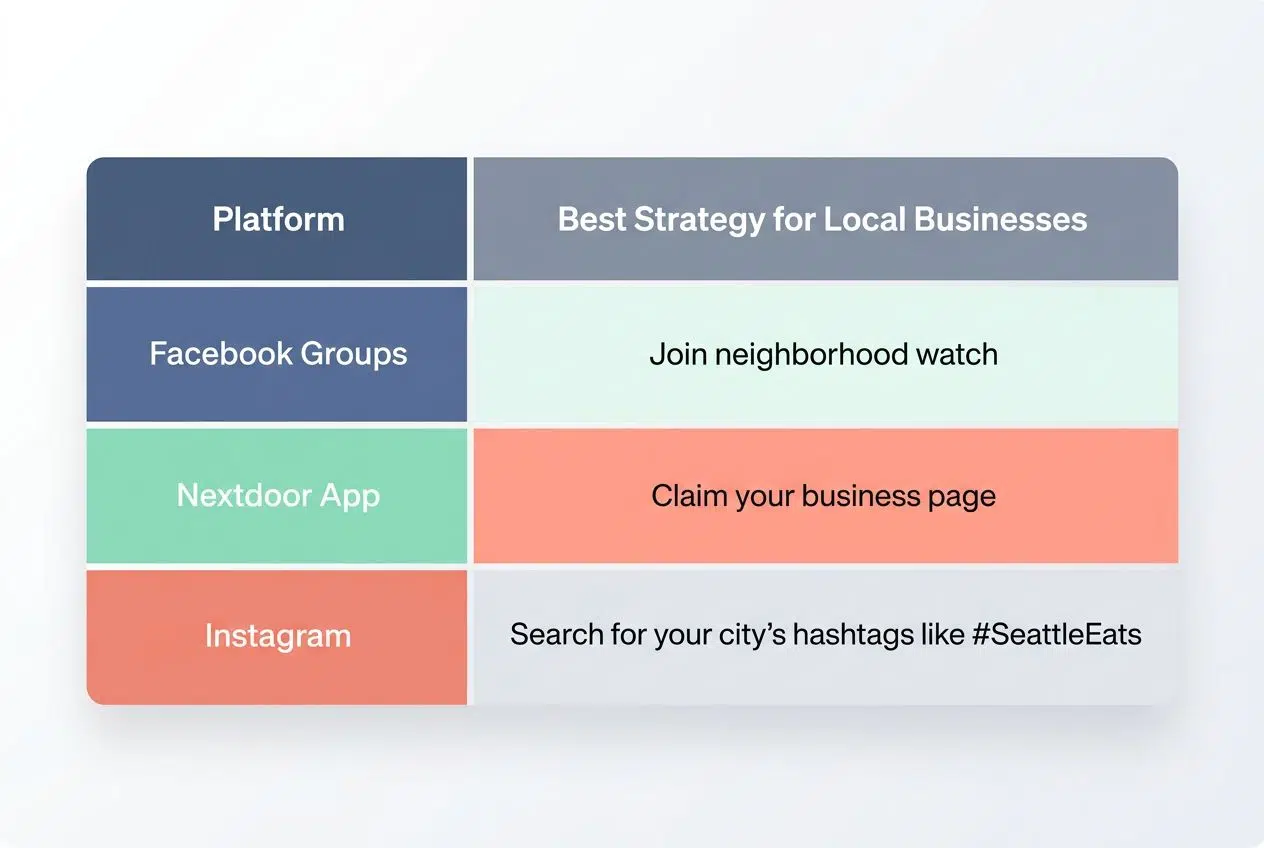
| Platform | Best Strategy for Local Businesses |
|---|---|
| Facebook Groups | Join neighborhood watch or community pages. Answer questions directly without always pitching your sale. |
| Nextdoor App | Claim your business page. Offer highly specific local discounts and reply to requests for recommendations. |
| Search for your city’s hashtags like #SeattleEats. Comment genuinely on posts from local residents. |
Taking just fifteen minutes a day to chat in these spaces builds incredible brand awareness for your service area business.
Enhancing Website Content for Local Relevance
Fresh, smart content helps search engines know your service area. Stir in local flavor, and curious customers may soon knock on your digital door.
Create location-specific landing pages
If you serve five different cities, you need five different pages on your website. Do not just copy and paste the text and change the city name, because Google ignores duplicate content.
Write unique paragraphs about the specific problems you solve in each area. Add “LocalBusiness” schema markup to the background code of these pages, which is invisible text that tells search engines exactly what areas you cover.
Include photos from that specific town, a local phone number, and targeted testimonials.
Use conversational and unbranded search terms
People talk to their phones very differently from how they type on a keyboard. A 2025 DemandSage study found that the average voice search result is quite detailed, averaging about 29 words in length.
People ask full questions like, “Who is the best mobile mechanic open right now near me?” To capture this traffic, try these steps:
- Build a Frequently Asked Questions page on your site.
- Write out the exact long questions your customers ask.
- Provide clear, simple answers right below each question.
Natural wording helps boost visibility in localized searches without showing an actual storefront address.
Advanced Tools and Analytics for Optimization
New tech tools can show you where your online presence shines or needs a boost. Track what works with easy dashboards to find fresh ideas.
Utilize AI tools to monitor and improve rankings
Artificial intelligence has made managing local visibility incredibly fast. You no longer have to guess what works, because these platforms do the heavy lifting for you.
| AI Tool Name | Best Use Case for Service Businesses |
|---|---|
| Semrush AI Visibility | Tracks how often your brand is recommended by AI tools like ChatGPT or Google’s AI Overviews. |
| Surfer SEO | Analyzes top competitors and tells you exactly which local keywords to add to your website text. |
| BrightLocal | Automates your directory listings and tracks your exact ranking in different ZIP codes. |
Using just one of these tools can save you hours of manual research every single week.
Track performance with local SEO platforms
You need to know if your efforts are actually working. Tools like Moz Local or BrightLocal allow you to see exactly where you rank on a map grid.
You can see if you are number one in your home ZIP code, but number five just a few miles away. Track your Google Business Profile insights to see how many people clicked to call you or asked for directions. Reviewing this data monthly helps you double down on the strategies bringing in the most revenue.
Common Mistakes to Avoid
Many stumble over small things that can hurt their local search results. A little care goes a long way to keep your digital standing strong.
Overusing location-based keywords
Keyword stuffing is the fastest way to ruin your website’s ranking. If your sentence reads, “We are the best Miami plumber for Miami residents needing plumbing in Miami,” Google will penalize you.
It sounds robotic and completely turns off potential customers. Write naturally for a human being first. Sprinkle your city name or neighborhood organically into the text where it makes logical sense.
Providing inaccurate business information
Search engines crave consistency and accuracy above all else. In 2025, Google aggressively suspends profiles that try to fake a physical location using a P.O. Box or a virtual office.
If you are a service area business, you must be honest about it and hide your address. Double-check that your phone number is correct everywhere.
A single wrong digit on a directory site can cost you real customers and drop your ranking. Keep everything truthful and up-to-date to maintain a bulletproof online presence.
Closing Thoughts
Mastering the art of optimizing for “near me” searches without a physical address means you can absolutely dominate local searches without signing a commercial lease. By focusing on what searchers actually intend to find, you can position your virtual presence right where they are looking.
Keep your details consistent, gather fresh reviews, and use smart tools to track your progress. With a little effort, your business will shine brightly for any algorithm and every local customer.