
Getting injured due to someone else’s mistake flips your life upside down. Between doctor visits, missed work, and mounting stress, the last thing you need is confusion about how the legal side works.
A solid demand package includes your full medical records, lost income details, property damage receipts, and expert evaluations when needed. These elements back up physical and financial losses while pushing back against insurance strategies designed to devalue claims. Speaking to Russell Berkowitz, a distinguished lawyer from Berkowitz Hanna Malpractice & Injury Lawyers can help in your personal injury case.
Connecticut has its own set of rules regarding personal injury claims. Knowing what to expect helps protect your rights and avoid delays that could cost you money.
This article explains how personal injury settlements work in Connecticut, from medical care and paperwork to negotiation and potential trial.
Immediate Steps After an Injury
Solidifying your claim begins right after the injury occurs. Typically, you should rush to seek treatment, even if the pain feels minor. Medical records help document the full scope of harm and link it directly to the incident.
In addition to medical care, gather details at the scene if possible, including witness names, photos of the injuries and damages, and surveillance footage. These pieces of evidence can support your version of events when insurance companies review the claim.
You should also report the incident to the proper authorities, whether it’s local police, property managers, or workplace supervisors. That report becomes an official timestamp and helps establish fault early.
The Documentation Phase
While recovering, collect and organize every document related to the injury. The details to note down include medical bills, prescriptions, doctor’s notes, lost wages, and proof of ongoing care, such as physical therapy or counseling sessions.
It is important to follow your treatment plan exactly as prescribed. Gaps in care or missed appointments can weaken your claim, making it easier for insurance adjusters to argue that the injury was minor.
The ideal way to capture the full impact of your situation is through a daily injury journal. You can use it to track pain levels, sleep issues, emotional strain, and limitations on regular activities.
Preparing the Case
Immediately, you reach maximum medical improvement (MMI), the groundwork shifts from treatment to building a strong claim. At this point, your Connecticut attorney steps in with more focus, pulling together the complete picture of what you have endured.
Your pain and suffering are quantified using evidence from your daily journal and future care estimates. That way, your compensation reflects both what you’ve faced and what still lies ahead.
Negotiating with Insurance Companies
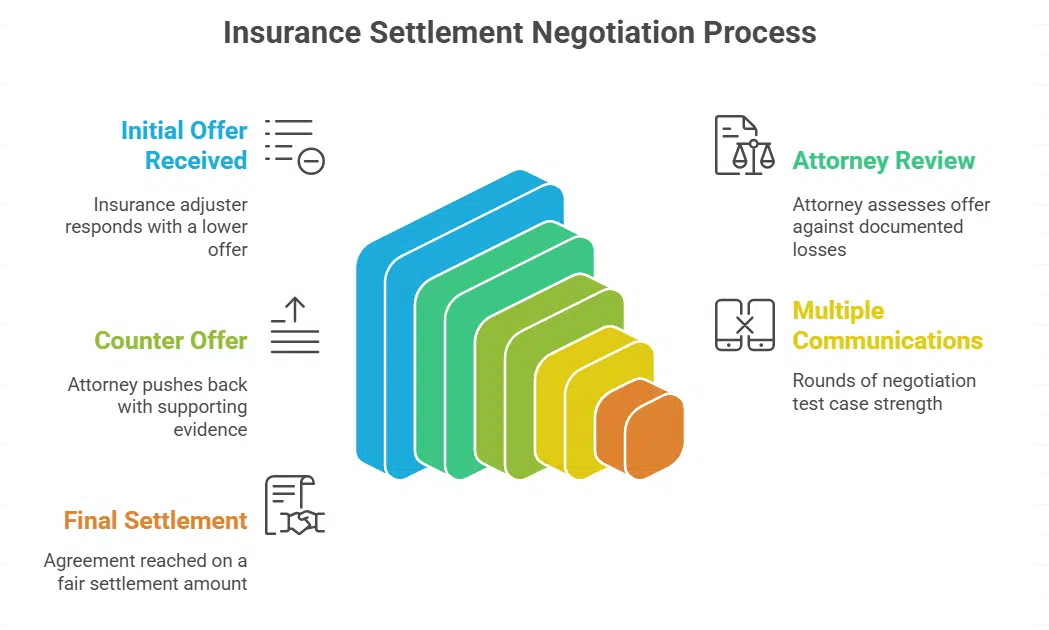
Once the demand package is submitted, the back-and-forth begins. Insurance adjusters often respond with a lower offer, expecting quick acceptance. However, that first number rarely reflects the full impact of your injury.
Your attorney reviews the offer, compares it against your documented losses, and pushes back with evidence that supports a higher settlement. The process may involve multiple rounds of communication, each testing the strength of your case and the adjuster’s willingness to move.
Negotiations require patience and a firm stand. It would be ideal to allow your lawyer to manage the talks since they are trained to spot weak offers and delay tactics.
Settlement Agreement and Payout Process
If both parties reach an agreement on a number, the settlement is formalized. The agreement specifies payment terms, liability releases, and ultimate claim closure. It establishes the amount owed to you and specifies who gets paid.
Medical providers with outstanding bills or health insurers who covered your treatment may need reimbursement from the total settlement. Your lawyer usually handles those payments before disbursing your share.
Payouts often arrive within a few weeks after signing. Funds are typically sent as one lump sum unless structured differently for long-term needs like ongoing care or future wage replacement.
When a Case Proceeds to Trial
Most personal injury claims settle out of court, but sometimes insurance companies will not budge. When that happens, your attorney files a lawsuit and prepares the case for trial.
The court will listen to both sides, review evidence, and decide on compensation. Testimony from medical professionals, accident reconstruction specialists, and the injured party helps tell the whole story.
Personal injury lawsuits may take longer to finalize. In successful cases, the court awards damages that reflect economic losses and personal suffering.