

Do you dream of starting a business in a bustling emerging market, but feel stuck by rules that seem to block your path? Many entrepreneurs face this hurdle every day. They juggle high taxes, tricky regulations, and limited funds, which can crush their big ideas before they even take off. It’s like trying to run a race with weights on your ankles, right? Government policy shapes entrepreneurship in ways that can make or break these dreams.
Did you know that in places like India and Brazil, smart policies have boosted startup numbers by over 50 percent in the last decade? This blog post breaks it down step by step, showing you how these policies work and what strategies can spark real growth.
You’ll get tips to navigate the system and build a thriving business. Ready to turn those policies into your superpower?
The Role of Government Policy in Entrepreneurship
Governments often act as the unseen hand, guiding entrepreneurs through the twists and turns of starting a business in emerging markets, much like a coach steering a team toward victory.
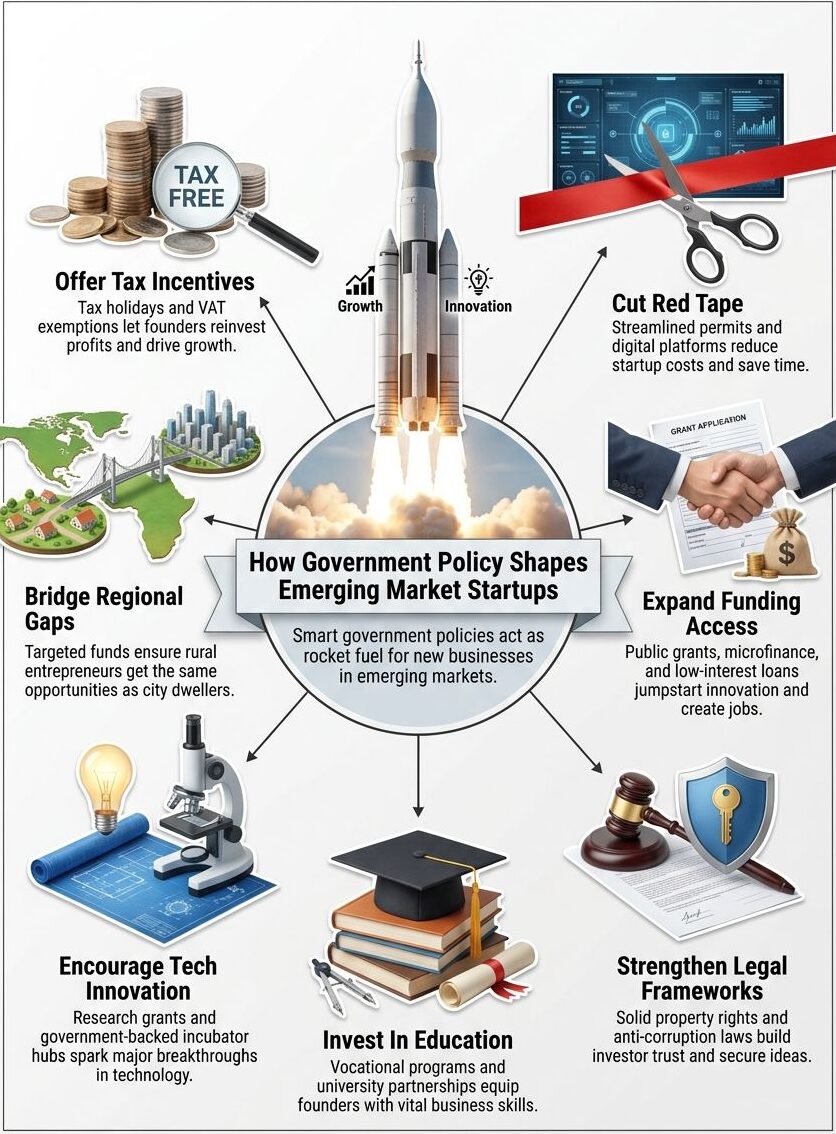
Think about it, without smart policies that cut red tape and spark ideas, those fresh startups might fizzle out before they even get going, so let’s explore how these rules fuel real growth.
Defining entrepreneurship in emerging markets
Entrepreneurship in emerging markets sparks new ideas and drives economic growth. Picture a street vendor in Nairobi who turns a small food cart into a chain of eateries; that’s the heart of it.
People here spot gaps in the market, like limited access to tech or basic services, and build startups to fill them. This spirit fuels the startup ecosystem, where innovation meets real-world needs. Many face high startup costs, yet they push forward with grit.
These markets, think India or Brazil, buzz with potential for business support and competitiveness. Entrepreneurs juggle policy frameworks that can make or break their ventures. They create jobs and boost networking, turning local challenges into global opportunities.
Supportive environments encourage this entrepreneurial culture, leading to stronger economic development.
Importance of supportive policies for business growth
Supportive government policies act like a strong wind in the sails for businesses in emerging markets. They boost economic growth by making it easier for startups to thrive. Think of it as planting seeds in fertile soil; without the right care, those seeds won’t grow.
Policies that cut taxes and offer incentives draw in investors, sparking innovation and creating jobs. In places like India, such moves have turned small ideas into big successes in the startup ecosystem.
You see, when governments provide clear rules and protection, entrepreneurs feel safe to take risks. This builds a vibrant entrepreneurial culture, full of networking and fresh ideas.
Good policy is the backbone of any thriving economy, says economist Amartya Sen.
These policies also improve market access and funding options. Venture capital flows in when the investment climate feels secure. Governments that reduce red tape let businesses focus on what matters: growth and competitiveness.
Picture a young entrepreneur in Brazil, dodging endless paperwork to launch a tech firm. Supportive frameworks change that story, driving economic development across regions. They encourage public policy that invests in education, turning dreams into reality for small businesses everywhere.
Key Government Policies That Shape Entrepreneurship
Governments hold the reins, you know, steering entrepreneurship with smart rules that can make or break a startup’s journey in emerging markets. Imagine this: a policy tweak acts like rocket fuel, blasting small businesses into growth mode, while a clunky one feels like quicksand, slowing everything down.
Tax Policies and Incentives
Tax policies and incentives play a big role in sparking business startups in emerging markets.
| Policy Aspect | How It Helps Entrepreneurs |
|---|---|
| Tax Breaks for Startups | You know that feeling when money stays in your pocket? In places like India, the Startup India initiative offers a three-year tax holiday for new firms. This lets founders reinvest profits right away. Picture saving 30% on taxes; that buys a lot of growth. |
| Incentives for Investment | Foreign cash flows more easily with smart perks. Take Rwanda; they cut corporate tax to 15% for investors in key sectors. Entrepreneurs, you get partners who bring funds and know-how. It’s like finding a golden ticket in your candy bar. |
| VAT Exemptions | Small businesses dodge heavy value-added taxes at first. Brazil gives exemptions for firms under $1.2 million. You save big on costs, right? This keeps your venture afloat during tough early days. |
| R&D Tax Credits | Innovation gets a boost with credits for research spending. South Africa’s program refunds up to 14% on R&D costs. Imagine turning ideas into products without breaking the bank; that’s a game-changer for tech startups. |
| Export Incentives | Selling abroad pays off with rebates. Vietnam offers tax refunds on exported goods, up to 10%. You expand markets, earn more, and build stronger firms. Feels like the government cheers you on, doesn’t it? |
Regulatory Frameworks
Beyond tax breaks that lighten the load for new ventures, governments in emerging markets set the rules of the game through regulatory frameworks, shaping how entrepreneurs play to win.
These rules act like guardrails on a busy highway, keeping businesses safe while letting them speed toward growth. Picture a startup in India, where clear regulations cut down on red tape and spark innovation.
Entrepreneurs face fewer hurdles when laws protect ideas and foster fair play. Such frameworks build trust, drawing in investors who see a stable path ahead. In Brazil, strong regulations have boosted the startup ecosystem by ensuring property rights stay secure.
Good regulations are the backbone of a thriving entrepreneurial culture, says economist Mariana Mazzucato.
Governments tweak these frameworks to match local needs, like easing license processes in Kenya to help small businesses bloom. This approach levels the playing field, especially for people in rural spots chasing big dreams.
Think of it as oiling the gears of economic development, where smart rules spark competitiveness and open market access. Entrepreneurs gain from networking events backed by policy, turning solo efforts into team wins. Funding flows more easily when regulations signal a green light for venture capital.
Access to Capital and Start-Up Costs
Good regulations pave the way for business, but entrepreneurs still need cash to get started. Access to capital drives startups in emerging markets. Governments can help with low-interest loans or grants.
Think of it like fueling a car; without gas, you go nowhere. In places like India, programs offer seed money to small businesses. This boosts economic growth and creates jobs. Venture capital firms step in too, spotting hot ideas.
Policy frameworks that cut start-up costs make a big difference. High fees scare off new players. Lower them, and the startup ecosystem thrives.
Entrepreneurs face tough hurdles with funding gaps. Public policy can fix this by linking banks with startups. Imagine a farmer turning ideas into a tech firm, thanks to easy loans.
Market access opens doors for these ventures. Business support from the government builds competitiveness. Networking events connect founders with investors. An entrepreneurial culture grows when costs stay low.
Investment climate improves with tax breaks on early funds. Small businesses gain ground in this setup. Innovation sparks when capital flows freely.
Legal Protection and Property Rights
Governments in emerging markets play a big role in protecting business ideas and assets. Strong legal protection stops theft of inventions and ensures fair play. Think of it like a shield for your startup dreams; without it, entrepreneurs hesitate to invest time and money.
Property rights let business owners secure land and tools without fear of sudden loss. This builds trust in the startup ecosystem and boosts economic growth. In places like India, clear laws on patents have sparked more innovation among small businesses.
Entrepreneurs thrive when policies safeguard their hard work. Weak rules can scare away venture capital and limit market access. Picture a farmer turning into an inventor, only to lose everything due to poor enforcement.
Solid regulatory frameworks create a fair playing field, encouraging competitiveness and networking. Public policy here directly shapes the investment climate for startups. Now, let’s explore strategies to foster entrepreneurship in emerging markets.
Strategies to Foster Entrepreneurship in Emerging Markets
Governments spark business growth in emerging markets by slashing red tape, pumping money into education, and handing out funds like candy at a parade, all to light that entrepreneurial fire. Stick around, for the juicy details on how these moves change the game.
Providing Access to Funding
Funding plays a key role in sparking innovation and economic growth in emerging markets. Entrepreneurs often struggle without easy access to capital, so smart policies can change that game.
- Public grants and subsidies jumpstart startups by offering low-risk money for new ideas, like how India’s Startup India initiative provides seed funding to over 50,000 ventures since 2016, boosting the startup ecosystem and creating jobs.
- Venture capital incentives draw investors with tax breaks, as seen in Brazil, where laws cut taxes on angel investments, leading to a 20% rise in funding for small businesses and stronger competitiveness.
- Microfinance programs target underserved entrepreneurs, especially in rural areas; Kenya’s government-backed schemes have loaned out billions since 2008, helping women-led businesses thrive and improve market access.
- Crowdfunding platforms get a lift from policy support, you know, making it easier for people to pool small investments online; Nigeria’s regulations since 2021 have unlocked $100 million in funds, fostering an entrepreneurial culture full of fresh ideas.
- Low-interest loans from state banks ease startup costs. Think of Indonesia’s programs that have supported 1 million small businesses with affordable credit, driving economic development and innovation in tough spots.
- International partnerships bring in foreign investment, for instance, Vietnam teams up with groups like the World Bank to channel funds, resulting in a 15% annual growth in the investment climate and better networking for local startups.
- Tax holidays for new ventures cut early burdens, as Egypt’s policy since 2017 offers five-year exemptions, attracting more entrepreneurs and enhancing the policy framework for business strategy.
- Equity funds backed by governments match private investments, like in South Africa’s model, where public money doubles private bets, leading to 30,000 new jobs and a vibrant entrepreneurial ecosystem.
Reducing Bureaucratic Red Tape
Once governments secure funding for startups, they must tackle the next big hurdle: slashing unnecessary paperwork. This shift eases the path for entrepreneurs in emerging markets. Imagine you’re a budding business owner bogged down by endless forms, and suddenly, policies cut through that mess like a hot knife through butter.
- Governments streamline approval processes to boost the startup ecosystem, for instance, Rwanda slashed business registration time from weeks to just six hours in 2019, sparking a 20% rise in new ventures and enhancing economic development.
- They cut down on permit requirements, which often act like roadblocks, and in India, the “Ease of Doing Business” reforms since 2014 have jumped the country’s global ranking by 79 spots, fostering innovation and attracting venture capital.
- Policies promote digital platforms for submissions, making things faster and less costly, like how Estonia’s e-governance system lets entrepreneurs file taxes online in minutes, building a supportive policy framework and entrepreneurial culture.
- Leaders audit existing regulations regularly to remove outdated ones, imagine ditching old rules that no longer fit, as seen in Kenya, where post-2020 reviews reduced compliance costs by 15%, improving market access and competitiveness.
- Training programs for officials speed up decision-making, turning slow bureaucracy into a well-oiled machine, with Brazil’s initiatives leading to a 30% drop in startup setup delays and stronger business support networks.
- Incentives reward quick processing, encouraging efficiency. For example, Vietnam offers bonuses to agencies that handle applications swiftly, which has fueled small business growth and economic growth in the region.
- Collaboration with the private sector identifies pain points, like a chat over coffee revealing hidden hurdles, and in Nigeria, such partnerships since 2017 have simplified licensing, enhancing the investment climate and regulatory framework.
- Transparent guidelines prevent corruption, ensuring fair play, as Mexico’s anti-red tape laws cut bribery incidents by 25% and promoted public policy that supports startups.
- Monitoring tools track policy impacts, using data to refine approaches, similar to how Indonesia’s dashboards show real-time progress, driving networking opportunities and general entrepreneurial ecosystem strength.
Investing in Education and Training
Governments in emerging markets boost entrepreneurship by investing in education and training. This approach builds skills that spark innovation and economic growth in startup ecosystems.
- Governments fund vocational programs that teach practical business skills, like how Brazil’s SEBRAE initiative has trained over 10 million entrepreneurs since 1972, helping them navigate market access and build competitive startups.
- They partner with universities to offer entrepreneurship courses, for example, India’s National Skill Development Corporation has upskilled 40 million youth by 2023, fostering an entrepreneurial culture that drives economic development.
- Public investments create online platforms for free training, such as Kenya’s Ajira Digital program, which has empowered 1 million young people since 2016 with digital skills, enhancing networking and business strategy in the startup ecosystem.
- Policies support mentorship programs linking new founders with experienced business leaders, such as Rwanda’s post-2000 education reforms, which have boosted small business growth by 25 percent through targeted training, strengthening the investment climate.
- They allocate budgets for innovation labs in schools, imagine kids in Indonesia turning classroom ideas into real ventures via government-backed hubs since 2015, which have sparked over 5,000 startups and promoted competitiveness.
- Emerging markets establish scholarships for business education abroad, like Vietnam’s program, sending 1,000 students yearly since 2010, who return with fresh ideas to improve local regulatory frameworks and funding access.
- Governments integrate entrepreneurship into national curricula; for instance, South Africa’s efforts since 2014 have increased youth startups by 30 percent, building a supportive policy framework that encourages market access and innovation.
Encouraging Innovation and Research
Innovation drives economic growth in emerging markets. Governments play a key role by encouraging research to boost the startup ecosystem.
- Offer grants and subsidies to spark innovation. Picture a small team in India turning a wild idea into a thriving app, all thanks to government funding that covers early research costs. This approach builds competitiveness and opens market access for new ventures. It fosters an entrepreneurial culture where ideas flow freely.
- Set up research hubs and incubators for business support. These spots connect startups with experts, much like a busy kitchen where cooks share recipes. In places like Brazil, such hubs have led to breakthroughs in tech, enhancing the policy framework for economic development.
- Promote partnerships between universities and businesses. Imagine students teaming up with entrepreneurs to solve real problems, creating a buzz of creativity. This strategy strengthens the regulatory framework and boosts networking in the startup ecosystem.
- Provide tax breaks for research spending. Companies save money and invest more in new ideas, like a farmer planting seeds for a bigger harvest. Such incentives drive innovation and improve the investment climate for small businesses.
- Launch public campaigns to celebrate innovators. Share stories of local heroes who turned challenges into opportunities, inspiring others to join in. This builds public awareness and nurtures an entrepreneurial culture across regions.
- Invest in tech infrastructure for better access. High-speed internet and labs let entrepreneurs experiment without barriers, fueling economic growth. It supports venture capital flows and enhances competitiveness in emerging markets.
Building a Supportive Legal Framework
While governments push innovation and research to spark new ideas in emerging markets, they also need strong legal structures to protect those breakthroughs and let businesses thrive. Solid legal frameworks act like a safety net for entrepreneurs. They build trust and stability in the startup ecosystem.
- Governments create clear property rights laws that shield your ideas and inventions from theft, much like locking your front door to keep burglars out, and this boosts competitiveness by encouraging you to invest without fear.
- They enforce fair contract rules so deals stick and disputes get resolved quickly. Imagine a referee in a soccer game making sure everyone plays by the rules, which strengthens the entrepreneurial culture and supports economic development.
- Policymakers set up intellectual property protections that guard patents and trademarks, think of it as a shield for your brainchild, helping startups attract venture capital and expand market access.
- They develop anti-corruption measures to level the playing field, like weeding out cheats from a garden so honest businesses can grow, and this enhances the investment climate in the entrepreneurial ecosystem.
- Governments establish efficient bankruptcy laws that allow failed ventures to bounce back without total ruin, like a trampoline catching you after a fall, promoting risk-taking and innovation in the policy framework.
- They implement labor laws that balance worker rights with business flexibility, akin to a well-tuned engine in a car, driving economic growth while supporting small business strategies and networking opportunities.
- Policymakers craft trade agreements that open doors to global markets, like building bridges over rivers, which improves market access and competitiveness for startups in emerging economies.
- They design dispute resolution systems that are fast and affordable, think of it as a quick oil change for your car instead of a full overhaul, fostering public policy that aids business support and regulatory frameworks.
Promoting Public Awareness and Entrepreneurial Culture
Governments spark entrepreneurial culture by spreading the word through campaigns and events. They host workshops that teach individuals how to start businesses, making innovation feel like second nature.
Picture a community fair where locals swap ideas on startups; it builds networking and boosts competitiveness. In places like Kenya, programs highlight success stories from small businesses, firing up economic development. People see entrepreneurs as heroes, not just dreamers.
Public awareness efforts cut through doubt and inspire action in startup ecosystems. Officials team up with schools to weave business strategy into lessons, planting seeds for future innovators.
They use media to share tales of market access wins, turning hesitation into hustle. This approach fosters an entrepreneurial culture that drives economic growth, one bold step at a time. Empathy kicks in when policies address fears of failure, encouraging more to join the venture capital chase.
The Impact of Policy on Entrepreneurial Ecosystems
Policies can make or break a startup scene in places like India or Brazil, turning raw ideas into booming businesses overnight. Imagine a farmer in Kenya launching a tech app because smart rules opened doors to easy loans and fair markets, sparking real change you won’t want to miss.
Case studies from emerging markets
Let’s look at some real-world examples from emerging markets that show how government policies spark entrepreneurship.
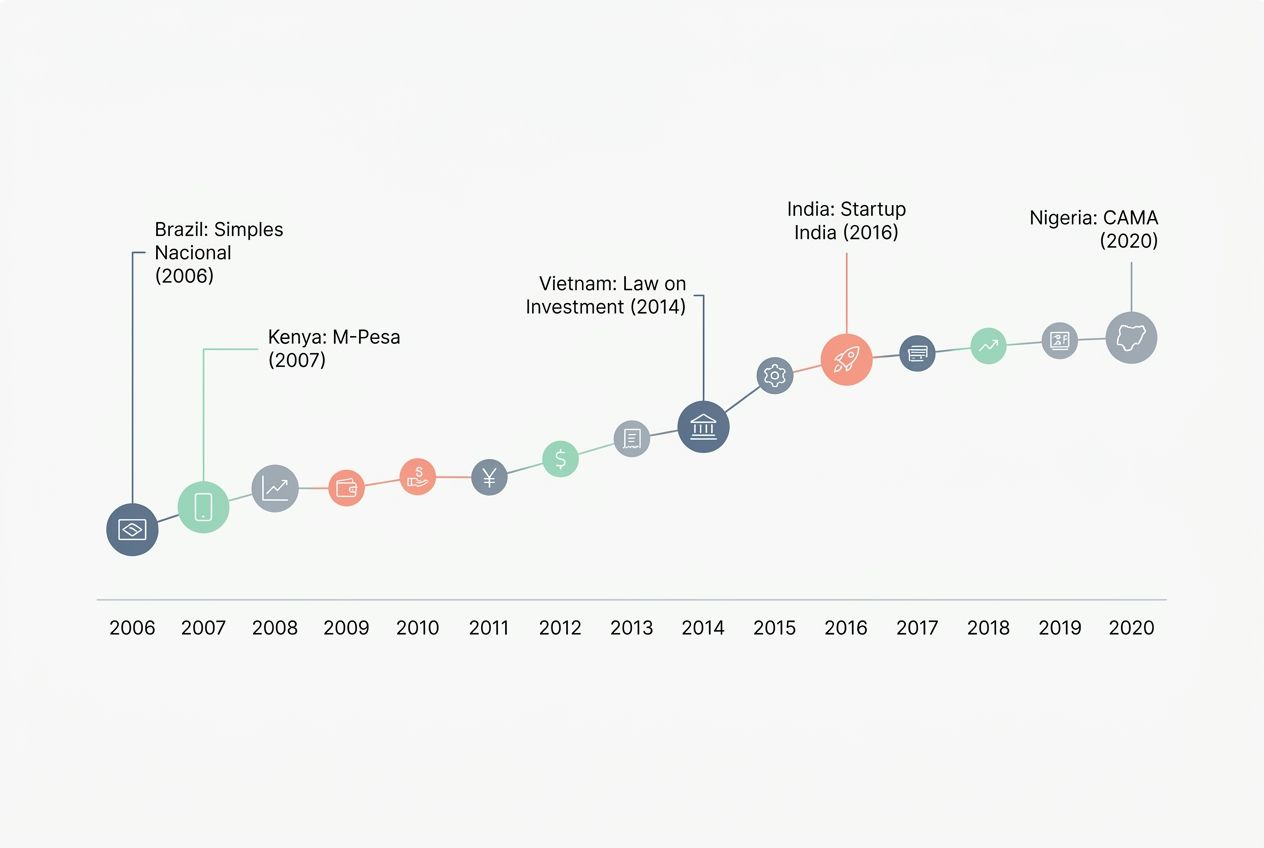
| Country | Policy Example | Impact on Entrepreneurs |
|---|---|---|
| India | The Startup India initiative, launched in 2016, offers tax breaks and easier funding for new businesses. | Entrepreneurs like those at Flipkart grew fast. They created jobs for millions. Imagine turning a small idea into a billion-dollar company, all thanks to smart rules. |
| Brazil | Simples Nacional simplifies taxes for small firms since 2006, cutting red tape. | Small shop owners thrive. They expand without drowning in paperwork. It’s like giving wings to local dreamers, you know? |
| Kenya | M-Pesa’s mobile money system got a boost from light regulations in 2007. | Tech startups boom. People start businesses from their phones. Picture a farmer selling crops online, changing lives overnight. |
| Nigeria | The 2020 Companies and Allied Matters Act eases company registration. | Young innovators launch apps and services. They build ecosystems that employ thousands. Feels empowering, doesn’t it? |
| Vietnam | Law on Investment from 2014 provides incentives for foreign capital and tech hubs. | Manufacturing startups multiply. Exports soar by 15% yearly. Entrepreneurs ride the wave of growth, turning challenges into gold. |
Measuring policy effectiveness in different regions
Those case studies show real-world wins and pitfalls, but now we need to figure out how to gauge if policies actually deliver results across various spots on the map. Metrics matter a lot in this game.
| Region | Key Metrics for Effectiveness | Why It Works This Way |
|---|---|---|
| Sub-Saharan Africa | Track startup survival rates and job creation numbers. | Policies here often focus on microfinance; high survival rates signal strong support, like in Kenya, where mobile money boosts small businesses. |
| Latin America | Measure ease of doing business scores and innovation patents filed. | Countries like Chile use tax breaks; rising patents show policies spark creativity, even if red tape slows things down sometimes. |
| Southeast Asia | Look at venture capital inflows and export growth stats. | Singapore’s incentives draw big bucks; steady export jumps prove policies build global players, turning local ideas into worldwide hits. |
| Eastern Europe | Check foreign direct investment levels and entrepreneurial density per capita. | Estonia’s digital reforms shine; dense startup clusters mean policies cut barriers effectively, fostering a buzz of new ventures. |
| Middle East | Evaluate female participation rates in business and tech adoption speeds. | UAE pushes diversity programs; quick tech uptake reveals policies empower everyone, breaking old molds with fresh energy. |
Challenges in Implementing Entrepreneurial Policies
Governments in emerging markets often struggle to strike that sweet spot, you know, where rules spark fresh ideas instead of snuffing them out like a wet blanket on a campfire. And don’t get me started on the uneven playing field across regions, where city people snag all the perks while rural entrepreneurs chase shadows for basic support, leaving everyone wondering what’s next.
Balancing regulation with innovation
Policy makers in emerging markets walk a tightrope with regulation and innovation. They set rules to protect consumers and ensure fair play, but too many restrictions can stifle creative startups.
Think of it like a garden: you need fences to keep out pests, yet overdo it and the plants can’t grow. In places like India, light-touch regulations have boosted the startup ecosystem, leading to economic growth through new ventures.
Leaders encourage innovation by easing rules on tech firms, which sparks competitiveness and draws venture capital.
Entrepreneurs face hurdles when red tape slows down market access. Smart policies strike a balance, offering business support without heavy burdens. For instance, Brazil’s reforms cut bureaucratic steps, helping small businesses thrive in the entrepreneurial ecosystem.
This approach builds an investment climate that promotes networking and economic development. Policy frameworks adapt to foster startups, turning ideas into reality with just the right mix of oversight.
Addressing regional disparities
Governments in emerging markets spot big gaps between bustling cities and quiet rural spots. They tackle these disparities with smart moves to boost entrepreneurship everywhere. Imagine a farmer in a remote village getting the same shot at starting a business as a tech whiz in the capital.
Leaders roll out programs that spread funding and training far and wide. This sparks economic growth and builds a stronger startup ecosystem across regions. Take India, for example, where rural hubs now thrive thanks to targeted policy frameworks.
People in underserved areas often miss out on market access and networking opportunities. Officials step in by cutting red tape in those spots and offering tax breaks to draw investors. This levels the playing field and fuels innovation in forgotten corners.
Entrepreneurs gain from better business support, turning local ideas into competitive ventures. Such efforts create a vibrant entrepreneurial culture that lifts everyone up.
The Closing Thoughts
Think about the future of entrepreneurship in emerging markets. Policies drive economic growth and spark innovation in startup ecosystems. Imagine a world where smart regulation opens doors to market access and funding.
Leaders shape this by building strong policy frameworks. They boost competitiveness through business support and networking. Entrepreneurs thrive when governments prioritize an entrepreneurial culture.
Picture entrepreneurs as trailblazers in a vast jungle, with policies as their map and compass. Supportive legal setups cut through red tape and fuel venture capital. This setup lifts small businesses and drives economic development.
Public policy can turn challenges into opportunities, fostering a vibrant startup scene. Stay engaged, your ideas could reshape the investment climate.
FAQs on Government Policy Shapes Entrepreneurship
1. How does government policy boost entrepreneurship in emerging markets?
Government policy acts like a launchpad for new businesses, offering tax breaks and funding to spark growth. It’s all about creating a fertile ground where ideas can bloom without too many weeds in the way.
2. What happens when policies hinder startups in these areas?
Bad policies can choke off innovation, like a tight leash on an eager pup. Entrepreneurs face red tape that slows them down, making it tough to compete.
3. Can you give an example of policy shaping business in emerging markets?
Take India, where eased regulations opened doors for tech startups to thrive. This shift turned small ventures into big players, drawing in global investors. It’s like giving a seed the right soil and sun to grow tall.
4. Why should entrepreneurs care about policy changes in emerging markets?
Policy tweaks can unlock new opportunities or slam doors shut, directly impacting your venture’s success. Stay alert, because ignoring them is like sailing without checking the weather. Empathy here, it’s frustrating when rules flip overnight, but adapting keeps you afloat.