In today’s technology-driven landscape, businesses operate on a complex web of applications, platforms, and data streams. From customer relationship management (CRM) software and social media channels to legacy databases and IoT devices, the modern digital toolkit is powerful but often fragmented. This fragmentation leads to information silos, redundant processes, and a significant drain on productivity. The challenge is no longer about acquiring the best tools, but about making them work together harmoniously.
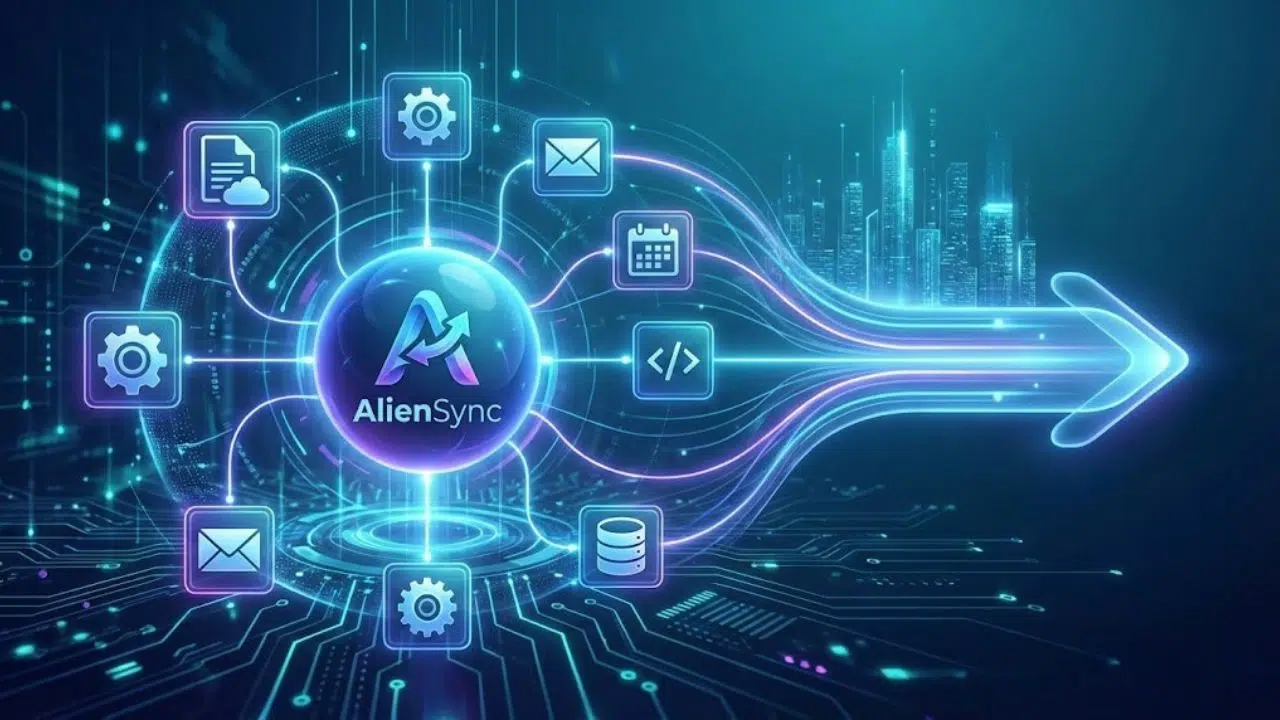
This is where the concept behind advanced synchronization platforms becomes critical. By creating a unified layer of communication, solutions like those found in the realm of apps and software aliensync are redefining operational efficiency. These intelligent integration frameworks act as a universal translator, enabling disparate systems to share data, interpret intent, and trigger actions in real time. This article explores how this technology is solving the puzzle of digital fragmentation and empowering businesses to achieve true workflow continuity.
The High Cost of Digital Fragmentation
As companies scale, they often accumulate a patchwork of software solutions. Marketing teams might rely on one set of analytics tools, while sales operates out of a separate CRM, and customer support uses another platform entirely. These systems, unfortunately, rarely communicate natively.
The result is a landscape of information silos where data is trapped and visibility is limited. Employees waste hours manually exporting data from one system and importing it into another, a process that is not only inefficient but also prone to human error. IT departments are frequently tasked with building custom middleware and scripts to bridge these gaps, diverting resources from strategic innovation to basic maintenance. This digital fragmentation hinders automation, slows down decision-making, and ultimately impacts the bottom line .
Understanding the AlienSync Approach to Integration
Platforms inspired by the “AlienSync” model address these challenges by moving beyond simple point-to-point connections. They establish an intelligent synchronization framework designed to create a cohesive digital ecosystem. This isn’t just about moving data; it’s about creating a responsive and adaptive infrastructure where logic and processes are shared seamlessly across all endpoints .
Core Principles of Intelligent Synchronization
- Universal Connectivity: The ability to connect with a vast array of protocols, from modern REST APIs to legacy SOAP and XML systems, ensuring no device or database is left behind.
- Contextual Awareness: Using machine learning to understand the context of data. Instead of just transferring a piece of information, the system understands what it means and what action it should trigger .
- Real-Time Responsiveness: Ensuring that a change in one part of the network is instantly reflected across all connected nodes, which is critical for applications like inventory management or fraud detection.
- Resilience and Reliability: Employing a decentralized architecture to guarantee that data sync continues smoothly even if parts of the network experience downtime .
Key Capabilities of Modern Synchronization Software
When evaluating apps and software designed for ecosystem synchronization, several key features distinguish a truly intelligent platform from a simple connector tool.
1. AI-Assisted Data Mapping and Translation
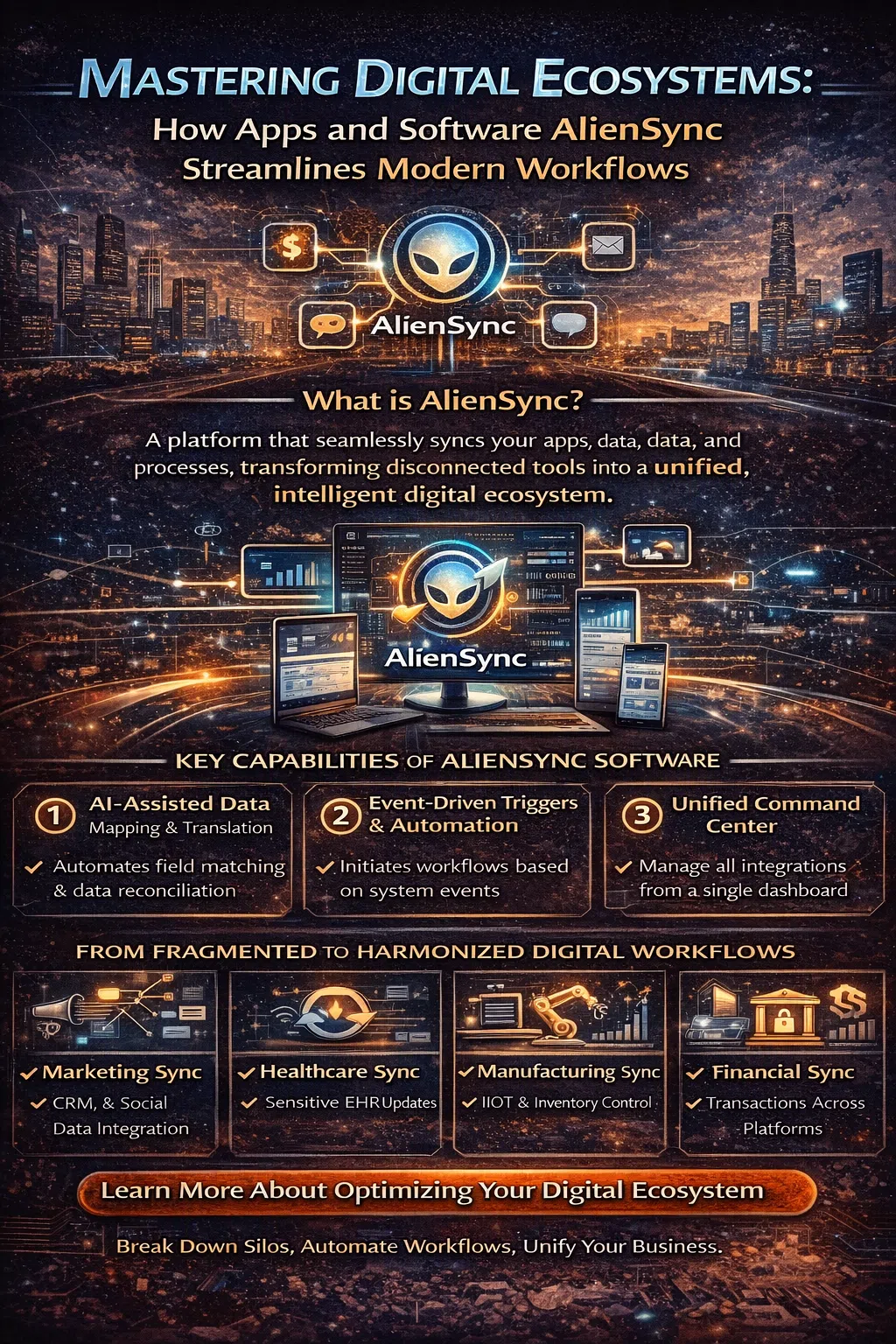
One of the most time-consuming aspects of integration is mapping fields between different applications. What one system calls “Client ID” might be labeled “Customer Number” in another. Advanced synchronization tools leverage AI-assisted mapping to automatically detect and reconcile these differences. The system learns the data structures and creates translations, significantly reducing the manual setup time required .
2. Event-Driven Triggers and Automation
Intelligent automation transforms passive data syncing into an active workflow engine. With event-driven triggers, a specific action in one platform can initiate a complex chain of events in another. For instance, a new customer inquiry on a social media platform can automatically generate a support ticket in the helpdesk software, add the contact to a CRM mailing list, and log the interaction in an analytics dashboard—all without human intervention.
3. A Unified Command Center
Managing multiple integrations can become as chaotic as managing multiple apps. A centralized dashboard provides a single pane of glass to monitor the health of your entire digital ecosystem. Teams can visualize data flow, track sync history, and set up alerts for any anomalies. This centralization is crucial for maintaining control and visibility across hybrid environments that span cloud, on-premise, and edge devices.
4. Scalable and Secure Architecture
As a business grows, its data volume and the number of connected applications will also grow. Modern synchronization platforms are built on scalable microservices architectures that can handle increasing loads without performance degradation. Security is embedded at every level, from field-level encryption to automated compliance checks for regulations like GDPR and HIPAA, ensuring that sensitive data remains protected both in transit and at rest.
Practical Applications Across Industries
The versatility of intelligent synchronization makes it valuable across a wide range of sectors.
- For the Connected Business: Marketing teams can synchronize customer engagement data from social platforms with their CRM, enabling hyper-personalized campaigns based on real-time behavior .
- In Healthcare: Hospitals and clinics can ensure that updates to Electronic Health Records (EHR) are instantly and securely synced across departments, improving patient care coordination while maintaining strict privacy standards .
- On the Factory Floor: Manufacturers can integrate IoT sensor data with inventory management and logistics systems. If a sensor detects a low stock of raw materials, it can automatically trigger a reorder from a supplier .
- For Financial Services: Banks and fintech apps can synchronize transaction data across legacy mainframes and modern mobile platforms, providing customers with a unified, up-to-date view of their finances .
Frequently Asked Questions
To help you better understand how this technology applies to your organization, here are answers to some common questions.
Q: What does “AlienSync” software actually do?
A: In simple terms, it acts as a universal connector and translator for your software. It allows different applications—even ones that weren’t designed to work together—to share data and trigger automated actions in real time, creating a single, efficient workflow .
Q: Is this type of integration only for large enterprises, or can small businesses use it too?
A: Absolutely not. These platforms are designed to be scalable and often offer flexible, pay-as-you-grow models. For small businesses and startups, automation is a powerful tool to level the playing field, allowing them to operate with the efficiency of much larger competitors without needing a large IT staff .
Q: We use some very old, legacy software. Will we have to replace it to use a sync platform?
A: No, you shouldn’t have to. A key feature of advanced synchronization engines is their ability to connect with legacy protocols. They act as a bridge, allowing your older, on-premise systems to communicate securely with modern cloud-based applications .
Q: How does this software handle data security and privacy?
A: Reputable platforms prioritize security through multiple layers of protection. This includes encrypting data not just when it’s stored or sent, but often at the individual field level. They also provide robust access controls and automated audit trails to help you comply with data privacy regulations .
Q: Can it really save my team time?
A: Yes, by automating the repetitive, manual work of moving data between systems. Instead of copying and pasting information, your team can focus on higher-value tasks. For example, a simple customer inquiry can automatically kick off a series of backend processes without anyone having to lift a finger .
A Global Perspective
For a global audience, it’s important to recognize that the challenges of digital fragmentation are universal, regardless of location or industry. Whether a company is based in North America, Europe, or Asia, the need for operational efficiency and real-time data access is paramount.
The principles of intelligent synchronization apply equally to a logistics company in Rotterdam coordinating with a factory in Shanghai, and a retail chain in São Paulo managing online and in-store inventory. By adopting a cloud-agnostic and protocol-agnostic platform, organizations worldwide can ensure business continuity, reduce data latency, and build a technological infrastructure that is both robust and adaptable to local market conditions . This neutral, interoperable approach is the foundation of modern digital transformation on a global scale.
Building a Harmonious Digital Future
The era of operating with disconnected software is coming to a close. As digital ecosystems grow in complexity, the ability to synchronize apps and software intelligently will cease to be a luxury and become a necessity for survival and growth. Platforms that embody the “AlienSync” philosophy offer more than just a technical fix; they provide a strategic advantage.
By breaking down silos, automating workflows, and enabling real-time intelligence, these solutions empower businesses to be more agile, responsive, and innovative. They transform a chaotic collection of tools into a harmonious, unified system that works as hard as the people using it.
If your organization is ready to move beyond the inefficiencies of fragmented systems and build a more connected operational foundation, it may be time to explore how a professional-grade synchronization platform can support your goals. Contact our team of integration specialists to discuss your unique ecosystem and discover the right path toward true digital harmony.