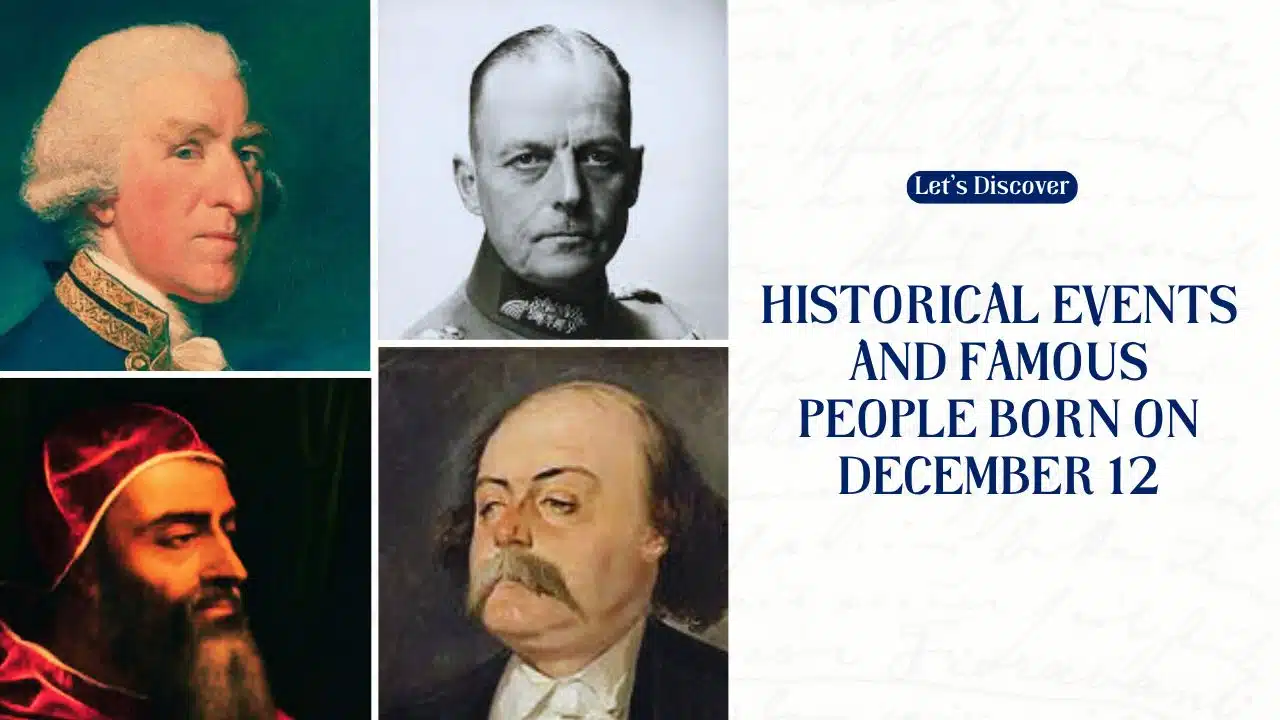
December 12 is one of those quietly powerful days in the calendar. It doesn’t always scream for attention like New Year’s Day or July 4, yet again and again, this date becomes a stage for big decisions: the reversal of the Partition of Bengal, Kenya’s independence, a new constitution in Russia, a bold climate pact in Paris, and the global commitment that every human being should have access to healthcare.
Let’s walk through December 12 as if we’re moving across a map—from Kolkata and Dhaka, to Nairobi, Paris, Xi’an, Washington and beyond.
The Bangalee Sphere (Bangladesh & India)
Delhi Durbar 1911 – When Bengal Forced the Empire to Blink
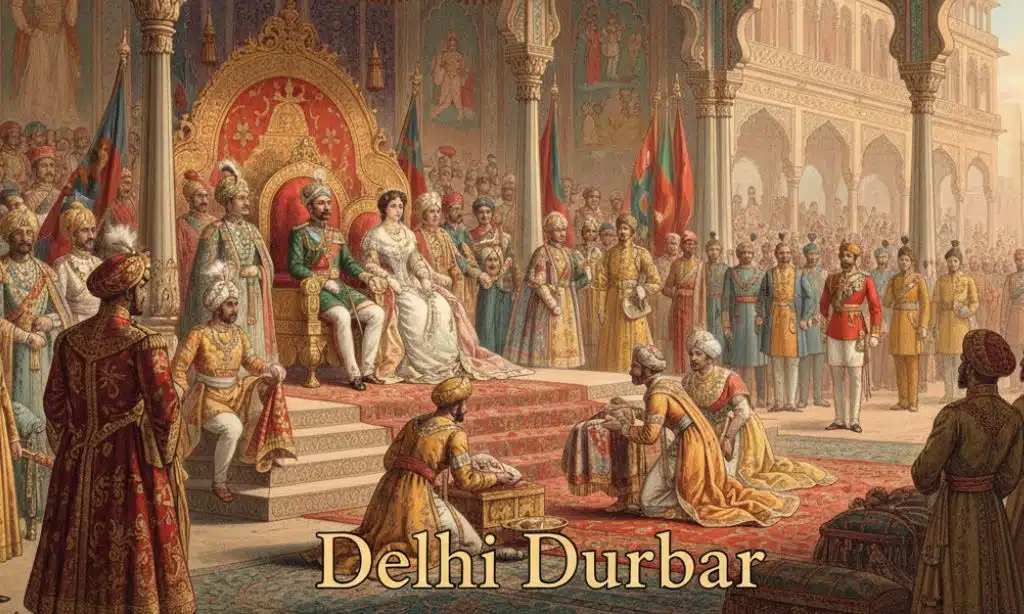
On 12 December 1911, British India gathered in Delhi for the last and grandest Delhi Durbar, a coronation ceremony for King George V and Queen Mary as Emperor and Empress of India.
At, and around, this Durbar, the British Crown made two announcements that changed the destiny of Bengal:
-
The partition of Bengal (1905) was annulled.
The 1905 partition had split Bengal into a largely Hindu west and a Muslim-majority east—widely condemned as a classic “divide-and-rule” move. -
The imperial capital would move from Calcutta (Kolkata) to Delhi.
In Kolkata’s historical memory this decision is linked to 12 December, while some administrative records highlight 13 December—historians still debate the exact announcement date.
Either way, the message was clear: the British were retreating from a policy that Bengali protest had made untenable.
For Bengal, and therefore for the broader Bangalee sphere, this annulment:
-
Validated mass movements like the Swadeshi boycott and anti-partition protests.
-
Showed that the empire could be forced to reverse itself.
-
Helped incubate a generation of nationalists whose political language—about identity, language and rights—would echo later in the 1952 Language Movement in East Pakistan and the 1971 Liberation War.
In other words, December 12, 1911 is a milestone in the long Bengali story of arguing with empire and winning, at least partly.
December 12 in the Shadow of 1971
Fast-forward six decades. In December 1971, the Bangladesh Liberation War was reaching its climactic final week.
-
On 16 December 1971, the Pakistani army surrendered in Dhaka, marking Bangladesh’s Victory Day.
-
On 14 December, Pakistan’s forces and local collaborators abducted and murdered leading Bengali intellectuals—events now commemorated as Martyred Intellectuals Day.
December 12 itself is not a named commemorative day, but it lies in this intense corridor between massacre and victory. In Bangladesh, mid-December is filled with:
-
Liberation War documentaries and talk shows,
-
Feature stories on freedom fighters and surviving families,
-
Campus debates on secularism, nationalism and justice.
So when you look at the calendar in Dhaka, December 12 feels like a breath held before history exhaled.
Subcontinental Events at a Glance – December 12
| Year | Place | Event | Why It Matters |
|---|---|---|---|
| 1911 | Delhi (then British India) | Delhi Durbar; announcement of Bengal partition annulment and capital shift | Symbolic victory for the anti-partition movement; Bengal’s protests forced London to reconsider its divide-and-rule strategy. |
| 1971 | East Pakistan / Bangladesh | Final days of the Liberation War, with targeted killings of professionals leading up to Martyred Intellectuals Day (14 Dec) | A corridor of fear and hope before independence; still central to Bangladeshi political memory. |
Famous Births – Bangladesh & India
December 12 has gifted the subcontinent with voices in literature, politics, cinema and cricket.
| Name | Born | Place | Contribution |
|---|---|---|---|
| Abdul Gaffar Choudhury | 1934 | Barishal (now in Bangladesh) | Writer and journalist; author of the iconic Ekushey song “Amar Bhaier Rokte Rangano”, the anthem of the 1952 Language Movement, sung every 21 February across Bangladesh and the Bengali diaspora. |
| Sharad Pawar | 1940 | Baramati, Maharashtra | Veteran Indian politician; founder of the Nationalist Congress Party (NCP), multiple-time Chief Minister of Maharashtra, former Defence and Agriculture Minister; awarded the Padma Vibhushan in 2017. |
| Rajinikanth | 1950 | Bengaluru, India | Superstar of Tamil cinema whose films cut across language and class; recipient of Padma Bhushan and Padma Vibhushan, and a cult figure for the Tamil diaspora from Chennai to Kuala Lumpur. |
| Hemant Karkare | 1954 | Nagpur, Maharashtra | IPS officer, chief of Maharashtra Anti-Terrorism Squad; killed during the 26/11 Mumbai attacks while actively engaging terrorists; posthumously awarded the Ashoka Chakra for gallantry. |
| Yuvraj Singh | 1981 | Chandigarh, India | Charismatic all-rounder in Indian cricket; Player of the Tournament in the 2011 ICC World Cup, later a global symbol of resilience after his successful fight against cancer and return to the sport. |
Through them, December 12 ties together Bengali memory, Indian electoral politics, South Indian cinema, and the emotional rollercoaster of cricket.
Notable Subcontinental Deaths on December 12
| Name | Died | Country | Legacy |
|---|---|---|---|
| Maithili Sharan Gupt | 1964 | India | One of the most important modern Hindi poets; known for nationalistic and devotional verse that energised Hindi literature in the early 20th century. |
| Ramanand Sagar | 2005 | India | Film-maker and television producer whose serial “Ramayan” became a defining cultural phenomenon on Indian TV in the late 1980s, shaping popular imagination of the epic. |
Although not Bangalee in ethnicity, both were deeply woven into the Hindi literary and visual culture that millions of Bengalis, especially in India, also consumed.
International Observances & Holidays (December 12)
Major Global & UN Days
| Observance | Type | What It Stands For |
|---|---|---|
| International Universal Health Coverage Day (UHC Day) | UN observance | Proclaimed by the UN General Assembly in 2017 (Resolution 72/138) and observed every 12 December to champion Universal Health Coverage—the idea that everyone, everywhere should access quality health services without financial hardship. |
| International Day of Neutrality | UN observance | Established through UNGA Resolution 71/275 at the initiative of Turkmenistan, recognising its status as a permanently neutral state. Observed on 12 December to promote neutrality as a tool of peace, diplomacy and conflict prevention. |
Together, these observances remind us that December 12 is not just about past events—it’s also a day when the UN invites us to rethink war, peace and health systems.
National & Religious Days
| Country/Region | Name of Day | Significance |
|---|---|---|
| Kenya | Jamhuri Day (Republic & Independence Day) | On 12 December 1963, Kenya gained independence from Britain; on 12 December 1964, it became a republic and joined the Commonwealth as a sovereign state. Jamhuri Day blends celebrations of both milestones and is one of Kenya’s most important national holidays. |
| Turkmenistan | Neutrality Day | National holiday marking the UN’s recognition (1995) of Turkmenistan’s permanent neutrality—deeply tied to the later UN International Day of Neutrality. |
| Mexico & Catholic World | Feast of Our Lady of Guadalupe | One of the largest Catholic pilgrimages, commemorating reported apparitions of the Virgin Mary to Juan Diego in 1531. For many Mexicans, this day fuses indigenous identity and Catholic faith and has become a symbol of the nation itself. |
Global History by Region (Non-Bangalee World)
United States
1870 – Joseph Rainey Becomes the First Black Member of the U.S. House
On 12 December 1870, Joseph Hayne Rainey, a formerly enslaved man from South Carolina, was sworn in as the first Black Representative in the U.S. Congress.
His four terms during Reconstruction showed what a more representative America could look like, before Jim Crow laws rolled back many of those gains. Today his story is invoked in debates about voter suppression, gerrymandering and racial equity.
2000 – Bush v. Gore Ends a Contested Election
On 12 December 2000, the U.S. Supreme Court issued its decision in Bush v. Gore, effectively stopping the Florida recount and delivering the presidency to George W. Bush.
This ruling:
-
Raised deep questions about judicial neutrality in elections.
-
Pushed discussions about electronic voting, recounts, and electoral reform that still resonate in contemporary U.S. politics.
Russia
1993 – A New Constitution for a Post-Soviet State
On 12 December 1993, Russian voters approved a new Constitution of the Russian Federation via referendum.
The constitution:
-
Created a strong presidential system.
-
Redefined the relationship between Moscow and Russia’s regions.
-
Formally guaranteed certain civil rights, though their implementation remains contested.
Constitution Day is still marked on this date, and discussions about presidential power, federalism, and democratic backsliding frequently trace their roots back to this founding document.
China
1936 – The Xi’an Incident: Chiang Kai-shek Kidnapped
In the early hours of 12 December 1936, General Zhang Xueliang and General Yang Hucheng detained Nationalist leader Chiang Kai-shek in Xi’an. Their demand: stop the civil war against the Communists and form a united front against Japan.
The crisis ended with Chiang’s release and the creation of the Second United Front against Japanese aggression. It’s a powerful example of how officers on the ground can force a strategic re-think at the very top, and it became a pivotal moment in both the Second Sino-Japanese War and the Chinese Civil War.
United Kingdom & Empire
From a British perspective, the Delhi Durbar of 1911, held on 12 December, was meant to be a grand imperial spectacle in Delhi’s Coronation Park.
Yet the very announcements tied to that Durbar—the end of Bengal’s partition and the shift of the capital from Calcutta to Delhi—are remembered in South Asia as a concession to nationalist pressure rather than a display of uncontested power.
It’s a reminder that even the British Empire’s celebrations carried the seeds of its eventual unraveling.
Europe
1901 – Marconi’s Transatlantic Radio Signal
On 12 December 1901, inventor Guglielmo Marconi received what he claimed was the first wireless transatlantic radio signal—the Morse code letter “S”—in St. John’s, Newfoundland, transmitted from Poldhu in Cornwall, England.
Modern physicists debate whether the technology of the time could really have captured such a signal clearly, but the experiment triggered a wave of investment and innovation in wireless communication. It paved the way for the global media and internet ecosystems we live in today.
2015 – The Paris Climate Agreement
At the COP21 climate summit in Paris, on 12 December 2015, 195 parties adopted the Paris Agreement, committing to hold global temperature rise “well below 2°C” and to pursue efforts to limit it to 1.5°C above pre-industrial levels.
Even if current policies are still falling short, the Paris Agreement:
-
Recast climate change as a shared planetary responsibility.
-
Became the cornerstone of national climate pledges, green finance and climate litigation.
Australia & Canada
Canada has two notable links to December 12:
-
Marconi’s Receiving Station (1901) – His claimed first transatlantic signal arrived in St. John’s, Newfoundland, making Canada part of the origin story of long-distance radio.
-
Arrow Air Flight 1285 Crash (1985) – A DC-8 charter carrying U.S. soldiers crashed soon after takeoff from Gander, Newfoundland, killing all 256 on board. It remains Canada’s deadliest aviation disaster, and a sombre reminder of the human costs associated even with peacekeeping missions.
Australia, while not associated with a specific December 12 event, is deeply bound into:
-
The Paris Agreement, as a signatory and a key player in debates over coal, renewables and Pacific climate justice.
-
Universal Health Coverage discussions in the Western Pacific region.
Rest of World: Africa, Latin America & Central Asia
Kenya – Jamhuri Day
As noted earlier, Jamhuri Day is celebrated each 12 December, marking both independence (1963) and republic status (1964).
Military parades, cultural performances and presidential speeches weave together stories of:
-
Anti-colonial struggle,
-
Post-independence challenges,
-
Digital innovation and youth entrepreneurship.
Turkmenistan – Neutrality
12 December 1995 saw the UN endorse Turkmenistan’s status as a permanently neutral state, a rare example of a national foreign policy principle becoming a global UN observance (International Day of Neutrality).
Mexico – Our Lady of Guadalupe
In Mexico City, 12 December brings millions of pilgrims to the Basilica of Our Lady of Guadalupe. The day links:
-
Indigenous history (Nahua convert Juan Diego),
-
Catholic devotion,
-
Mexican national identity, often invoked in social justice and political movements.
Notable Births & Deaths (Global)
Spotlight Birthdays – December 12
| Name | Year | Nationality | Why They Matter |
|---|---|---|---|
| Gustave Flaubert | 1821 | French | Novelist of Madame Bovary, a cornerstone of literary realism; his obsessive focus on style influenced generations of writers. |
| Edvard Munch | 1863 | Norwegian | Expressionist painter whose work, especially The Scream, became an enduring visual symbol of modern anxiety. |
| Frank Sinatra | 1915 | American | Singer and actor, one of the most influential voices in 20th-century popular music; winner of multiple Grammys and an Academy Award. |
| Dionne Warwick | 1940 | American | Soul and pop singer with a long string of hits, key interpreter of Burt Bacharach and Hal David songs; five-time Grammy winner. |
| Rajinikanth | 1950 | Indian | Tamil film superstar with pan-Asian cult status; his characters often portray the underdog who turns the system upside down. |
| Yuvraj Singh | 1981 | Indian | Cricket hero of India’s 2011 World Cup triumph and a global face of survivorship after beating cancer. |
More Notable Birthdays at a Glance
| Name | Year | Field |
|---|---|---|
| John Jay | 1745 | American Founding Father, first Chief Justice of the U.S. Supreme Court. |
| Erasmus Darwin | 1731 | English physician and poet, grandfather of Charles Darwin; early thinker on evolution. |
| Connie Francis | 1937 | American pop singer, one of the most successful female vocalists of the late 1950s and early 1960s. |
| Bob Barker | 1923 | American game show host, longtime face of The Price Is Right. |
Spotlight Death Anniversaries – December 12
| Name | Died | Nationality | Legacy |
|---|---|---|---|
| Maimonides (Moses ben Maimon) | 1204 | Jewish philosopher & physician (from al-Andalus/Egypt) | One of Judaism’s greatest medieval thinkers; his legal and philosophical works shaped Jewish law and also influenced Christian and Islamic scholars. |
| Menelik II | 1913 | Ethiopian | Emperor who preserved Ethiopia’s independence by defeating Italy at the Battle of Adwa (1896), a landmark in African anti-colonial history. |
| Maithili Sharan Gupt | 1964 | Indian | Pioneering Hindi poet whose nationalist and social themes helped popularise Khari Boli Hindi as a literary language. |
| Yasujirō Ozu | 1963 | Japanese | Film director famed for quiet domestic dramas like Tokyo Story, frequently hailed as one of the greatest filmmakers ever. |
| Tallulah Bankhead | 1968 | American | Broadway and film actress known for her magnetic stage presence and uncompromising personality; later a queer icon. |
| Joseph Heller | 1999 | American | Author of Catch-22, the novel that gave English a new phrase for absurd bureaucratic traps and remains a classic anti-war satire. |
| Heydar Aliyev | 2003 | Azerbaijani | Former KGB official and president of Azerbaijan; central in shaping the post-Soviet state and its energy geopolitics. |
| Ike Turner | 2007 | American | Early rock ’n’ roll and R&B musician; his legacy is musically important yet overshadowed by his documented abuse of Tina Turner. |
“Did You Know?” – December 12 Trivia
-
The radio signal that may—or may not—have crossed the Atlantic.
On 12 December 1901, Guglielmo Marconi said he heard three faint clicks—the Morse code “S”—traverse the Atlantic from England to Newfoundland. Some modern scientists doubt that such a weak signal could have survived the journey with the equipment of the time, yet the experiment unleashed a global boom in wireless technology anyway. -
One date, two independent republics.
December 12 marks Kenya’s independence in 1963 and its becoming a republic in 1964—both remembered under the banner of Jamhuri Day. -
A health-for-all promise with a climate twin.
The UN chose 12 December as Universal Health Coverage Day, marking its 2012 endorsement of UHC and its 2017 resolution establishing the observance. On the same calendar date in 2015, the Paris Agreement on climate change was adopted—making December 12 a symbolic day for both health and planetary survival.
Takeaways
December 12 doesn’t announce itself loudly, yet it carries a remarkable gravitational pull. Across continents and centuries, it has been a turning point—sometimes quiet, sometimes seismic—linking colonial resistance, national independence, political courage, scientific daring, cultural brilliance, and global commitments to health and climate justice.
To look at December 12 is to see how history is never confined to one region or one struggle; it’s a collage of human choices that ripple outward. And in tracing those ripples, we’re reminded that even the most ordinary dates can become extraordinary when people decide to change the course of their world.