You create great content. You spend hours on it. But your web traffic just keeps dipping. Your posts are packed with keywords. Yet Google seems to look the other way. It is confusing. It is also a bit frustrating. Here is a fact that might help you connect the dots. Google’s Helpful Content Update pushes people-first content above everything else. This update rewards websites that answer real questions.
It solves problems for readers like you. This post will show you why your site may be slipping. I will cover what this big update means. Also, share how to shine again on search results by focusing on helpfulness instead of empty tricks.
What Is the “Helpful Content” Update?
Google’s “Helpful Content” update shook up how sites rank. It changed what gets noticed online. Want to know why your old tricks aren’t working? Keep reading.
Overview of Google’s Helpful Content System
Google created the Helpful Content System in August 2022. The goal was simple. They wanted to boost content written for people rather than machines. This update crawls websites to spot pages built just to get search engine hits.
It uses clever algorithms trained on many examples. It works across different languages like English, Spanish, German, and French. Sites filled with fluff or copied text tend to drop in rankings fast.
The system keeps learning as user needs shift. Updates landed in December 2022 and September 2023. Both hit spammy trends hard. In March 2024, Google integrated this system directly into its core algorithm.
According to Google’s official blog, “People-first content has lasting value.” Pages full of tips from real experts rise up high in results. Low-effort posts fall away. Clear info that solves the reader’s problems stands out every time.
Timeline: Evolution from 2022 to 2026
Google loves to keep things fresh. The Helpful Content update changed websites from 2022 to 2026 in a big way.
- August 2022: Google launched the Helpful Content System. This shook up how sites ranked in search results.
- Late 2022: Search engine optimization goals began to shift. Websites saw drops if their pages did not focus on people-first helpful content.
- Early 2023: Signals pushed for less reliance on stiff keyword stuffing. The focus moved to writing that answered real questions from readers.
- March 2023: Adjustments linked quality content even more tightly with higher rankings. Thin or copied articles started vanishing fast.
- April 2024: Site-wide impact became clearer. Low-value sections dragged down whole domains, not just weak pages alone.
- June 2025: AI integration took off. Sites using tons of auto-generated text faced warnings and penalty drops in visibility.
- Late 2025: Updates added E-E-A-T factors. Experience, expertise, authoritativeness, and trustworthiness became essential ranking factors.
- May 2026: Updates further rewarded original insights. Top spots went to writers who showed both knowledge and clear value to users.
- Current Trends: Sites with engaging layouts and smooth usability win more web traffic. Mobile use has exploded across digital marketing channels.
- The Standard Today: Website owners focus energy on long-form, user-friendly articles. They use authentic voices instead of chasing quick wins from old tricks like spinning content.
These years reshaped online visibility and SEO strategy forever. People-first always wins now!
Key Features of the Update
This update shakes things up for everyone. It makes big changes to how websites rank. You might spot some new faces at the top of Google before you finish your coffee.
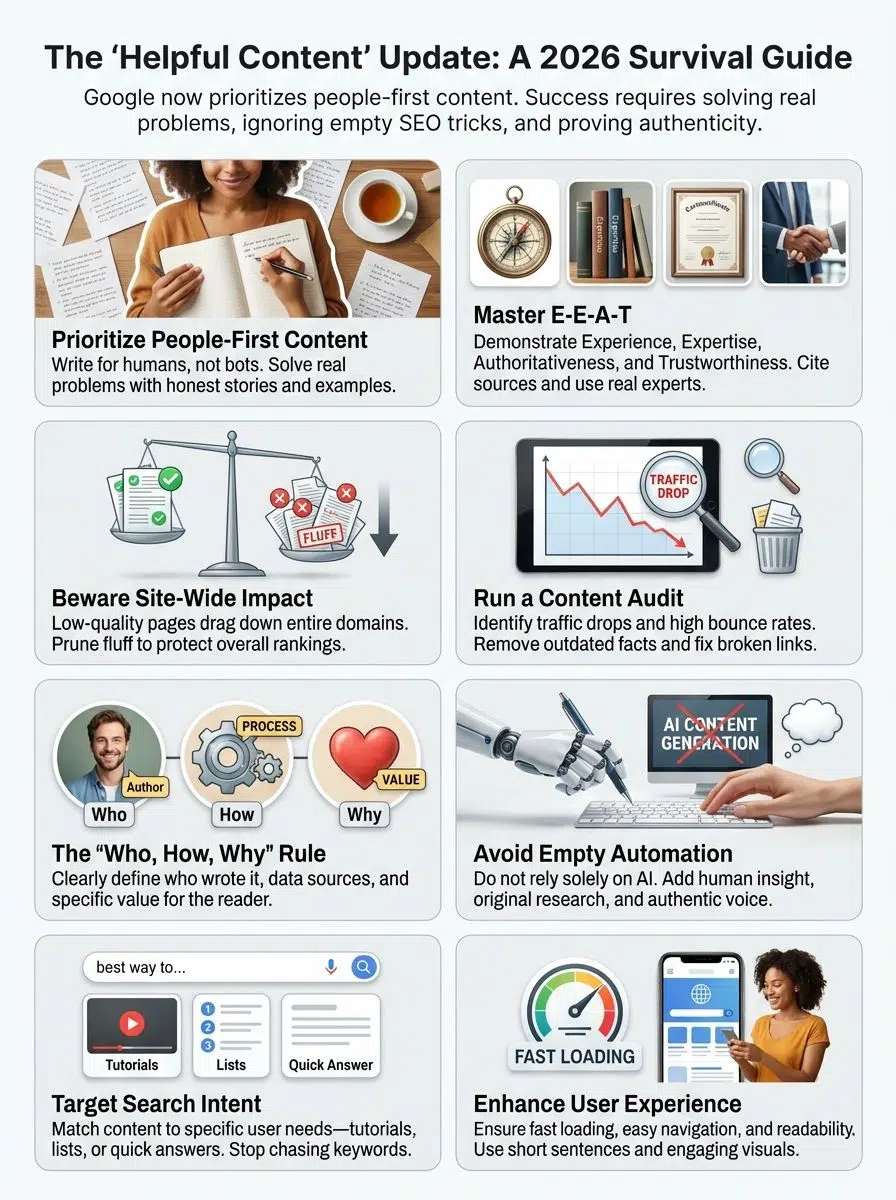
Focus on People-First Content
Google’s Helpful Content update rewards websites that put people first. You should use words your neighbor would understand. Do not use fancy terms just for search engines. Give answers that solve real problems. Avoid copy-paste jobs from other sites.
Share stories and examples from daily life. Honesty stands out in a world full of spin. Teach something useful or crack a smile with every visit. Search rankings love it when users stick around.
Forget keyword stuffing or tricking the algorithm. Quality content wins in 2026. Real experience beats empty promises every time. Focus on helping readers for higher site-wide rankings.
“Creating content for search engines first is a losing battle. Creating content for people is a long-term asset.”
Google pushes E-E-A-T even harder now.
Integration of E-E-A-T [Experience, Expertise, Authoritativeness, Trustworthiness]
Sites now need to show strong experience and credibility. Real people want to see real stories. They want honest content. They do not want facts copied from somewhere else.
If a nutrition blog shares tips from an actual dietitian who uses their name, readers feel safer. They come back more often.
Search engines notice this expert touch. It makes those sites more visible in search rankings. Authority is like street cred for websites. If other well-known experts mention your site, it grows stronger.
Trust comes with clear sources. It comes from reviews by happy visitors. It comes from easy-to-find author info.
“A website without trust is like a door without a lock,” said one SEO strategist in 2025. Now these ranking factors affect entire websites. We will look at how your whole site could rise or fall in search results because of quality signals.
Site-Wide Impact on Rankings
Google judges helpful content across your whole website. It does not look at just one page. If too many pages have low-quality text, search rankings for all your content may drop.
A single well-written article will not save your site if the rest falls short. It is like a group project. If some members slack off, everyone’s grade tanks.
Overused tricks like keyword stuffing set off alarms in Google’s system. Pay close attention to every corner of your digital home. Each section counts toward rankings on search engines in 2026. This approach rewards websites that keep their advice fresh, true, and people-first.
How the Update Impacts SEO
The update turns the old rules upside down. It pushes websites to think like real people. If you stick to stale tricks, your search rankings could slide faster than socks on a waxed floor.
Shifting Away from Search Engine-First Content
Google wants your pages to feel written for people. Stuffing in keywords no longer works. Writing bland answers just to show up in search fails, too. Now, quality content helps real readers first. It keeps their needs at the center.
Writers who focus too much on pleasing algorithms may see drops in site rankings. Search engine optimization matters. But it should support helpful information instead of leading every step.
| Search Engine-First Approach (Avoid) | People-First Approach (Adopt) |
|---|---|
| Writing to hit a specific word count. | Write enough to answer the question fully. |
| Repeating keywords unnaturally. | Using natural language and synonyms. |
| Summarizing what others say without value. | Adding original insights or data. |
| Leaving readers with more questions. | Providing a complete solution or the next step. |
Think about how you can give fresh insights. Solve problems rather than churning out repetitive digital marketing fluff. If folks walk away confused, Google might decide your website is not what users need.
Effects on Keyword Optimization and Automation
SEO experts have moved from stuffing keywords to writing for real people. The Helpful Content Update punished sites that rely too much on keyword tricks. Stuffing “search engine optimization” into every line now hurts your rankings.
Automated content creators like AI must work harder. They cannot simply churn out thin articles stuffed with key phrases.
Tools that promise fast digital marketing boosts are less useful if the text is bland. Google’s algorithm looks at quality and originality before it cares about exact keyword matches. A website packed with fake-sounding pages will tumble in search rankings. Real engagement wins over robots. Simple answers beat long-winded walls of text every time.
Impact on Google Discover Visibility
Google Discover loves fresh content. It loves helpful content. Sites with thin articles often lose traffic there fast. Google’s system can spot low-quality pages more easily now. If your site is full of user-first advice, you stand a better chance. You might show up in Discover feeds.
Content that matches real questions shines brighter in this space. Think about how people talk on their phones. Keep it casual. Keep it honest.
An article packed with value gets clicks from curious readers. The update rewards content that sounds like it comes from someone who knows the topic. It ignores software stringing words together for keywords alone.
How to Assess If Your Site Is Affected
Wondering if your pages took a hit from the Helpful Content update? Check out these quick steps below. You can spot any dips and find simple fixes to put you back on track.

Analyzing Traffic and Keyword Performance
Sites can experience rapid changes in traffic after a major algorithm update. Tracking numbers will show if your site was impacted.
- Check Google Analytics: Look each week to spot dips or spikes in website visits since 2026 began.
- Review Landing Pages: See if top pages lost position for main keywords aligned with your content strategy.
- Use Search Console: Track search rankings, impressions, and click-through rates for target phrases focused on user experience.
- Compare Dates: Compare your site’s average ranking in June 2026 with the same week last year for a quick health check.
- Monitor Discover: Notice any sudden drops in web traffic from Google Discover. This system favors helpful content with high engagement.
- Analyze Keywords: Review data for shifts. Sometimes high-volume words slip while long-tail terms gain traction.
- Check Engagement: Spot patterns of lower session time or higher bounce rates. Both may signal that users do not find your information useful enough.
- Track Referrals: Keep an eye on referral sources. Digital marketing trends shift quickly following algorithm changes.
- Identify Recovery: Make note of which pages recover quickly. Test adding more depth or quality content where performance lags.
- Adjust Plans: Use these insights to update content creation plans. Improve authenticity without over-optimizing.
Identifying Low-Quality or Unoriginal Content
Spotting low-quality content keeps your site healthy. It keeps it visible. Good content is the lifeblood of search engine optimization.
You can use tools like Copyscape to check for copied text. Duplicate content hurts your search rankings. Scan for thin articles that answer nothing new. Google’s Helpful Content System now punishes shallow writing.
Search for pages that get little engagement. Low clicks and fast exits show readers do not find value. Look out for keyword stuffing. Sentences packed with keywords feel fake.
Test the accuracy of your facts. Old info can break trust fast. Spot AI-generated posts that lack a human voice. These often sound awkward. Avoid repeating information across many pages. Every article should share something original. Watch for grammar mistakes. These signals rushed work.
Review if posts address real user intent. Focusing only on ranking tricks no longer works. Evaluate author credentials. Posts from experts boost E-E-A-T. Finding weak spots now prevents bigger headaches as algorithm changes roll out.
Strategies to Survive and Thrive
Roll up your sleeves. Take a good look at your content. Get ready to see what really works. Stick around to pick up tactics that could boost you ahead.
Conducting a Comprehensive Content Audit
A content audit is your first step for better search engine optimization. You need to find what helps your website stand tall. You also need to find what drags it down.
- List all pages on your site, including blog posts and product descriptions.
- Use traffic data from Google Search Console to spot pages with low visits.
- Check each piece for accuracy and proper grammar that could harm trustworthiness.
- Review content quality and ask if articles solve readers’ problems clearly.
- Compare your pages with top-ranking competition to spot gaps in depth.
- Spot duplicate text using tools like Copyscape since repeated info hurts ranking factors.
- Flag outdated facts or stats that send users running to other sites.
- Look for odd automation language that reads like a robot talking about digital marketing.
- Make sure every article matches user intent and answers actual questions.
- Evaluate images for quality since poor visuals impact engagement.
- Review headings to ensure they help readers scan easily.
- Check all links because broken ones weaken authority signals.
Enhancing Content Depth and Originality
Digging deeper into your topics helps people trust your words. Give facts and stories. Use clear examples. Use research stats or quotes from experts to show you know the subject. For instance, including a case study on how a shoe store boosted online visibility feels real. It feels useful.
Swap tired phrases for fresh ideas in every piece of content. Avoid copying others’ work. Add your own angle or passion. Add details that can’t be found anywhere else.
Use plain language so readers stay engaged. They will come back for more insight next time Google tweaks its algorithm.
Aligning Content with Search Intent
Search intent is the reason people type words into Google. Some want a quick answer. Others need in-depth guides. Maybe they just want a simple how-to.
Think of it as reading your audience’s mind before you write your next sentence. If someone searches for “best hiking boots for kids 2026,” they expect clear reviews. They want fresh picks. They do not want generic shoe tips from 2018.
Match content to these needs by studying what shows up first on search engine results pages. Notice which types win. Are they lists? Are they tutorials? Tailor your pages so visitors stick around longer.
This helps boost engagement. It signals quality content to Google’s ranking system. Next comes making sure all that new work shines with depth.
Best Practices for Creating “Helpful” Content
Great content starts with knowing your reader. It means caring about their needs. Wondering how to make your site shine even brighter? Keep reading for some hands-on tips.
Asking “Who, How, and Why” About Your Content
To make helpful content, ask who, how, and why before hitting publish. These simple questions can help turn bland pages into content that shines.
- Who wrote it: Always share clear author details. If Lisa from your team writes about gardening, say so. This shows real experience.
- Who is reading: Know if you are writing for beginners or experts. A guide about SEO strategy for a small shop needs simple steps.
- How did you get the info: Use facts and clear sources. If you mention Google’s update, include details from a Google Search Central blog post.
- How does it help: Focus on solving a problem. Tell readers how to check if their site lost web traffic after an update.
- Why stay: Give them value. Offer quick answers or fun stories. Sites that boost engagement get higher search rankings.
- Why write this: Share your reason in your introduction. Maybe you want to show business owners how helpful content supports online visibility.
- Why is it different: Offer personal insights. Avoid copying what big sites already say. Use original examples.
Plain words and honest detail always beat empty filler. Users can tell the difference right away!
Prioritizing User Experience and Value
Google rewards sites with easy navigation. It likes fast-loading pages. It likes clear calls to action. People stay longer on pages that are simple to read. They want real value. Use short sentences. Use big fonts. Use lots of white space.

“Helpful content answers questions quickly. It does not waste time.”
Focus on making visitors happy every step of the way. Give direct answers using examples. Add engaging visuals. Keep ads from getting in the way. If users leave feeling satisfied, your site builds trust. It ranks higher over time.
Avoiding Over-Optimization and Automation
Stuffing your pages with keywords can hurt web traffic fast. Using too many tools for automation may make content sound stiff. Readers can spot fake text from a mile away. Search engine algorithms can spot it, too, after the 2026 Helpful Content update.
This shift asks creators to focus on quality content. You need real value instead of ranking factors or shortcut tricks. Mix up your sentence lengths.
Keep language natural. Write as if you’re having a chat over coffee. Share authentic stories or tips that help users solve problems right there on the page.
If every post feels copied, online visibility drops. Site trust falls even faster than an anchor in water. Make each article lively yet clear by focusing more on helping people.
Looking Ahead: Preparing for Future Updates
Change is always around the corner. This is especially true with search engines. Get ready to spot new patterns early. You can stay a step ahead of the pack.
Trends in AI-Generated Content and SEO
AI tools now create millions of blog posts every day. These tools use machine learning to mimic human writing. Google’s 2026 “Helpful Content” update has made one thing clear.
Not all content from these machines will help with search rankings. Sites filled with low-effort text risk losing visibility fast. Marketers see quick wins in using AI for digital marketing. Yet search engine optimization rules have shifted gears. Quality matters more than quantity. Websites must show real expertise.
Mixing real stories and good research can boost site ranking. AI gets smarter at copying styles. But if your website has something fresh to say, it stands a better chance.
Long-Term Benefits of People-First Content
People-first content builds trust with your readers. Google boosts sites that answer real questions. This approach keeps visitors returning. This increases engagement. It improves search rankings over time.
Content created for humans stands out in digital marketing. It supports a high user experience. Sites known for quality content see better online visibility.
Originality becomes a magnet for sharing on social media. As the algorithm updates roll out, pages filled with user-focused information keep their ranking steady. You set your site up to weather any storm Google sends your way. You do this by putting people first.
Final Words: Turning Updates Into Advantages
Mastering Google’s Helpful Content Update means shifting your focus. You need to focus on what people need. You should not just focus on what search engines want. Good content is clear. It is easy to read. It helps answer real questions. You do not need fancy tricks or complicated tools for that.
Review your website for quality. Use honest words with real stories. You will build trust while boosting rankings. Small changes make a big splash when they truly help visitors find answers fast. For more tips on content strategy, check trusted SEO blogs. Take a deep breath.
Every update is an open door to grow your site if you keep learning!