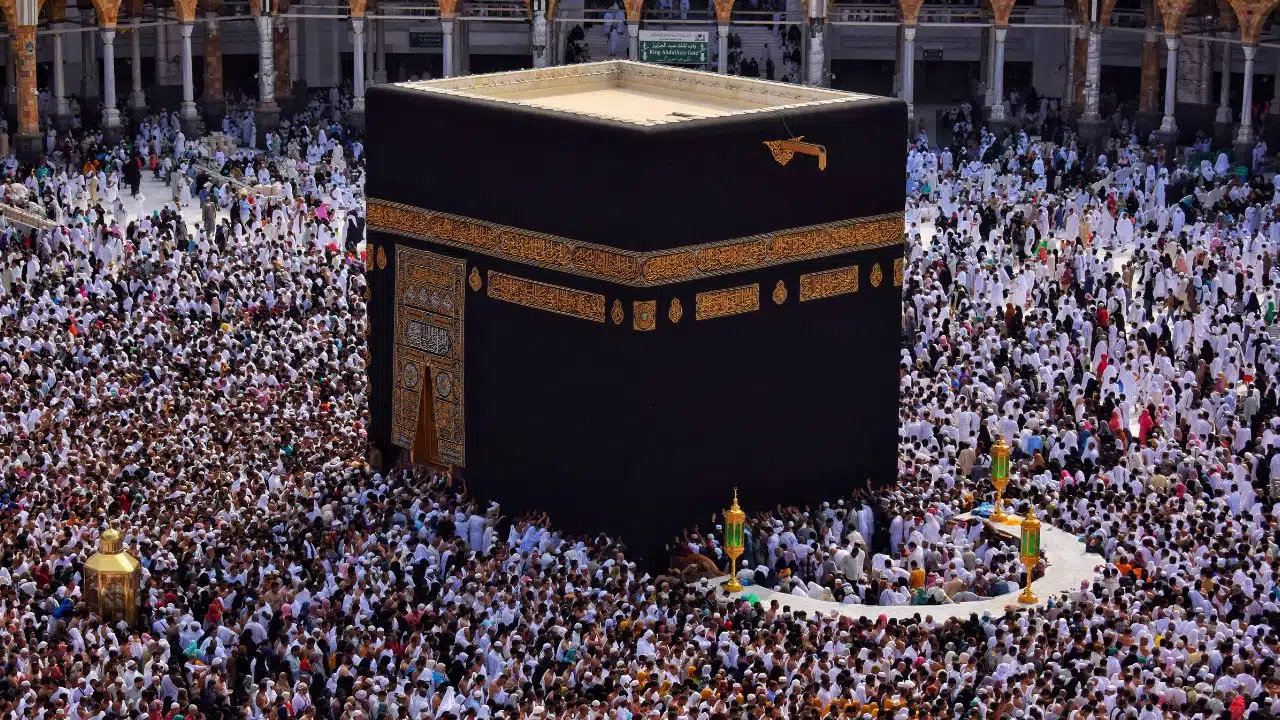
Every year, millions of Muslims from across the globe travel to Mecca in Saudi Arabia specifically to perform Hajj. One of Islam’s five pillars, it is a once-in-a-lifetime duty for every able-bodied Muslim who can afford the journey.
A person who completes a Hajj is referred to as a Hajji. It is a term that can also be used as an honorific title and is often prefixed to the person’s name.
If you are unsure as to the reverence and significance of this annual pilgrimage to Mecca, you just need to look at how many people actually perform Hajj every year. In 2025, the numbers are truly impressive. Keep on reading to find out more.
2025 Hajj Statistics
In 2025, Haji took place between the 4th and 9th June. This stretch of sacred days is linked to the 8th to the 13th of Dhul Hijjah. The last month in the Islamic lunar calendar. Hajj dates are not the same each year, as they follow the Islamic lunar cycle.”
According to the Saudi Ministry of Hajj and Umrah, more than 2 million pilgrims attended Hajj in 2025. This figure comprised both international pilgrims and Saudi residents. As the majority came from outside the Kingdom, it shows the true global nature of the pilgrimage.
Comparing Numbers with Previous Years
These figures for 2025 highlight a steady increase in comparison to the past few years.
For instance, during 2022, lingering COVID-19 restrictions meant that fewer than 1 million people were able to perform Haji. That number increased to about 1.8 million in 2023 and just under two million in 2024.
Now, with more than 2 million Muslim pilgrims completing the rituals in 2025, the event feels like it is back to normal levels of participation. This return of numbers illustrates just how important Muslims view the act of fulfilling their spiritual duty.
Saudi Arabia Hajj Quota System
As there are approximately 1.9 billion Muslims in the world, you might be wondering why only 2 million of them performed Haji in 2025. Well, the reason is that every country that sends pilgrims to Saudi Arabia is given a set number of spots.
This is known as the Saudi Arabia Hajj quota, and it is based on the Muslim population of each country. On average, it allows about 1,000 pilgrims per one million Muslims for any given nation.
This system is necessary as it helps Saudi Arabia manage the large crowds. It also ensures that people from all corners of the world get a chance to participate in the pilgrimage.
International Pilgrims in 2025
Out of the two million-plus pilgrims who took part in Haji in 2025, the majority were international pilgrims. Nationals from countries like Indonesia, Pakistan, India, and Bangladesh made up some of the biggest delegations. However, there were also many people from other Asian, African, European, and both North and South American countries in attendance.
The geographical diversity of attendees is always one of the most striking aspects of Hajj. In Mecca, you can meet people from every continent. All of whom are dressed in simple white garments and perform the same rituals side by side.
This unity is one of the major reasons why Hajj is considered such a powerful spiritual experience. It signifies equality, humility, and the shared faith of Muslims worldwide.
The Role of Crowd Management
Handling millions of people in a single city requires extraordinary planning. So, it is no surprise that Hajj crowd management is one of the most challenging tasks that Saudi authorities face each year.
The government always invests heavily in infrastructure, transport systems, and safety protocols to make sure the pilgrimage runs smoothly.
This includes organising special measures such as improved bus systems, expanded accommodation options, and using technology to monitor crowd flow. There are even digital apps that can guide pilgrims through rituals, schedules, and locations.
Hajj Capacity Limits
Mecca’s holy sites are massive. But there are still Hajj capacity limits that need to be enforced.
The Grand Mosque and surrounding areas can only hold so many people at once. That is why quotas are essential. It is also why some Muslims may wait years for their chance to perform Hajj.
The capacity is always carefully managed to strike the perfect balance between enabling as many people as possible to perform Haji without overcrowding to dangerous levels.
Umrah vs Hajj Numbers
You might be wondering how Hajj attendance compares with that of Umrah, which is a pilgrimage to Mecca that can be performed at any time of the year.
Unlike Hajj, Umrah is not mandatory. However, that doesn’t stop tens of millions of Muslims from visiting Saudi Arabia throughout the year to practice it.
This difference between Umrah vs Hajj numbers highlights how important the central Mecca site is to global Islamic life. Indeed, while Hajj may be the main event, Umrah shows the ongoing devotion of Muslims around the world.
Why the Numbers Matter
Documenting how many people perform Hajj in 2025 is much more significant than determining a statistic. Indeed, it demonstrates the scale and importance of the event.
With more than 2 million people making the journey, Hajj is one of the largest annual gatherings of humanity anywhere on Earth.
These numbers, and perhaps even more pointedly, the undocumented number of people who would like to go to Haji, also reflect the strength and devotion of Muslim communities around the world.
Despite the travel costs, high cost of living in their home countries, low wages, visa requirements, and long waiting lists, far more people miss out on Haji than make the pilgrimage every year.
The Spiritual Impact
Hajj has a profound spiritual impact on every individual pilgrim. Essentially, it is about faith, devotion, and the chance to fulfil a lifelong dream.
The act of performing Haji honours rituals that have been carried out for over 1,400 years. From circling the Kaaba to walking between Safa and Marwa, these acts connect today’s Muslims with past generations.
The sheer number of pilgrims that Haji attracts every year is a testament to the unity of the Muslim ummah and the true global significance of this act of worship.