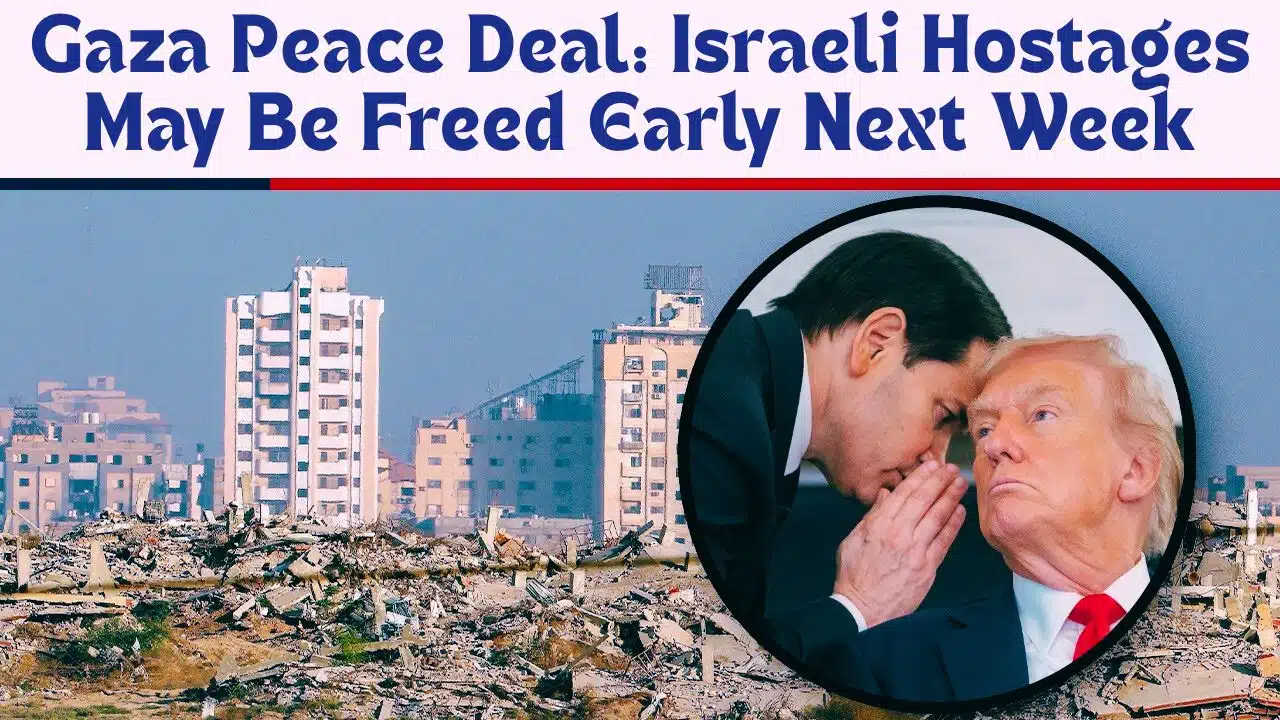
A potential breakthrough in the protracted Gaza conflict appears imminent, with intensive, high-stakes negotiations in Cairo pointing towards a landmark Gaza Peace Deal that could see an initial group of Israeli hostages freed as early as next week, according to senior Egyptian and Qatari diplomatic sources involved in the talks.
The framework, hammered out by mediators from Qatar, Egypt, and the United States, reportedly outlines a multi-phase truce, beginning with a six-week cessation of hostilities to facilitate the exchange of dozens of hostages for a significant number of Palestinian prisoners. While officials express cautious optimism, formidable obstacles surrounding the scope of a permanent ceasefire and the complete withdrawal of Israeli forces remain, threatening to derail the most promising diplomatic effort in months.
Key Facts: The Proposed Framework
- Initial Ceasefire: A six-week pause in all military operations in the Gaza Strip by both Israeli forces and Hamas.
- Hostage-Prisoner Exchange (Phase 1): Hamas would release an estimated 35-40 hostages, including all remaining women, children under 19, the elderly (over 50), and the medically infirm. In return, Israel would release several hundred Palestinian prisoners, with the exact ratio still under intense negotiation.
- Increased Humanitarian Aid: The deal mandates a dramatic surge in humanitarian assistance, with a target of over 500 trucks of food, fuel, and medical supplies entering Gaza daily, including to the hard-to-reach northern areas.
- Sticking Points: Hamas is demanding ironclad guarantees that the initial truce will lead to a permanent end to the war and a full Israeli Defense Forces (IDF) withdrawal. Israel’s government insists on reserving the right to resume operations to achieve its stated goal of dismantling Hamas’s military and governing capabilities.
- Future Phases: Subsequent phases would involve the release of male Israeli soldiers and the bodies of deceased hostages in exchange for more high-profile Palestinian prisoners and further steps toward reconstruction.
A Fragile Hope Forged in Cairo
After weeks of deadlock, diplomatic momentum surged following a trilateral meeting in Cairo on Wednesday, October 8, 2025, between CIA Director William Burns, Qatari Prime Minister Mohammed bin Abdulrahman Al-Thani, and Egyptian Intelligence Chief Abbas Kamel. Sources close to the negotiations, who spoke on the condition of anonymity, described the latest text as a “bridging proposal” that attempts to thread the needle between Hamas’s demand for a permanent ceasefire and Israel’s security imperatives. “Gaza truce talks intensify in Cairo as mediators push for breakthrough,”
The core of the current optimism lies in the structure of the deal. By front-loading the release of the most vulnerable civilian hostages and a massive increase in humanitarian aid, mediators hope to build trust and create an environment where discussions on a more permanent political solution can take place.
“The language has shifted from a ‘humanitarian pause’ to a ‘sustainable calm’ that leads to a permanent ceasefire,” a senior Western diplomat told the Associated Press. “It’s a constructive ambiguity that allows both sides to agree to the first phase while deferring the most intractable issue—the end game. “Mediators see ‘real progress’ on Gaza deal, hostage release,”
Latest Data & Statistics
The urgency of the talks is underscored by the stark figures that define the conflict and the humanitarian crisis.
- Remaining Hostages: As of October 9, 2025, the Israeli Prime Minister’s Office officially estimates that 105 hostages taken on October 7, 2023, remain captive in Gaza. This figure includes both living individuals and those presumed deceased whose bodies have not been recovered. The International Committee of the Red Cross (ICRC) has not independently verified the exact number but continues to call for immediate access to all captives.
- Palestinian Prisoners: The number of Palestinian prisoners to be released is a critical variable. Palestinian officials have reportedly submitted a list of approximately 3,000 prisoners, including some serving life sentences for attacks against Israelis. Israeli negotiators are said to be working from a smaller, vetted list. The final number in the first phase is expected to be between 600 and 800. “Inside the Gaza truce negotiations: The prisoner exchange,”
- Humanitarian Crisis: Prior to the renewed diplomatic push, the daily average of aid trucks entering Gaza in September 2025 was 148, according to the UN Office for the Coordination of Humanitarian Affairs (OCHA). The proposed deal aims to more than triple this to over 500 trucks daily, a level OCHA says is the bare minimum to begin addressing widespread malnutrition and the collapse of the healthcare system. “Gaza Humanitarian Update – Oct 8, 2025,”
Official Responses and Lingering Doubts
Publicly, all sides remain guarded. In a press briefing in Doha on Thursday, Qatar’s Ministry of Foreign Affairs spokesperson, Dr. Majed al-Ansari, urged caution.
“We are more optimistic today than we were last week, and we are working tirelessly to bridge the remaining gaps,” Dr. al-Ansari stated. “The talks are at a critical and sensitive stage. We hope to convey positive news in the coming days, but nothing is agreed until everything is agreed.” “Foreign Ministry Weekly Press Briefing,”
In Israel, Prime Minister Benjamin Netanyahu faces immense pressure from two opposing directions. The Hostages and Missing Families Forum has intensified its protests, demanding the government prioritize the return of their loved ones above all else. “This is a moment of truth. We call on the Prime Minister to show courage and make the deal,” a spokesperson for the families said during a rally in Tel Aviv.
Conversely, far-right members of Netanyahu’s coalition have threatened to collapse the government if the deal includes what they deem excessive concessions, such as a full IDF withdrawal or the release of prisoners with “blood on their hands.”
Hamas has not issued a formal response to the latest proposal but has reiterated through its media channels that its fundamental demand for a complete end to the “Israeli aggression” and a lifting of the Gaza blockade remains non-negotiable.
What to Watch Next
The next 72 hours are critical. The Israeli war cabinet is expected to convene over the weekend to deliberate on the final terms of the proposal. Simultaneously, Hamas’s leadership is consulting with its political and military wings, as well as with other factions in Gaza.
Diplomatic sources indicate that if both parties give their assent by Sunday evening, the implementation could begin within 24 to 48 hours, with the first hostage release potentially occurring on Tuesday, October 14, 2025. This would involve complex logistics coordinated by the ICRC and Egyptian authorities at the Rafah crossing.
However, analysts warn that the deal’s structure, which postpones the most difficult questions, leaves it vulnerable to collapse. “This is a framework for a truce, not a framework for peace,” said Dr. Hassan Khreisheh, a political analyst at the Carnegie Middle East Center. “The fundamental conflict of objectives is unresolved. The risk is that after six weeks, if there’s no clear path forward, the fighting could resume with even greater intensity.”
For now, the families of the hostages and the besieged civilians of Gaza are holding their breath, clinging to the fragile hope that this time, diplomacy will prevail.