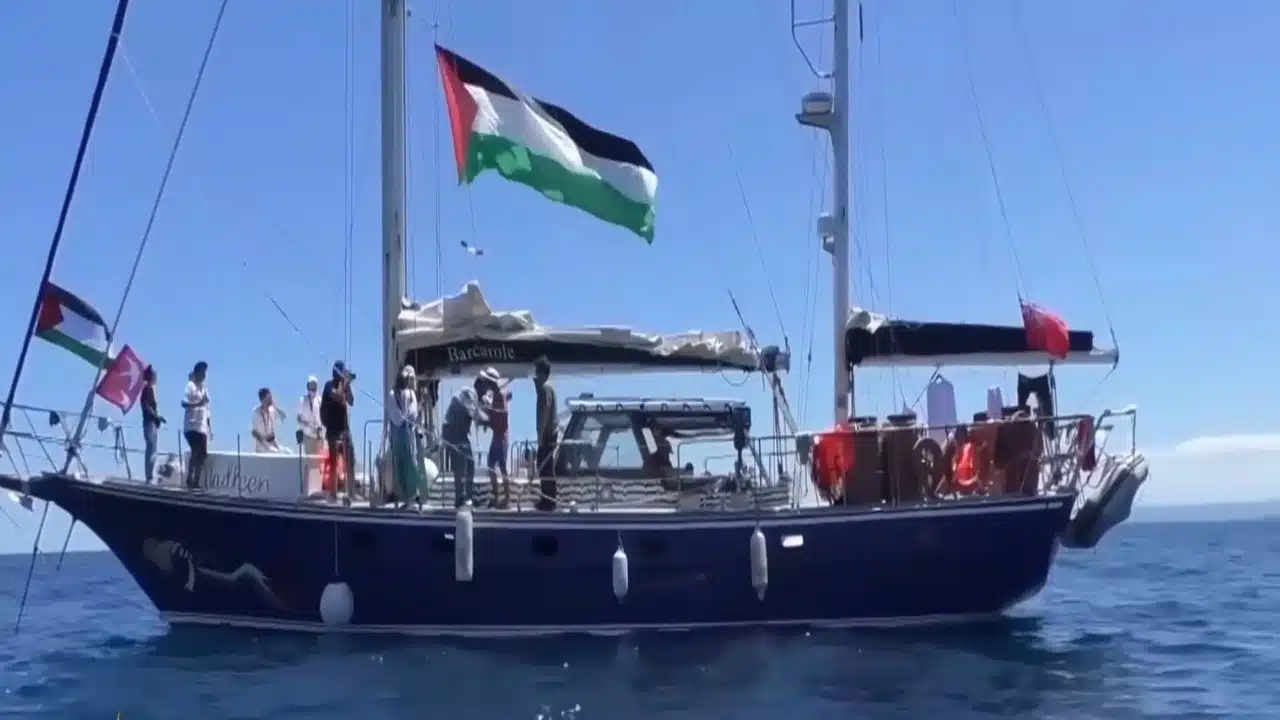
International condemnation and widespread protests have erupted across major world cities after Israeli naval forces intercepted a large international aid flotilla bound for Gaza on Wednesday, detaining hundreds of activists, including high-profile Swedish climate campaigner Greta Thunberg. The flotilla, aimed at breaking Israel’s long-standing blockade, was halted in international waters, sparking a diplomatic firestorm.
The “Global Sumud Flotilla,” comprising over 40 vessels, was intercepted approximately 70 nautical miles off the coast of the besieged Palestinian territory late Wednesday, October 1, 2025. Israeli authorities confirmed the operation, stating the vessels were “safely stopped” and passengers were being transferred to the Israeli port of Ashdod for processing and deportation. The Israeli Foreign Ministry released a video showing a seated Thunberg on the deck of a vessel surrounded by soldiers, stating she and her “friends are safe and healthy.” (Source: Reuters, The Guardian).
The interception has triggered a furious backlash, with spontaneous demonstrations emerging in cities from Rome and Barcelona to Istanbul and Bogotá. Protesters are demanding the immediate release of the activists and an end to the 18-year blockade on the Gaza Strip, where a humanitarian crisis, including famine, has been declared by the United Nations.
Key Facts / Quick Take
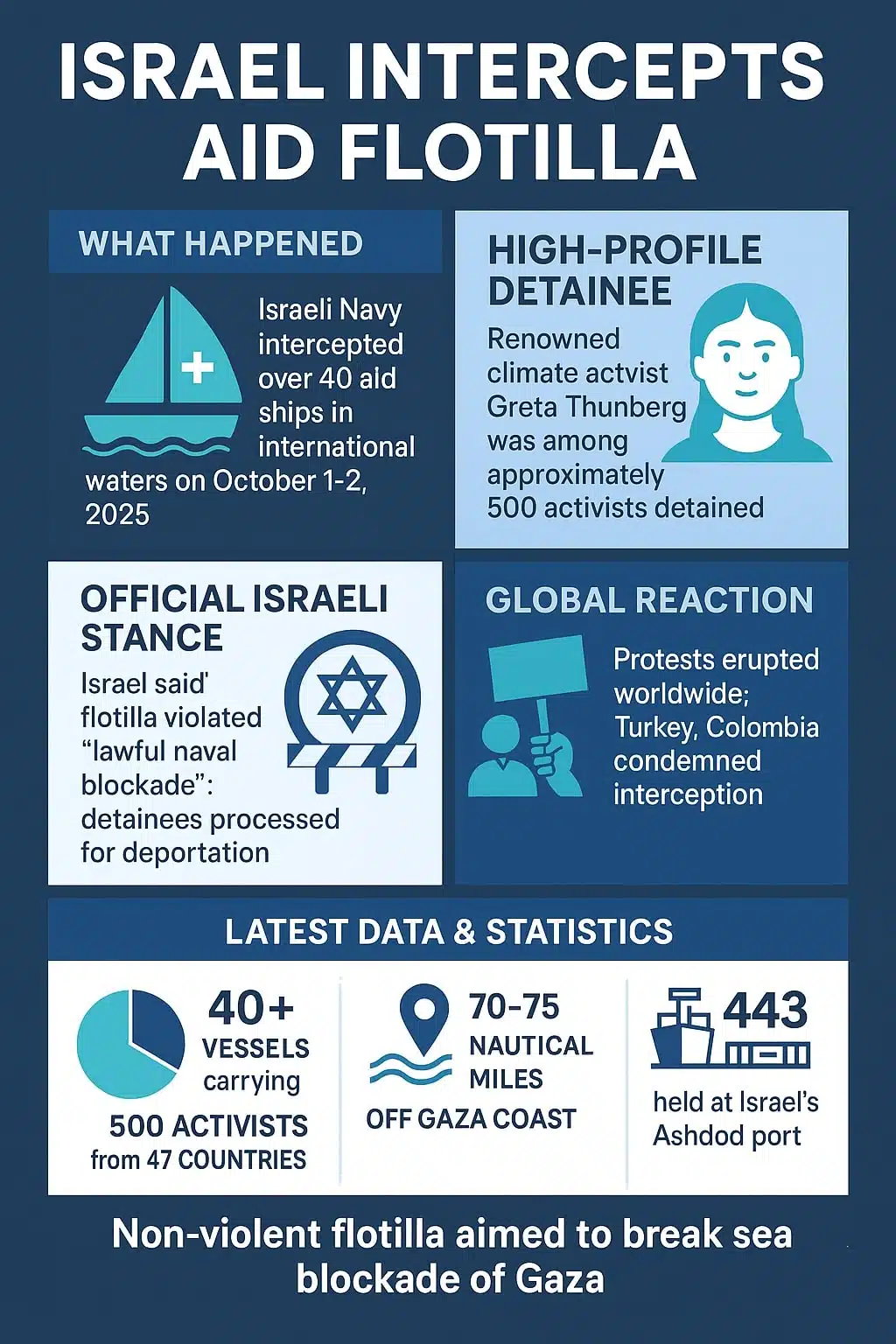
- What Happened: The Israeli Navy intercepted the “Global Sumud Flotilla” of over 40 aid ships in international waters on October 1-2, 2025.
- High-Profile Detainee: Renowned climate activist Greta Thunberg was among the approximately 500 activists from 47 countries detained. Other notable participants include Nelson Mandela’s grandson, Mandla Mandela.
- Official Israeli Stance: Israel stated the flotilla violated a “lawful naval blockade” in an “active combat zone” and offered to transfer aid via established channels. Detainees are being processed for deportation. (Source: Israel Foreign Ministry).
- Global Reaction: Protests have broken out in dozens of cities worldwide. Turkey has labeled the interception an “act of terror,” and Colombia has moved to expel Israeli diplomats. European nations are seeking consular access.
- Flotilla’s Goal: Organizers said the mission was a non-violent attempt to deliver essential food and medicine and to politically break the sea blockade which they and the UN deem a violation of international law.
- Humanitarian Context: The action comes as the UN warns of widespread famine and a catastrophic humanitarian situation in Gaza following nearly two years of intense conflict.
The Interception at Sea
The “Global Sumud Flotilla,” which translates to “Steadfastness,” set sail from Barcelona, Spain, a month prior, gathering more vessels along its Mediterranean journey. Onboard were parliamentarians, lawyers, doctors, and activists aiming to challenge the sea blockade Israel has imposed on Gaza since 2007, citing security concerns to prevent weapons from reaching Hamas.
According to flotilla organizers and live streams before communications were cut, Israeli naval ships surrounded the activist vessels on Wednesday evening. Activists reported the use of high-pressure water cannons and stun grenades dropped from drones to intimidate them before commandos boarded the ships. (Source: Al Jazeera, Sky News).
In a pre-recorded video message posted to her social media shortly before the interception, Thunberg stated, “My name is Greta Thunberg. I am onboard the ship Alma. We are about to be intercepted by Israel. Our mission is a non-violent humanitarian cause.” (Source: The Guardian).
The Israeli Foreign Ministry confirmed the interception in a post on X (formerly Twitter), stating: “Already several vessels of the Hamas-Sumud flotilla have been safely stopped and their passengers are being transferred to an Israeli port.”
Latest Data & Statistics
- Flotilla Size: The convoy consisted of over 40 vessels (down from an initial 50 due to technical issues) carrying approximately 500 activists from 47 different countries. (Source: Associated Press, October 2, 2025).
- Interception Location: The Israeli Navy boarded the vessels approximately 70-75 nautical miles off the Gaza coast, placing the incident squarely in international waters. (Source: The Guardian, October 2, 2025).
- Detainees: An estimated 443 participants were detained and are being processed at Israel’s Ashdod port, with deportation procedures expected to begin. (Source: Flotilla organizers statement, cited by Washington Post, October 2, 2025).
Official Responses & Global Condemnation
The reaction to the interception has been swift and severe from several nations and international bodies.
- Turkey: The Turkish Foreign Ministry condemned the Israeli action as an “act of terror” that endangered civilian lives and constituted a grave breach of international law. (Source: India Today).
- Colombia: President Gustavo Petro announced his government would expel Israel’s diplomatic delegation and terminate a free trade agreement. He called the detentions a potential “new international crime” by the Israeli government. (Source: Times of India).
- Spain: Deputy Prime Minister Yolanda Díaz described the raid as “a crime against international law” and called for the European Union to sever diplomatic relations with Israel immediately.
- United Kingdom: A Foreign Office spokesperson stated the government was “very concerned” and had communicated to Israel that the situation must be resolved safely.
“This attack by the Israeli government against civilians sailing in international waters has once again shown the madness of its genocidal leaders trying hide their crimes against humanity in Gaza,” Turkish President Recep Tayyip Erdoğan said in a speech to his party. (Sourced from The Guardian).
Expert Analysis: A Breach of International Law?
Legal experts are weighing in on the legality of Israel’s actions. Many argue that boarding vessels in international waters constitutes a violation of the law of the sea, which guarantees freedom of navigation.
Israel maintains its naval blockade is legal and necessary for its security. However, the United Nations has repeatedly condemned the blockade as a form of “collective punishment” against the Palestinian population and a violation of international humanitarian law. The interception of a humanitarian mission with such a high-profile figure as Greta Thunberg is seen by analysts as a calculated risk by Israel, likely anticipating the international fallout but prioritizing the enforcement of its blockade.
Impact on People: Protests Ignite Globally
Within hours of the news, solidarity protests were organized in dozens of cities. In Rome, thousands marched, leading Italian unions to call for a general strike on Friday. Clashes between protestors and police were reported in Barcelona, where demonstrators tried to overcome barriers. Large-scale demonstrations were also seen in Brussels, Athens, Istanbul, Buenos Aires, and Kuala Lumpur.
“I am worried sick for my daughter, but I am so proud of her and of what she’s doing,” said Miriam McNally in Dublin, whose daughter was on one of the intercepted ships. “She is standing up for humanity in the face of grave danger.” (Source: Times of India).
What to Watch Next
The immediate focus will be on the legal process for the detained activists in Israel. Consular officials from multiple countries are attempting to gain access to their citizens. The incident is likely to be raised at the United Nations Security Council, with several nations calling for an emergency session. The long-term diplomatic fallout, particularly between Israel and countries like Turkey, Spain, and Colombia, will be a significant development to monitor. The fate of the humanitarian aid carried by the flotilla also remains uncertain.
Israel’s interception of the Gaza aid flotilla and the detention of Greta Thunberg has transformed a regional policy into a global flashpoint. While Israel asserts its right to maintain a security blockade, its actions in international waters have galvanized pro-Palestinian activists and drawn sharp rebukes from the international community. The resulting protests demonstrate a deep well of global frustration over the ongoing humanitarian crisis in Gaza and the perceived inaction of world governments. The coming days will be critical in determining the diplomatic and legal consequences of this high-stakes confrontation at sea.