You want choices that change a game long after you make them. Many players see small, flashy choices, then watch the story snap back to the same path, and that feels hollow, especially in interactive storytelling, and after a few hours, the stakes fade.
This post lists games that keep those stakes alive. The witcher 3: wild hunt and detroit: become human show how choices shape characters and the map, life is strange and the walking dead raise the emotional cost, and fallout: new vegas lets you change entire factions and endings.
I will point to ten titles, give quick examples, and show what to watch for in future playthroughs. Read on.
Key Takeaways
- The Witcher 3 (CD Projekt Red, May 19, 2015) sold 60 million copies, Shacknews reported May 28, 2025, and choices alter characters and towns.
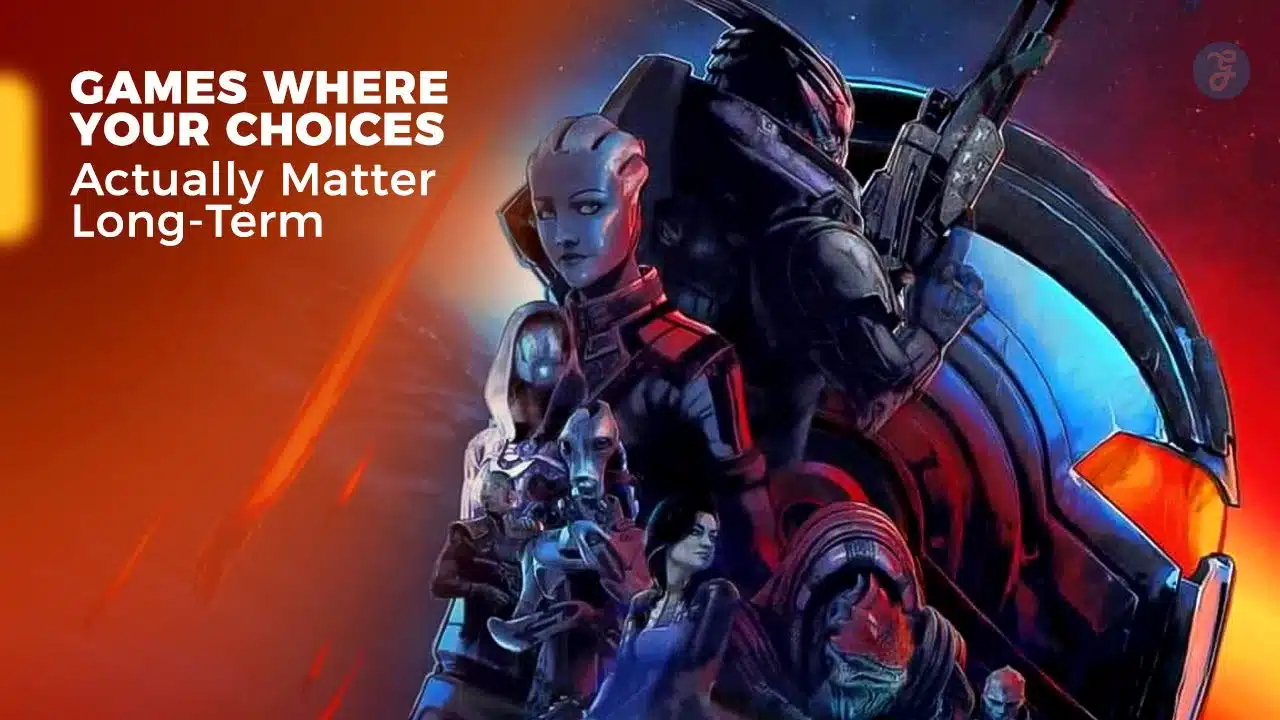
- Mass Effect Legendary Edition lets you import saves so early decisions, like saving Wrex, shape allies, civilizations, and trilogy endings.
- Detroit: Become Human uses branching narrative and motion capture to change android fates, while Life Is Strange (2015, Square Enix) uses rewind to alter relationships.
- Fallout: New Vegas forces faction alignment—NCR, Caesar’s Legion, Mr. House, or Yes Man—each yielding one of four major endings and map changes.
- Until Dawn (Aug 25, 2015) uses butterfly-effect choices that decide who lives, and Dragon Age: Origins (BioWare) ties companion loyalty to world outcomes.
The Witcher 3: Wild Hunt – Impact on Characters and World
The Witcher 3: Wild Hunt launched on May 19, 2015. CD Projekt Red developed the game, and CD Projekt published it. Shacknews reported the title sold 60 million copies as of May 28, 2025.
Critics praise how choices change the world, and shift the fate of NPCs and companions.
Player choices drive multiple possible endings, and they alter quests, towns, and who survives. Major decisions affect key characters like Ciri, and they shape relationships with allies.
The dialogue wheel and quest outcomes lock in world changes, so your saves feel weighty. Fans cite CD Projekt’s title, alongside interactive storytelling hits like Telltale games, Life Is Strange, and Detroit: Become Human, as a benchmark for game endings that stick.
That design puts player agency at the center, and it ties into companion quests and long-term consequences.
Mass Effect Series – Decisions That Shape the Galaxy
Choices in one game can ripple across the three titles in the trilogy. Mass Effect Legendary Edition lets you import a save, and that import changes events, allies, and entire civilizations.
Commander Shepard faces tests that decide who lives, who dies, and what species survive. A saved Wrex can unite the Krogan, while a dead Wrex shifts war odds in later missions. Decisions on the Citadel, or with Cerberus, can alter seats on the Galactic Council, and tilt who fights the Reapers.
The machine collective and the Quarians face war, peace, or exile, depending on a single early choice. Importing a save ties your past actions to new dialogue, new scenes, and new endings.
Many companions react differently across the three entries, Garrus, Liara, and Tali each change, and that change alters combat and story beats. The game uses a dialogue wheel, a companion system, and save import tools to bind your choices to later moments.
Fans of interactive storytelling and narrative-driven games, from telltale games to Life Is Strange, Detroit: Become Human, and Dragon Age: Origins, will spot how early choices echo into the final fight.
Detroit: Become Human – Branching Storylines and Consequences
Detroit: Become Human puts branching storylines front and center. Every big decision can change which androids live, and which plot threads progress to new scenes. Its interactive storytelling, like telltale games and other narrative-driven games such as Heavy Rain, hits harder, and it makes you squirm in a good way.
The developer studio used motion capture to sell emotion, it turns small beats into heavy moments.
Every significant choice can lead to different paths, and those paths end in multiple endings. The game presses on moral and emotional consequences, and that pushes players to care.
Player agency shows up in small scenes, and it can change not just one character, but the whole city and its future.
Life Is Strange – Emotional Choices with Lasting Effects
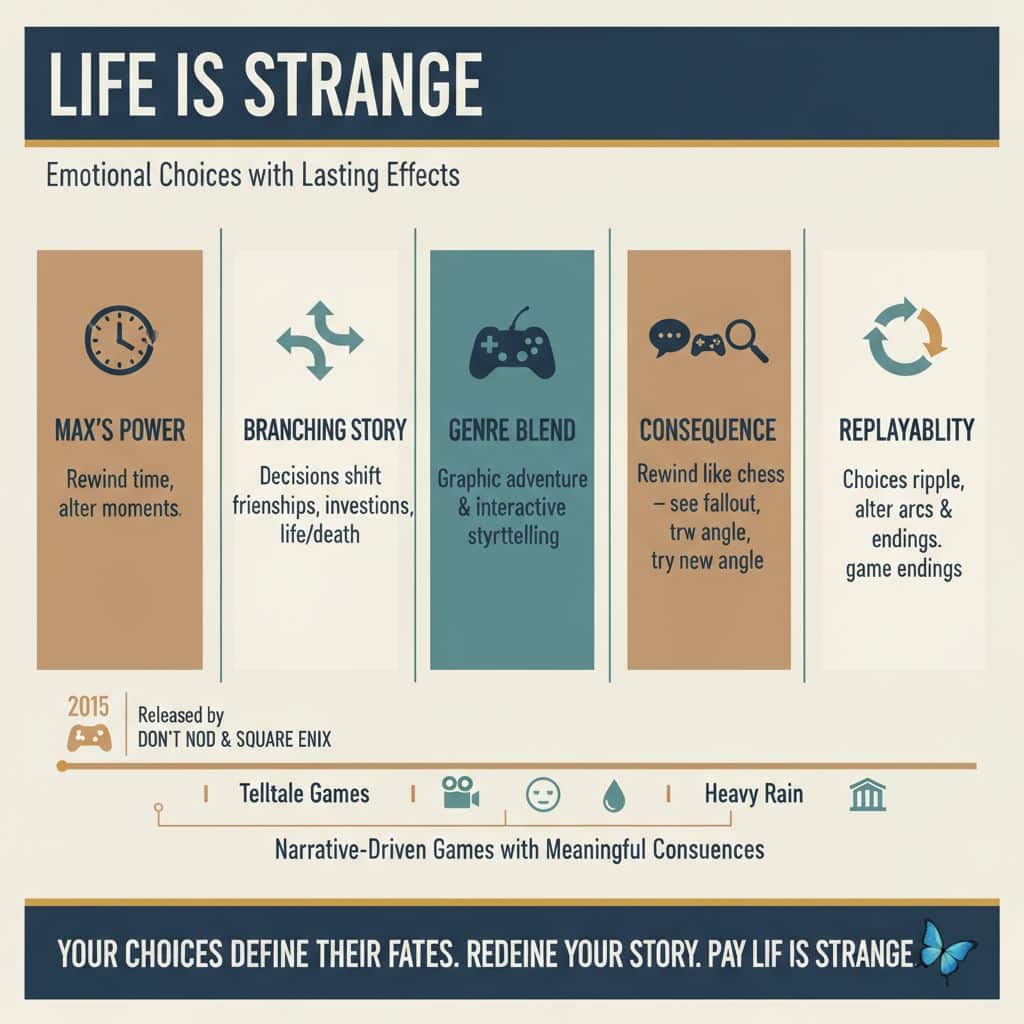
Max Caulfield wields a rewind power, so choices feel heavy and immediate. The five episode arc, released in 2015 by the developer and Square Enix, places players in tense, small town scenes.
Each decision can shift friendships, alter investigations, and change who lives or dies. The title sits alongside telltale games, Detroit: Become Human, and Heavy Rain as a standout narrative-driven game that blends graphic adventure and interactive storytelling.
The game uses the rewind mechanic like a chess move, you see the fallout, then try a new angle.
Choices ripple across episodes, they alter character arcs and final scenes. That replayability pushes players to test different routes, and Life Is Strange delivers alternate game endings.
Fans name it as a prime example of narrative-driven adventures with meaningful consequences. You will debate, laugh, and cry over a split second call, then reload an episode to see how Chloe Price fares.
Fallout: New Vegas – Faction Alignments and World Outcomes
Choices in New Vegas pivot on faction alignments, and those alliances shape the game’s end. You can join the New California Republic, back Caesar’s Legion, side with the robotic magnate Mr.
House, or go independent with the proxy AI, Yes Man. Each path yields one of four major endings, and each shift changes the balance of power across the Mojave and at Hoover Dam. Gameplay uses quests, companions, and perks to push you toward those forks, and those systems make choices feel heavy and real.
The title sits in the fallout series, it follows Fallout III’s open world, and it pushes branching storylines harder than many other RPGs.
NCR control brings order, but it can sap local freedom, and Caesar’s Legion rules with strict, brutal law. Mr. House offers stability, modern tech, and corporate rule, while the independent route gives the player the final say.
Those outcomes alter towns, who holds resources, and which NPCs live or die. Modders use the Garden of Eden Creation Kit to add endings and tweak faction flags. The game invites multiple playthroughs, you can see all four endings and test different moral paths.
Fans and critics cite New Vegas as a high mark for interactive storytelling. It stands beside Detroit: Become Human and Life Is Strange for narrative weight. Unlike Telltale Games point-and-click adventure games, New Vegas blends RPG mechanics with choices that change the map.
Until Dawn – Survival Based on Player Decisions
Until Dawn uses a butterfly effect system, so tiny acts change the plot. The game launched on August 25, 2015. Player decisions decide who lives and who dies, which makes game endings hit hard.
Horror setting cranks the fear up, and QTEs plus timed prompts force split second calls. Each playthrough can end with a different mix of survivors, which boosts replay value. Fans of interactive storytelling, from Heavy Rain to Detroit: Become Human, and fans of telltale games or point-and-click adventures will spot familiar, tense beats.
Dragon Age: Origins – Relationships and World-Altering Choices
Choices in Origins shape who lives, who dies, and who wears the crown. Dragon Age: Origins ties companion loyalty to major world events, and your dialogue choices push storylines down different branches.
You will see multiple endings, each one shaped by your actions, making this tactical rpg a standout in interactive storytelling.
A rival can claim the throne, allies can fall, and the kingdom can change hands. Companions react to gifts and insults, their loyalty can open or close whole quest lines, and some characters will only survive if you act right.
BioWare built a narrative-driven game that rewards careful play, fans of ttrpgs, bg2, or bg3 feel the weight of each decision.
Takeaways
These ten games prove choices echo across hours, days, even whole playthroughs. Players feel the weight in interactive storytelling, from telltale games to massive RPGs like the monster-hunting saga The Witcher 3.
Detroit: Become Human and Life Is Strange turn tiny moments into huge shifts in game endings and bonds. Pick a side in Fallout: New Vegas, save or lose companions in Dragon Age: Origins, and watch small acts change the whole map in Until Dawn.
FAQs on Games Where Your Choices Actually Matter Long-Term
1. What kinds of games make choices matter long-term?
Narrative-driven games and interactive storytelling do. Telltale games showed how small acts can ripple out. JRPGs can lock paths, change who lives, and alter the world. These games track your steps, like a trail of crumbs.
2. Which titles on the list actually change your story?
detroit: become human gives you lots of branches, and lots of guilt. life is strange ties choices to feelings, and to later events. heavy rain turns one choice into a chain, it hits hard. i was a teenage exocolonist stacks choices, and it keeps the consequences.
3. Do my choices change game endings, or big characters like Batman and the Joker?
Yes, game endings shift with your moves. In batman: the enemy within, the caped crusader faces moral forks, and the joker reacts, coldly or wildly. Choices can reshape Gotham. In gta v., or grand theft auto v, choices affect missions and who trusts you, even if the main plot moves on.
4. Can choices change companions, kingdoms, or time itself?
They can, and often they do. In dragon age: origins your companions judge you, and quests split. In dragon age: the veilguard choices shape war and fate. king’s quest changes your path, catherine: full body tests love and consequence, and chrono trigger jumps timelines, so one slip can alter eras.
5. How do I play so my choices matter, and can I replay to see other paths?
Think ahead, save often, talk to characters, and follow clues in the text. Use interactive storytelling cues, and replay chapters to see different game endings. Try telltale games for clear forks, or jump into a JRPG to watch slow, steady change.