Have you ever typed a question into Google and felt like the results missed the point? Or maybe you spent hours picking the perfect keywords for your website, only to watch your page slip down the rankings anyway. You are definitely not the only one feeling this. Search engines are getting smarter every day. They are changing how they understand what we really want.
Here is a fact for you. Search engines like Google now use AI to look at meaning, context, and even the way we speak naturally. They do not just look for single words on a page anymore. This guide breaks down exactly how the Future of Keywords in AI-driven Search changes SEO. I will show you how to reach the readers who matter most.
Ready to see if keywords still pull their weight? Let’s get started.
The Evolution of Keywords in Search
Back in the day, search engines were simple matching machines. If you typed a word, they looked for that exact word. Now, they read between the lines and understand context better than we often expect.
From Exact Matches to Semantic Context
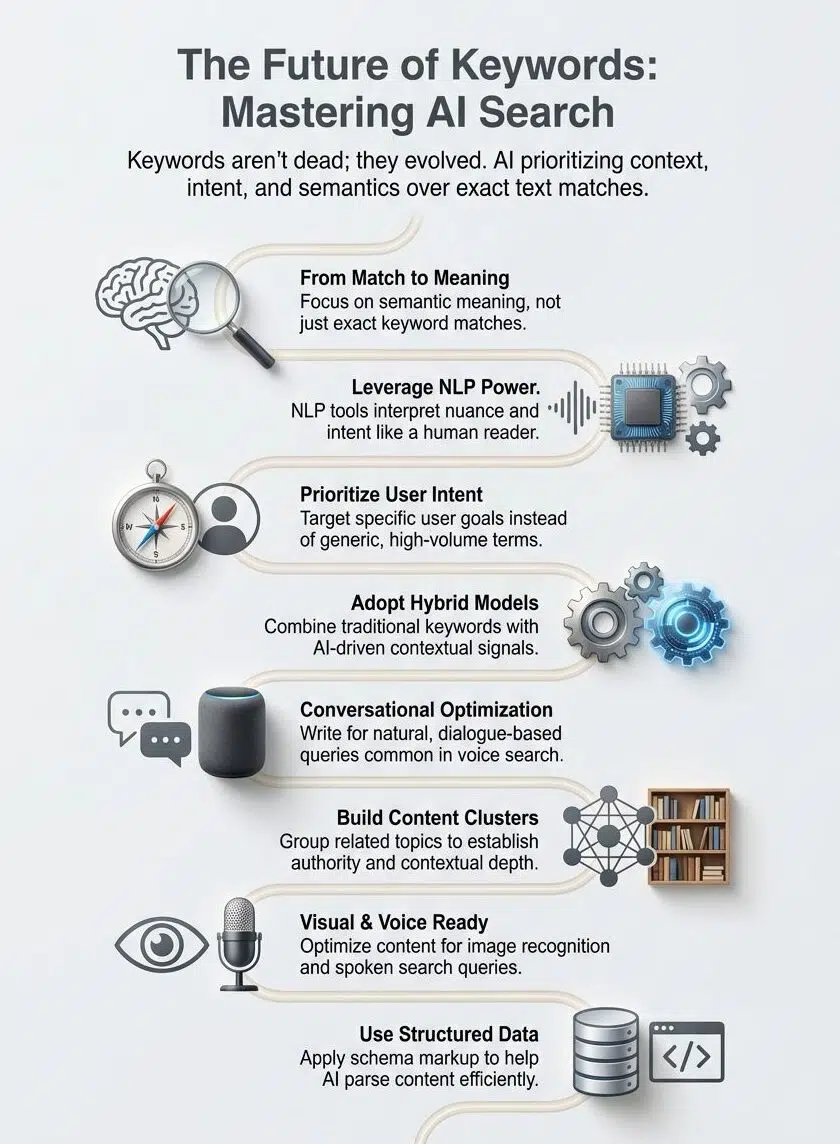
Search engines used to focus entirely on exact keyword matches. Users had to type the specific words found in the content, or their search would fail. Today, things have changed fast thanks to AI and Natural Language Processing.
Google’s Hummingbird update in 2013 marked the first big shift toward meaning over exact phrases. But recent advancements have taken this much further.
Now, search algorithms look at context and user intent. They understand that “kids’ shoes” and “children’s sneakers” mean the same thing. Content quality matters more than just filling pages with specific terms. Websites see better results if they match topics and entities, instead of just single terms, for SEO success.
The Rise of Natural Language Processing (NLP)
Natural Language Processing, or NLP, lets computers understand how people really talk. Machines now look past keywords and focus on the meaning in sentences. Google rolled out its BERT model in 2019, and newer models like MUM (Multitask Unified Model) are even more powerful.
These tools read search queries almost like a human does. They use deep learning to spot small details that change what words mean.
- Understanding Nuance: NLP helps AI match results with user intent. If you type “best place to eat near me,” the system knows you want restaurant reviews close by, not random food facts from another country.
- Connecting the Dots: It links concepts together. If you search for “fix a flat,” it knows you need tire repair steps, even if you don’t use the word “tire.”
- Handling Complexity: Newer models can handle multi-step questions, like “places to hike with kids that have parking.”
As NLP gets smarter every year, it shapes how search engines pick high-quality content for users’ needs.
Computers are now listening more closely than ever before.
Next, see how this shift influences SEO strategies and keyword research moving forward.
How AI is Changing the Role of Keywords
AI reads more than just words. It tries to grasp what people really mean. The game is shifting, and old keyword tricks are starting to feel like relics from the Stone Age.
AI-Driven Semantic Search
AI-driven semantic search looks deeper than just matching text. Search engines use tools like NLP and machine learning to study how people talk, not just what they type.
For example, if someone searches “best place for Italian food,” the engine guesses you want restaurant tips nearby instead of recipes or historical facts. It finds meaning in questions and matches them with relevant content.
Google’s BERT update in 2019 showed this big leap. Now, AI links user intent with high-quality content using more than keywords alone. That means websites need clear answers, natural language, and good structure to shine in search results today. Context matters as much as keywords do now. Sometimes it matters even more.
Contextual Understanding in AI Search Engines
AI search engines learn fast. They study billions of searches every day. Google alone processes over 8.5 billion queries daily. This puts their AI to work around the clock.
Today, machines grasp keywords plus whole ideas and situations. You type in “best pizza near me at midnight,” and the results show late-night options that actually deliver. It ignores places that closed at 10 PM.
This is possible through semantic search and natural language processing tools like BERT and Gemini. Search engines look for patterns in words. They link them to meaning and intent instead of matching a single phrase. This change helps users find what matters most. They get fast answers that fit real needs right now.
The Shift from Keywords to User Intent
Contextual understanding in AI search engines has become sharper, but there is a bigger change at play. Search now looks past keywords and aims to grasp what users actually want.
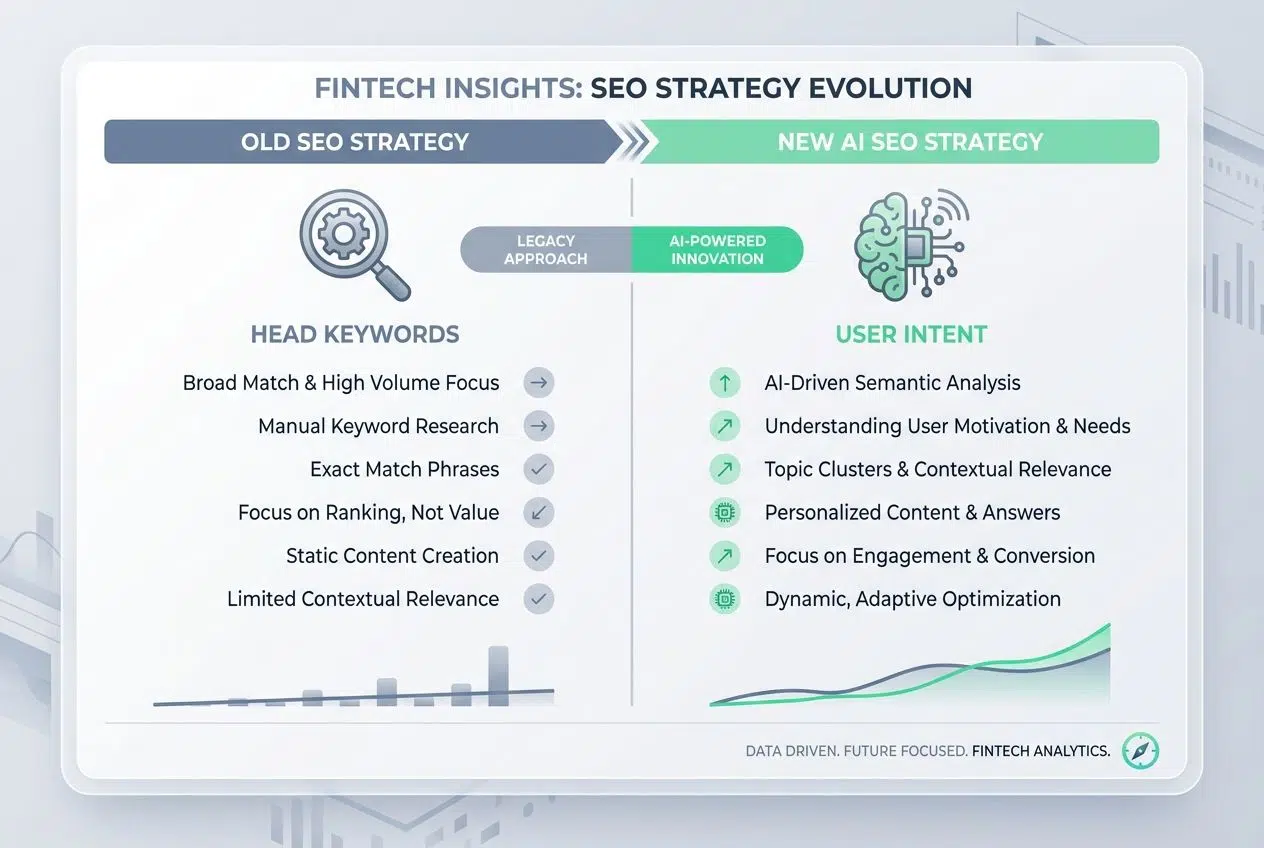
| Old SEO Strategy | New AI SEO Strategy |
|---|---|
| Focus on “Head Keywords” (e.g., “Shoes”) | Focus on “User Intent” (e.g., “Best running shoes for flat feet”) |
| Repeating the exact keyword 5-10 times | Using natural variations and related topics |
| Writing for the search bot | Writing for the human reader |
Newer systems powered by Natural Language Processing focus more on user intent than single terms. For example, if someone types “best shoes,” Google tries to guess whether they want reviews, shopping sites, or local stores.
SEO professionals must think less about forcing exact phrases. Context matters more now in digital marketing and Search Engine Optimization strategies. Brands that predict why people are searching stand out higher in results because content relevance rises above just keyword use.
The Role of Large Language Models (LLMs)
Large Language Models act like smart helpers. They read between the lines and spot what people really want. Search feels more like a conversation now. It is not just about matching words anymore.
Personalized and Context-Aware Search Results
AI search engines now use more than just keywords. They look at your location, past searches, and what you like to read. For example, a kid searching for “cats” may see cute animal videos. A veterinarian may see medical articles about cat allergies. Search Engine Optimization teams spot these patterns using AI-driven tools.
Semantic search brings deeper meaning into play. It connects words in your question with the reason you ask it. Your intent matters most now. This means two people can type the same thing but get totally different answers based on context and personal habits.
Brands fine-tune content strategies to meet each person’s needs. They do not just match popular keyword lists from years ago.
Predictive Search Trends with AI
AI looks at what people search for every day. It studies billions of words and clicks to spot market demand before anyone else does. Google, Amazon, and Bing all use AI for this type of prediction. In 2024, platforms like ChatGPT showed how fast AI can shape digital marketing trends by guessing hot topics based on user intent.
Search engines now guess what you need even if you do not say it right out loud. They read your habits, times of visit, and even tiny hints in your searches.
SEO experts watch these patterns to create content that matches future queries instead of just old ones. This change makes keyword research feel a bit like forecasting the weather, but with more data.
Do Keywords Still Matter in the Age of AI?
Sure, AI is rewriting the rules. But keywords are still in the huddle. They just wear a different jersey now, and they play for team context.
Keywords as a Foundation for AI Optimization
Keywords guide AI like a compass. Search engines still need words to link content and user intent. Machines learn which terms matter most, so selecting strong keywords powers better results.
Tools track what people search for every day. In fact, 15 percent of Google’s searches are new each day. That means choosing popular and meaningful phrases can help boost your spot in the rankings.
AI-driven search uses keywords as clues, but it digs deeper with context too. Think of classic SEO tactics meeting high-tech methods like semantic search or NLP.
Today, mixing different keyword types helps machines find pages that fit complex questions from real users. A good mix supports both classic ranking factors and modern digital marketing strategies alike.
The Emergence of Hybrid Search Models
Hybrid search models mix old and new ways of searching. They use both keywords and smart AI, like Large Language Models, to find answers. These systems look at exact words, but they also learn context and intent from user queries.
Google and Bing have blended classic ranking factors with semantic search tools since 2022. Users can type a question or speak it. The system understands both.
- Flexibility: People want fast results that match their needs, even if they do not use perfect words.
- Precision: Hybrid models meet this demand by linking keyword research with deep learning tools in SEO.
- Adaptability: This combo shapes content strategies fit for voice search, image questions, or long conversational phrases.
Now is the time to see how digital marketing fits into a world where people talk to machines more than ever before.
The Future of Search Beyond Keywords
Searching will soon feel like chatting with a friend. It won’t feel like typing words in a box. Get ready for search tools that understand context and meaning better than ever before.
Conversational and Dialogue-Based Queries
Kids talking on a playground ask each other questions, not keywords. AI search now acts more like those kids. It listens to longer, natural queries and responds in full sentences. It even follows up if you want more info.
You might say, “What’s the tallest building in Chicago?” The engine won’t just spot the word “Chicago.” It understands you want facts about skyscrapers.
You can talk to voice assistants using simple phrases, too. No fancy words are needed. By picking up context, these smart tools answer as if they know your story already. This shift lets users chat with technology instead of just typing lists of terms into boxes.
As this style leads SEO pros to rethink strategies, content clusters, and topic relevance step further into the spotlight next.
Emphasis on Content Clusters and Contextual Relevance
Search engines now value groups of related topics, called content clusters. These clusters help search engines understand your main topic better. Instead of filling pages with one keyword, smart marketers create several helpful posts around a big idea. This method shows the depth and clarity of your digital marketing plan.
Context matters more than ever before in SEO and AI-driven search. Google’s algorithms look for meaning behind words, not just exact matches. Pages that answer different user intents using relevant terms tend to rank higher in modern semantic search models.
Voice assistants like Siri or Alexa rely on this context to give users clear results from clusters.
Integration of Visual and Voice Search
Visual search lets people use images to find information. Point your phone at a pair of shoes, and AI can show you where to buy them in seconds. Google Lens handles over 12 billion visual searches every month, according to recent reports. Users no longer need perfect keywords. They just snap a photo or scan an object instead.
Voice search makes life easy for busy hands and quick minds. Over half of smartphone users speak their questions aloud now, using tools like Siri or Alexa. Natural language processing helps these systems understand what you mean, not just what you say word for word.
People ask full questions, chat with their devices, and skip typing altogether. Both trends shape content strategy today. Up next is how brands prepare by investing in structured data and smart markup so AI connects the dots even faster.
Preparing for the Future of AI Search
Ready to make your site stand out in the crowd? Get ahead of the curve and discover how smart tools can help keep you on top.
Investing in Structured Data and Schema Markup
Structured data is like a secret language for search engines. Schema markup makes your content clearer and more useful to AI systems. Here is why it is essential:

- Faster Reading: Search engines love structured data because it helps them read your site faster and smarter.
- Featured Snippets: Adding schema boosts your chances of getting featured snippets in Google results. Answers show up right at the top.
- Local Visibility: Local businesses can stand out with local schema. It shows hours, addresses, and phone numbers directly in search results.
- Visual Trust: Review and rating schema make star ratings pop up next to listings. This adds trust for users looking for quality.
- Event Promotion: Event schema tells search engines about upcoming activities or sales.
- Shopping Ease: Product schema lets shoppers see prices, availability, or even if something is on sale, straight from the search page.
- Clear Signals: Proper use of structured data improves SEO by giving clear signals about what your pages cover. Engines know just what to rank you for.
- Voice Readiness: Voice search uses this information to pull quick answers from sites with well-marked content. Smart websites get picked first.
In 2023, Google reported that sites using proper schema saw a 30% jump in click-through rates on average. This is a huge boost for traffic-hungry brands.
Investing in structured data now means staying ahead as AI-driven search grows sharper every year. It is like planting seeds before spring comes along.
Leveraging AI-Powered SEO Tools
Today, smart tools make Search Engine Optimization much easier. AI-powered SEO tools help find what people want, how they search, and ways to rank higher.
- Keyword Discovery: Use AI tools to spot top keywords. AI can scan thousands of web pages in seconds and show the words people use the most.
- Trend Prediction: Tools like Semrush or Ahrefs use machine learning to predict trends. They track shifts in market demand so you get ahead of changes.
- Real-Time Optimization: Many platforms help with real-time content optimization. They give instant tips on making high-quality content that matches ranking factors.
- Intent Grouping: Advanced keyword research tools group topics by user intent. This means your content answers real questions people have, not just repeats keywords.
- Content Scoring: Platforms such as Clearscope or Surfer SEO measure your writing against the best-ranking pages. If your text lacks depth or clarity, these tools point it out fast.
Predictive analytics is a big step forward in digital marketing. These features test what topics might trend next month or year based on billions of searches.
Final Thoughts
Keywords are changing as the future of keywords in AI-driven Search gets smarter, but they still help people find answers. Search is now about meaning and context, not just matching words. You can focus on clear writing and user intent without getting lost in technical details. Simple steps like using structured data or trying new tools make a big difference in your online success.
Keep learning because even small changes today could shape how people discover your work tomorrow. Adapting keeps you ahead of the curve.