
The US dollar in your pocket or the digital balance on your screen used to feel like an objective truth. It was a promise kept by a central bank and backed by the weight of a flag. For decades, if the state declared a banknote held its face value, the world believed it. But that old certainty is dissolving. We are witnessing a quiet but disruptive shift in how we decide what has value. This is not just about apps or new coins. It is a fundamental fight over the future of digital money.
A global monetary realignment is now underway where the rules of trust are being rewritten for every citizen on the planet. We are seeing a struggle over who gets to design the systems we rely on to trust each other. On one side, we have the traditionalists. They believe money requires a human face and a legal seal. On the other, we have the digital rebels who argue that math is more honest than a politician. Now, governments are striking back with their own digital versions of cash to reclaim the ground they have lost.
This is the real front line. It is a contest between the established authority of the state and the emerging architecture of decentralised networks. We used to think of money as something issued by a mint. Today, it is something believed into existence. If enough people agree that a digital string of numbers is wealth, the old institutions lose their grip. The struggle ahead is not about who has the most power. It is about who can convince the world they are the most reliable.
What Makes Money Trustworthy?
Trust is the invisible glue that holds a currency together. Without it, a banknote is just a scrap of paper and a digital coin is merely a string of zeros. For generations, we have relied on fiat money. This system works because it is backed by the state and managed by central banks. When you use a dollar or a pound, you are participating in a longstanding social contract. Its value no longer comes from gold in a vault. It comes from your faith in the stability of the government and the soundness of its economic policy. If the institutions are strong, the money stays steady. This is trust in authority.
 The rise of the blockchain has introduced a rival to this old model. Cryptocurrencies do not ask you to rely on traditional custodians of wealth. Instead, they shift the burden of proof to a distributed ledger. Here, trust is established through network consensus rather than a central office. It is a system designed to be transparent and highly resistant to manual manipulation. You do not need to know the person on the other side of a transaction. You only need to know that the code is working as intended. This is trust in mathematics.
There is a trade-off at the heart of the future of digital money. Fiat systems offer a safety net through monetary policy and consumer protection. If a bank fails, a government can step in. Cryptocurrencies offer total transparency and freedom from interference, but they lack those central safeguards. If a digital wallet is hacked, there is no one to call for a refund. We are moving towards a crossroads where we must decide which we value more. Do we want the predictable protection of an institution or the cold, hard logic of a machine?
Volatility vs Stability: The First Fault Line
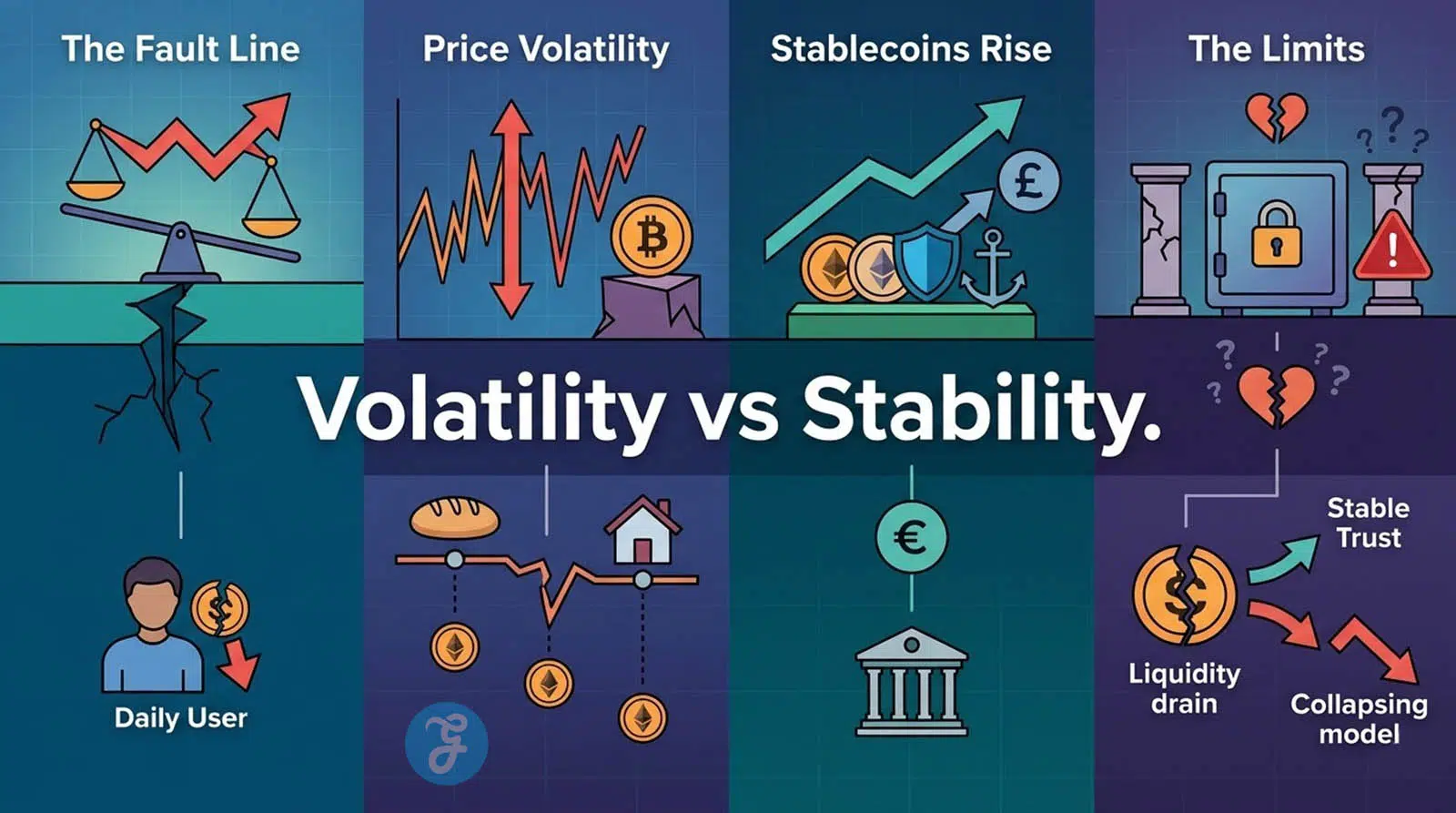
Trust is a fragile thing when the ground beneath it moves. For any currency to work, you must be certain that its value will not evaporate by breakfast. This is where the battle for the future of digital money faces its toughest test. Stability is not just a technical feature. It is the core requirement for a functioning society.
The Price of Unpredictability
Peer-reviewed research hosted on ResearchGate confirms that cryptocurrencies like Bitcoin remain far more volatile than major fiat currencies. This wild swinging makes them difficult to use for daily life. You cannot easily price a loaf of bread or a month of rent in an asset that jumps 10 per cent in an afternoon. This instability undermines the very idea of a store of value. It turns a medium of exchange into a high-stakes gamble. No society can build a long-term contract on a foundation that shifts with every tweet or speculative wave.
The Rise of Stablecoins
To fix this, the market created stablecoins. These are digital assets pegged to the value of a traditional currency such as the US dollar. They were designed to offer the speed of the blockchain with the steady heart of a central bank. Recent studies on arXiv suggest that fiat-backed stablecoins often serve as anchors of fiduciary reliability in the digital world. They provide a safe harbour when the rest of the market is in turmoil. By linking back to the real economy, they attempt to bridge the gap between the old guard and the new rebels. They are the middle ground where code meets the counting house.
The Limits of Anchors
Even these anchors have their limits. Stablecoins are still vulnerable to sudden liquidity shocks and de-pegging events. If the reserves backing them are questioned, the trust vanishes instantly. We have seen how quickly a digital coin can collapse when the belief in its peg fails, particularly in the case of algorithmic models that lack physical reserves. In these moments, some assets actually amplify risk rather than reducing it. It proves a fundamental point. Without a steady floor, no amount of clever code can keep a financial system standing. Credibility cannot be simulated. It must be proven through the fire of a market crash.
Regulation: The Global Scramble for Legitimacy
The wild west of the digital assets market is currently being fenced in. Governments have realised that ignoring this space is no longer an option if they want to maintain financial order. This is not just about control.

It is about creating a framework where businesses and citizens can operate without the constant fear of a total systemic collapse. The goal is to bring the future of digital money out of the shadows and into the light of the legal world.
The EU: Leadership Through Legislation
While many nations are still debating their first steps, the European Union has moved with significant speed. The ongoing impact of the Markets in Crypto-Assets (MiCA) regulation has turned the Eurozone into the world’s first large-scale regulated digital market. By requiring issuers to maintain high-quality liquid reserves and granting holders a permanent right of redemption, Europe is attempting to manufacture trust through law. This “passportable” license allows a firm regulated in one member state to operate across all twenty-seven, creating a unified liquidity pool that is attracting massive institutional capital.
The India Case Study: Protection Over Promotion
In India, the approach remains one of cautious observation. The government has made it legal to trade digital assets, but it refuses to grant them the status of legal tender. The high tax rate and recent disclosure requirements in the 2026 Budget reflect a deep concern for financial stability. Policy experts note that the state is wary of any system that could bypass its monetary control or disrupt domestic payment systems like the UPI. It is a defensive stance rooted in the need to protect the common investor from the volatility of an unregulated market.
The Tension of Oversight
There is a difficult balance to strike in this new landscape. Too little regulation leads to chaos and the risk of massive fraud. Too much regulation could strip away the very efficiency and privacy that made these assets attractive in the first place. The goal of current policies is to find a middle ground where innovation can happen safely. In the end, the most successful systems will be those that provide the security of law without stifling the speed of technology.
CBDCs: The State Strikes Back
Central banks are not watching the digital revolution from the sidelines. They are launching a counter-offensive. The rise of private cryptocurrencies has forced a massive rethink of what a national currency should look like in the twenty-first century. This has led to the birth of Central Bank Digital Currencies or CBDCs. At its simplest, a CBDC is a digital version of the physical cash you carry in your wallet. It is issued directly by the state and enjoys the same legal status as paper notes. The goal is to marry the lightning speed of the blockchain with the ironclad safety of a government guarantee.
Reclaiming the Sovereign Ground
The shift toward these digital assets is a strategic move to protect the future of digital money. By creating a state-backed alternative, central banks hope to limit the influence of private coins that operate outside the law. This is about preserving monetary sovereignty. If a nation loses control over the money its citizens use, it loses the power to manage its own economy. A CBDC ensures that the state remains the ultimate arbiter of value. It is a defensive wall built to keep the financial system within the reach of public policy.
The Indian Digital Rupee
The Reserve Bank of India has emerged as a vocal leader in this global experiment. The RBI is aggressively testing its digital rupee while simultaneously warning that private cryptocurrencies pose a huge risk to the country. Official records and central bank communications highlight how the regulator views these private tokens as a threat to financial stability. For India, the digital rupee is not just a technological upgrade. It is a way to modernise payments without sacrificing the security that only a central bank can provide.
A Defensive Kind of Innovation
We must see CBDCs for what they truly are. They are not just an attempt to be modern or tech-savvy. They are a calculated move to reclaim the trust that has started to leak toward decentralised systems. While the rebels talk about freedom from the state, the state is busy building a digital version of its own authority. This is a battle for the heart of the transaction. In this contest, the winner will be the one who provides a digital experience that feels as safe as a coin held in your hand.
The Rise of Hybrid Money Systems
The binary choice between old-world cash and new-age crypto is starting to fade. We are entering an era of overlap where different forms of money must learn to live together. This is the birth of a hybrid ecosystem.
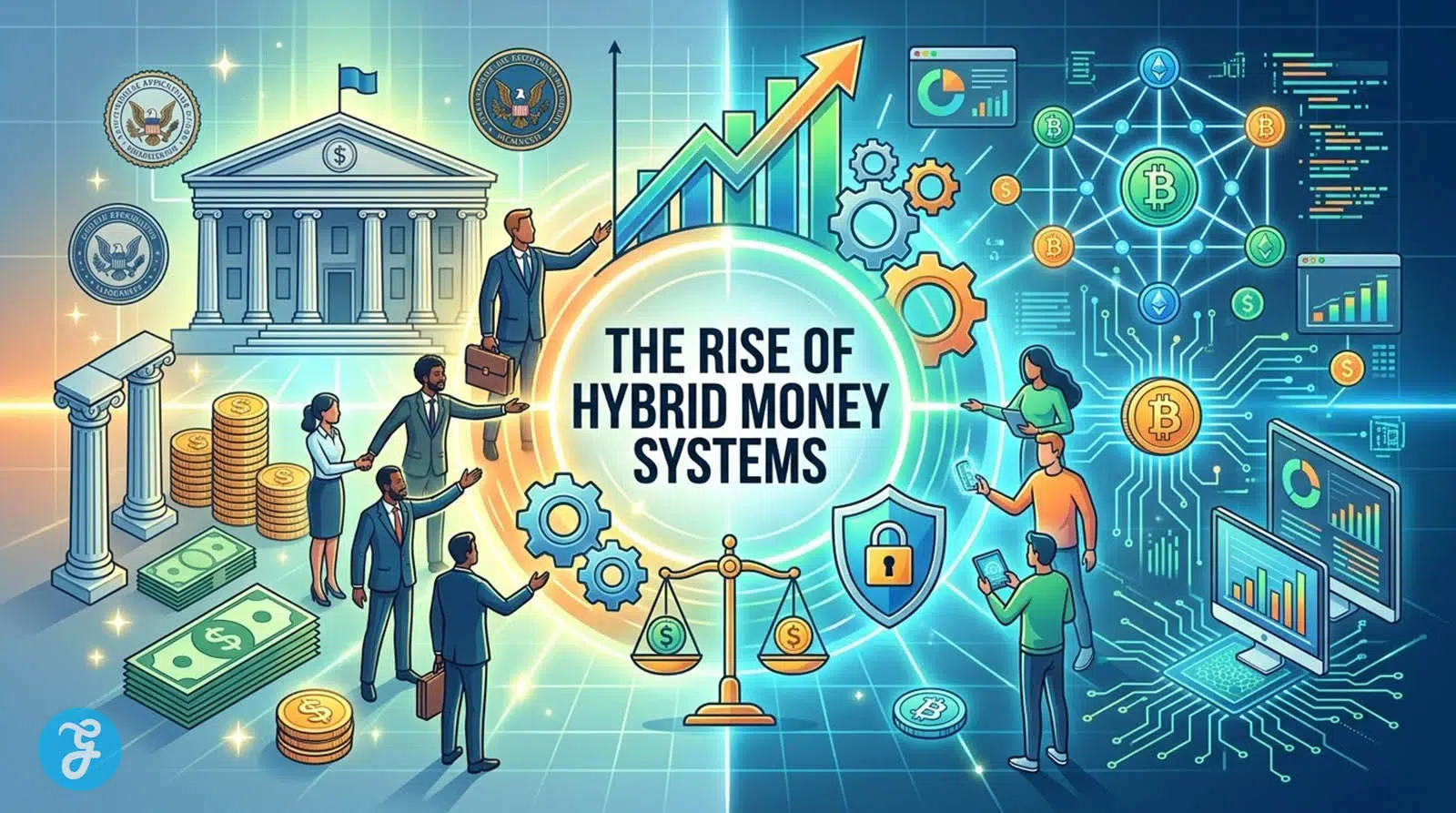
It combines the traditional strength of fiat with the speed of stablecoins and the safety of central bank digital currencies. Instead of one system killing the other, we are seeing them merge into a more complex whole. This is the real direction for the future of digital money.
Research highlights that this mixing of models is actually a good thing for stability. A study found on arXiv suggests that when stablecoins are backed by central bank assets, they create far more resilient systems. Purely decentralised coins often struggle with wild price swings because they lack a physical anchor. When you add institutional backing to the mix, the risk of a sudden crash drops significantly. These hybrid models prove that we do not have to choose between total freedom and total control. We can have the efficiency of the blockchain without the constant fear of losing our savings overnight.
Finding the Middle Ground
There is a hard truth becoming clear to both sides of this war. Pure decentralisation is often too unstable for a modern economy to function. At the same time, pure centralisation can be too slow and rigid to meet the needs of a digital world. The solution lies in a negotiated model of credibility. This involves private innovation working within a framework of public safety. It is a system where the government provides the foundation and private companies build the tools we use every day.
A New Layer of Credibility
This shift towards a layered system is more than just a technical update. It is a way to build a financial world that actually works for people. By using the best parts of each technology, we can create money that is fast, safe, and global. We are moving away from the idea of a single sovereign instrument. In its place, we are building a network of trust that relies on both human laws and computer code. The goal is no longer to find one winner. It is to create a world where all these systems can support each other to keep our wealth secure.
The Shift Beyond the State
We are watching a profound change in the soul of the transaction. For centuries, money was a top-down decree. It was a symbol of the state that demanded a public display of faith. Today that sanctity is fading. The future of digital money is stripping away the myth of the sovereign and replacing it with the transparency of mathematical proof. We are moving from a world where value is granted by a leader to a world where it is verified by a network. It is less about a flag and more about a formula.
This is the ultimate democratisation of trust. We no longer need to believe in the wisdom of a central committee to know our savings are safe. We only need to check the code. However, as we move away from human oversight we must ask what we lose. Automated networks can offer supreme efficiency, but they lack human flexibility. A protocol can flawlessly execute a transaction, but it cannot decide to forgive a debt during a national crisis. We are trading empathetic judgement for rigid, systemic certainty.
The Geopolitics of Money
Money has always been a tool of statecraft. In the past, empires were built on the reach of their coins. Today, that reach is being redefined by the future of digital money. We are moving away from a world where currency is strictly bound by borders. This struggle is being fought simultaneously in the server rooms of Silicon Valley, the central banks of Europe, and the trading floors of Singapore.
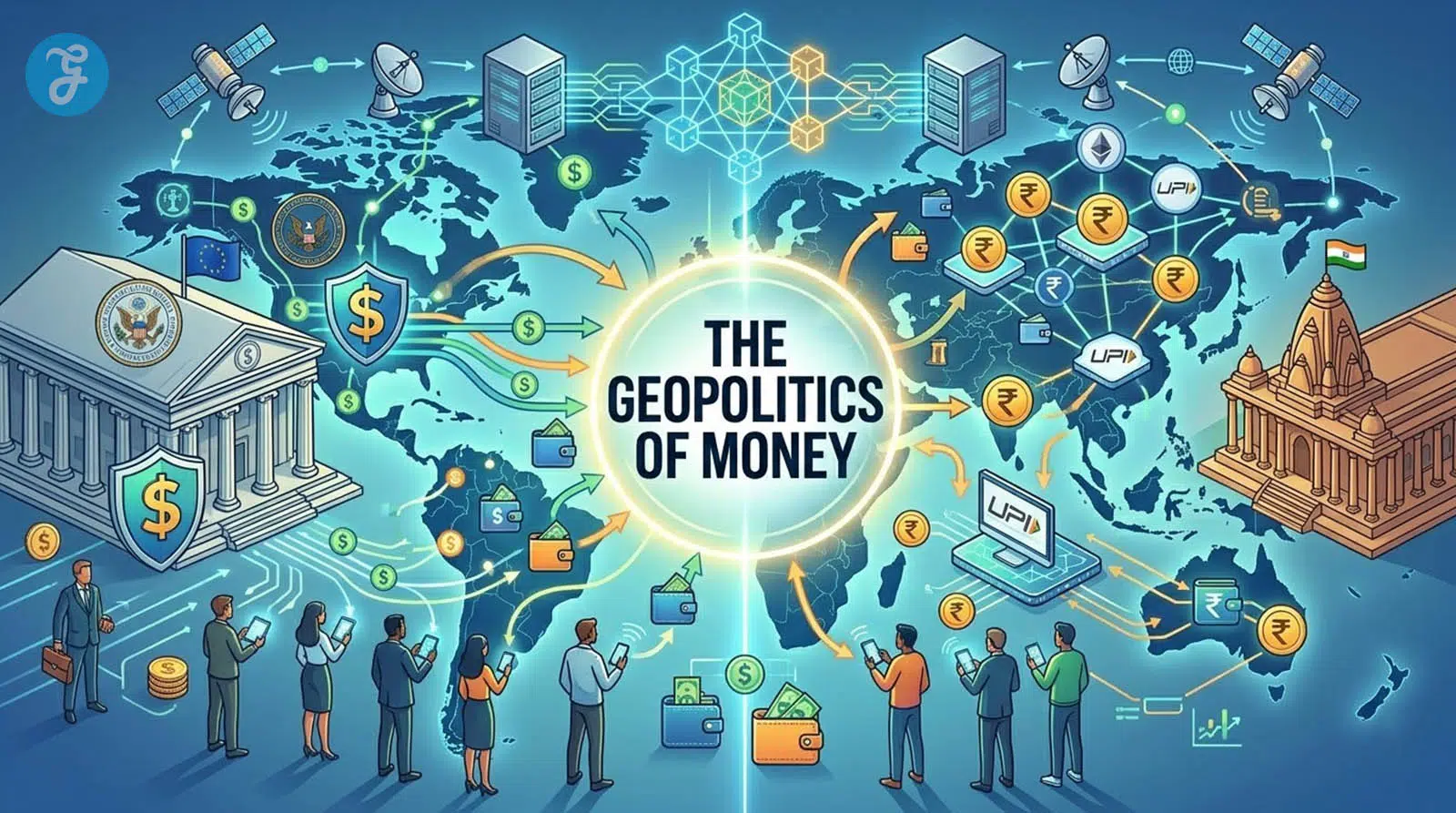 Digital assets do not stop at customs. They flow through fibre optic cables and satellite links, ignoring the traditional maps of the world. This is not just a change in how we pay for goods. It is a fundamental shift in global power. Power is no longer just about who has the most gold or the largest army. It is about who owns the platforms and who writes the code. We are seeing a world where monetary influence is becoming detached from geography. It is a competition for the digital wallet of the global citizen.
The Digital Dollar and the World
The most striking feature of the current market is the dominance of the US dollar. Most popular stablecoins are pegged to the greenback. This means that every time someone in a distant corner of the globe uses a digital dollar, they are extending the influence of American monetary policy. It allows the dollar to seep into economies where it was previously hard to reach. For many nations, this is a major concern. It threatens to undermine domestic currencies and strip away the ability of local central banks to manage their own financial affairs.
Risks to Domestic Systems
India is particularly watchful of this trend. While the country has built a world-class payment system in the UPI, the rise of borderless digital assets presents a new kind of challenge. Reports indicate that policy makers have moved beyond mere concern, implementing a rigorous transparency framework in the 2026 Budget. By bringing virtual digital assets into the Common Reporting Standard, the state is attempting to strip away the anonymity of offshore holdings.
If citizens begin to prefer digital dollars over their own currency, the state loses its grip on the economy, a phenomenon known as “digital dollarisation.” This is why the push for a sovereign digital rupee is so intense. It is no longer just an experiment; it is a strategic attempt to provide a modern, local alternative that preserves monetary sovereignty before foreign platforms can disrupt the domestic ecosystem.
The Real War: Credibility vs Control
We often hear that the struggle for the future of digital money is a simple fight between two extremes. The common narrative suggests that governments only want control while the crypto world only wants absolute freedom. This misses the point entirely. For the average person, the debate is not about political philosophy. It is about practical credibility. Most users do not care if their money is managed by a bureaucrat or an algorithm as long as it works. They want three simple things. They want stability. They want security. They want transparency.
Trust is earned through performance and not ideology. A government can pass a law to make a currency legal tender but it cannot force people to believe in its value if inflation is rampant. Similarly, a brilliant piece of code is useless if it is too volatile to pay for a cup of coffee. Control can mandate usage. Only credibility can sustain belief. We are moving toward a world where the most successful systems will be those that prove their worth every single day. The winner will be the platform that protects our savings and makes our lives easier without asking for blind faith.
Redefining Money in the Age of Distrust
Money is no longer a single sovereign instrument. We are watching it change into a layered system where different technologies and institutions must work together. The old monopoly of the state is fading, but it is not being replaced by digital anarchy. Instead, we are building a world where fiat, stablecoins, and central-bank digital currencies all play a role. This shift reflects a deeper change in how we relate to value in a digital age. We are learning to trust a combination of human law and computer logic. This is the new foundation for the future of digital money.
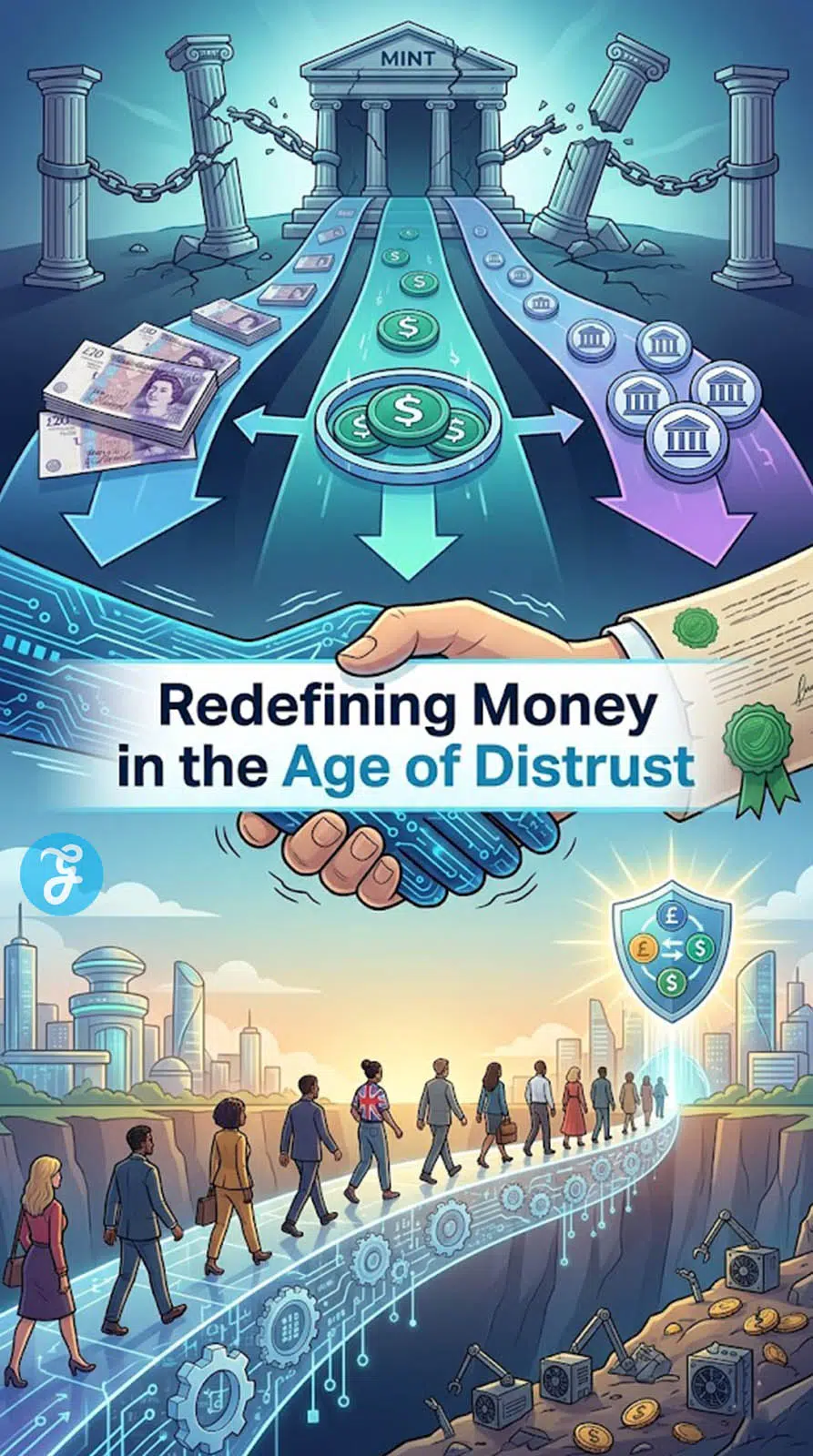 The final victory will not belong to crypto or fiat alone. The winner will be whoever builds the most credible financial ecosystem for a global audience. We are entering a period where the quality of the system is more important than the name on the banknote. Money is not merely what a government prints or what a computer script encrypts. It is what people believe will hold its value tomorrow. The future of money will not be decided in mints or mining rigs, but in the fragile space where trust is built or broken.