
Video game graphics have come a long way. From simple dots and lines to stunning 3D worlds, the journey has been amazing. But keeping up with these changes can feel overwhelming. Do you miss the days of pixelated games like Super Mario Bros? Or maybe you’re curious about how games like The Last of Us Part II look so real?
Back in the 1980s, games used blocky designs called pixel art. Today, we see lifelike characters and worlds thanks to ray tracing and HD visuals. This blog will show you how video game graphics grew over time—from basic pixels to advanced virtual reality (VR).
Ready for this trip through gaming history? Keep reading!
Key Takeaways
- Video game graphics evolved from simple 8-bit pixel art in the 1980s to lifelike visuals with ray tracing and HD technology today.
- Key games like Super Mario Bros (1985), Super Mario 64 (1996), and Red Dead Redemption 2 (2018) shaped each era of gaming graphics.
- The move to HD in the early 2000s brought sharp resolutions like 720p and dynamic lighting, seen on systems like Xbox 360 and PlayStation 3.
- New tech like ray tracing, HDR, AR, VR, and AI now makes gaming worlds more realistic with better shadows, light effects, and textures.
- Cross-platform tools help games run smoothly on both high-end consoles and mobile devices without losing quality or performance.
The 8-Bit and 16-Bit Era
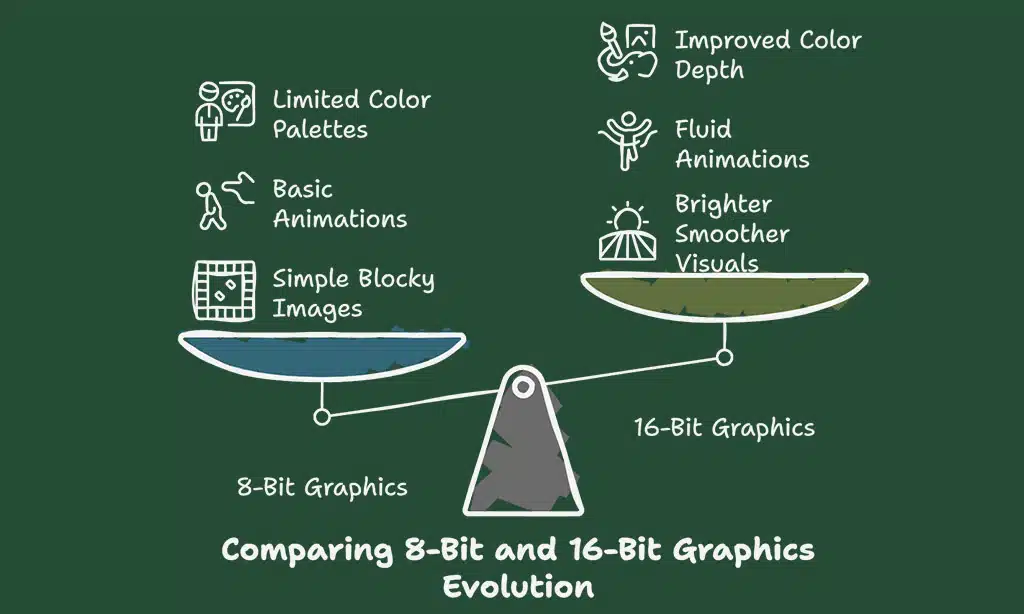
Graphics were simple but charming in the 8-bit days, with blocky images and basic animations. As systems like the Sega Genesis and Super Nintendo arrived, visuals became brighter and smoother, thrilling gamers worldwide.
Early pixel art and limited color palettes
Pixel art in the 8-bit era was basic but creative. Developers worked with grids of tiny squares, called pixels, to form characters and scenes. The Nintendo Entertainment System (NES) and Atari 2600 pushed these visuals forward in the 1980s.
Games like “Super Mario Bros.” and “Space Invaders” became icons with their colorful yet simple designs.
Limited color palettes were a huge challenge. Systems could only display a handful of colors at once—16 for NES or just nine for earlier computers. Artists had to be clever, mixing shades for depth or motion effects.
Still, games like “Donkey Kong” used bold colors to stand out, leaving lasting impressions on players worldwide.
Introduction of smoother animations in 16-bit graphics
In the late 1970s and early 1980s, gaming took a big leap. The jump from 8-bit to 16-bit graphics changed everything. Games now looked sharper and moved smoother. Animations became more fluid because of better color depth and improved hardware.
Sega Genesis and Super Nintendo showed what 16-bit could do. “Sonic the Hedgehog” zipped across screens with speed that felt alive. Parallax scrolling gave backgrounds more depth in games like “Super Mario World.” Motion was no longer blocky or stiff; it felt real and exciting for players everywhere.
The Move to 3D Graphics
Video games leaped into 3D with bold ideas and new tools. Polygons replaced flat visuals, making characters and worlds feel alive.
Emergence of polygons and 3D environments
Polygons changed games forever in the late 1980s and early 1990s. Developers used them to create three-dimensional worlds. Early arcade hits like Sega’s “Virtua Racing” and Atari’s “Hard Drivin’” showed how exciting this new style could be.
These polygonal models used basic shapes, but they paved the way for realistic graphics.
Shading methods like Gouraud and Phong made objects look smoother. Consoles like the Sony PlayStation pushed these designs further in the mid-90s. Games such as “Super Mario 64” and “The Legend of Zelda: Ocarina of Time” brought rich environments to homes, leaving players amazed at their depth and detail.
Iconic games that defined the era
Video game graphics made huge leaps in the 1990s. Some games changed how we see and play today.
- “Super Mario 64” (1996) changed gaming forever. It introduced smooth 3D movement on the Nintendo 64.
- The Legend of Zelda: Ocarina of Time” (1998) set new standards for open-world design.
- “Final Fantasy VII” (1997) wowed players with its cinematic scenes and rich story.
- “Tomb Raider” (1996) gave us adventure and one of gaming’s first strong, iconic characters, Lara Croft.
- “Grand Theft Auto III” (2001) brought a massive, open-world experience full of freedom.
- “Halo: Combat Evolved” (2001) redefined shooting games on the Xbox and showed what modern consoles could do.
- “Doom” (1993) was groundbreaking for shooter fans, with fast gameplay and scary levels.
- Sonic the Hedgehog” (1991) helped make Sega Genesis a hit with its colorful graphics and quick action.
- “Space Harrier” (1985) amazed players with its early attempt at 3D-like visuals on arcade machines.
- “The Elder Scrolls IV: Oblivion” (2006) shocked people with lifelike forests, towns, and detailed textures for its time.
Games like these shaped the gaming industry in big ways!
High-Definition (HD) Graphics
Games began to look sharper with better image clarity. Detailed textures and lifelike lighting made virtual worlds feel alive.
Transition to HD resolutions
HD graphics became big in the early 2000s. The Xbox 360 (2005) and PlayStation 3 (2006) led this change. Resolutions like 720p and 1080p brought sharper visuals. Frame rates hit smooth levels, often at 30 fps or more.
Widescreen displays with a 16:9 ratio replaced square screens. This upgrade made games feel more real. Developers added lifelike textures and better lighting to match the new high-definition screens.
Realistic textures and dynamic lighting
Game developers pushed for lifelike details in HD graphics. Realistic textures made surfaces look rough or smooth, like peeling paint on walls or soft fur on animals. In “The Last of Us Part II,” every object looks real, from dirty windows to damp ground.
Dynamic lighting brought shadows and light that moved naturally. Games like “Red Dead Redemption 2” used sunlight and moonlight to create breathtaking scenes. Techniques such as ray tracing technology made reflections feel true to life, showing clear mirrors or shiny puddles in real time.
Modern Advancements in Graphics
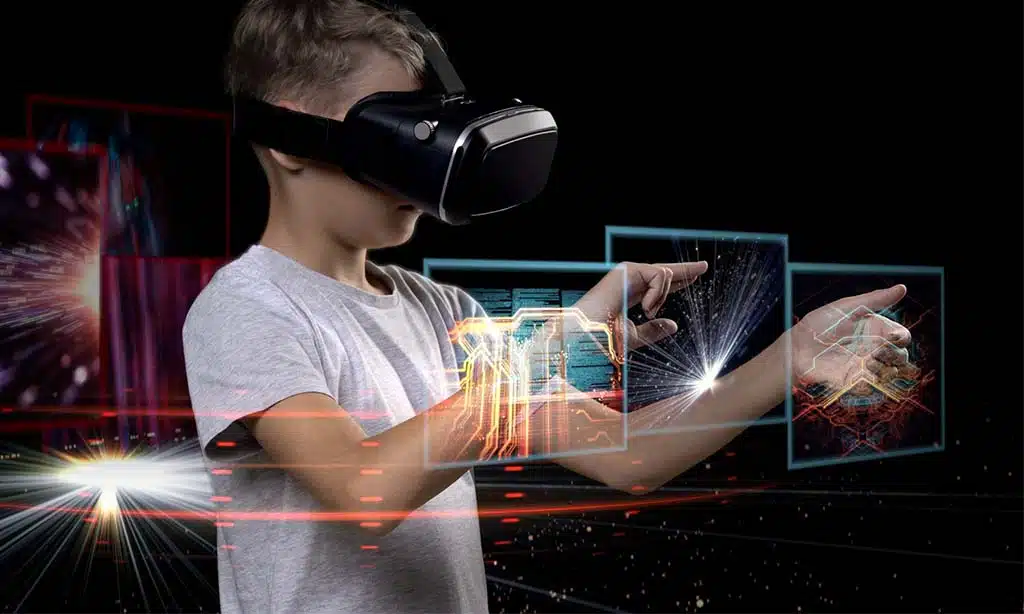
Games now feel more real with new tech. Lights, shadows, and details bring worlds to life like never before.
Ray tracing technology
Ray tracing makes light in video games look real. It copies how light acts, including reflections, shadows, and even refractions through glass or water. This technology changes how players see worlds in games like “Hellblade: Senua’s Sacrifice.” Real-time ray tracing boosts graphics by creating lifelike lighting instantly as you play.
Shadows feel softer; reflections look sharper.
It made a splash with modern gaming hardware like the PlayStation 5 and Xbox Series X. The tech shines in open-world titles such as “Cyberpunk 2077,” making streets glow under neon signs at night.
This exciting leap moves beyond pre-rendering to deliver stunning visuals on gaming platforms today!
High Dynamic Range (HDR) visuals
HDR makes game worlds look more real. It expands color and brightness. Bright lights shine without losing detail, while shadows stay deep and rich. Colors pop with better contrast ratios, creating sharper visuals.
Games like Red Dead Redemption 2 use HDR to paint lifelike skies, glowing sunsets, and vivid landscapes. Moving from standard dynamic range to HDR feels like putting on glasses after a long blur.
It’s not just about brightness; it’s about depth in every pixel.
AR and VR integration
AR and VR push gaming into new dimensions. Games like “Pokemon Go” (2016) blended the real world with digital creatures, using augmented reality (AR). Virtual reality (VR), on the other hand, places players inside fully simulated worlds.
Headsets make these experiences immersive with realistic lighting, textures, and movement.
These technologies improve gaming’s realism. AR overlay adds digital details to physical spaces. VR relies on headsets for 360-degree views. Together, they offer interactive environments that feel alive.
Gaming developers use AR and VR to create fresh storytelling methods and breathtaking visuals in modern games.
The Future of Video Game Graphics
Games are getting smarter, learning to make graphics faster and better. New tools will let players see worlds that feel almost real, no matter the screen or device they use.
AI-generated graphics
AI breathes life into game visuals. It creates textures, landscapes, and designs with speed and precision. Game developers use AI for procedural generation. This means worlds like forests or cities build themselves using algorithms.
These graphics also enhance quality. They simulate real-time reflections, shadows, and global illumination faster than older tools. AI art experiments offer fresh styles not seen in games before.
As gaming hardware improves, so will these smart systems, reshaping video game graphics further.
Cross-platform visual consistency
Game developers now use tools like adaptive resolution scaling. This tech adjusts game visuals based on the device’s power. It keeps frame rates smooth on gaming platforms like Xbox, PlayStation, and mobile devices.
Scalable assets also play a big role in this process. They let games look sharp on everything from high-end PCs to basic phones. Popular titles like Fortnite run well across various gaming hardware without losing quality.
Takeaways
Video game graphics have come a long way. From blocky pixels to near-real worlds, the change is amazing. Games like Super Mario 64 and Red Dead Redemption to show this growth clearly.
As new tech like ray tracing and VR grows, games will feel even more alive. The journey isn’t over—it’s just getting started!
FAQs
1. What were video game graphics like in the 1980s?
Video games in the 1980s had simple pixelated visuals, often two-dimensional. Games like Space Invaders and Super Mario Bros used basic designs due to limited gaming hardware.
2. How did the Nintendo Entertainment System (NES) change video game graphics?
The NES introduced smoother pixel art and better colors compared to earlier systems. It brought classics like Super Mario Bros and improved how games looked on home consoles.
3. What made The Legend of Zelda: Ocarina of Time a major step for graphics?
It used polygonal models and real-time rendering, creating realistic environments for its time. This was groundbreaking during the sixth generation of gaming platforms.
4. How have high-definition (HD) graphics changed modern gaming experiences?
HD graphics deliver sharper images, higher frame rates, and more detailed worlds in open-world games like Red Dead Redemption 2. They make everything feel more lifelike.
5. What role does ray tracing technology play in today’s video games?
Ray tracing simulates light reflections and shadows realistically, adding depth to scenes. Games like The Last of Us Part II use this to create immersive visuals.
6. Is virtual reality (VR) changing how we see video game graphics?
Yes, VR creates fully interactive spaces where players feel inside the game world. Combined with augmented reality (AR), it pushes boundaries beyond traditional display resolution standards set by older systems like Sega Genesis or PlayStation 2!