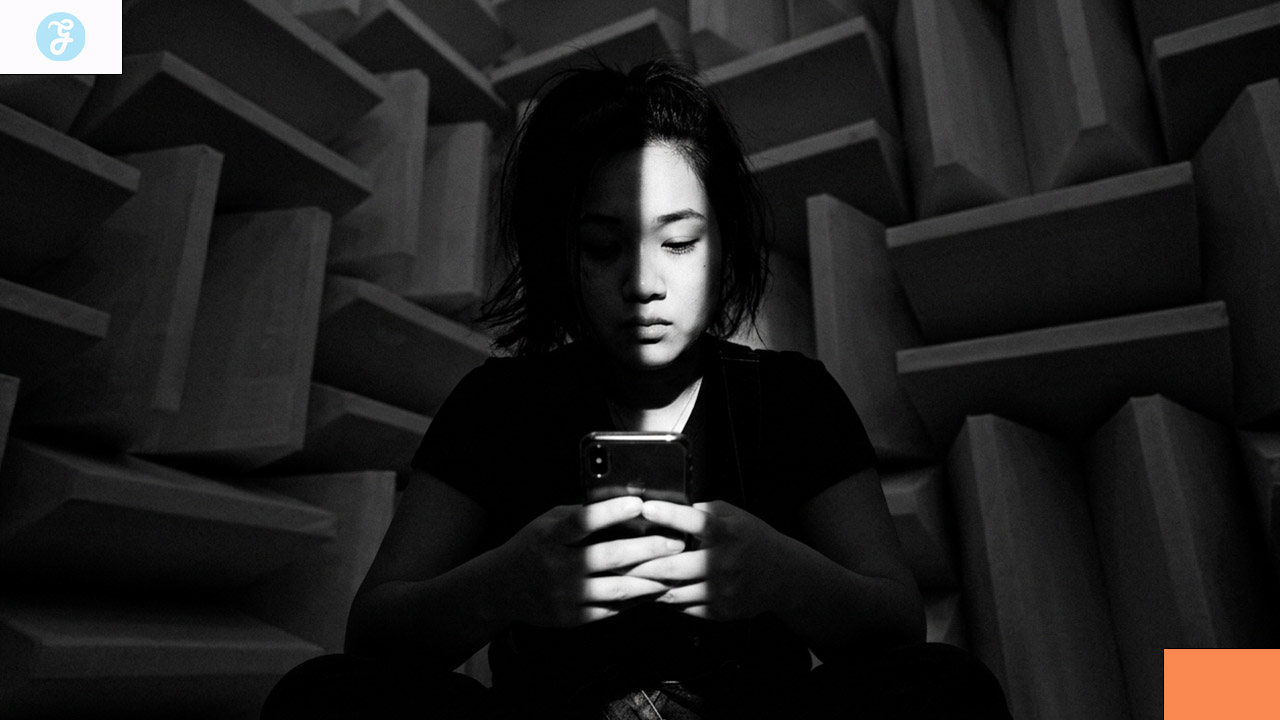
The English-speaking internet has turned into a high-decibel arena. Every scroll feels like walking through a crowded room where everyone is shouting. Notifications compete. Opinions demand a response. This constant pressure is driving a new wave of digital burnout in 2026.
To escape the noise, a quiet migration is underway. Users are drifting toward the linguistic sanctuary of Japanese X, seeking a “silent room” where the outrage economy cannot follow.
Here, the language barrier acts like a filter. When you cannot fully read the text, you cannot fully engage in conflict. The brain stops trying to decode arguments or take sides. Instead, it slows down. It observes. It rests.
This shift brings back the wonder of the early internet, before performance and polarization took over. Navigating a space you do not fully understand becomes a functional reset for the nervous system. In a hyperconnected world, this is not avoidance. It is self-preservation.
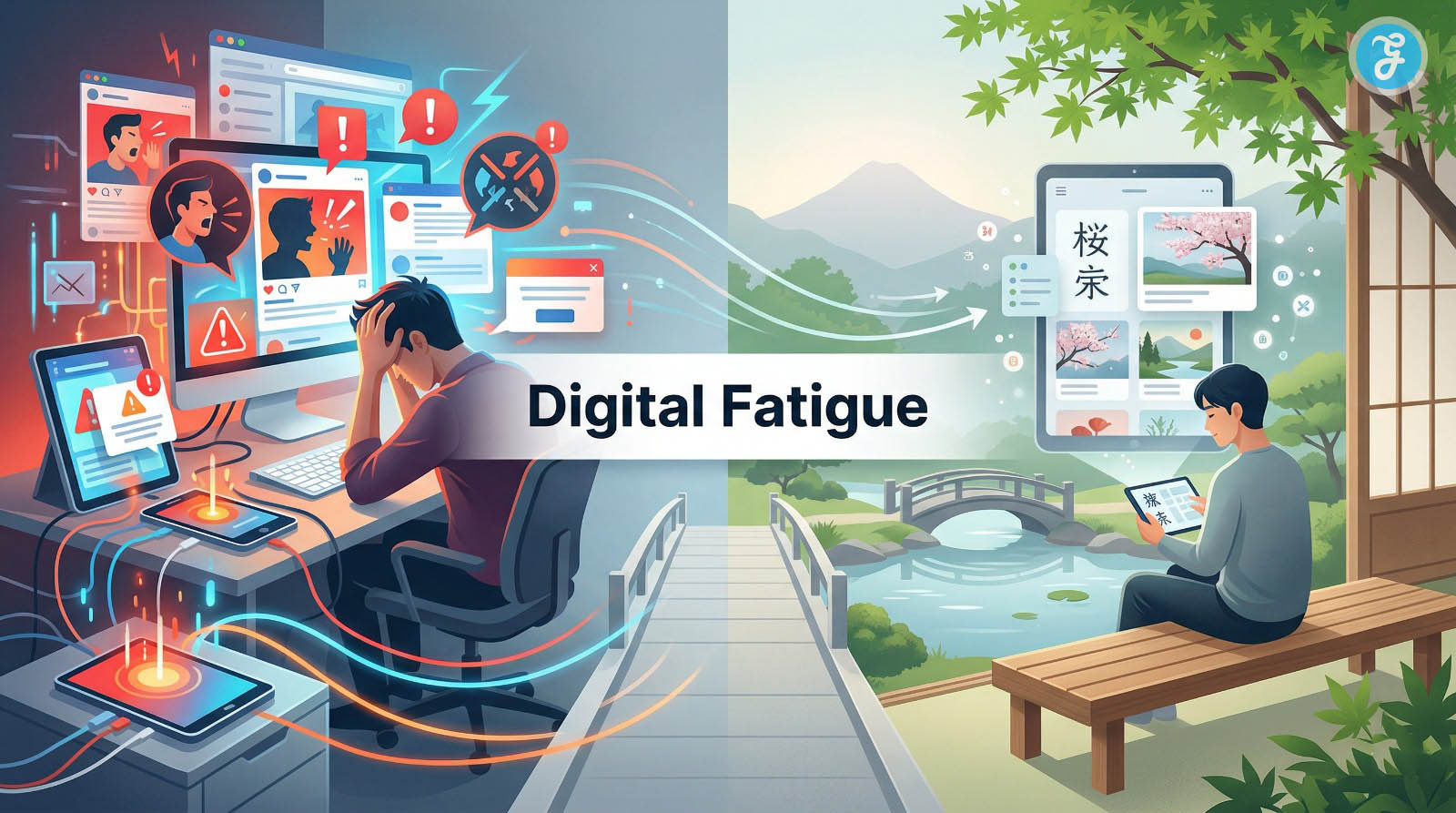
Recent data suggests that a majority of users experience emotional fatigue from social media. Much of the English feed is engineered for engagement through conflict. In contrast, Japanese digital spaces often lean toward visual calm, niche communities, and quieter forms of interaction.
By moving into a space where outrage becomes illegible, users are not disconnecting. They are reclaiming control. They are replacing reaction with reflection, and noise with creative stillness.
The Psychological Mechanics of a Linguistic Sanctuary
Entering a digital space in an unfamiliar language builds an immediate mental buffer. Your mind simply stops trying to decode every argument it encounters. This quiet environment gives your nervous system a necessary break from constant online friction.
Cognitive Load Reduction
The human brain is wired to interpret meaning and respond to social cues. In an English feed, it constantly scans for conflict, tone, and subtext. This creates cognitive overload, a key driver of digital burnout.
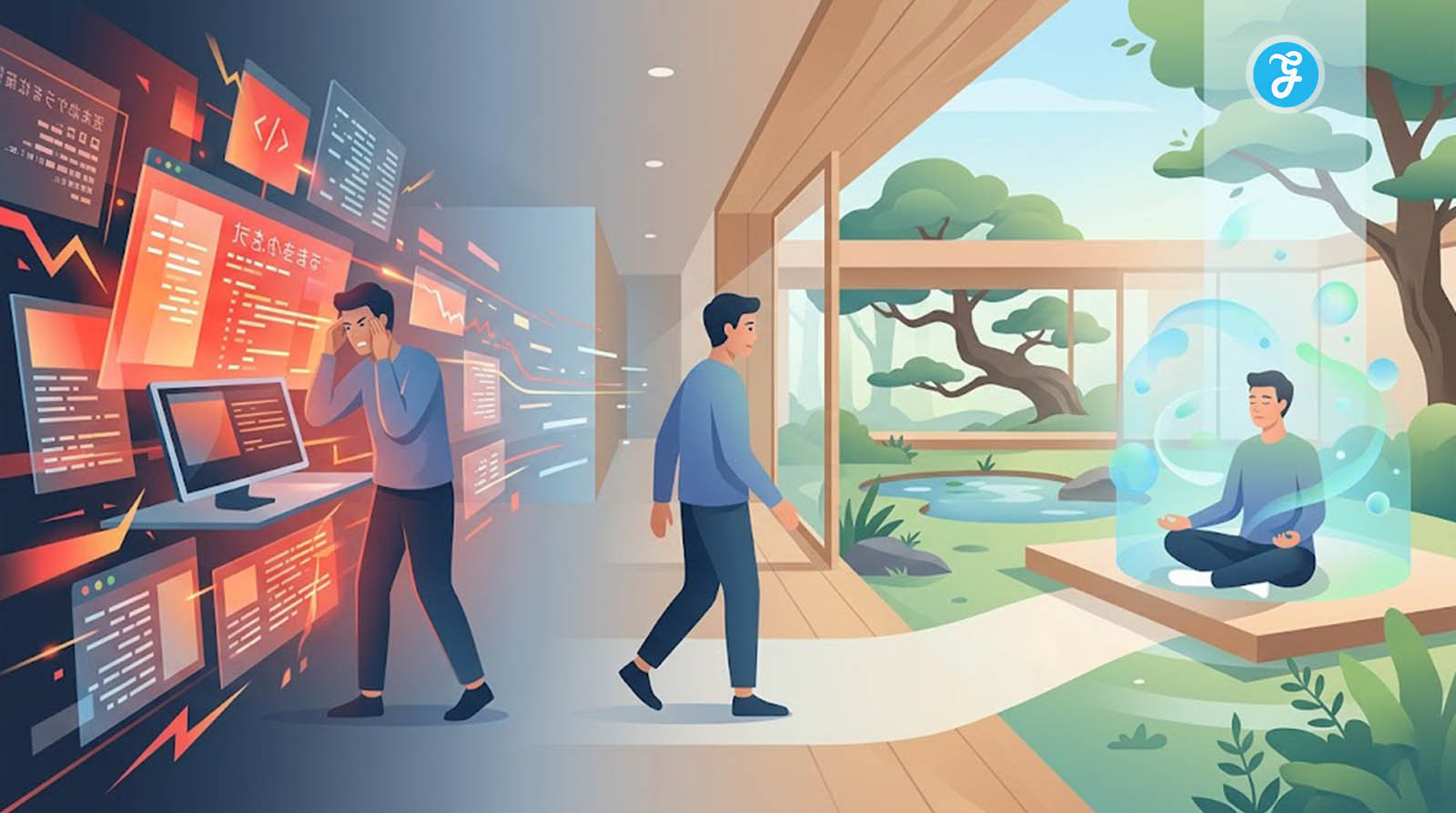
In a foreign-language feed, that loop breaks. The mind no longer tries to win arguments or decode intent. The result is a rare form of passive engagement, where presence replaces pressure.
The Oshikatsu Model
Japanese online culture often revolves around “Oshikatsu,” the practice of supporting favorite creators, artists, or interests. Unlike the performative “main character” culture common in Western feeds, Oshikatsu centers on appreciation rather than visibility. The focus shifts from self-promotion to shared enthusiasm. This reduces comparison, softens competition, and creates a more emotionally sustainable digital environment.
This cultural framework is not just a hobby; it represents a fundamental shift from a consumption economy to a participation economy. In the West, users often feel like products are being mined for data. This transactional relationship contributes heavily to digital burnout. In the Japanese “Silent Room,” the relationship is based on “Nagesen,” or digital gifting.
This is an investment in the creator’s journey rather than a payment for a service. According to research on Self-Determination Theory, this fulfills the human need for competence and relatedness. When you support an artist on Japanese X, you see the direct impact of your contribution. You are no longer a passive observer of a timeline; you are an active participant in a creative life. This sense of purpose acts as a shield against the hollow exhaustion of mainstream social media.
The Aesthetic Pivot
When reading recedes, seeing takes over.
The experience shifts from debate to discovery. Illustration, photography, design, and craftsmanship come into focus. A handmade ceramic bowl or a quiet street scene holds more value than a viral argument.
This aesthetic turn acts as a psychological refuge. It allows users to redirect attention toward beauty, detail, and creative joy, antidotes to digital burnout.
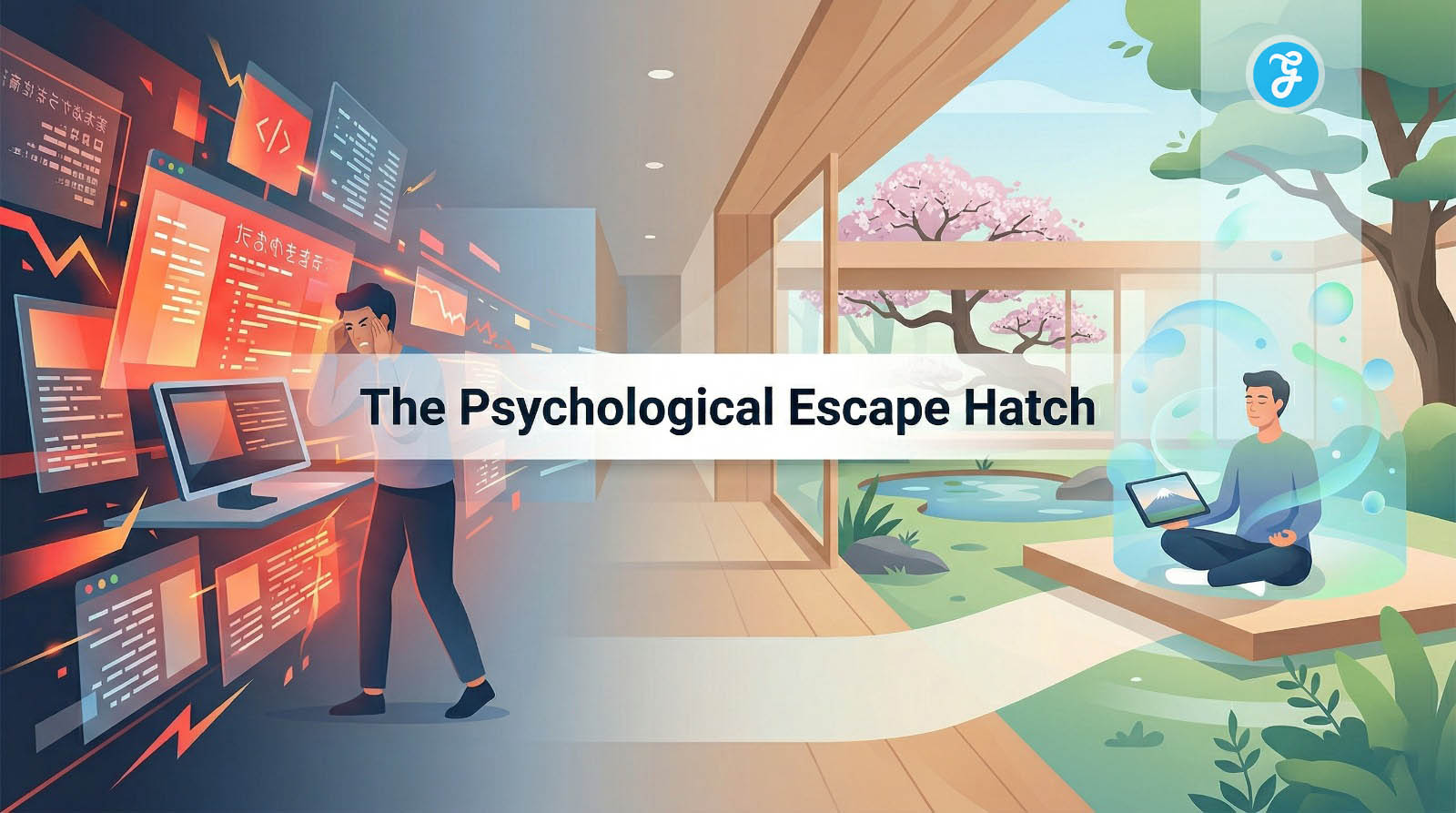
Digital Burnout: The Psychological Escape Hatch
Protecting your mental health online requires an intentional exit strategy. The English-speaking internet often feels highly volatile. You need a way to step out without losing your connection to the world. Japanese X provides this specific type of relief.
The Reality of Digital Burnout
Modern browsing has become a source of profound exhaustion. A 2026 State of Browsing Report found that 62 percent of users experience digital burnout. This state is caused by the constant need to process high stakes information. Your brain was not built to handle thousands of conflicting opinions every hour. By shifting to a feed you cannot read, you finally give your mind permission to disengage. It is a necessary pause in an era of overstimulation.
Low Stakes Interaction
On the English internet, every “Like” is often seen as a political statement or a tribal signal. You are either for something or against it. In Japanese X, the interaction is blissfully simple.
You are not liking a controversial “take” or a divisive argument. You are liking a photo of a rainy Kyoto street or a detailed character sketch. This freedom restores the joy of social media. It allows you to engage with the world without the fear of being misunderstood or dragged into a debate.
The Digital Hikikomori
The term “Hikikomori” usually refers to social withdrawal. In this context, it describes a healthy choice to step back from a toxic global discourse. You are not hiding from reality. You are choosing to inhabit a curated, quiet room. This digital retreat allows you to protect your energy while still enjoying global curiosity. It is about setting a boundary that keeps the noise out. By withdrawing into this linguistic sanctuary, you reclaim your focus and your peace of mind.
Privacy-First and Anonymous Expression
A key driver of this migration is the Japanese preference for privacy-first engagement. By 2026, 87 percent of the Japanese population is active on social platforms, yet many prefer anonymous interaction. The cultural tenet of avoiding Meiwaku or causing nuisance to others shapes the entire online environment. It is the opposite of the “Main Character” culture that dominates the English web.
In these spaces, anonymity is not used as a mask for cruelty, but as a tool for safety. It allows for “Anonymous Expression,” where the art or the information is more important than the identity of the poster. For Western users, this provides a massive relief from the pressure of personal branding. You can browse, like, and share without the fear of your past or your identity being scrutinized. This layer of anonymity is a vital component in the fight against digital burnout, as it removes the performance anxiety of the modern internet.
Breaking the Outrage Economy
The modern internet runs on friction. Most platforms profit when you are angry or anxious. By choosing a linguistic sanctuary, you effectively cut the wires to this machine. You are no longer providing the high energy reactions that the current digital market demands.
Algorithm Subversion
Social media code is designed to reward what researchers call “moral shock.” Platforms tend to amplify posts that trigger strong emotional reactions, especially anger and outrage. When you follow Japanese accounts, you quietly starve the system of these signals.
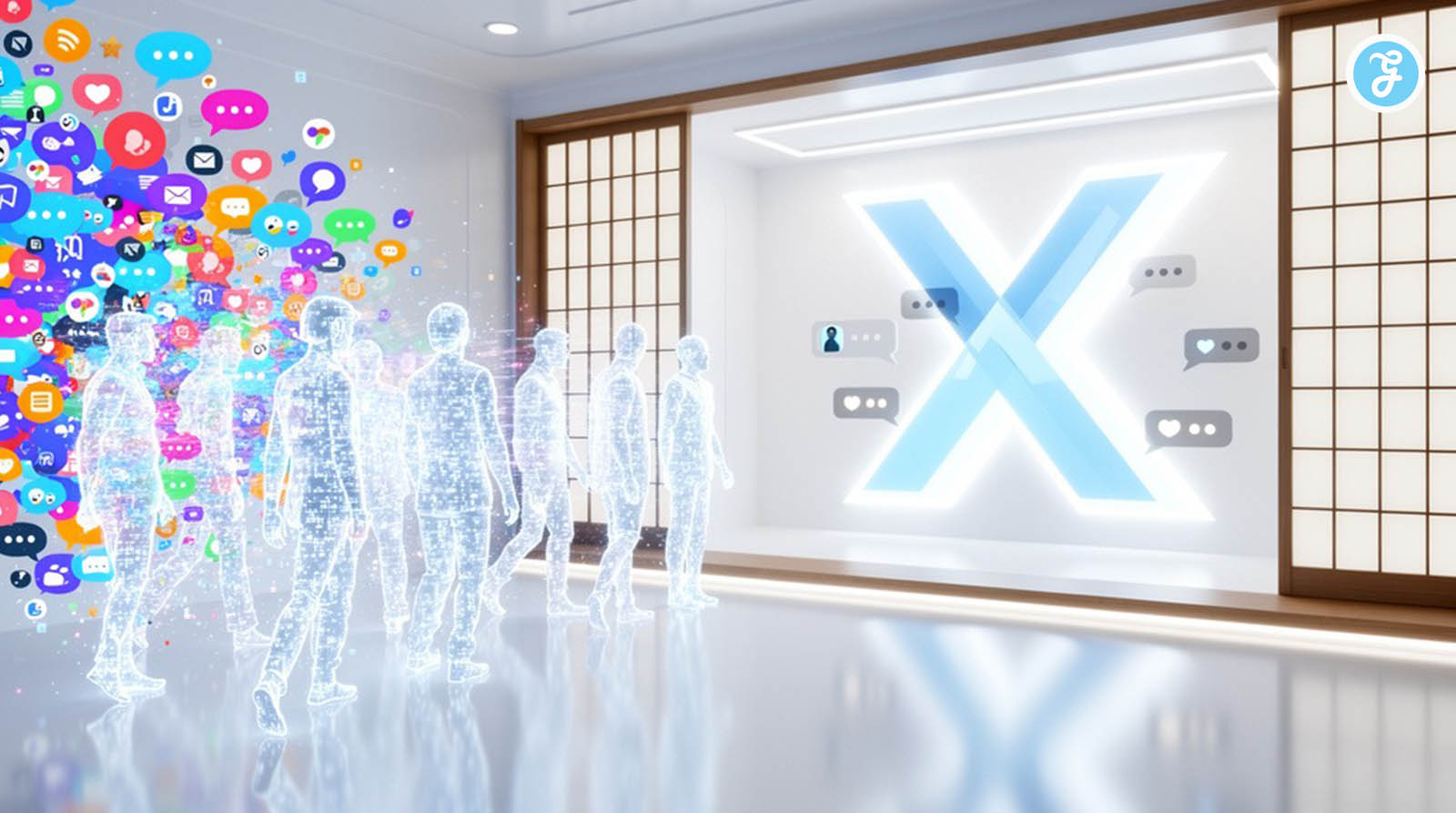
The machine can no longer predict which political firestorm will hold your attention. Instead, it begins to surface content driven by curiosity, aesthetics, and niche interests. You are not just changing what you see. You are retraining the algorithm itself.
Over time, the feed adapts to your quieter behavior. It learns to respect your attention rather than exploit your digital burnout.
The Silent Room Metaphor
Think of this migration as entering a grand library in a foreign city. You are surrounded by people and the hum of activity. You can feel the presence of a living community all around you. However, because you do not speak the local tongue, the conversations do not burden you. You are a guest in a space where you are not required to have an opinion. This allows you to enjoy the social aspect of the web without the psychological tax of its noise. It is a rare chance to be among others while remaining perfectly still.
Holistic Viewing and Pastel Sanctuaries
The visual architecture of Japanese X differs significantly from Western minimalism. While Western apps favor clean lines and bold calls to action, Japanese design often embraces high information density and “Holistic” thinking. Psychologists note that Westerners tend to focus on foreground objects… the “big fish” in a pond. Japanese users are more likely to describe the background and the relationships between elements.
For someone suffering from digital burnout, this holistic design is unexpectedly soothing. The prevalent use of pastel colors and 2D “Kawaii” (cute) illustrations creates a soft visual landing. You are not being hit with high-contrast, vivid alerts designed to trigger an immediate click. Instead, the “Silent Room” offers a balanced, unified aesthetic. This design philosophy prioritizes emotional response over functional efficiency, allowing the eyes and the mind to rest.
The Future of Global Browsing
We are moving past the era of total connectivity. The dream of a borderless web has often resulted in a cycle of endless noise. Tomorrow’s users will not look for more ways to talk. They will look for more ways to filter.
The Vibe Over the Voice
The next phase of the internet will not prioritize better translation. Instead, it will embrace intentional barriers. We are seeing a shift where the “vibe” of a digital space matters more than the “voice.” Users are tired of decoding complex arguments and hidden agendas. They want to exist in a space defined by aesthetic tone rather than verbal conflict. This transition marks a return to a more primitive and peaceful way of using technology. It proves that silence is a feature, not a bug.
Market Insights on Intentional Browsing
Industry reports across marketing and digital experience consistently point to a shift toward what can be called “intentional browsing,” where users spend more time with less content, choosing depth over volume.
For an increasingly tech-fatigued audience, this behavior is beginning to feel like a luxury. Attention is no longer freely given. It is carefully protected.
In this emerging landscape, digital calm is becoming a form of value. Platforms that offer quieter, more meaningful experiences are gaining an edge over those built purely on speed and scale.
The Radical Relief of Not Knowing
The emergence of the digital silent room marks a necessary evolution for the modern mind. We have spent decades breaking down every barrier to global communication. Now, we are discovering that those barriers were often what kept us sane. Moving to Japanese X is not an act of ignorance but a calculated strategy for survival. It is a way to reclaim your focus in an environment that is no longer designed for human peace.
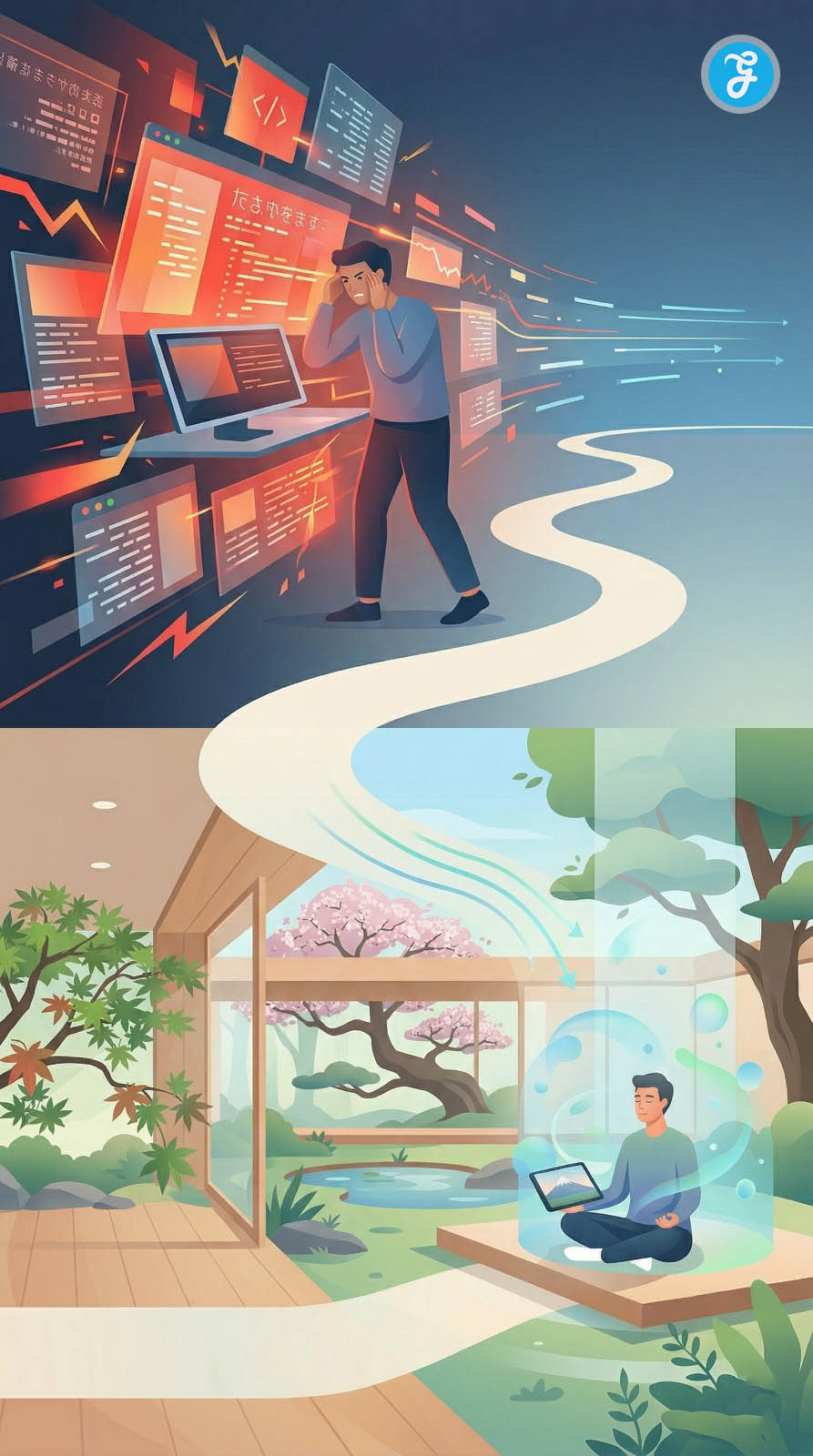
This migration provides a functional cure for digital burnout. By stepping into a world where the noise is illegible, you allow your nervous system to recover. You trade the exhaustion of constant debate for the quiet joy of global curiosity. You find a sanctuary where you can enjoy the presence of others without the burden of their opinions. It is a transition from being a target of the outrage economy to being an observer of pure creativity.
In a world that demands you have a loud stance on every headline, the greatest luxury is a space where you are allowed to understand nothing. You can look at a sunset, a character sketch, or a street scene without needing to argue about it. This intentional silence is the ultimate protection against the pressures of the modern web. It proves that sometimes the best way to stay connected is to stop listening to the noise. Choosing the beauty of the unknown may be the only way to outgrow digital burnout.