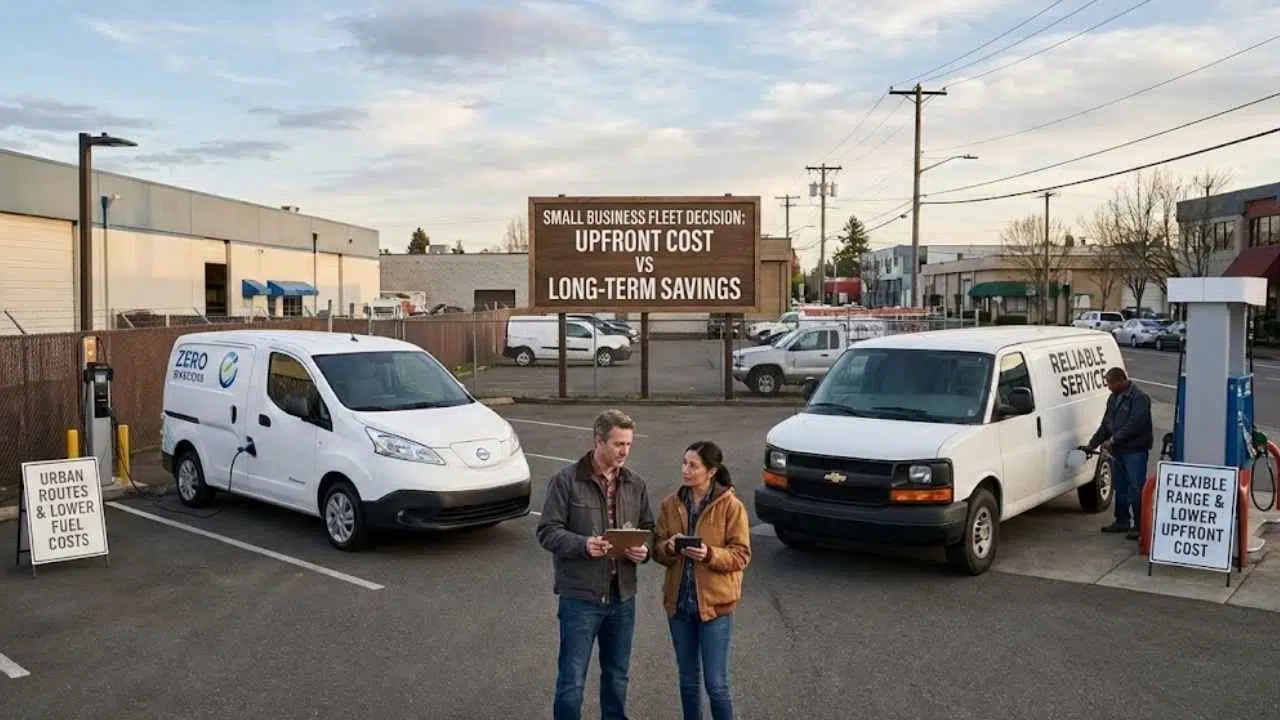
For service-based businesses, choosing the right fleet vehicle isn’t just a technical decision. It’s a financial one that affects daily operations, scheduling, and long-term growth. Electric vans have gained attention for their lower emissions and modern technology, while traditional gas-powered vans continue to dominate fleets across construction, delivery, and mobile services. The real question for many business owners isn’t which option sounds more innovative. It’s which one makes the most sense financially and practically.
The answer often depends on how and where a business operates. Electric vans can be a strong fit for companies running short urban routes with access to charging infrastructure. Gas vans, on the other hand, still offer a level of flexibility and convenience that many growing service companies rely on. Here’s a closer look at what actually saves money when comparing electric and gas work vans.
Chevrolet Express 2500 is a Gas-Powered Workhorse That Still Makes Financial Sense
For many small businesses, the Chevrolet Express 2500 remains a practical benchmark when evaluating total vehicle costs. This van continues to appeal to fleet managers who value reliability and straightforward maintenance. It’s built around a traditional design that prioritizes durability over experimental features, which can be a major advantage when downtime directly impacts revenue.
Gas-powered vans like the Express 2500 offer consistent range without requiring businesses to rethink how they schedule routes or fuel stops. For service companies covering rural areas or traveling between multiple job sites, that flexibility can translate into real savings. Drivers don’t have to plan their day around charging stations or extended recharge times, which helps maintain productivity during busy seasons.
Maintenance costs also tend to be predictable because mechanics are familiar with the platform and parts are widely available. For businesses that need vehicles to last well beyond 200,000 miles, that reliability can outweigh the potential fuel savings of electric alternatives.
The Future of Electric Vans and Where They Make Sense
Electric work vans are no longer a niche concept. Advances in battery technology, charging networks, and manufacturing have pushed EVs into mainstream fleet conversations. Many companies are exploring electric vans because they promise lower fuel costs and fewer moving parts, which can reduce certain maintenance expenses over time.
The industry is moving quickly toward electrification, with manufacturers investing heavily in new models and improved driving ranges. Businesses operating in cities with dense charging infrastructure often find electric vans to be a smart option for predictable routes. Delivery companies and mobile technicians who stay within a limited radius may benefit from the quieter operation and reduced emissions that electric vehicles provide.
However, the financial picture changes when businesses operate outside those ideal conditions. Charging infrastructure varies widely depending on location, and installation of private charging systems can add upfront costs. Range limitations can also require careful route planning, which may not be practical for companies that respond to unpredictable service calls. As electric technology evolves, it will likely become more viable for a wider range of businesses, but for now its strongest advantages tend to appear in urban environments rather than rural or multi-state operations.
Ford Transit and Other Gas Vans That Offer Flexibility
Beyond the Express 2500, many businesses continue to rely on versatile gas-powered options like the Ford Transit. The Transit offers multiple roof heights and wheelbase options that make it adaptable to a variety of industries. Whether used for HVAC service, mobile IT support, or delivery routes, it provides a balance of efficiency and customization that appeals to growing companies.
Gas vans like the Transit allow businesses to scale their fleet without changing how drivers operate day to day. Refueling takes minutes instead of hours, and the widespread availability of gas stations eliminates concerns about range anxiety. For companies expanding into new service areas, that simplicity can reduce logistical headaches and help teams stay focused on customers rather than infrastructure planning.
Other gas-powered models, including the Ram ProMaster and Mercedes-Benz Sprinter, continue to offer strong value for businesses that need cargo space and reliability. Each model brings unique advantages, from maneuverability in urban areas to premium interior configurations that support mobile office setups.
Upfront Costs vs Long-Term Expenses
One of the biggest factors in the gas versus electric debate comes down to initial investment. Electric work vans often carry a higher purchase price compared to traditional gas models. While incentives and tax credits can offset some of that cost, not every business qualifies or operates in regions where these programs are available.
Gas vans generally require a lower upfront investment, which allows small businesses to expand fleets more quickly. This can be especially important for startups or growing service companies that need multiple vehicles to meet rising demand. Even when electric vans promise lower fuel costs, the payback period can stretch longer than expected depending on mileage and charging expenses.
Insurance and repair considerations also come into play. Electric vehicles may involve specialized parts and trained technicians, which can increase repair costs or downtime in certain areas. Gas vans benefit from established service networks, which often leads to quicker repairs and fewer operational disruptions.