Have you ever worried about big tech companies controlling your online life? Many people feel uneasy when foreign powers peek into their data. This fear hits home in a world full of cyber threats. Nations face the same issue on a massive scale. They deal with data leaks and outside meddling in their affairs.
One key fact stands out: Nations build their own internets to shield data and boost security, as seen in projects like China’s Great Firewall. This push for Digital Independence helps countries stand tall against global giants.
In this writing, we’ll explore why this trend grows, with real examples and tips to grasp its impact on your digital world. We’ll break down the benefits and hurdles, so you can see the big picture clearly.
What Is Digital Independence?
Countries chase digital independence like a kid claiming their own treehouse, building separate online worlds to call the shots on data and access. It boils down to guarding secrets from prying eyes, sparking a push for control that could reshape how we all connect.
Definition and Key Principles
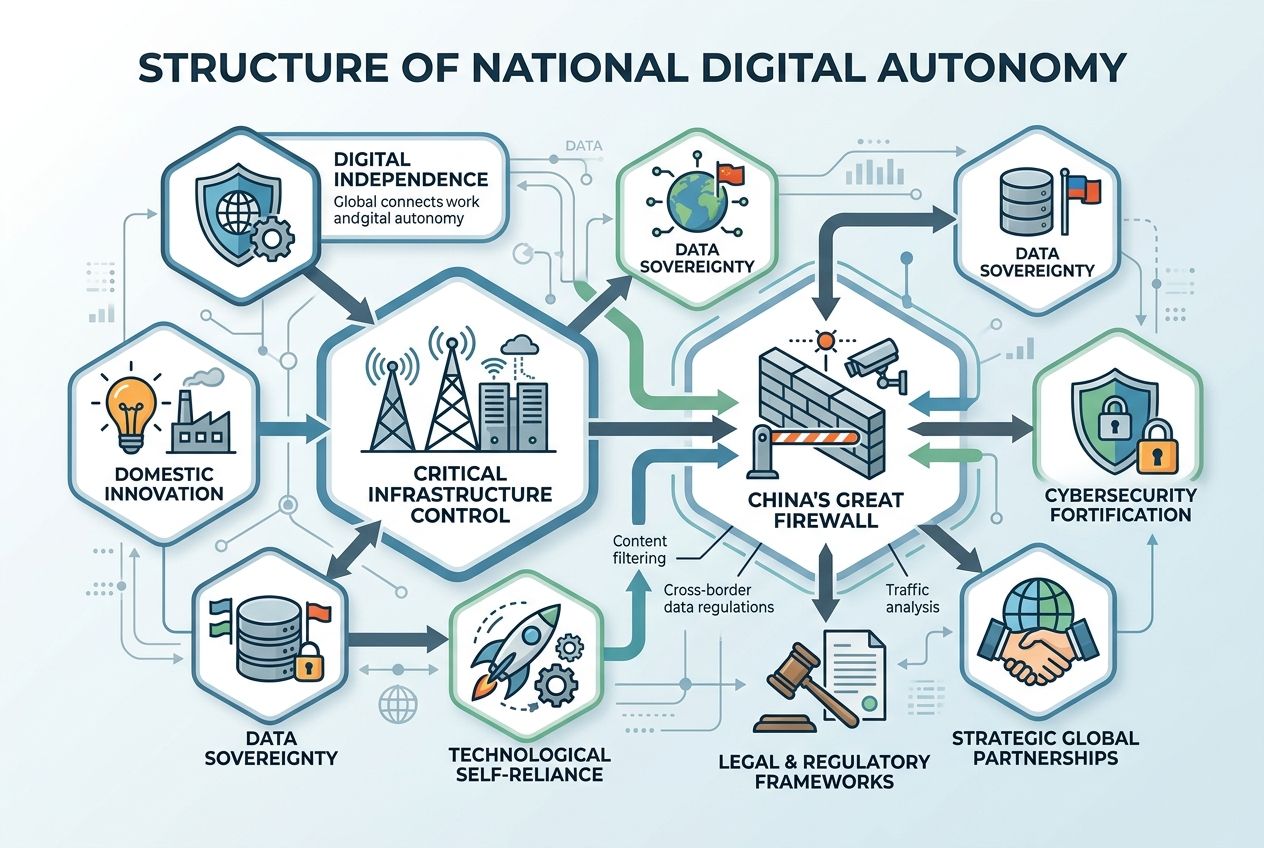
Digital independence means nations build their own digital setups. They do this to cut ties with big tech firms. People gain more control over their data this way. Think of it like owning your own backyard, instead of renting space in someone else’s garden.
Nations push for this autonomy to boost privacy and security. They use self-hosting tools, like personal servers, to keep data safe from outsiders. Open-source software plays a big role here; it helps dodge pricey, closed systems.
People move away from giants like Google and Facebook. They pick privacy-focused options instead. Secure channels lock in user privacy and keep data whole. Decentralization spreads out control, so no single point fails.
In a situation of data grabs, digital independence hands the reins back to you. – Tech Privacy Advocate
Nations chase this path for solid reasons, like guarding user data with encryption. Self-hosting sparks local control and cuts foreign sway. Open-source tools fuel innovation without big company strings.
Autonomy builds a shield against leaks and hacks. Data sovereignty lets countries run their show. User control sits at the center of it all. Alternative platforms offer fresh paths to connect safely. Digital security ties it together. Now, examine the importance of digital authority.
The Importance of Digital Sovereignty
Nations seek control over their online presence. They want cyber autonomy to protect data. Think of it like locking your front door; you decide who enters. This setup boosts digital sovereignty.
People gain power through network authority. Countries build walls against outside threats. They own their virtual identity. Leaders push for internet independence. Citizens feel digital empowerment. Data ownership stays in local hands. People learn digital literacy fast. They grasp information control better. You see, no one likes foreign eyes on private matters.
Authority in the digital world matters a lot. It shields economies from hacks. Leaders craft rules for safe spaces. Consider a garden you tend yourself, no weeds from afar. This path fosters trust among users. Communities thrive with strong data guards. Independence sparks fresh ideas at home. People chat freely without fear. Autonomy means real power online. You control the narrative, plain and simple.
Reasons Behind the Push for National Internets
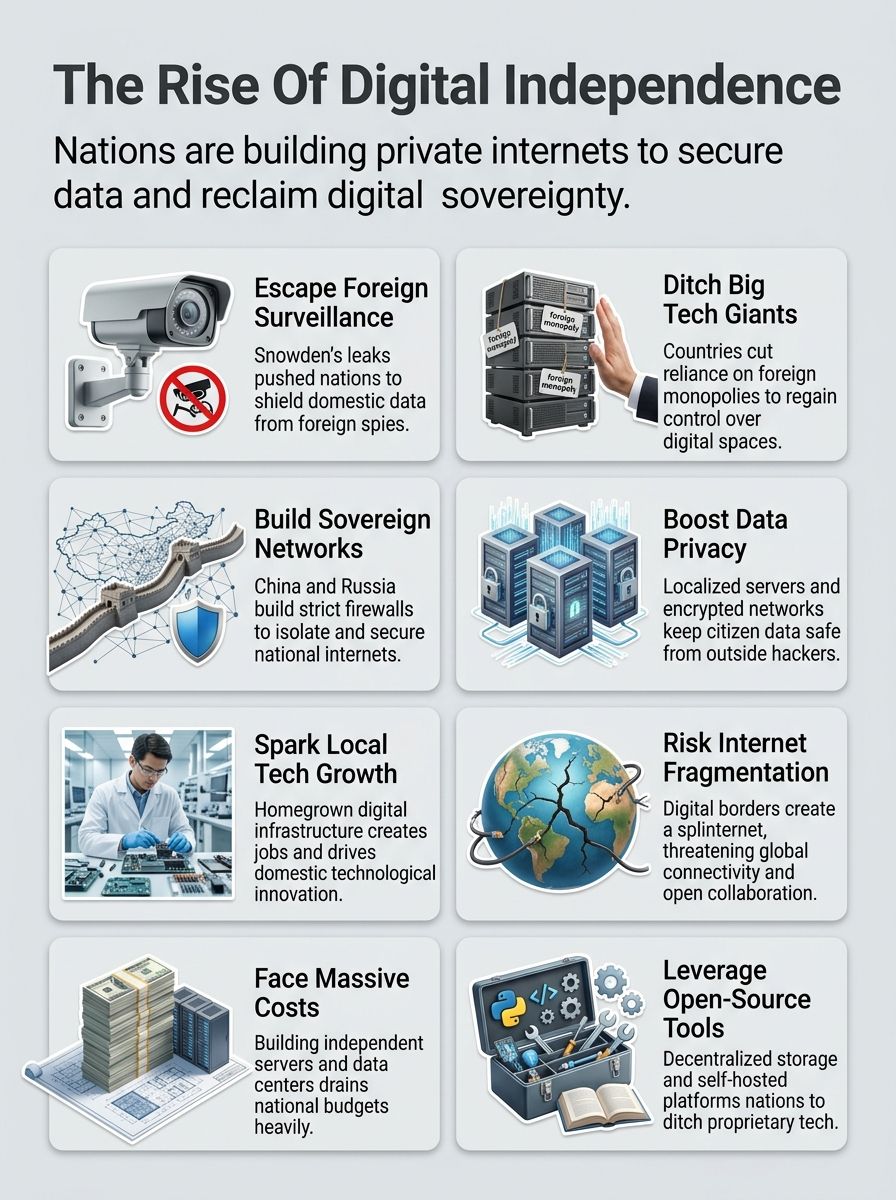
Countries chase their own internets because global rivalries spark fears over data leaks, like a game of digital tug-of-war where no one wants to lose their secrets. Snowden’s leaks hit like a wake-up call, exposing how foreign powers snoop on everyone, pushing nations to break free from tech giants that dominate the scene and grab too much control.
Geopolitical Tensions and Data Security
Nations seek digital independence to cut the influence of global tech giants amid geopolitical tensions. They build their own systems to boost data security and guard domestic talks.
This push creates a “splinternet,” which splits the once-united global web. Think of it like countries drawing lines in the digital sand to keep their info safe. People and groups gain autonomy from big firms through this shift. They move away from platforms like Google and Facebook to options that respect user privacy.
Leaders prioritize data privacy with self-hosted tools as a main drive for digital independence. Secure communication channels and self-hosting options protect data integrity and keep privacy intact.
Nations develop independent digital setups to enhance national security and promote cyber sovereignty. This reduces foreign sway on home affairs and fights digital isolation risks.
The emergence of independent national networks contributes to the concept of a ‘splinternet,’ challenging a unified global internet.
The Impact of Snowden’s Revelations
Edward Snowden dropped a bombshell in 2013, exposing massive surveillance by the U.S. government. He revealed how agencies spied on global communications, sparking outrage over privacy invasions.
This eye-opener shook trust in foreign-controlled internet systems, pushing countries to rethink data sovereignty. Think about it, your emails and calls, scooped up without a nod. Nations saw the risks to national security and digital rights, fueling demands for better cybersecurity.
They worried about information control slipping away, leading to calls for stronger encryption against such snooping. Censorship debates heated up, too, as people questioned internet governance run by outsiders.
Countries felt the sting of this exposure, realizing they needed to guard their own backyards from unchecked surveillance. This shift made people everywhere more aware of privacy pitfalls in a connected world.
Dependence on Foreign Tech Giants
Snowden’s leaks exposed how foreign powers could snoop on data, and that sparked fears about relying too much on tech giants from abroad. Nations now aim for digital independence to cut that reliance on them.
They shift from just regulating these companies to building their own digital infrastructures. Think of it like a country deciding to grow its own food instead of buying from a distant farm that might add secret ingredients. This move enhances data security and shields local discourse from foreign influence.
Strategies focus on digital sovereignty, with an emphasis on autonomy from major tech companies. Countries prioritize user privacy and control over personal data. They adopt self-hosted tools for secure communication and move away from dominant foreign platforms.
The rise of these independent national networks leads to internet fragmentation, often called the “splinternet.” Localized networks boost technological independence and data protection, while offering better cybersecurity against outside threats.
Consider your online world as a cozy neighborhood, not a vast city ruled by far-off landlords. This push for information control and privacy rights empowers nations to foster digital empowerment on their own terms.
Key Examples of Digital Independence Initiatives
Countries around the world are rolling up their sleeves to build their own digital fortresses, dodging the risks of relying on outsiders. Think of it as nations planting their flags in cyberspace, and if you’re curious about who’s leading the charge, keep reading for the eye-opening stories.
Europe’s Digital Sovereignty Efforts
Europe pushes for digital autonomy to protect its data privacy and boost cybersecurity. Leaders see foreign tech firms as a risk, so they build their own digital infrastructure. This move aims at technological independence and stronger digital governance.
Think of it like a neighborhood watch, people guarding their own backyard from outsiders. Nations team up on projects that shield information sovereignty and spark innovation strategies.
They create rules to keep data within borders, cutting down on leaks and hacks. Local firms grow, pumping life into the digital economy. Connectivity initiatives link everything safely, without relying on big players abroad. China takes a different path with its Great Firewall and internal internet systems.
China’s Great Firewall and internal internet systems
China’s Great Firewall stands as a massive shield for digital sovereignty. Officials built this system to control what people see online. They block foreign sites and monitor web traffic closely.
Think of it like a strict gatekeeper at a party, deciding who gets in and what stories get told. This setup boosts cybersecurity by keeping threats out. Yet, it also ramps up surveillance on citizens. Leaders say it protects data privacy from outside eyes. In turn, people inside rely on homegrown apps and services.
Internal internet systems in China push for total digital autonomy. They create a separate online world, free from global ties. Regulators enforce tight internet regulation to shape information flow.
Censorship plays a big role here, filtering out unwanted views. Consider locals chatting on WeChat without Facebook’s shadow. Such moves cut online restrictions from abroad but spark debates on freedom. These efforts strengthen information control and fend off foreign influence.
Russia’s Runet project
Russia takes a page from China’s playbook on digital independence, pushing forward with its own system to secure national control. They call it Runet, a project that aims to create a self-sufficient internet backbone.
Leaders in Moscow launched this in 2019 to boost sovereignty and cybersecurity. Runet lets the country disconnect from the global web during threats, much like pulling up a drawbridge in a castle under siege.
This setup focuses on internet regulation and digital autonomy. It protects against foreign hacks, keeping vital data safe within borders.
Engineers test Runet through drills, ensuring infrastructure resilience in telecommunications. Picture a giant shield guarding online spaces from outside meddling. The project enforces data localization, requiring companies to store data on local servers.
This cuts down on information control slipping away to tech giants abroad. Online censorship plays a role, too, filtering content that might stir unrest. Russia builds this national firewall to foster a stable digital environment, even if it means some global ties get strained. Critics worry about isolation, but supporters see it as smart defense in a wild cyber world.
Benefits of Building Independent Internet Ecosystems
Picture your nation shielding its secrets like a fortress, keeping data private and secure from outsiders. This setup cuts foreign meddling in local politics, letting leaders call the shots without interference. Plus, it sparks homegrown tech innovations, pumping fresh energy into the economy and creating jobs.
Enhanced Data Privacy and Security
Independent digital infrastructures aim to enhance data security and protect domestic discourse and people. You know that feeling when your personal info feels like it’s floating in a vast ocean, vulnerable to any storm? Nations build these systems to prioritize data privacy, a key motivation for digital independence.
They implement self-hosted tools, which contribute to improved data privacy and security. Adoption of open-source software reduces reliance on proprietary technologies, enhancing data security in general.
Secure communication channels promote user privacy and data integrity, like a locked diary that only you can open. Personal data storage solutions, such as self-hosted servers, enhance user privacy in everyday use.
The movement for independent networks challenges external influences on data security, giving countries more control. This push for data sovereignty ties right into reduced foreign influence on domestic affairs.
Reduced Foreign Influence on Domestic Affairs
Nations pursue digital independence to cut the influence of global tech giants, you know, those big players pulling strings from afar. These efforts build independent digital infrastructures that guard domestic discourse, like a sturdy fence around your backyard chat.
The growth of national networks slashes foreign sway on home affairs, giving countries real autonomy in internet governance. Visualize it, people, no more outsiders meddling in local chats or policies, all thanks to a focus on self-sufficiency and nationalism.
Digital independence lets people and groups run without leaning on others, promoting privacy and control right at home.
Initiatives stress self-hosting to grab local control over digital assets and dial back foreign meddling, a smart move like keeping your secrets in your own safe. Strategies lean on self-hosted tools and open-source software to shrink dependency on outside tech, boosting cybersecurity and data localization through decentralization.
Countries aim for this to shield their talks and decisions, creating a space where local infrastructure rules the day. This shift protects and also fuels growth in other areas, like boosting local innovation and the economy.
Boosting Local Innovation and Economy
Less foreign influence opens doors to fresh ideas at home, people. Promoting local alternatives to dominant platforms supports local innovation and the economy. Independent national networks encourage the development of local tech solutions.
Think of it like planting seeds in your own garden instead of buying veggies from afar. The shift to self-hosted tools fosters local entrepreneurship and business growth. Emphasizing open-source software helps local developers contribute to the economy.
Digital autonomy sparks community-driven innovation, you know? Digital independence allows local organizations to create customized technology solutions for their communities.
Strengthening data privacy and security can attract investment in local tech initiatives. Open-source development builds economic resilience. Tech diversity grows through independent networks and localized services. Data sovereignty keeps things strong and steady.
Challenges of Digital Independence
Picture a country pouring billions into massive servers and cables, only to watch the global web start cracking like an old mirror. Nations chase this dream of total control, yet they juggle the tightrope between staying connected worldwide and locking down their digital borders, risking isolation that could stifle ideas and trade.
High Costs of Infrastructure Development
Nations chase digital independence, but they face steep costs in infrastructure development. Think of it like building a massive fortress from scratch; you need big bucks for servers, cables, and data centers.
These expenses add up fast, draining budgets that could fund schools or roads. Countries pour investment into technology to secure their online space, yet sustainability becomes a puzzle.
Innovation helps cut corners, but initial outlays challenge even wealthy governments. Leaders weigh these costs against the perks of control.
Empathy kicks in here because small nations feel the pinch hardest. They scrape together funds for nationalized systems, dodging reliance on foreign giants. Challenges arise when development stalls due to tight wallets.
Consider a startup scraping by; that’s the vibe for some countries in this digital push. Investment in local tech sparks growth, but high costs test resolve. Independence demands deep pockets, no doubt about it.
Risk of Internet Fragmentation
Countries chase digital sovereignty, and that push risks a “splinternet.” This trend fragments the unified global internet, you see. Leaders build independent digital infrastructures, and they might isolate their networks from others without meaning to.
Think of it like walls going up in a neighborhood, blocking easy chats between houses. The establishment of national networks creates barriers in cross-border data flow, plain and simple.
Digital independence initiatives encourage regulatory differences, and those differences further fragment the internet. Prioritization of local data privacy leads to diverging internet policies around the world. Cyber sovereignty sounds strong, but it can create information silos that trap data inside borders.
Fragmentation limits global collaboration, and it hinders the sharing of information across those borders. The rise of independent networks challenges the principles of an open and interconnected internet.
Data localization efforts build connectivity barriers, like fences that keep neighbors apart. Digital nationalism grows, and it shapes a splintered global digital landscape. Network isolation might protect one spot, yet it weakens the whole web.
Internet governance shifts with cross-border regulation, creating divides we never wanted. Consider a puzzle breaking apart; each piece shines alone, but the big picture fades.
Balancing Global Connectivity and Sovereignty
Nations build independent digital infrastructures to cut global tech influence and tackle geopolitical tensions. These moves boost data security and shield domestic talks from outside forces.
Envision a place where your country’s online space acts like a cozy, guarded backyard, yet you still peek over the fence for global chats. Digital independence stresses less dependence on big tech firms, and it pushes for cyber sovereignty and digital autonomy.
Advocates urge a switch to platforms that put data privacy first, over those dominant options. They see self-hosting tools as key for better user control over personal info. The rise of national networks sparks internet fragmentation, creating what experts call a “splinternet.” Tech independence sounds great, like owning your own digital castle, but it demands a tricky dance between staying connected worldwide and guarding your domain.
Leaders face high costs in building these systems, plus the risk of cutting off global ties. Empathy kicks in here; think about juggling a phone call with a far-off friend while locking your front door tight.
Motivations include prioritizing information security through secure communication channels and personal email setups. These steps keep user privacy and data integrity strong. Nations promote individual and organizational autonomy to reduce foreign sway.
Fragmentation worries many, as it splits the web into isolated zones. Still, the push for national networks grows amid rising tensions. Next, we examine the technologies that make digital independence possible.
Technologies Enabling Digital Independence
Countries turn to self-hosted platforms, you know, to keep their data close to home and dodge those sneaky foreign spies. Open-source tools pop up like wildflowers in spring, giving nations the power to craft their own secure networks without begging big tech for scraps.
Self-hosted platforms and open-source tools
Self-hosted platforms let you take charge of your data, giving you that sweet taste of digital freedom without relying on big tech overlords. Open-source tools, on the other hand, build security and autonomy right into the mix, helping nations and people alike ditch foreign dependencies.

- Nextcloud stands out as a prime self-hosted tool; it lets individuals manage their own data securely, boosting privacy and control over personal information in a world hungry for your details.
- Open-source software cuts down reliance on proprietary technologies; this shift enhances security, fosters autonomy, and promotes self-reliance, much like planting your own garden instead of buying wilted veggies from the store.
- Self-hosting puts a spotlight on data privacy; you gain full control over personal information, ensuring decentralization that keeps prying eyes at bay, and it feels like locking your front door yourself.
- Secure communication channels prove vital in self-hosted setups; they safeguard user privacy, support data management, and let you chat without fear, akin to whispering secrets in a trusted circle.
- Nations adopt self-hosted platforms to slash dependency on global tech giants; this move enhances data sovereignty, bolsters security, and sparks local innovation, turning the tide toward true digital independence.
- Digital independence encourages open-source solutions; these tools heighten autonomy, improve communication, and secure data integrity through self-hosted email systems, empowering you to own your online world.
- Individuals maintain data integrity with self-hosted communication tools; this approach emphasizes privacy, decentralization, and self-reliance, offering a shield against data breaches that could turn your life upside down.
Nationalized cloud services
Nations build their own cloud services to keep data safe at home. Think of it like locking your front door; you control who gets in. These nationalized cloud services use cloud computing to store information on local servers.
They boost data sovereignty, so governments avoid foreign spies. Countries set up Infrastructure as a Service for this. Virtualization helps run apps without outside help.
Picture a world where your info stays put, no sneaky hands from abroad. Digital autonomy grows with these setups. They tie in cybersecurity to fight threats. Open source tools make them flexible.
Data privacy jumps up a notch. Edge computing speeds things along, keeping data close. Interoperability lets systems talk without issues.
Decentralized data storage solutions
While nationalized cloud services give countries a firm grip on their data flows, decentralized data storage solutions take that control even further by spreading it out across networks.
Think of it like sharing a secret among friends instead of locking it in one vault; no single point fails, and you keep the power. Self-hosted solutions, such as personal servers, help users maintain control over their data, boosting data autonomy in a big way.
Decentralized data storage enhances data security and reduces vulnerability to foreign entities, making it a smart move for privacy-centric setups. Countries push this through peer-to-peer networks, where data sovereignty shines bright.
The use of open-source software gets encouraged for decentralized data storage practices, letting people build without big tech strings attached. Secure communication channels prove crucial for safeguarding user privacy in decentralized environments, often relying on encryption and distributed ledger technology like blockchain.
Independent national networks support decentralized data storage as part of digital infrastructure development, weaving in federation for smoother connections. Digital independence promotes alternatives to reliance on major tech companies for data storage solutions, even tying into cloud computing for hybrid strength.
Prioritizing data privacy often leads to the adoption of decentralized storage methods, fostering self-sovereign identity that feels like true freedom.
The Future of Digital Independence
Nations race ahead with bold cybersecurity moves and open source magic, crafting a web that’s tough against threats and sparks homegrown genius. Dig deeper into these shifts, you won’t want to miss what’s coming.
Emerging Trends in Cybersecurity and Innovation
Countries build their own digital setups to gain more control. This push boosts data security. It guards local talks from outside meddling, like a sturdy lock on your front door.
Think about the “splinternet,” where online worlds split apart. These changes create separate web spaces. People and groups now focus on user privacy. They run without leaning on tech giants.
Self-hosted tools grow popular. People use them to keep personal info in their own hands. That’s a big reason for this shift. Open-source software spreads fast. It helps ditch closed-off tech.
Systems get tougher that way. Secure channels and self-hosting protect privacy. They keep data safe and sound. Envision chatting without eavesdroppers; that’s the goal here. Digital sovereignty leads the charge.
Cyber resilience strengthens every step. Decentralization spreads power around. Self-sovereign identity puts you in charge. Data protection stands front and center. Fragmented internet shapes the scene. User autonomy thrives in modern times.
The Role of Open Source Technologies
Trends in cybersecurity and innovation lead us straight to open-source technologies, people, tying everything together for stronger digital futures. Digital independence emphasizes the use of open-source software to promote autonomy from major tech companies.
Nations chase this path, you see, because the adoption of open-source software stands as a key motivation for pursuing digital independence. Open-source solutions contribute to the development of independent digital infrastructures.
They boost resilience, too. Plus, these tools enhance security in digital operations. Think of ditching big tech overlords, like shaking off a clingy ex, for true empowerment.
Open-source technologies enable users to gain greater control over their personal data and communications. Self-hosted tools, often based on open-source platforms, prove integral to supporting digital independence.
The rise of open-source technologies aligns with the broader goal of enhancing data privacy and security. Nations build self-hosting options for transparency in their systems. This shift fosters independence, cutting ties with foreign influences.
Local teams craft infrastructure that screams control and privacy, like a fortress guarding your secrets.
Final Thoughts on Digital Independence
Nations chase digital independence to shield data and cut ties with foreign tech companies. These moves boost security and spark local innovation, yet they demand big bucks and risk splitting the web.
Dive deeper with books on China’s Great Firewall or Russia’s Runet for real-world insights. Such steps reshape how we connect globally, guarding privacy amid tense geopolitics. Go ahead, ponder your own digital footprint; it might just empower you, too.